



by Nadine Whitney
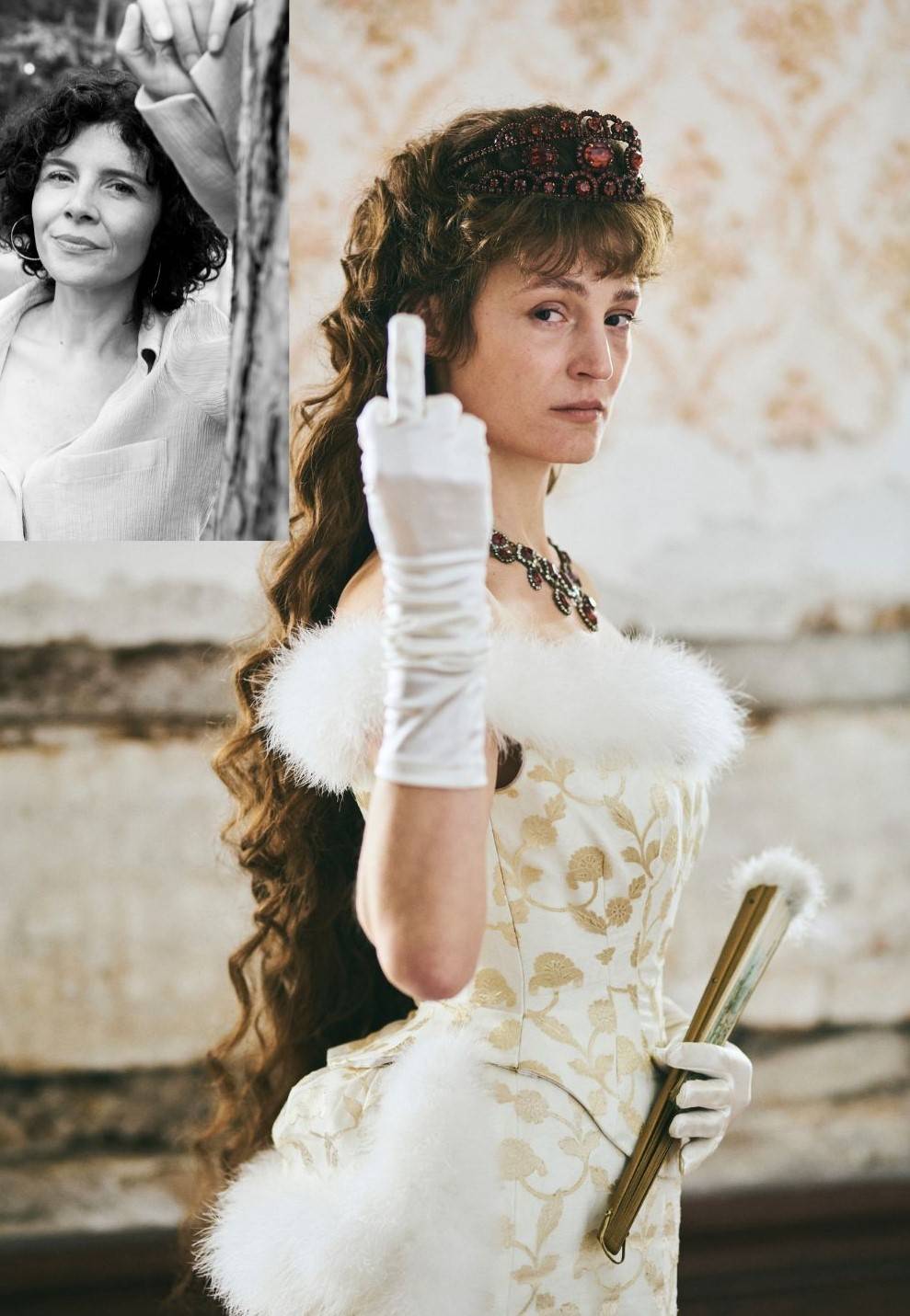
Marie Kreutzer directed Corsage, the award-nominated imaginative biography of Empress Elisabeth ‘Sisi’ of Austria. While being far from true to Sisi’s life, it gives the “ornamental Empress” a new vitality that is based on Kreutzer’s extensive research on the 19th Century Austro-Hungarian monarch. It is also a story that extends its narrative to defiant outsiders and people caught in a system that defined their every movement.
Some people know about Elisabeth and her corsets, and the trilogy of romanticised Romy Schneider films. Then, there was news that your film was coming out and people wondered how the story will be told, because ultimately Sisi’s story is tragic. Her real life fate is tragic, as well as what happened with her son and heir to Franz Joseph’s throne. You’ve given her something that she deserved, which is a chance of life.
Corsage is an act of rebellion, and it is also an act of living. Sisi has a chance to actually live and be herself. When you were writing the script, how important was it to you to get that across, to give her a new identity outside of that sort of tragic queen?
“I did so much research and reading and I was really intrigued by what I read about her, especially in the diaries of, for example, her daughter and her Lady in Waiting. I think that these books, which were written by people who really lived with her, were really important. And also, her own poems. And the image I had before was very different. Much nicer and of course tragic, but then also… the cliche of a sad, rich, beautiful woman in a golden cage, blah, blah, blah. But then reading about her, I sensed that there is so much more to it, and she was so much more complex as we all are, of course.
“And ultimately, in every film I do, I really only want to show the complexity of human beings because we are all not only one thing. And that was very interesting in the writing process. That happens with every single one of my scripts. I write a script and people read it, and then they say, ‘it’s a great script, but do you think people will like her?’ Because it’s always a main character, which is a woman, so will people like her? And that’s where I feel like this has become my mission, to just show normal, complex female characters. By normal, I mean, we are all complex, but we are used to seeing stereotypes of women in movies, really.
“I’m just trying to show people how they are. And that’s what I try here too. It was not the main focus in the beginning… Of course, I was intrigued. And that was also maybe the point where I realised this is a good story I want to tell, about her rebellious spirit.
“When you read the diaries of her Lady in Waiting, Marie [played by Katharina Lorenz], who is also an important figure in the film, and it’s reading about different women, because Marie liked her so much and wrote about her in such a warm way, but also very critical. I tried to stay true to what I read about the character, not so much about the facts.”
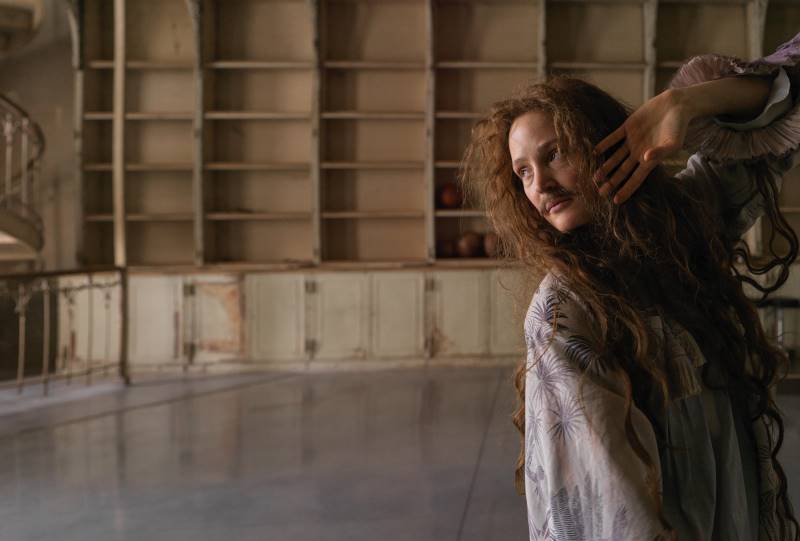
Corsage opened with one of her staff saying, ‘She scares me’. The audience doesn’t know if she’s actually scared of Sisi, or for Sisi, because of Sisi’s extremities of behaviour. It sets up the tone for the character being complex, for being difficult, but not always being likable and for being very, very human. That was a really clever way to introduce her.
“Well, thank you, I will tell my producer [Alexander Bohr] because it was his idea. Of course, it was in the script, but we did a lot of re-editing at the beginning of the film because that didn’t really work in the film as it worked in the script. That scene was out of the film, and then at some point he said to me, ‘Don’t you think it will be good for the audience to know that someone’s scared of her?’ I really owe him for that, because I also think it’s a very good opening.”

The use of Camille’s music was just hauntingly lovely. And also, the very clever contemporary flourishes with, ‘Help Me Make It Through the Night’, and those kinds of touchstones which made Sisi into an eternal princess, someone who could have existed now, just as she did then. Was that something that you thought about when putting these things together?
“It really came from me reading all the biographies. Reading different biographies and then also the diaries and her letters and the poems; every book was influenced by the time it was written in and by the person who wrote it obviously. And that really made me second guess my thoughts about history. I think it’s very often we think we know how it was because we read it somewhere. We think we know how rooms look like because we’ve seen them, but we’ve actually seen them in films or maybe in museums. The images we see of people like Sisi are paintings, and paintings are being made to idealise people and show them at their best and not how they actually looked and lived. I think that most of the… what we would now call modern elements, came from the idea from that experience of starting to question what I thought was known or was a fact.
“I really started playing with that. The music was already in the script. Most of the music was already there, and the idea was to bring it into the film in a way with interpretations with instruments that would make the music sound as if it could already have existed, so that you would also question yourself, ‘is this an old song? I didn’t know that’. So, a little bit like that. And that’s something that then came also to the visual work on the film. That’s also something the production designer, costume designer and the DOP started working with when I said, ‘let’s try for something else’. We think we know what it looked like…
“I don’t want candles, for example. I thought candles were kitschy and I thought it would be difficult to shoot with candles, and I didn’t like the lightning so much. Electricity existed, but of course, not like it exists today. But then I said, ‘who really knows? I mean, we were not there, so let’s just use what we think is beautiful’. And that’s how it started. And then it became really playful for everyone involved, I think. It became fun to make our own vision of a time that we don’t know ultimately anyway, because there are no home stories of Sisi and there are no interviews. A lot of it is interpretation of little facts, actually.”
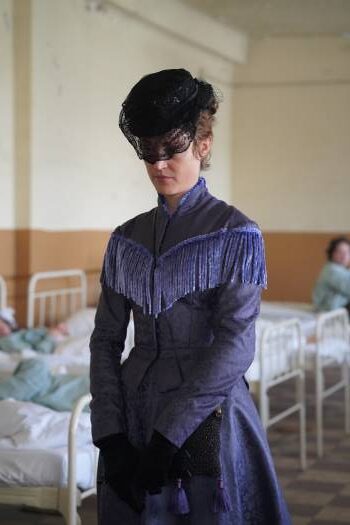 There are some factual elements in the film. For example, her conversation with Franz where she says, ‘You can buy me a tiger, or you can give money to the asylum’. She actually did demand that. Weaving these factual parts of her story into it, is what makes it really interesting. One of the most effective parts of the film was both the asylum scenes, the second one in particular where she’s standing between the two baths and there’s one woman who’s being essentially tortured in a bath as they did back then for lustful thoughts, for having committed adultery, which is something that Sisi was considering in the film. And there’s another one who is there for the melancholia of having lost a child, which is also something that Sisi went through. These women are collectively parts of aspects of Sisi’s personality.
“Yeah. And the feature film I did before Corsage was The Ground Beneath My Feet. It was about two sisters, and it had to do with mental illness. I did a lot of research on psychiatry at that time. My film was a contemporary film, but I was really intrigued by these images and by these stories, and then started reading a little more than what was necessary for that particular film. And when I read about Sisi, that was really the part of the job that she liked, visiting the sick and the poor. And that was like it is still today, royal women going to see poor and sick people.
“It’s what they’re supposed to do, but that’s actually the part that she liked about her duties. And wherever she went, she would visit mental psychiatry wards. And that was really the beginning of the idea of, we can cure these people, we can do something for them. So as brutal as it looks in the film and as what the doctor says sounds, and that these are also accurate lines from that specific doctor taken from his books – it all sounds very brutal – but the idea was for the first time, we can do something for these women, we can help them. Of course, I don’t think what they did was actually helping, but at least they’re thinking about it.
“I didn’t find her saying something specifically about why she liked going there, but it was something that’s through her life, it was something she felt drawn to and that you could say it has to do with her being so melancholic and seeing herself in these women. But I don’t know if that’s the case. I also thought that the sentence she really said or wrote to Franz Joseph when she said, ‘You can either buy me a tiger or pay more for the mental hospital’, there you see it’s really a priority for her. And that was really not typical for that time to be so interested in that. I really like that aspect of her.”
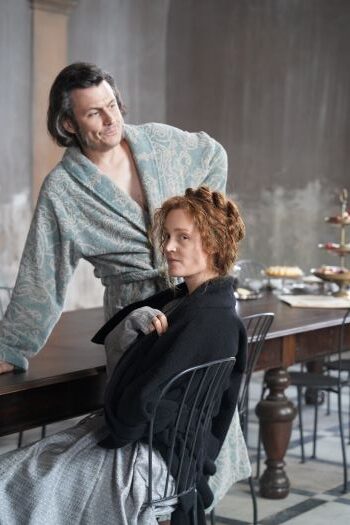 She was absolutely fascinating. So much more than the ornament that we’re led to believe that she was in history. One thing that I also found very moving was her relationship with her cousin, “Mad King” Ludwig II of Bavaria [Manuel Rubey], and that they had a oneness because of their sort of strangeness. That they didn’t quite fit into this perfect royalty even though she was a much more perfect looking specimen. He had all the money. They were still outsiders and they shared that.
“It’s also interesting because when you read about them in today’s biographies or biographies from twenty years ago, it’s framed like a very close relationship of two outsiders in the royal world. But when I read a biography written in the 1950s or sixties, it was a different story. It was basically about a very crazy mentally ill cousin who would stalk her and want to see her, and she didn’t want to see him, she didn’t want to deal with him. That’s how the story was told in a time where it was seen differently.
“I always liked the character of Ludwig; I also loved the Visconti film about him [1973’s Ludwig]. It was clear to me that he would be a part of the story, also because I’m showing different connections she’s trying to have with men. Ludwig doesn’t in the end give her what she needs, but it’s also very different from the connection to the husband or the potential lover (George ‘Bay’ Middleton [played by Colin Morgan]). But he’s the last man she turns to in the film and she hopes to find what she needs and then doesn’t, which is for me one of the saddest moments in the film when she realises he also wants her a certain way.”
Do you feel that you have given audiences an inroad into thinking about history and feminism in a different way after the film?
“I don’t know. I’m not reading so much about reactions, but a lot of people sent me messages from all over the world when they see the film. I can see that it does something to the audience and that a lot of people feel inspired by it and touched by it. That’s actually the biggest success you can have as a filmmaker, that people really take something out of your film, whatever it is. And it’s different aspects for different people. It’s the best case.”
Corsage is playing in cinemas now
