



By Karl Rozemeyer
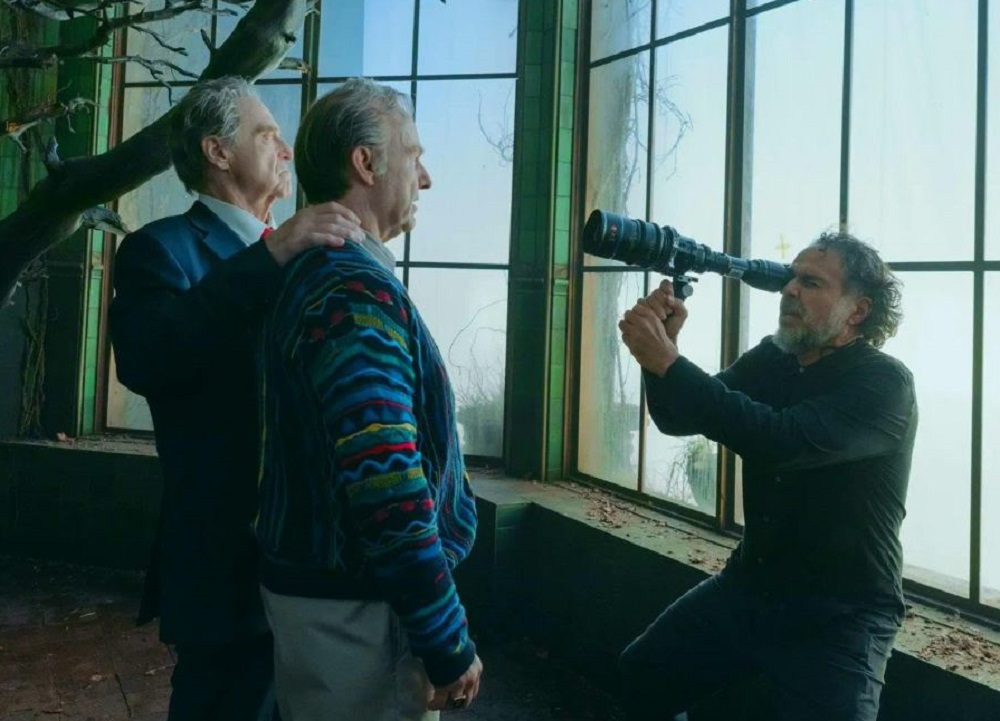
Upon the release of his profoundly ambitious and unconventional political satire Digger starring Tom Cruise, we look back on the fascinating career of Alejandro González Iñárritu, the pugnacious, outspoken, Mexican-born director of Amore Perros, 21 Grams, Babel, Biutiful, Birdman, The Revenant, and Bardo.
The poster for 2010’s Biutiful features a portrait of the film’s star, Javier Bardem, as well as his name printed in bold red type. Above the movie’s title and Bardem’s name, in equally large lettering, are the words “A film by Iñárritu.” Following the success of his previous films – Babel, 21 Grams and Amores Perros – Mexican-born director Alejandro González Iñárritu had become such an instantly recognisable name, especially in the Spanish-speaking world, that he could, with assurance, simply use his surname to topline advertising materials in order to promote his films.
“I am not looking to be recognised as an auteur,” Iñárritu told FilmInk in a typical torrent of words. “For me, I am a filmmaker. As a filmmaker, I tell stories with images. No matter if my name is in it or not.” But Iñárritu is not oblivious to the professional (and financial) risks of fronting a film by emblazoning his name across its poster. “If you make a film, you are exposed and naked – no matter what,” he told FilmInk in 2010. “You give birth to your ‘little song’, and then 2,000 people in the theatre say: ‘Oh, look at that shit!’ So you are exposed no matter what. Your shit and your beauty are exposed no matter if your name headlines it or not. So that is always the challenge. If you don’t want to be criticised, the only way is to not do it. That is the risk that you take.”
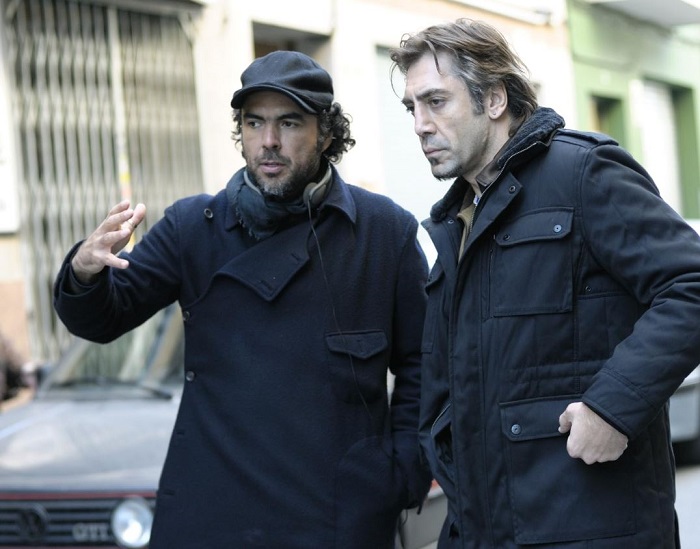
Iñárritu is also known to be a perfectionist, and a relentless taskmaster. When FilmInk asked Javier Bardem about working with the director on Biutiful, the actor was quick to recall a day on location in the suburbs of Barcelona. “We shot for what seemed like the whole day, and Alejandro covered the scene from four or five angles. So we did the same scene, I would say, a good hundred times. I was broken,” Bardem said, adding that it was important for both him and the director to “go to the bone” to reach the emotional essence of the scene. “You don’t want to just deliver the line; you want to be fully present. But after a hundred times, I said…” his voice drops to a whisper. “‘I can’t. I’m exhausted.’ That was only Day Two…and we had five months of shooting!”
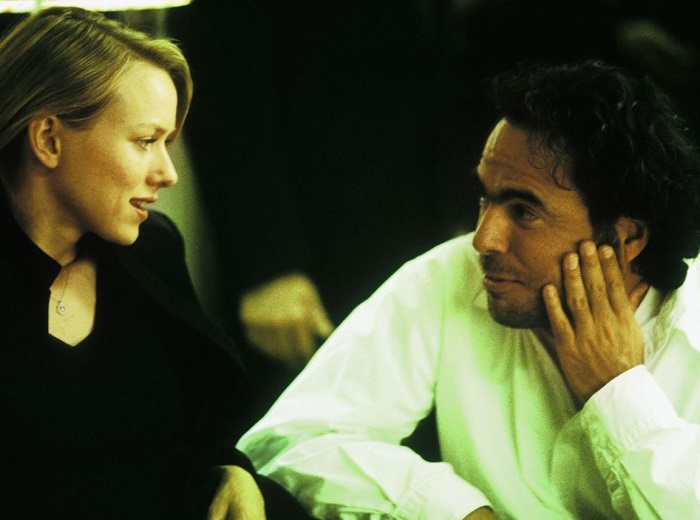
Actress Naomi Watts was equally spent while filming 21 Grams. “It was exhausting,” Watts told FilmInk of the emotional impact of the shoot. “It was incredibly challenging, but I was prepared for that, and if it meant taking that mood home with me at the end of the day and not sleeping very much, it was okay. I knew that I had to come in with the same mood – I didn’t have to look good.”
The director, however, is strikingly self-aware when it comes to the punishing nature of his film sets. “I can be unbearable,” Iñárritu says matter-of-factly. “I can ask for forty takes to get something. For somebody to resist that really deserves all my love, and Javier was able to do that even when he was in pain. It was really intense, and there were big, challenging moments. That was never because we were disagreeing, but rather because we were challenging each other. We were like two crazy, neurotic guys trying to get to the bottom of something. We were hoping that there was something more than we had already gotten. To have two people that are never satisfied is dangerous territory.”
Working in such an intense fashion has become Alejandro González Iñárritu’s stock in trade. Born in 1963 in Mexico City to a wealthy banker who had gone bankrupt, he knew about life’s gritty possibilities from an early age. After being kicked out of school at sixteen, Iñárritu worked for a time as a commercial sailor, before finally feeling the need to complete his formal education. After enrolling in college, Iñárritu landed a job as a disc jockey at WFM, Mexico’s most popular radio station, where he enjoyed great success with his daily three-hour on-air slot, playing tunes and speaking with the people of Mexico.
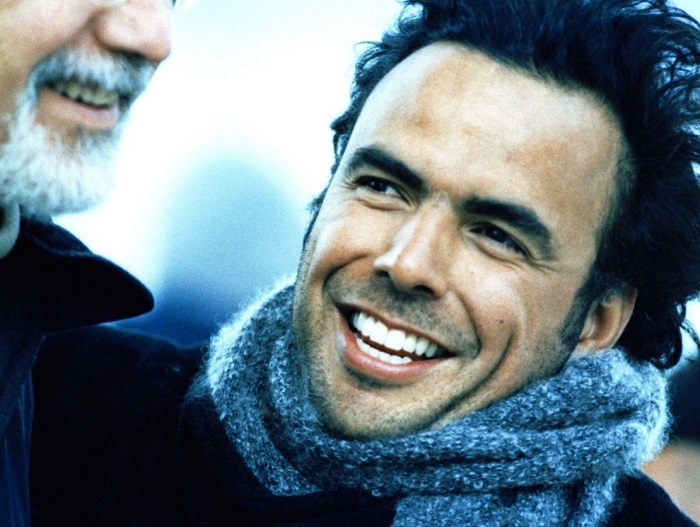
A strange by-product of this is that Iñárritu now conceives his films in musical terms first. “I have to understand how the film will sound, and what texture, tone, tempo and beat it will have,” he told The Scotsman. “If not, I can’t do it; it would be impossible without a musical reference. I actually have a better ear than an eye. I’m not ashamed about that. I have the talent on the wrong side.”
Though a well-known personality in Mexico, Iñárritu moved into the advertising world, first as a writer, and then as a director of television commercials. Though ultimately unsatisfied with all of the shiny surfaces and superficial messages inherent in advertising, Iñárritu has since confessed that directing commercials helped him how to learn to tell a story economically and incisively. “I started off writing TV adverts,” he told BBC. “I saw those as rehearsals for a feature film.”
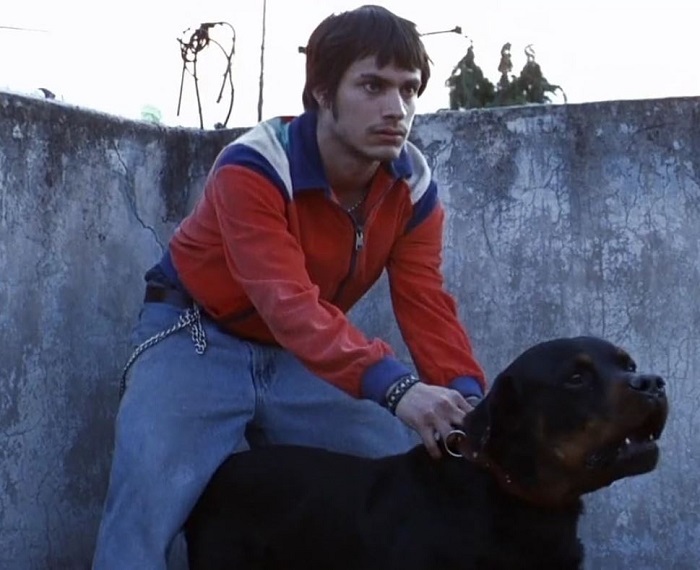
Iñárritu then introduced himself to novelist Guillermo Arriaga, with whom he would strike up a strong creative bond and a lengthy professional relationship. The pair originally intended to make eleven short films that would chart the volatile and highly contradictory nature of Mexico City. Instead, they decided to focus on just three stories, and wound the strands together to create an interlocking feature length film. The result was the vivid, energetic and strikingly confronting Amores Perros, Alejandro González Iñárritu’s 2000 directorial debut, and one of the most successful films to come barreling out of Mexico in years.
Lazily dubbed “Mexico’s Pulp Fiction” because of its cross-cutting narrative and partial criminal underworld setting, Amores Perros tracked three separate characters affected by a horrific car accident, and traded in themes that would become a trademark for Iñárritu: grief, pain, desperation, loss, fear and regret. The first story involved street kids and the illicit dog-fighting scene; the second mixed a supermodel, a luxury apartment and an ill-fated lapdog; and the third followed a hitman snaking his way across the city. Though the film helped to make Mexican actor Gael Garcia Bernal a star, Amores Perros was largely cast with non-actors.
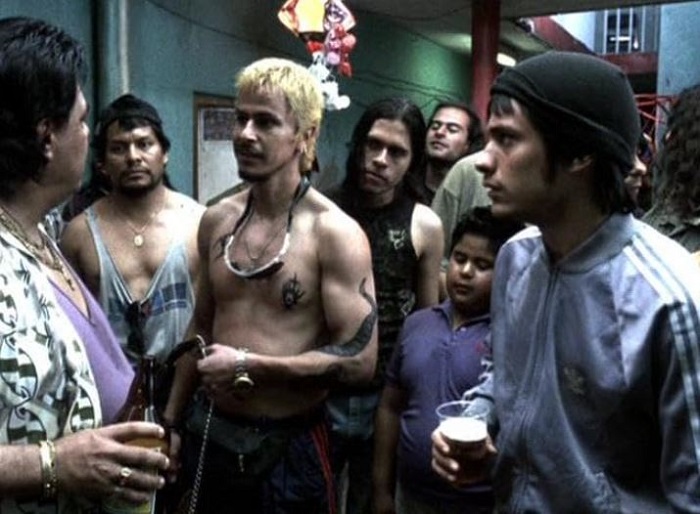
“I used 52 actors from different backgrounds,” Iñárritu told BBC. “I chose many first timers so that we could share the innocence of our first time together. I chose actors who shared elements of the characters. I made them live in their roles beforehand, to prepare. That meant one of them living in a slum, for example. I wanted to concentrate on the actors, as they are what you see on-screen. I treated the locations like a stage, to give the actors their space. The cameramen had to work around them.”
Ambitious, bold and visually audacious, Amores Perros was an international arthouse hit, earned a Best Foreign Language Film nomination at The Academy Awards, and opened doors in Hollywood for its director. The film also marked Iñárritu as a serious, thoughtful man ready to tackle the big issues. With his first film, that issue was urban violence.
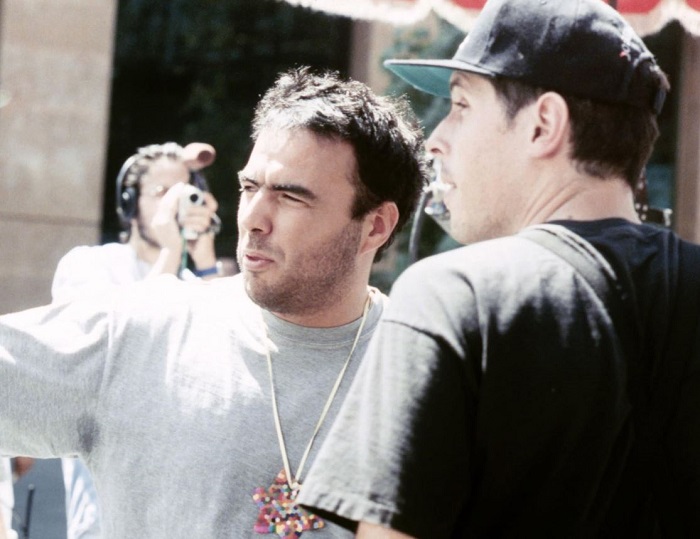
“Many Mexican directors are scared to shoot in Mexico City, which is why there are many stories in Mexican cinema about little rural towns, or set a hundred years ago,” he told The Guardian. “It’s difficult to shoot there, not just technically but because it’s such a complex mix. All the city’s frontiers are falling. When you live in a city, as I do, where violence is really in the streets and people die every day, there’s nothing funny about it. We try to show that violence has a consequence – when you create violence, it turns against you.”
On top of his days as a popular radio personality, the huge success of Amores Perros combined to make Iñárritu a major star in Mexico, where fame can sometimes be a dangerous commodity indeed. “At that time in Mexico, kidnapping was a sport,” the director told the UK’s Telegraph. “My 72-year-old father was kidnapped, gone for six hours. It was horrible. My mother was assaulted, her teeth broken, and my brother was assaulted too. It was insane. I couldn’t focus on work anymore, and I was constantly worrying about my children. So we had to leave.”
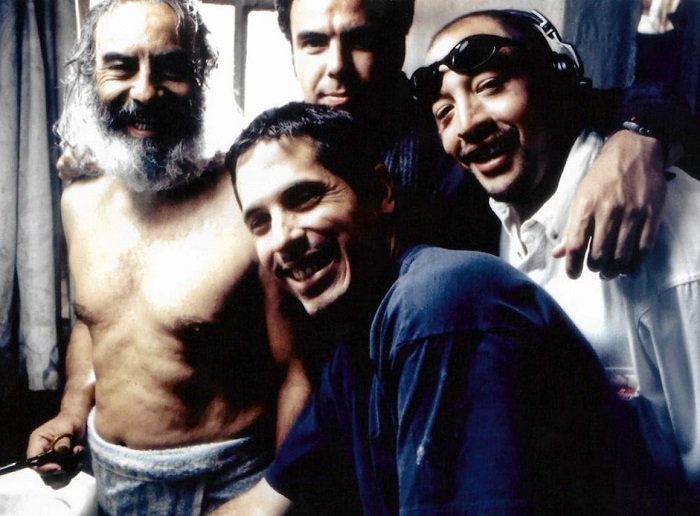
Fearful for his family’s safety, Iñárritu decamped for Los Angeles. “It was difficult, that first year, to try to understand things. It’s not easy to maintain your voice in an industry like this. But I have been very lucky to have final cut in all my films; everything that is wrong in them is my fault. You just have to know what you want, and I know what I fucking want.”
After making a couple of high-profile short films – Powder Keg, a segment for BMW’s groundbreaking advertorial short film series, The Hire; and the Mexican entry in the 9/11 omnibus film Eleven Minutes, Nine Seconds, One Image: September 11 – Iñárritu got what he truly wanted: his debut American film. Deeply emotional and absolutely gut-wrenching, 2003’s 21 Grams was a richly detailed character piece hinging on an uncompromising, non-linear narrative, swirling with themes of death, self-destruction and redemption.
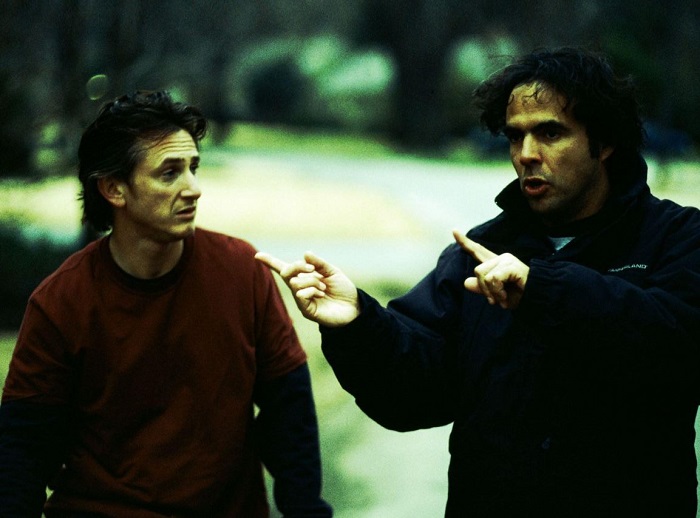
With a bruising script by his friend Guillermo Arriaga, the film charts the lives of a critically ill maths professor (Sean Penn) and his once drug dependent wife (Naomi Watts), who are thrown out of control when a violent, born-again ex-con (Benicio Del Toro) shatters their already troubled existence. “I didn’t think about it when I was doing it, but 21 Grams has a very September 11 theme,” Iñárritu told The Chronicle. “What I discovered is that the journey of Naomi Watts’ Christina – which is about loss, then grief and confusion and the need of revenge – works on a human scale and on a country scale, which is exactly what happened on September 11. The sense of loss, then confusion and grief, and then the need for revenge – that’s what happened in Afghanistan and now Iraq.”
The film’s themes of loss and familial breakdown were tragically anchored in Iñárritu’s own life. In 1996, the director’s son died two days after birth from medical complications. This personal tragedy has obviously influenced Iñárritu’s dark world view, though at the time, it inspired something wholly different in him: rage. “The doctors didn’t really talk to me in advance, and they didn’t take the necessary precautions to prevent the death,” he told SF Gate. “The reason that my kid died is very complicated. When I began to investigate it, I began to plan things – and how I could damage those guys. Suddenly I realised, by a very tough process, that nothing will bring my kid back. It’s a very subjective world. And I just let it go. I had to find a way to let go. If not, you begin to get crazy.”
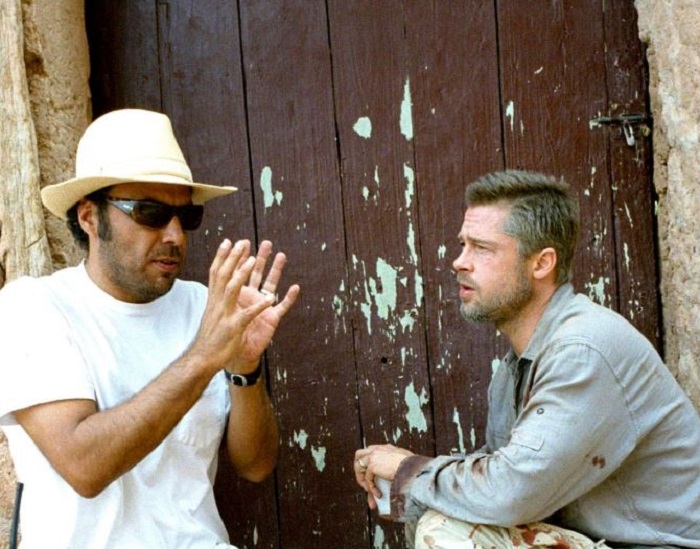
Though 21 Grams was a critical and arthouse success (and picked up Oscar nominations for both Naomi Watts and Benicio Del Toro), it was Babel, which combines stories from North Africa, Japan and the US-Mexican border, and employs the talents of Cate Blanchett and Brad Pitt, as well as a host of unknowns and nonprofessional actors, that won Iñárritu international acclaim, including the Best Director award at The Cannes Film Festival in 2004, and six nominations (including Best Director and Best Film) at The Academy Awards.
A tough, uncompromising treatise on moral responsibility and global connection, Babel kicks off with an accident that will ultimately have dire consequences. The sprawling but intimate mini-epic draws in an American couple (Brad Pitt, Cate Blanchett), a rebellious deaf Japanese teenager (Rinko Kikuchi) and her father, and a Mexican nanny (Adriana Barraza) who disastrously takes two American children across the border.
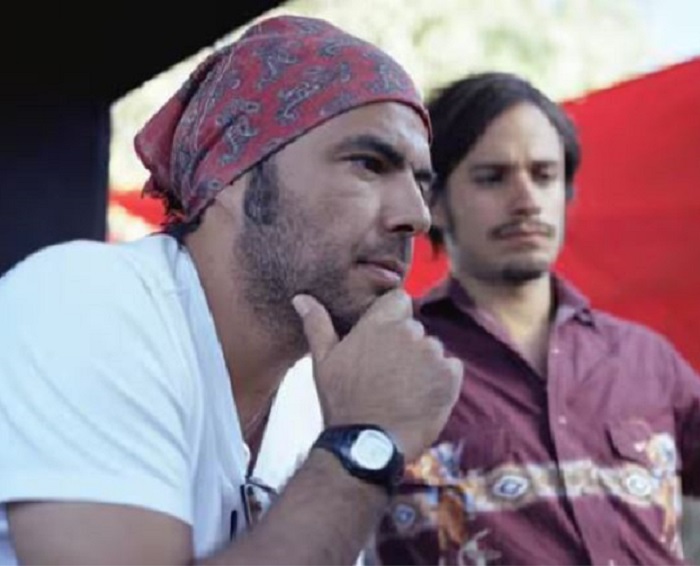
Like all of his previous films, Babel was a deeply personal work. “I had the idea before I started shooting 21 Grams, and what I understand now is that this film couldn’t have happened without me being in self-exile,” Iñárritu told FilmInk upon the release of Babel. “I left my country in 2001, and it’s a very complicated thing when you’re a Third World citizen living in a First World country. It’s difficult to communicate, and you confront prejudices every day. I’ve been travelling a lot over the last six years, and that triggered in me a lot of things that I needed to question. I wanted to somehow film that whole moral imposition that I feel in everyday life. This movie helped me to be more positive. I was more cynical and more pessimistic before I made this film. The TV news and the governments just send us this message about the threat of others, and our teachers and our fathers tell us that the white race or the black race or Catholics or whatever are not as good as us. We have been fucked by what we are told, because when you go out there and live with people and work with them and have a relationship with them, you realise that everything is wrong. We are all exactly the same.”
After 21 Grams and Babel, Iñárritu wished to move away from his use of multiple storylines and interwoven narratives. Babel had been filmed in many international locations and featured dialogue in several languages. The director was tired of globetrotting, and was eager to make a Spanish-language film focused on a single character with a straight narrative line. He began working on the script for Biutiful at the end of 2006, and kept going into 2007. When he started, he “saw incredibly clearly” that the main character, Uxbal, was being written with Javier Bardem in mind. “It was a tailor-made suit. The nature of the character that was flowing through my veins was so contradictory and so complex that I knew that Javier as a person is as complicated and as complex as this guy. I had never done that before, and I knew that I could have been rejected. It was very scary.”
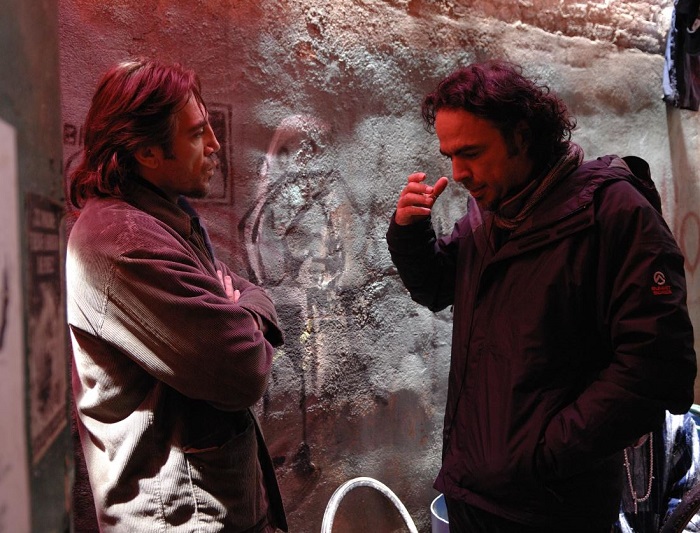
Cancer is but one of a torrent of catastrophes that Javier Bardem’s Uxbal – a hustler in Barcelona’s underground economy – must confront in the weeks leading up to his inevitable death. Uxbal also has the sole responsibility of looking after his two young children as he is separated from his bipolar, alcoholic and promiscuous wife, Marambra (Maricel Alvarez), who is meanwhile having an affair with Uxbal’s brother, Tito (Eduard Fernandez), a nightclub manager. Confronted with his impending death, he is determined to leave a legacy for his broken family.
“The subject matter was so heavy, and the shooting was so very long,” Iñárritu told FilmInk upon the release of the film. “I shot it chronologically too, which makes it very emotional. I was dealing with a lot of non-actors – I used real people that had never performed in their lives in this film. With all of that combined, the pain of the film began to impregnate us in such a heavy way.”
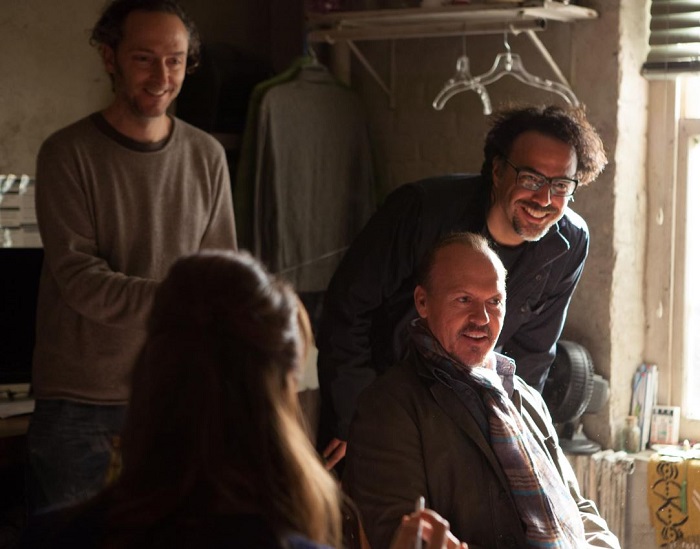
After the painful experience of making Biutiful (which garnered much acclaim and a slew of Oscar nominations), Iñárritu executed a major about-face with 2014’s Birdman (Or The Unexpected Virtue Of Ignorance), a black comedy and showbiz satire that not so much bites the hand that feeds, but tears it right off. It’s a brilliantly conceived and executed drama about an actor, Riggan Thomson (Michael Keaton), who became famous for playing Birdman, a Hollywood superhero, but since leaving the franchise has seen his career hit the skids. Now he’s trying to make a comeback, by staging a Raymond Carver play in New York, in a bid to feel relevant again. Oh, and did we mention that he believes that he’s developed superpowers – namely, telekinesis and levitation?
“After so many films, dramatic films, that have a lot of spicy Mexican chili, I wanted a little dessert,” Iñárritu grinned to FilmInk upon the film’s release. “I wanted to jump into something that I never knew could happen, which was to laugh on a set!”

Another critical darling and multiple Oscar winner, with gongs for Best Picture, Best Screenplay, Best Director and Best Cinematography, Birdman was rightly hailed for its technical achievements. Entirely set in and around the Broadway theatre where Riggan is staging his play, the scenes play out as a series of long, uninterrupted tracking shots, woven seamlessly together to give the illusion that the entire film is one long continuous take (a trick that Alfred Hitchcock pulled, albeit with less visual effects, in his murder tale, Rope).
On a normal film, a scene can be pieced together, beginning with a master-shot. But not on Birdman. “When you shoot, you cover yourself with different angles, and different takes,” Iñárritu told FilmInk. “Then in the editing room for months and months, you rationally hide your mistakes, and take the best, and manipulate the tone and the rhythm, even the genre. But in this case, nobody had the opportunity to hide or to transform or to manipulate. Everything that you see is absolutely true.”
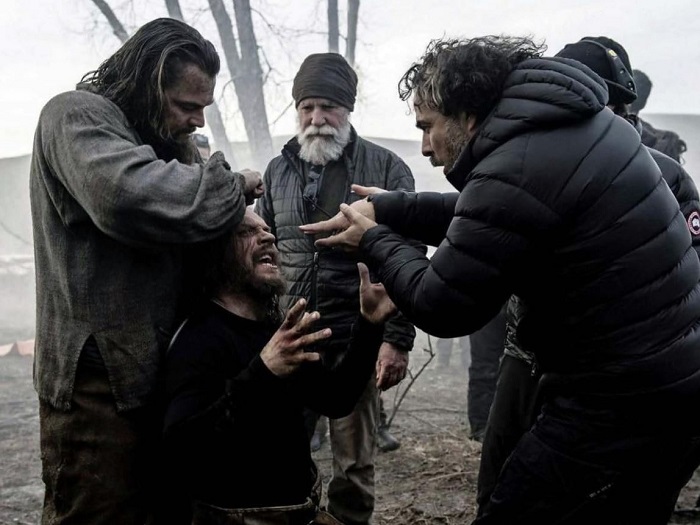
Obviously wanting to spread his cinematic wings after the singular and largely interior Birdman, Iñárritu went into the wild with 2015’s The Revenant, shooting almost entirely on location, and dragging forth a visually stunning but gruesomely primal tale of survival and revenge that recalls masters like Sam Peckinpah, Walter Hill, Werner Herzog, and Terrence Malick. In this mini-epic of dirt, grit, and blood, beauty and horror bash against each other at will, and the human spirit is revealed in all of its nobility and brutality. And at its centre is a group of actors who literally go to the bottom of the well to deliver a collection of highly committed, deeply felt performances that go beyond mere acting and push into something else altogether.
Working with limited dialogue, Leonardo DiCaprio wholly inhabits the character of Hugh Glass, an experienced wilderness tracker working as guide to a bedraggled crew of fur trappers plying their trade in The Rockies in the 1820s. After being mauled by a bear, the barely alive and practically mute Glass is then betrayed and left for dead by Tom Hardy’s trapper, John Fitzgerald, a revoltingly insensitive and avaricious misanthrope who rates as one of the most despicable villains to metaphorically twirl his moustache in years. His body battered and eviscerated, the determined and highly skilled Hugh Glass then begins a long and torturous journey back to what passes for civilisation, where he hopes to have a few angry words with the aforementioned John Fitzgerald…
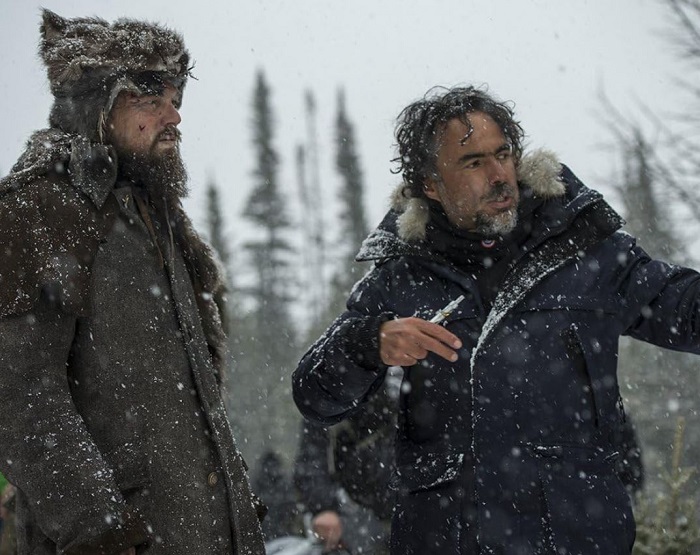
As a technical achievement, The Revenant is a work of art beyond compare. The images conjured by cinematographer, Emmanuel Lubezki, are painterly but horribly immediate, bathed in natural light and literally shimmering off the screen. The special effects are expertly woven through this visual tapestry, with the CGI blending in seamlessly with the natural surroundings, creating a sense of breathless realism. And while not previously a proponent of action cinema, Iñárritu crafted a number of staggering set pieces, with an early attack on the trappers by a Pawnee tribe rattling with a Saving Private Ryan-style mix of horror, confusion, and body-blasting violence.
After the gritty hyper-realism of The Revenant, which saw Iñárritu awarded his second Best Director Oscar, the filmmaker looked inward for his next film, 2022’s Bardo: False Chronicle Of A Handful Of Truths. An epic and surreal dramedy, Bardo follows Iñárritu’s alter-ego Silverio, a renowned Mexican journalist and documentary filmmaker living in Los Angeles, who, after being named the recipient of a prestigious international award, is compelled to return to his native country, unaware that this simple trip will push him to an existential crisis.
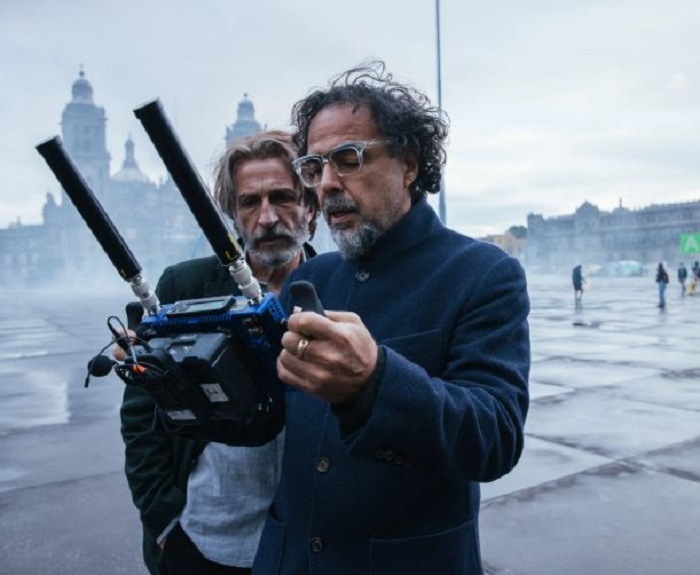
His first film to be shot in Mexico in the 22 years since the mighty Amores Perros, Iñárritu cast Mexican actor Daniel Gimenez Cacho as his alter-ego Silverio Gama, with Argentinian actress Griselda Siciliana playing his wife Lucia, and Iker Solano and Ximena Lamadrid as their son and daughter. With both pathos and laughter, Silverio grapples with universal, yet intimate questions about identity, success, mortality, the history of Mexico and the emotional familial bonds he shares with his family. Indeed, what it means to be human in these very peculiar times.
“Once it was all there, I got to fictionalise,” Iñárritu told FilmInk of the autobiographical nature of the film. “I was not interested in a biography, because my biography will be the most boring biography ever – because I don’t believe in biographies, I think they are lies. They are hypocrisies because we cannot claim that they happened that way; it’s the way I remember. In this way, I am trying to find a higher truth as a way to reveal what reality is hiding, so I fictionalised everything to understand it better. And then it was not me anymore. I created an alter ego character in a way for me to really put all those things through Silverio Gama, and I always saw him as Silverio Gama. I never was thinking, ‘Oh, this is me.’”
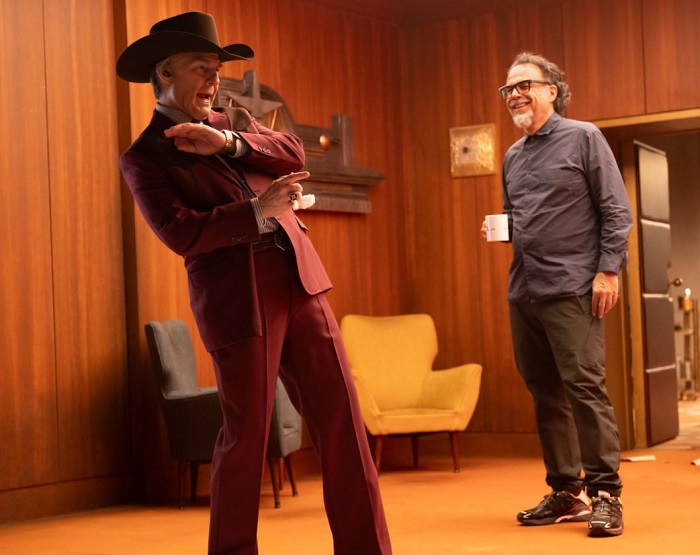
Though many of his films have certainly contained humour and provided laughs, Iñárritu has never really delivered a full-blown comedy…which now changes with his new release, Digger. A wild, broad satire on, well, just about everything, this bizarre detour for Iñárritu stars Tom Cruise as the most powerful man in the world…and the one man who may save or destroy the planet. The film looks to be something of a realisation of a dream for Iñárritu. Back on the release of Biutiful, the director told FilmInk that he would love to venture into the realm of comedy. He is a great admirer of The Coen Brothers (“They nail those kinds of smart, intelligent and dark things”), Christopher Guest (“His films, like Best In Show, are just genius”) and the best moments of Woody Allen. “The scary thing about comedy is that it is for masters,” he concedes, “but someday I would love to try to achieve that.”
With additional reporting by James Mottram, Gill Pringle & Erin Free
Digger is released on October 1.
