



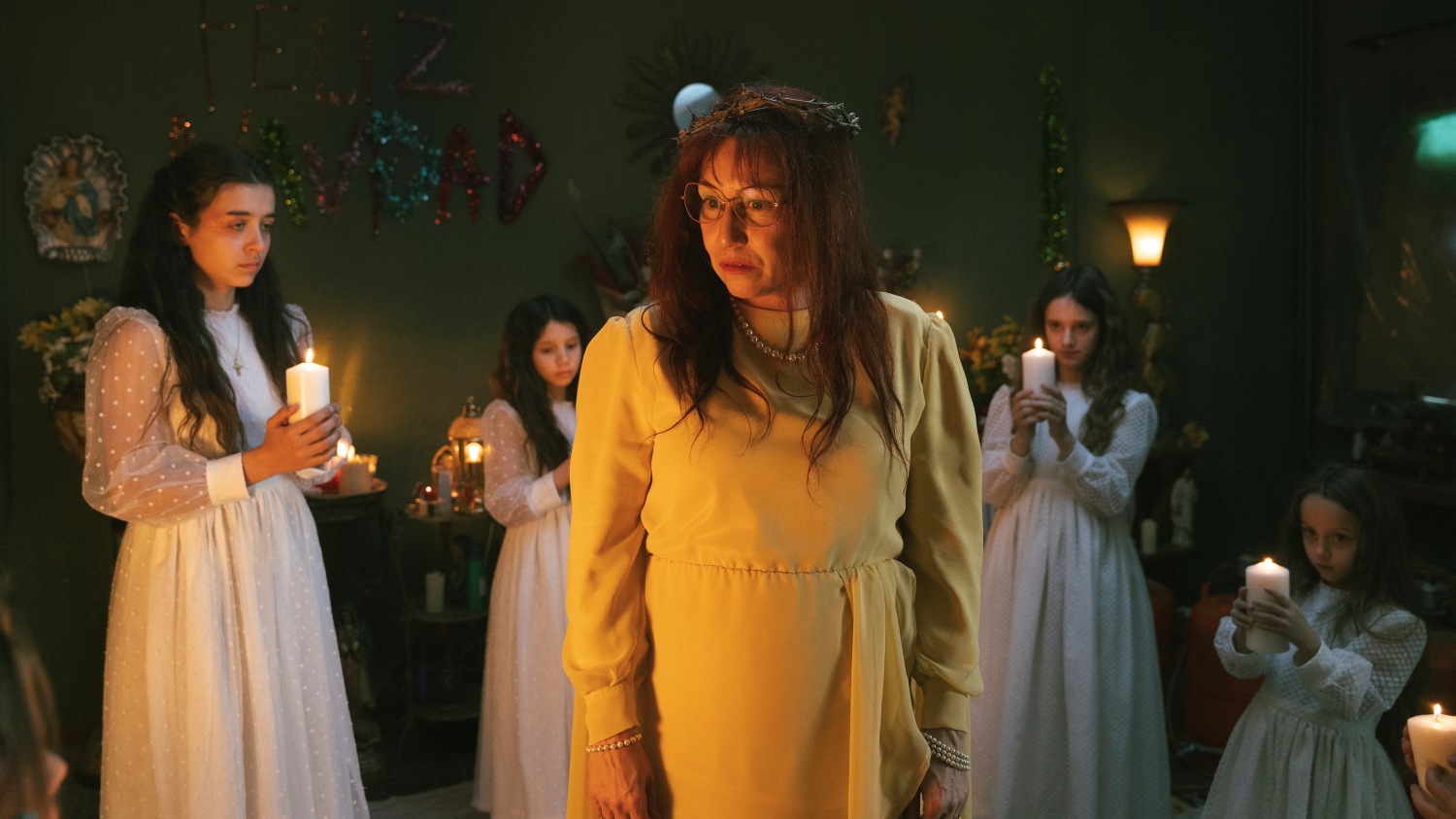
by Nataliia Serebriakova
La Mesías, created and directed by Javier Ambrossi and Javier Calvo, tells the story of Enric [below], who is deeply affected by a viral video of a Christian pop band made up of five sisters. What initially looks like an eccentric internet phenomenon gradually opens the door to a much darker story of family, religious fanaticism, childhood trauma and psychological control. As Enric tries to understand why the video affects him so profoundly, the series moves between past and present, revealing how the violence of a closed family system can continue to shape a person long after they have escaped it.

Creativity becomes both a symptom of confinement and a possible route out of it. Music, performance and imagination are not simply decorative elements: they become ways for the characters to process experiences that they cannot articulate directly.
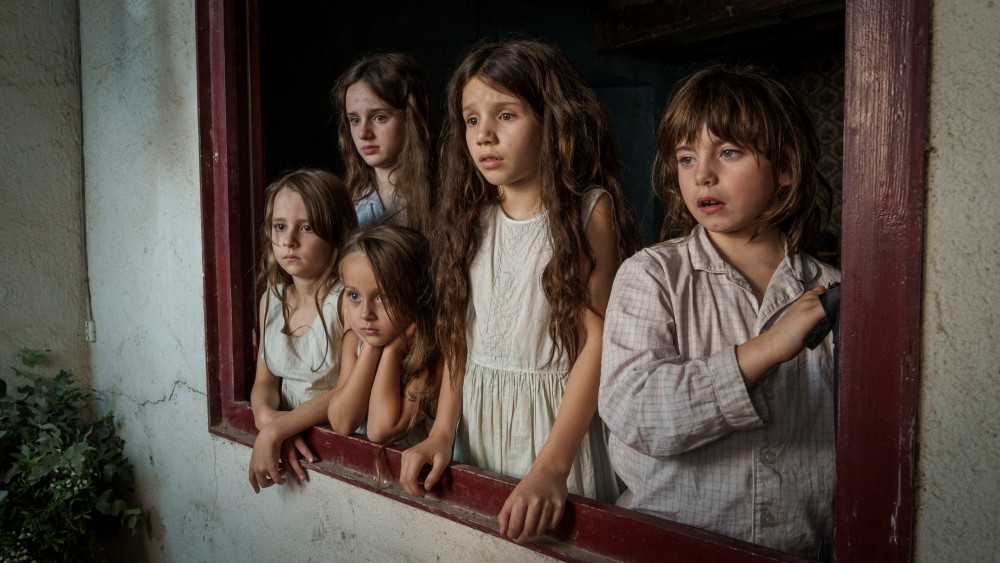
Ambrossi and Calvo [below, on set] wrote all the episodes and also directed and produced the series. That complete creative involvement made La Mesías particularly personal. The series became a major phenomenon in Spain and France and marked an important turning point in their careers, opening the way to a new stage of their work in cinema and television.

At its centre, La Mesías is concerned with the consequences of extremism — not only religious extremism, but the desire to impose a single worldview on another person. “It’s a story about the dangerous things, about being radical and about being extremist in every single aspect of your life,” says Javier Ambrossi.

“We wanted to create a show about the danger of totalitarianism and the danger of not being able to think by yourself and not being free and the importance of being free and really having the time to think and grow and understand life the way you have to understand and touch your soul. So, yes, it’s about the dangers of totalitarianism and radicalism. And me, in my personal case, I studied in a very, very, very religious school. But I’m not religious at all. So, I think it’s also a message of freedom.”
The family at the heart of the series functions as a miniature version of a much larger social structure. What makes the situation particularly disturbing is the vulnerability of children, who have no real possibility of stepping outside the system imposed on them. “IIt was a metaphor of society. Families are like micro universes of the world we live in. So we thought it would be cool to talk about that thing in a family where it’s even more dangerous because the kids are even more fragile,” says Javier Calvo.

This connection between private and political forms of power gives La Mesías much of its unsettling force. The series does not need an authoritarian state to explore authoritarianism: the family itself becomes a closed ideological world in which obedience is presented as love and control as protection. Music provides an important counterpoint to this darkness. The series is filled with songs that evoke the 1990s, creating an atmosphere that is at once nostalgic, absurd and deeply unsettling.
“We wanted to have that ’90s vibe where I think we all remember our mums dancing or on the radio in the car listening to those kinds of songs. It was that feeling. Music transports you to a time in your life and this kind of music, like we use music in scenes because they have this nostalgic component.”

For Calvo, the music also creates a necessary emotional contrast within a story that can become almost physically difficult to watch. “It’s a very dark show, so we wanted to give a sense of joy and, of course, mark the period that we’re talking about in each of the storylines. But we wanted to give this sense of a little bit of lightness. And music always helps you to really connect with different emotions because it’s very complex and at some points you cannot breathe watching the show.”
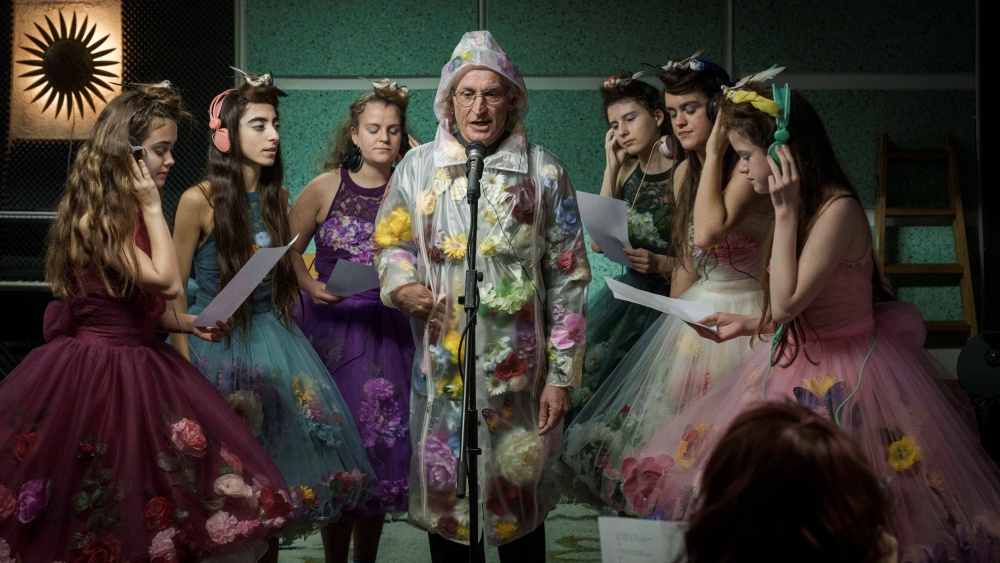
One of the series’ most memorable inventions is Stella Maris, the strange Christian pop band made up of the sisters. Their viral songs and deliberately awkward aesthetic make them feel both ridiculous and strangely convincing — exactly the kind of internet phenomenon that could become impossible to escape.
The filmmakers took inspiration from a real Spanish group of sisters who performed Christian pop songs, but then transformed that starting point through an unusually collaborative creative process. “There’s this group in Spain called Stella Maris that were also sisters that sang pop Christian songs and they became viral and we were inspired by them, but we hired these magicians. This group, they’re like magicians. They’re so weird, they’re so special. They’re called Hidrogenesse and we worked with them, and also hand in hand with our choreographer Belén [Martí Lluch], who is a genius, and with the visual artist Elena Rodríguez, we created this band.”

The visual identity of Stella Maris was just as important as the music. Costumes, choreography and casting all contributed to creating a group that had to be simultaneously believable and bizarre. “It was very important for us and it was a key to the show to have that kind of weird, viral, catchy band. Everything — the wardrobe, we really worked a lot designing with our wardrobe designer, Ana López [Cobos], all the dresses that are super cool. And we had a lot of auditions trying to find the perfect band because each one of them is so special.”
The fictional band eventually escaped the boundaries of the series itself. In Spain, Stella Maris became popular enough to perform live at Primavera Sound, while the songs were also released on vinyl.

Another of the series’ remarkable achievements is the work with its young actors. Rather than giving the children conventional scripts, Ambrossi and Calvo developed a different method that allowed their performances to remain spontaneous. “The script was written, but we never gave the little kids the script. So we rehearsed with them the things that happened before the scene and we filled their minds with imagination of the things that were leaving this family. So they could improvise and we could lead them to say the things we wanted them to say, but in a very natural and a spontaneous way.”
Javier Ambrossi and Javier Calvo [below, on set] also spent considerable time building relationships with the children before filming. The approach was designed to make them feel safe while giving them enough understanding of the story to respond naturally within each scene.
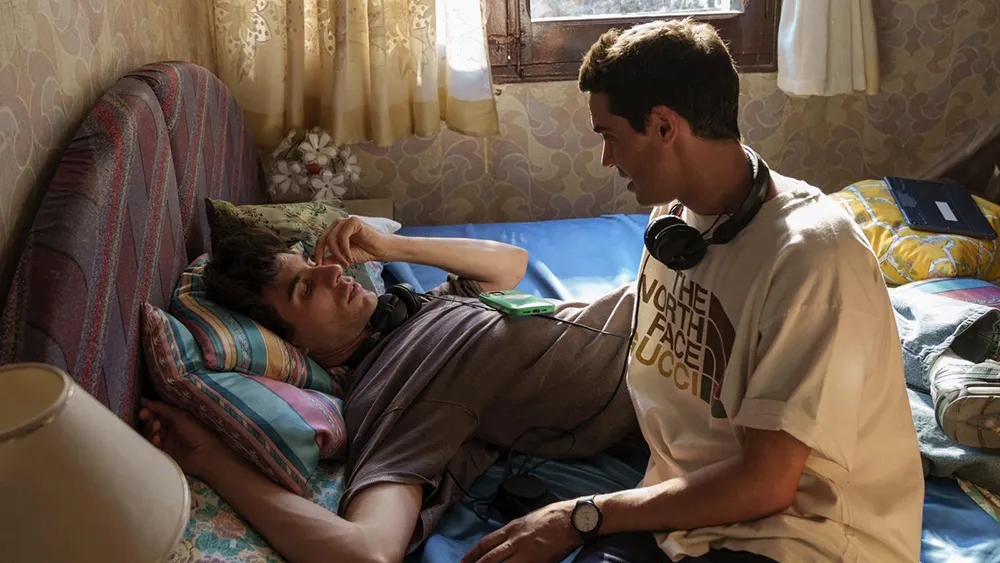
That becomes particularly important because La Mesías deals not only with religious control but with different forms of abuse, including sexual abuse and the way childhood trauma can remain buried beneath apparently inexplicable memories and behaviours.
“People will have to uncover the mystery of what the alien means during the show,” tease the filmmakers. “But yes, it’s all about all kinds of abuse. The show is about being abused in every sense. And all the characters, in a way, feel that they have been abused in different ways. Sexual harassment is one of them.”
The mother’s authoritarianism is therefore not presented simply as an expression of religious belief. Ambrossi and Calvo were interested in the psychological mechanisms through which a traumatised person can become an oppressor themselves. “One of my favourite movies is The Master and I was really interested in the main character, [played by] Philip Seymour Hoffman, and how Paul Thomas Anderson can tell the evolution of a future dictator and how a narcissist can grow into a very oppressive person. And we focused that in the character of the mother. How a narcissistic woman who has suffered a lot during her childhood can become someone like Monse. So it was, for us, a psychological study of how cult leaders end up being like that.”
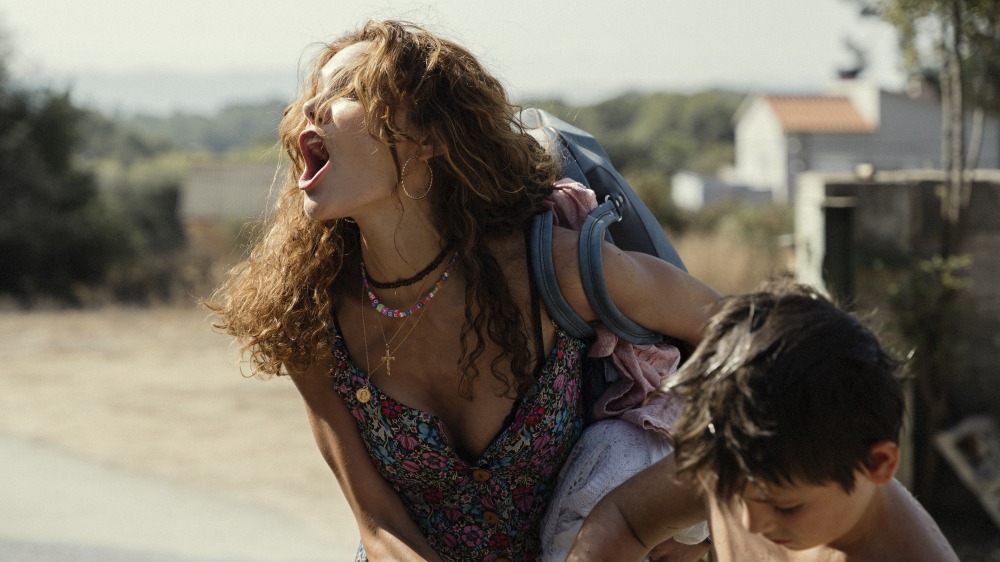
Despite the elaborate visual world of the series, almost everything was shot on real locations in Catalonia. “It was all real location, but the place where he dances and climbs the roof, the ceiling of the basement, was the only set.”
The visual distinction between past and present was also carefully constructed. The contemporary storyline was shot digitally, while the past was captured on 16mm film, giving the earlier period a tactile, imperfect quality. “We wanted to create something special, like a memory with a sense of a real memory, like with the texture of the past.”
Released in Spain and France in 2023, La Mesías arrived at a crucial moment in Ambrossi and Calvo’s careers. Their success in Cannes with their later film, La Bola Negra (releasing in Australian cinemas in October), confirmed the international attention that had begun with the series. They became only the third Spanish directors to receive the festival’s Best Director award, following Pedro Almodóvar and Luis Buñuel.
Yet, La Mesías remains an important key to understanding their artistic language: its mixture of melodrama, pop culture, horror, humour and visual excess is not simply stylistic experimentation. It reflects their interest in the complicated relationship between oppression and creativity, faith and fear, memory and identity.
Ultimately, the series is less interested in religion itself than in what happens when belief becomes a system that leaves no room for doubt. Its characters need to recover something more fundamental than faith: the right to think, to question, to grow and to construct an identity of their own.
For Ambrossi and Calvo, that is where freedom begins.
La Mesías is streaming now on MUBI
