



by Shahran Morshed
Worth: $18.00
FilmInk rates movies out of $20 — the score indicates the amount we believe a ticket to the movie to be worth
Venice Film Festival
Cast:
Missagh Zareh, Forouzan Jamshidnejad, Sadaf Asgari
Intro:
… never begs for our affection. It earns it quietly, scene by scene, until we leave with the feeling that perhaps there is still a little more light to be found, and a little more life to live.
Sometimes, a film reminds us of something we already know but have somehow stopped feeling. We know that life is difficult, that the world can be cruel, that the future can become impossible to imagine. We know all this, yet we continue to live, often without quite understanding what keeps us going. Ali Asgari’s A Bit of Light, which premiered at the Venice Film Festival, brings us close to this contradiction. It is another surprising beauty from a filmmaker who has never needed to make a great show of his abilities. There is something wonderfully simple about his cinema, something that draws us in before we even realise why we are watching so attentively. He remains entirely himself here, but there is still something new to discover.
Arash, a doctor in Tehran, has reached a point where he no longer wishes to live. After treating protesters injured during demonstrations, he is arrested and loses his medical practice. His work, which once gave his life purpose, is taken away from him. He decides to end his life and spends what he believes will be his final day visiting his mother and siblings. He wants to prepare them for his absence, though it is difficult to know how one prepares the people one loves for such a thing. As he moves between them, the day fills with conversations, interruptions and the small business of being together. Arash has made up his mind, but the world around him has not stopped living.
There’s a lot to love about Asgari’s filmmaking, especially his ability to make us stay with people without constantly giving us a reason to do so. He doesn’t rush towards the dramatic moment or insist that we feel something at every turn. He lets conversations unfold, allows silences to remain, and pays attention to the awkwardness that often accompanies affection. People rarely know exactly what to say to one another, especially when something important is at stake. They talk about other things, become distracted, laugh at something unexpected. Life continues in these seemingly unimportant moments, and Asgari knows how much they can hold. His simplicity is not a lack of ambition. It is a way of looking at the world, and A Bit of Light shows just how much he can find by looking carefully.
Arash’s despair has a history. His personal crisis is inseparable from the political circumstances that have taken away his ability to practise medicine and damaged his sense of belonging in the world. Asgari does not need to turn every scene into an argument about Iran. The politics are already there, in the life that Arash can no longer lead, in the uncertainty surrounding him, and in the difficulty of imagining a future. What makes the film moving is that it never reduces him to a victim of these circumstances. He remains a son, a brother, a doctor, a person whose life has meant something to other people even when he can no longer see its meaning for himself.
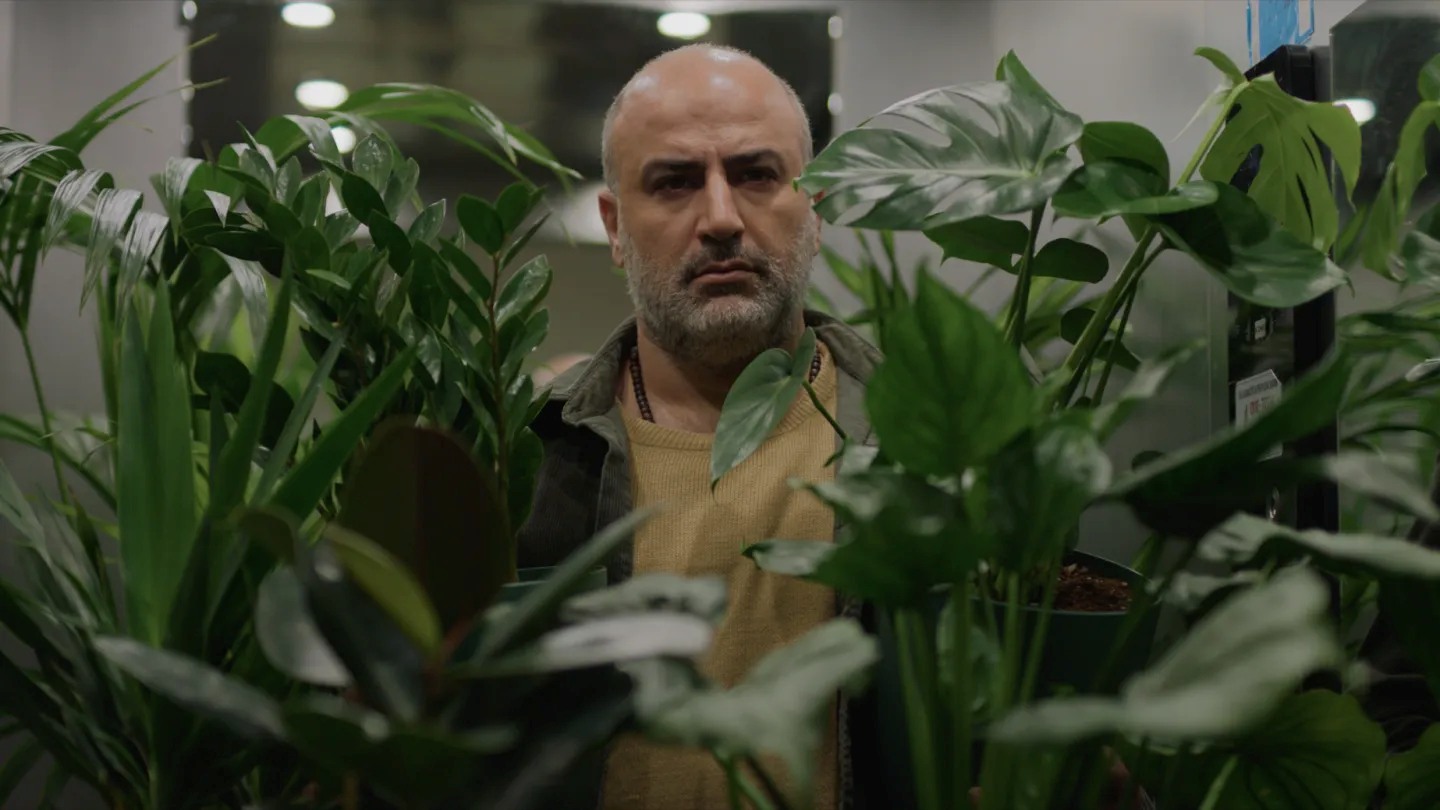
Missagh Zareh gives a deeply affecting performance as Arash. He carries his exhaustion quietly, without making the character’s suffering a spectacle. We sense how much he has withdrawn from the world, but we also see him moving through familiar spaces, encountering people with whom he shares a history. There is something painful about watching a man prepare to leave a world that continues to offer him these small, ordinary encounters. His family cannot magically repair what has happened to him, and the film never pretends that love can undo political violence. But being with them means being reminded, however briefly, of a life that extends beyond his despair.
This is perhaps the most beautiful thing about A Bit of Light. It does not offer hope as a grand revelation, nor does it suggest that a difficult life can be made simple by looking at things differently. The problems remain. The future is uncertain. What changes is our attention. We begin to notice the things that despair makes difficult to see: the presence of another person, the comfort of a familiar voice, the unexpected pleasure of an ordinary conversation. None of these things is extraordinary on its own. Together, they make up the life we so often struggle to appreciate while we are living it.
Asgari isn’t interested in giving us a reason to be optimistic. His film is too honest for that. What it does, instead, is make life feel a little closer to us. It reminds us that even when the world becomes unbearable, there are moments worth staying for, though we may not recognise them as such at the time. A bit of light might not change the darkness surrounding us, but it can change what we see within it.
Asgari has made a film that leaves us loving life a little more. Not in any grand or sentimental sense, but in the simplest way: with a renewed appreciation for the people around us and the time we still have with them. He makes cinema so naturally that it would be easy to overlook how difficult it is to achieve. A Bit of Light never begs for our affection. It earns it quietly, scene by scene, until we leave with the feeling that perhaps there is still a little more light to be found, and a little more life to live.
