



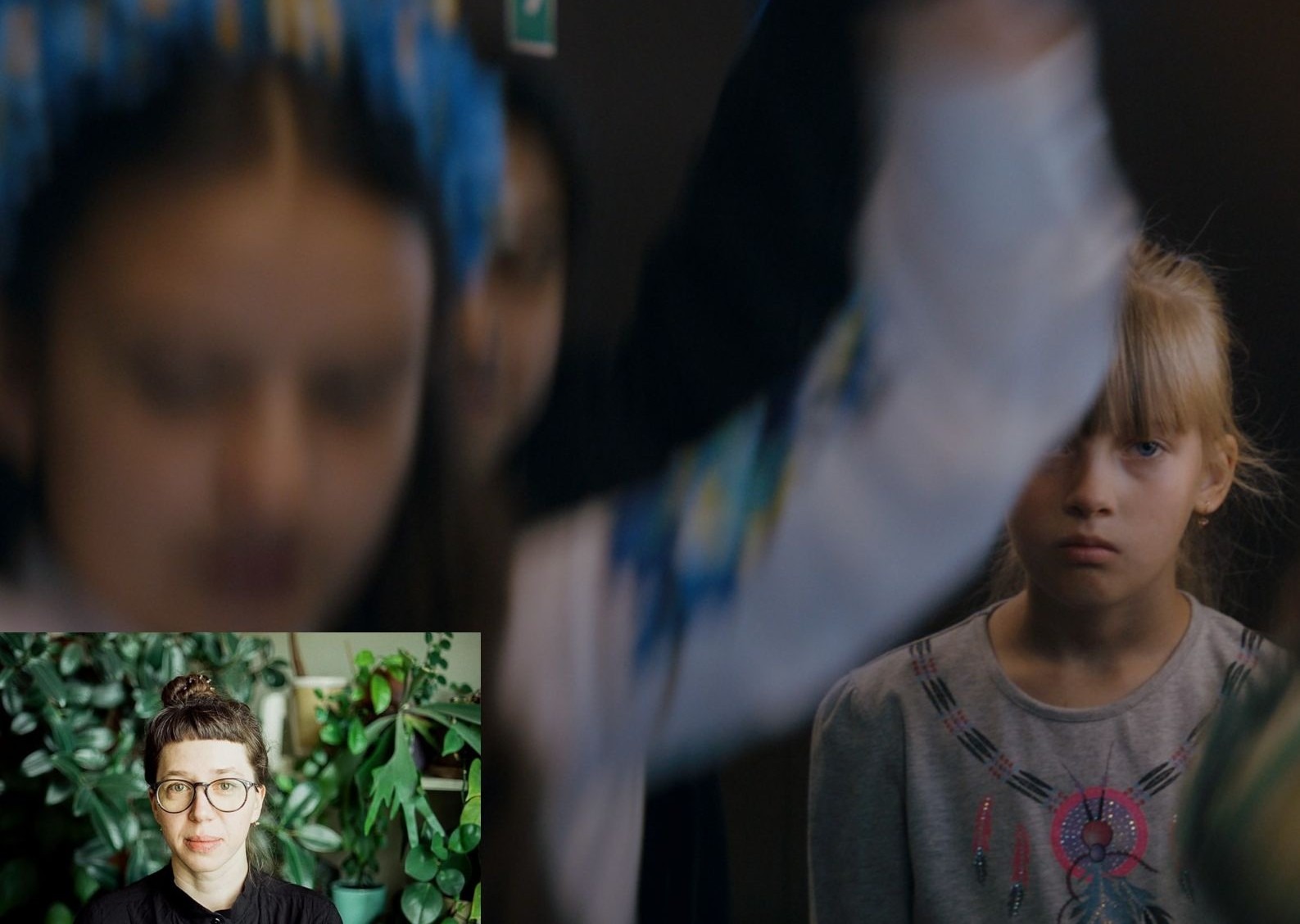
by Nataliia Serebriakova
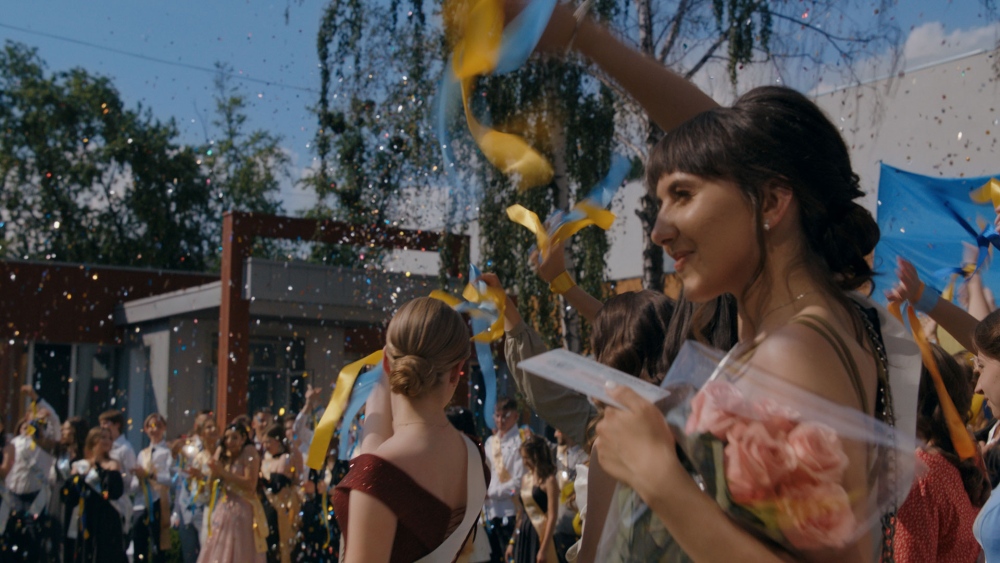
When Katerina Gornostai’s documentary Timestamp premiered in the main competition of Berlinale in 2025, it stood out not through spectacle but through its quiet, almost stubborn attention to everyday life. The film looks at Ukrainian schools during the full-scale war—capturing classrooms, rituals, and fleeting moments of normalcy that continue to exist alongside destruction. It is one of the first Ukrainian films of this kind made during the invasion, refusing dramatisation in favour of presence.
Speaking from Kyiv, Gornostai describes a process shaped as much by chance as by intention, and a belief that documenting reality is itself a necessary act.
 How the film began: “This came from the teachers themselves”
“This came from the initiative of educators,” Gornostai explains. The project originated with the Ukrainian educational organisation Osvitoria, which, after the start of the full-scale invasion, began collecting stories about teachers and schools. Initially, these were written accounts, but eventually the team realised that “it was worth showing these stories through video.”
Producer Olga Bregman brought the project to Gornostai, and the director immediately felt a connection. “For us, it’s a natural environment. We understand how everything works there,” she says, referring to her previous experience filming in schools on Stop-Zemlia. From the beginning, however, she wanted to avoid retrospective storytelling: “In 2023, returning again to February 24, 2022 felt forced.” Instead, the focus shifted to the present — what school life looks like now.
Choosing observation: “We realised interviews don’t work here”
The film’s form emerged through trial. “We did some test shooting days just to see what was happening,” Gornostai recalls. Very quickly, the team understood that the material demanded a different approach: “We immediately realised that we wanted to make observational cinema.”
Attempts to include interviews were short-lived. “After the first recording, we understood that this format doesn’t work in our film.” What remained was a commitment to observation — capturing not only teachers, but “school life in general.”
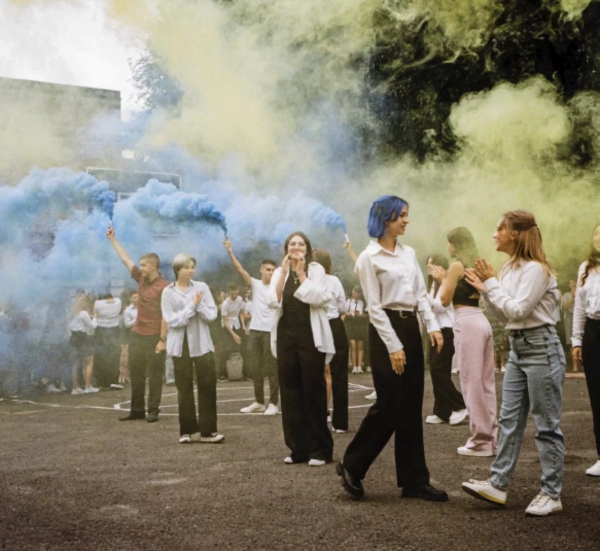
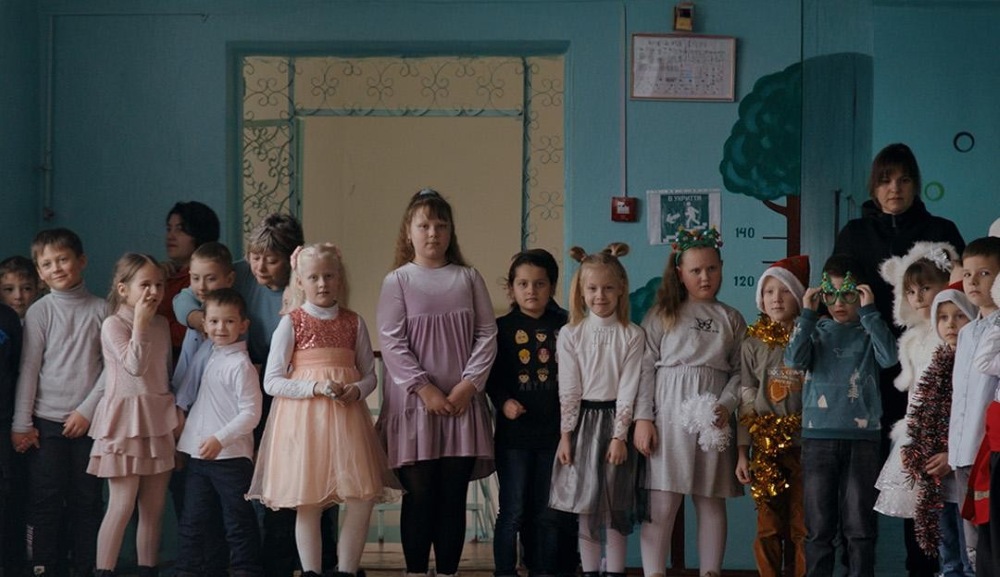
At the same time, the director structured the film around key points in the academic year: “September 1st, New Year,” and newly established rituals such as February 24th commemorations. One of the most striking elements is the daily minute of silence: “Many schools now have a tradition — every morning at 9:00, to honour the fallen. It becomes a ritual.”
War and routine: “This cannot be called normality”
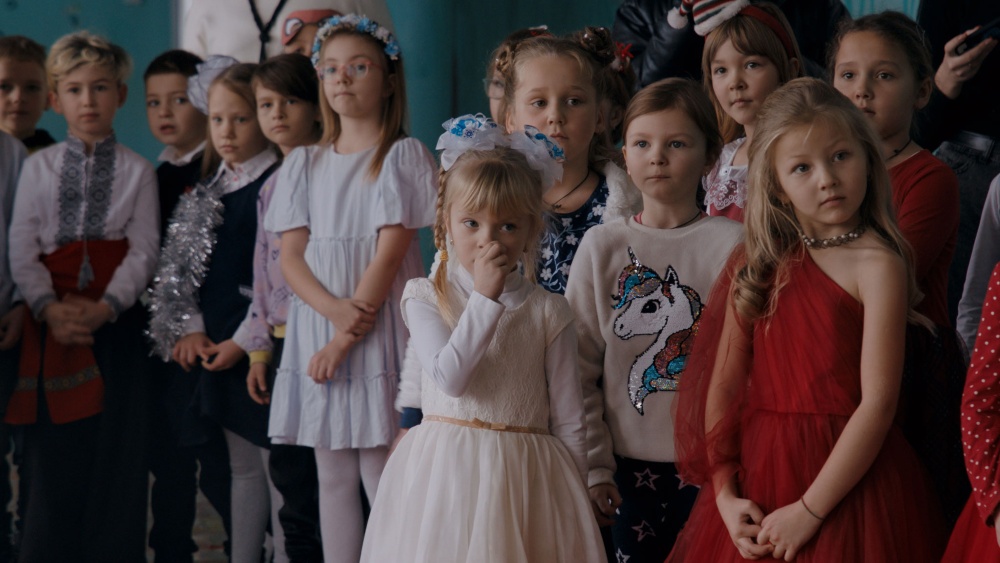
Although schools have adapted, Gornostai is careful with language: “They have gotten used to this new reality, although it cannot be called normality.” The film captures this tension between continuity and rupture.
There are also stories shaped by distance and absence. “We explored the impact of online education,” she says, describing teachers working remotely. One example stayed with her: “A chemistry teacher comes to an empty classroom and demonstrates experiments via Zoom.”
The accumulation of footage exceeded expectations. “We filmed not only what we planned, but also important unexpected moments,” she notes. “In documentary filmmaking, reality always opens up deeper than you expect.”
On filming young people: “They are simply interesting to me”
Gornostai’s focus on adolescents is not accidental, though she resists over-intellectualising it. “I don’t know, I just like them,” she says. Initially, it began almost as a joke about debut films often being coming-of-age stories, but over time it became a genuine interest.
“I realised that this theme is really important to me,” she reflects, adding that her future projects may follow characters as they grow older. At the same time, she acknowledges the limits of perspective: “With each year, I feel more how I move away from that time when I was a teenager.”
Moments of emotion: “It’s not only about grief”
Some of the film’s most powerful scenes emerged unexpectedly. One such moment involves a girl seeing a portrait of her father who died in the war. “We didn’t expect that,” Gornostai admits.
The decision to include it was not only about documenting loss. “It’s not only about grief,” she explains. “There was also something about children’s psychological flexibility — the ability to live with this pain.”
She connects this to a broader emotional experience: “Sometimes, a small thing triggers a wave — tears — and only after letting them out can you continue living.”
Silence and avoidance: “Not a single child said a word”
One of the most striking observations during filming was not what children said, but what they didn’t. After heavy nighttime shelling, Gornostai expected reactions the next day. “Not a single child said a word about it,” she recalls.
A similar absence appeared in a classroom birthday scene: “There were wishes about everything — going to Mars, friends, fun — but nothing about peace, about the war.” For the director, this silence was surprising.
She links it to a conscious strategy in some schools: “There was a clear position — not to talk to children about the war, because it could retraumatise them.” Gornostai is not entirely convinced that this is the best approach: “These things need to be lived through, not buried.”
Different schools, different realities: “War is not a taboo everywhere”
At the same time, she encountered the opposite. “There are schools where they actively reflect on this reality,” she says. In such places, students engage directly — volunteering, fundraising, discussing events openly.
“War is not a taboo there,” Gornostai notes. “It is discussed, lived through.”
This contrast becomes central to the film’s structure: rather than offering a single narrative, it presents a range of responses to the same reality.
Life alongside war: “Even silence speaks about it”
One of the most revealing moments came during filming in Cherkasy, shortly after the destruction of the Kakhovka dam. Gornostai expected the subject to dominate conversation. It didn’t.
“They talked about dresses, graduation, teachers,” she says. “Not a word about it.” At first, she considered intervening, but stopped herself: “Why? They are talking about today, about themselves, about life.”
This realisation became key: “Even scenes without war are also about war.” The absence itself carries meaning. “Even silence about it is eloquent.”
Cinema as resistance: “We are creating narratives”
For Gornostai, documentary filmmaking is inseparable from responsibility. “We live in a moment when history is being formed,” she says. “Our task is to create as many quality narratives as possible.”
This is not only for future generations, but for the present. “In Russia, a narrative is also being created — but distorted.” Against this, she insists on another approach: “We must counter with truth, dignity, and quality.”
She points to contemporary examples where documentary already shapes memory. When people recall Mariupol, she says, they will turn to films that bear witness — not propaganda.
“It’s important to anchor truth in culture”
Ultimately, Gornostai sees her work as part of a larger cultural process. “It’s important to anchor truth in culture,” she states.
Because what is being filmed now is not just cinema. “These films are not just films — they are history that will remain.”
Timestamp is screening at the Ukrainian Film Festival in Sydney, Melbourne and Perth
