


by Dov Kornits
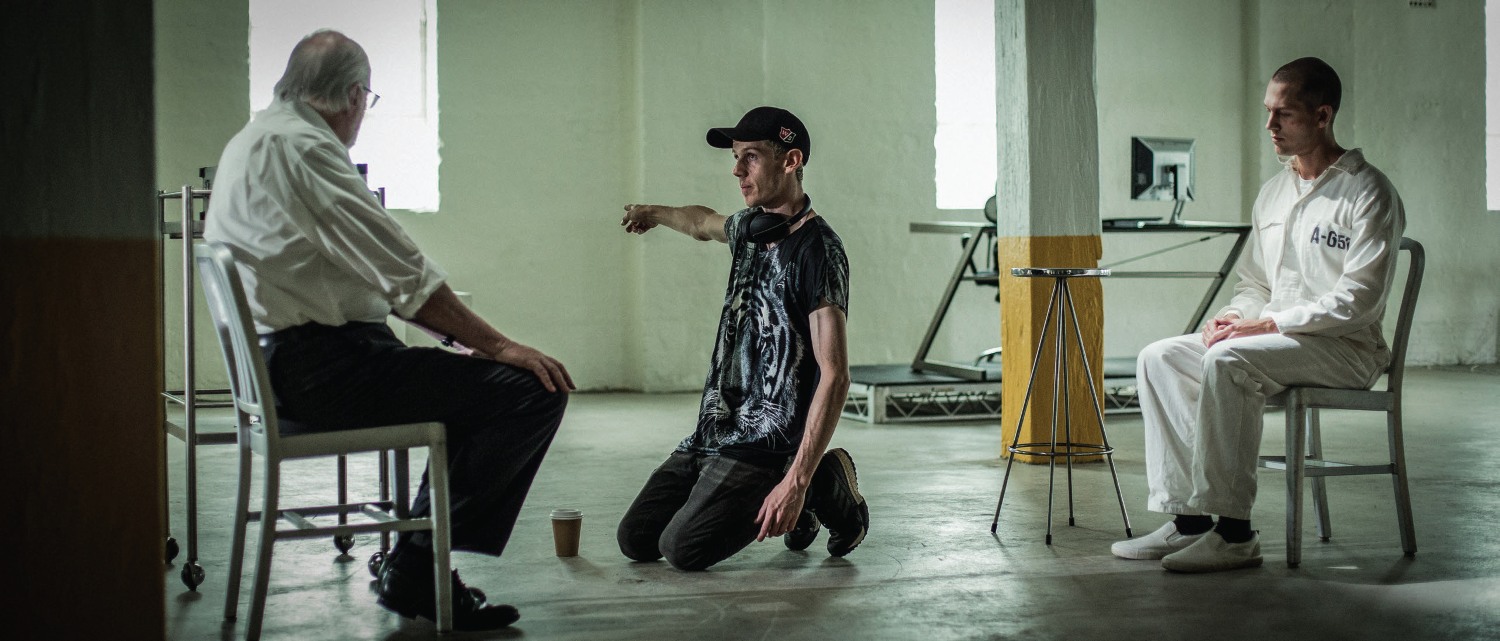
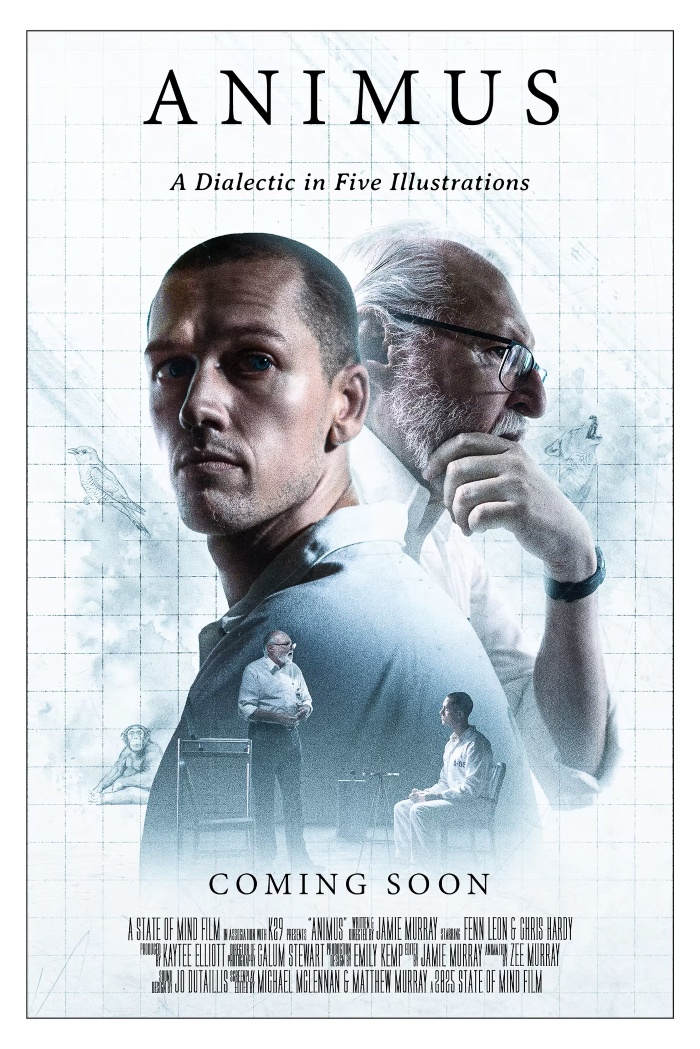
“I don’t think the film became more relevant. I think reality became more recognisable,” says Sydney filmmaker Jamie Murray, with Animus recently screening at the Revelation Perth International Film Festival, and nominated for Best Australian short at AFIN International Film Festival in Brisbane. “Editing Animus over five years meant watching history reshape the landscape around it. I began writing at a time when environmental collapse seemed like the defining crisis. Then came the pandemic, war, artificial intelligence, economic uncertainty and an increasingly fractured sense of reality. The world became stranger than I had anticipated.
“The film didn’t suddenly become prophetic. If anything, it became less speculative and more observational. Scenes I had approached intellectually began to feel uncomfortably familiar as a new culture emerged from the social fragmentation happening outside of my edit suite.
Human beings haven’t evolved nearly as quickly as the tools we’ve built. We still carry ancient instincts into an increasingly artificial world. That tension sits at the heart of Animus, and I suspect it’ll remain relevant long after today’s headlines have disappeared.”
 Why 5 years to complete the film?
“The short answer is post-production. Principal photography lasted four days. The next four years were spent testing every idea against the film until only the strongest survived.
“Animus was always intended to be a chimera — a collision of in-camera performance, hand-drawn animation and archival footage. Each medium carried its own language, and learning to speak them became part of making the film. A time-consuming discipline. What began as post-production became an extended experiment.
“Working independently meant there was no clean separation between writing, directing, editing, producing or promoting. The film slowly occupied every part of my life. After everyone else had finished their contribution, I was still in conversation with it—dismantling the cut, rebuilding it, trying ideas that failed, learning new techniques, killing many of my darlings, and refining the ones that endured.
“Looking back, I’m grateful for the years it took. Constraint forced invention. Scarcity sharpened intuition. Whatever singular voice Animus possesses was forged less by planning than by persistence—the willingness to pull the work apart, refine what endured, and keep cutting until it no longer needed me.”
You use some AI in the film, which is actually in theme with the film’s thesis, it could be argued. What are your thoughts on its use in filmmaking?
“I find the conversation around AI strangely absolutist. It’s either presented as the end of art or the future of everything. I don’t believe either.
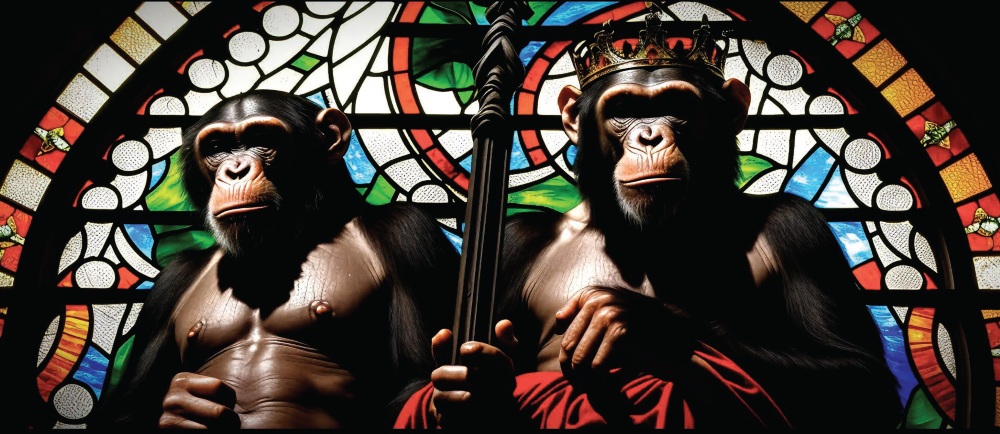
“We used AI very selectively because its artificial quality served the ideas of the film. It wasn’t there to replace creativity—it was there to become part of the argument. In that sense, the medium reflects the message. When I started tinkering with AI as another colour on my palate, it was seen as an exciting new tool. By the time the film was released, it had become a dirty word.
“Technology has always changed cinema. Sound, colour, digital cameras, CGI—they were all treated as existential threats at one point. AI is no different. The real danger isn’t the tool. It’s the temptation to let convenience replace curiosity. A machine can generate images, but it can’t take responsibility for what those images mean. That remains the filmmaker’s job.
Yet it is very possible that in the not-too-distant future, works of art will be made entirely by AI, tailored to the consumer’s taste. They will be objectively good, and this will not be seen as a moral dilemma. People often speak about AI art as though the danger is that it will become too human. I find the opposite more disturbing: it reveals how machinic humans already are.”
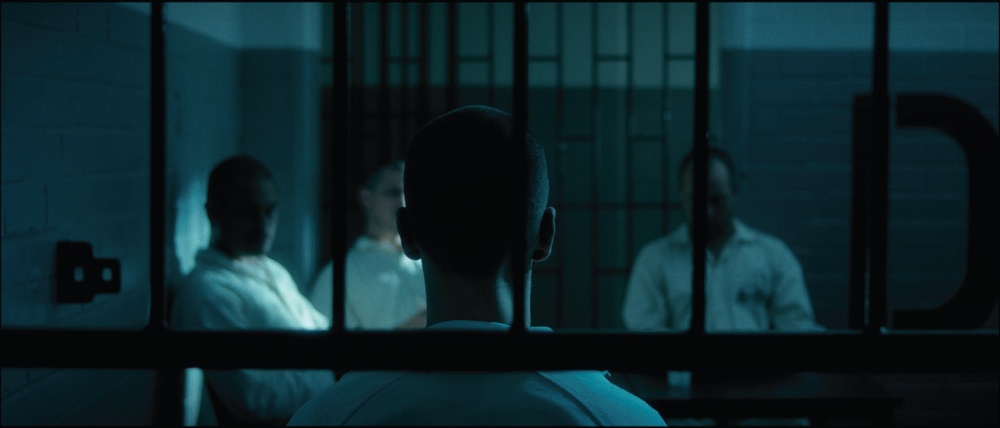
Any particular influences on the film, both cinematic and otherwise?
“There are certainly filmmakers I admire, but I try not to think in terms of influence so much as conversation. I watched Burden of Dreams just a few nights before we began shooting, and Herzog’s relentless pursuit of an impossible vision was quietly reassuring. It reminded me that filmmaking isn’t meant to be comfortable. It’s an endurance test as much as a creative one. Von Trier’s The House That Jack Built was another important touchstone, particularly its use of illustrations and archival material to step outside the immediate narrative and into a more philosophical register.
“Outside cinema, I found myself returning to philosophers and scientists wrestling with the same question from different directions: what, if anything, separates human beings from the rest of the animal kingdom? Hobbes’ Leviathan argues that beneath civilisation lies a perpetual struggle, and that order exists only because we collectively impose it against our natural instincts. Hume’s is–ought problem challenged that; his rejection of the naturalistic fallacy – this idea that we cannot simply derive moral truths from the way nature happens to be. Then Frans de Waal’s work on primates complicated the picture even further, suggesting that empathy, reciprocity and even rudimentary justice aren’t uniquely human after all.
Animus lives somewhere in the uneasy space between those ideas: between civilisation as a fragile dam against chaos, and the possibility that the qualities we call ‘human’ were never exclusively ours to begin with. More than anything, I wanted Animus to feel like an inquiry rather than a verdict. I’m less interested in telling audiences what to think than in inviting them to inhabit uncertainty. I think the most rewarding films don’t resolve difficult questions—they leave them echoing long after the screen has gone dark.”
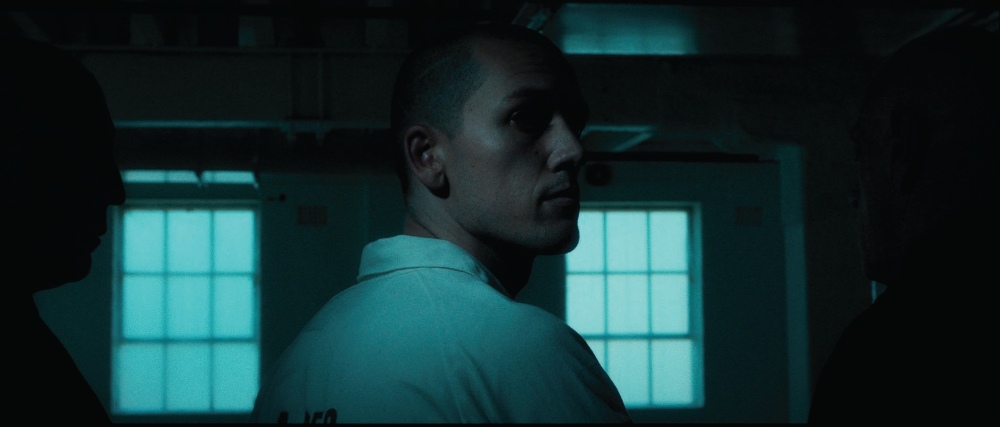
It’s quite a long short. Is it a proof of concept for something bigger?
“Animus was never conceived as a proof of concept. It was conceived as a complete work. I think we’ve become too comfortable treating short films as business cards for features, and I don’t believe a work should be made merely to advertise the next one. Every film should justify its own existence, and a work of art shouldn’t ask for permission to exist.
“That being said though, during the process I realised these ideas could live beyond a single story. I began imagining an anthology—self-contained films connected not by characters, but by a shared philosophical current. Something in the vein of Black Mirror but more interested in enduring questions than speculative futures. Whether I will return to that idea, I don’t yet know.
“For now, Animus forms the middle chapter of a loose triptych that began with my first film Nangana and my next one, Carcharodon.
They’re different films on the surface, but they’re all circling the same mystery: the uneasy boundary between civilisation and the animal that still resides beneath it. They are all studies of competing worldviews colliding under pressure – that’s the landscape I find myself returning to. For me, filmmaking isn’t about arriving at conclusions. It’s about returning to the same mystery with slightly better questions.”
Animus screens at AFIN International Film Festival on 16 September at Dendy Portside
