



by Stephen Vagg
Hollywood’s done some random takes on Australian history over the years – from the horny soldiers on leave of Abroad with Two Yanks to the antics of Kangaroo Jack. But we don’t think anything’s quite as odd as 1934’s Stingaree.
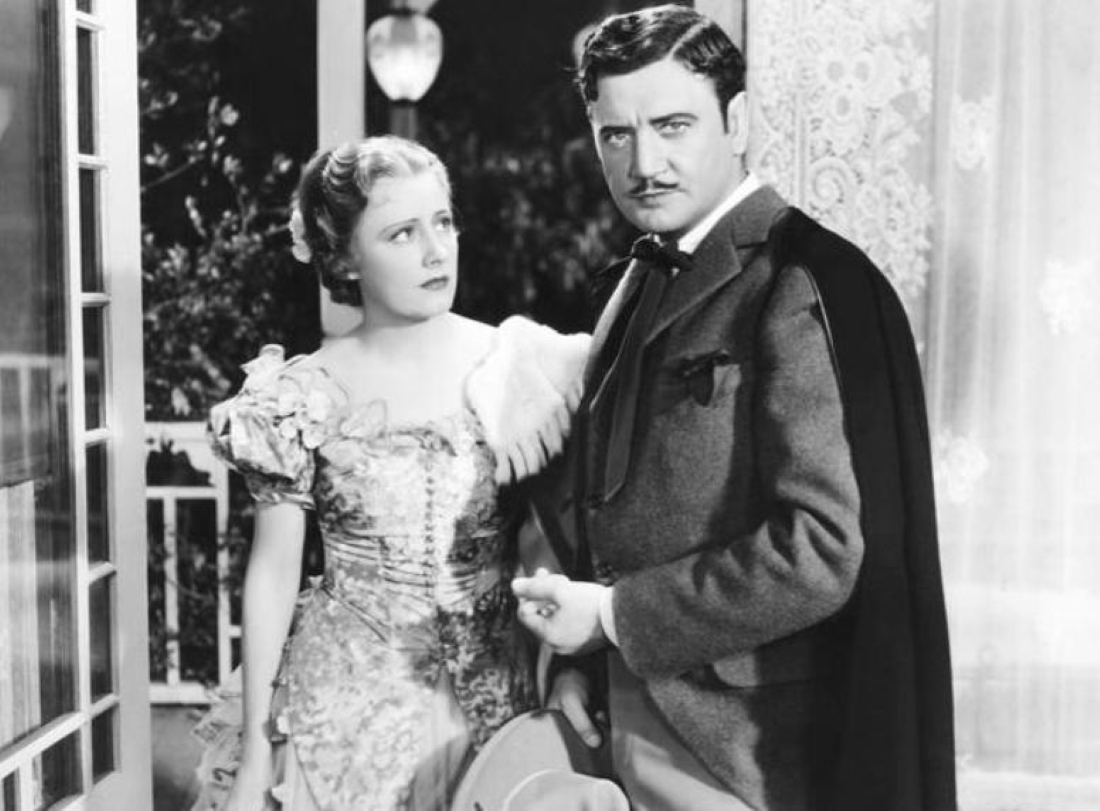
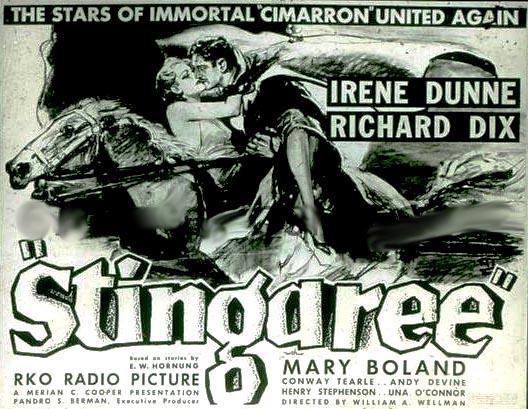
This movie was forgotten for a long time, despite some famous names in the credits: it was directed by William Wellman (Wings, The Ox-Bow Incident) and starred Irene Dunne (The Awful Truth, My Favorite Wife) and Richard Dix (The Whistler). And its source material was, at one stage, quite well known: Stingaree, the gentleman bushranger in a series of short stories by E. W. Hornung.
Hornung was a British author, brother-in-law of Arthur Conan Doyle, and famed for his short stories about the gentleman thief, Raffles; Stingaree was one of his less popular franchises, though still admired. You can read some of the stories here.
The character of Stingaree was a little like Raffles – a criminal, but one with a code of honour, who only robbed the rich Robin Hood-style, etc, etc. The Stingaree stories were turned into a play, as well as film serials in 1915 and 1917 (apparently the serials ran for years in South America).
In the early 1930s, film rights wound up at RKO, then under Merian C. Cooper, maker of King Kong, and a fan of adventures in out-of-the-way places; presumably, the Hornung name helped as there had been a popular Raffles film in 1930 with Ronald Colman.
Cooper thought Stingaree might make an ideal vehicle for the team of Irene Dunne and Richard Dix, who had just appeared in RKO’s Oscar-winning 1931 Western Cimarron. Another factor may have been the box-office success of RKO’s 1929 musical Western Rio Rita. Stingaree had scope for action, drama and singing (Dunne is best remembered for her comedies but was a top singer).
The job of producing Stingaree went to David Lewis, who wrote in his memoirs that he didn’t really like the Hornung stories and couldn’t understand why William Wellman agreed to make it. (A possible reason – Wellman’s ex-wife sued him for more alimony around the time of the shoot and he needed the money.) Lewis said Dunne mostly agreed to appear in the film to get rid of a commitment to RKO, and that he went through various different writers to get a screenplay that worked, and Cooper left RKO before the shoot and was replaced by Pandro Berman. So basically, none of the key creatives on Stingaree wanted to be there. These things happen.
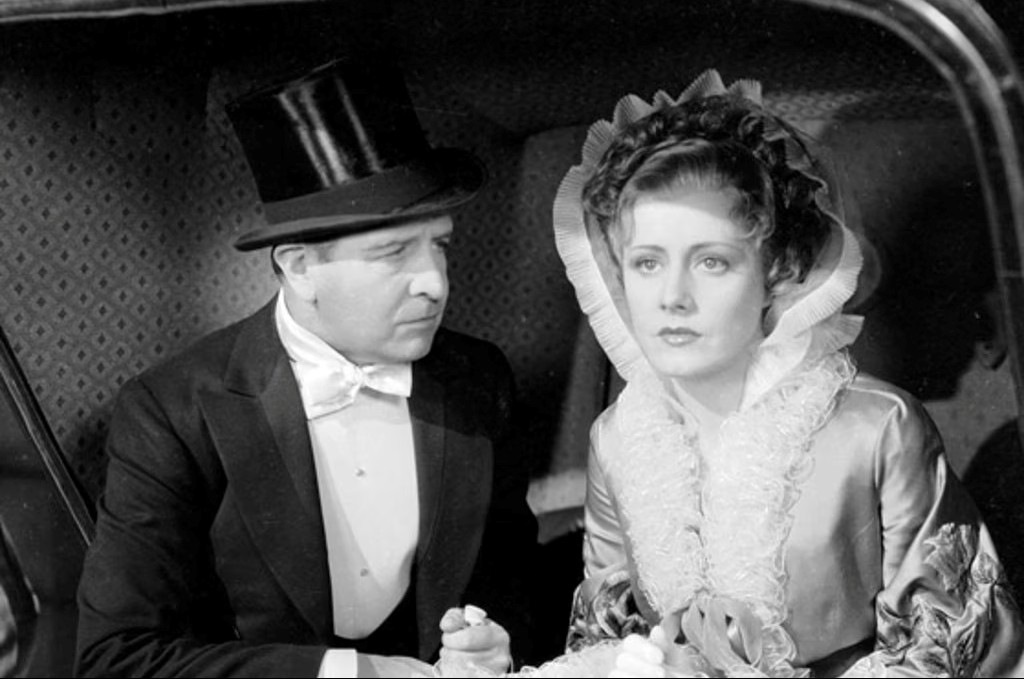
The film is set in 1874 and involves bushranger Stingaree (Richard Dix) becoming infatuated by maid Hilda (Irene Dunne), who wants to be a singer. They fall in love, despite/because of him abducting her, and Stingaree helps Hilda become a singing star. He gets arrested, she becomes famous in Europe, she returns to Melbourne, he breaks out of prison, they’re reunited and they gallop off together.
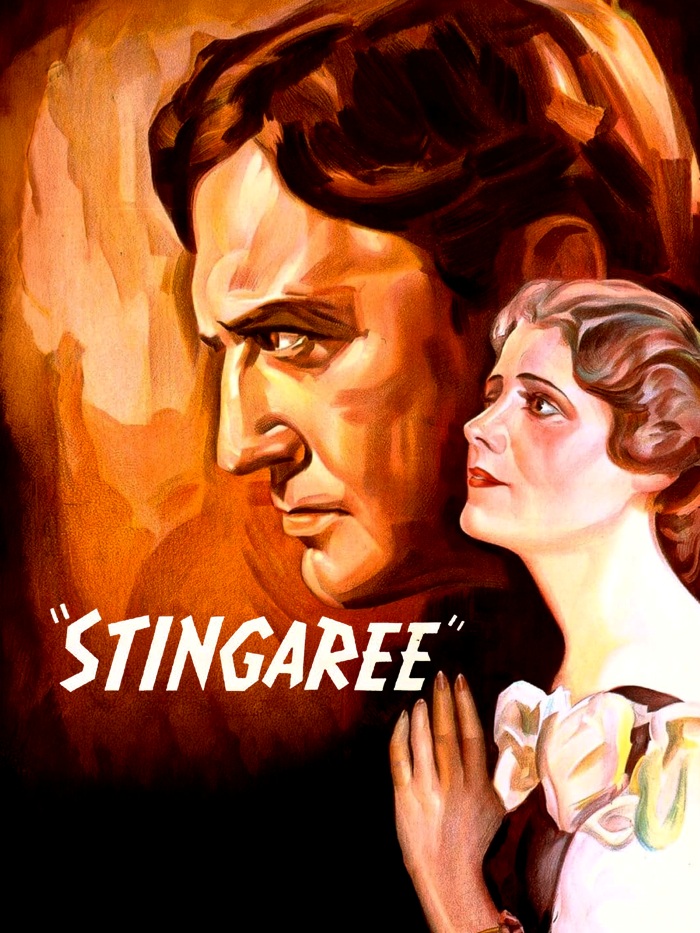 The main problem with Stingaree is that it feels torn between two genres – action/romance and musical. It’s as if RKO cross pollinated Cimarron with Rio Rita and Stingaree was the baby. An action-and-romance-oriented Stingaree could have been terrific – you had all the material (sexy bad boy hero, robbing from rich to help poor, good girl who’s a secret rebel) and Wellman was terrific at action (Beau Geste, Call of the Wild). Likewise, an action-orientated musical could have worked; they were all the rage at the time (Rio Rita, Rose Marie, The Desert Song), Irene Dunne was a fantastic talent, they could have dubbed Richard Dix.
But the final result is neither fish nor fowl. There’s a bit of action but not enough. There is a lot of singing but the numbers are all just shoved in there naturalistically instead of memorably, the songs don’t progress the story and/or relationships, and the male lead doesn’t sing.
Wellman’s heart is clearly not in it – according to Lewis, the director considered the movie his worst. It is dimly lit with low ceilings, although production values are high – RKO didn’t stint.
From a drama point of view, the film suffers from not having a villain. Hilda/Dunne does have someone in love with her, but instead of making him a cad, he’s just stuffy. We keep waiting for Stingaree to rob someone really bad (a Prince John/Sheriff of Nottingham to his Robin Hood) and/or help the poor, but he doesn’t really. Lewis whinged in his memoirs about the screenwriters, but anyone with half a story brain would know that the movie needed a villain.
(Aside: David Lewis is a fascinating character. Best known for being the romantic partner of director James Whale for a long time, he is credited as a producer on a number of classic films such as Dark Victory and King’s Row. However, he seems to have been one of those producers who got their jobs through social connections rather than ability and could only function in large Hollywood studios surrounded by top talent where his only job was mostly making sure people got along. When he went independent and had to do actual hard producing later in his career – Arch of Triumph, Raintree County – he floundered and Lewis’s colleagues were withering as to his lack of ability. There are a lot of these sorts of executives in show business, then and today – corridor executives, good at chat at parties and in corridors of big studios/production companies, not so great at actual filmmaking. Still, we recommend his memoirs strongly, they are fascinating and full of good gossip. End of aside.)
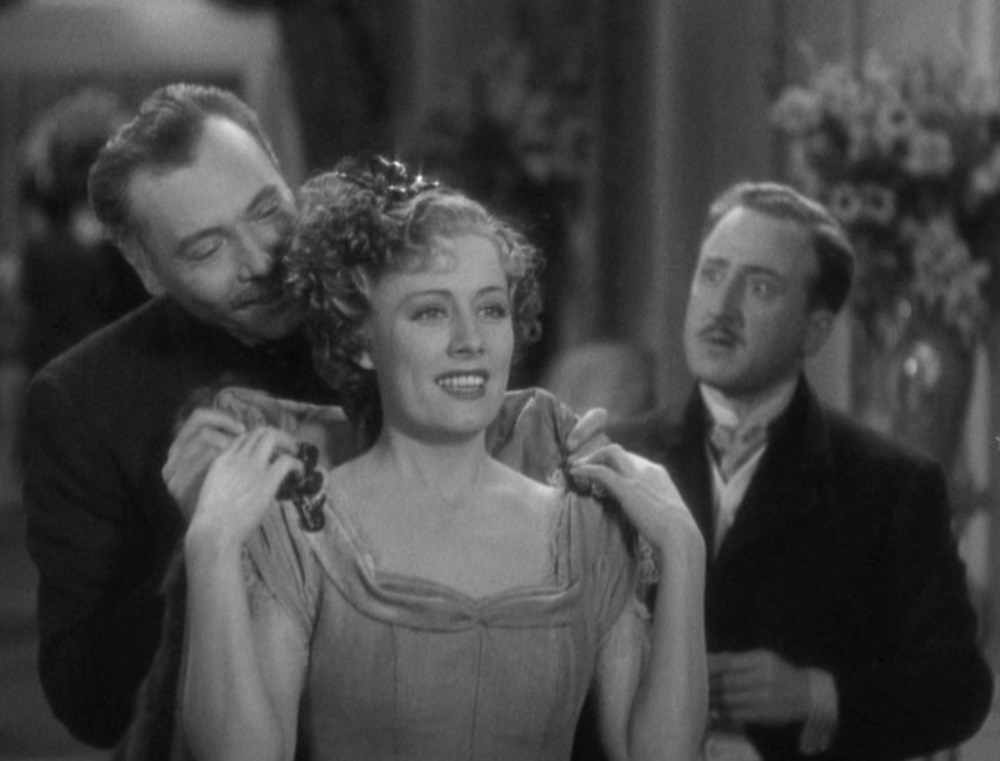
Anyway, back to Stingaree. The support cast includes Andy Devine and Una Connor as well as some actual Aussies (Snub Pollard, Billy Bevan). Irene Dunne is charming and beautiful, everything you want in a female lead. Dix has some charm but is far too fat to be a bushranger and he and Dunne have no chemistry (RKO had fantastic female stars in the 1930s, but their pool of decent male leading men was much smaller).
The movie doesn’t feel remotely Australian, apart from a few stock shots and expressions – it’s more like a musical Western with lots of British accents. Still, someone does say “bail up” which is fun.
 Stingaree lost money at the box office, though not too much. It played in most states of Australia, where critics went far easier on it than they would on Australian films, which is typical. The film did not play in New South Wales, though (aside from a sneaky cinema in Broken Hill), as there was a ban against bushranging films at the time and the censor decided to enforce it. This mattered – Ken G Hall dreamed of doing an adaptation of Robbery Under Arms around this time; the banning of Stingaree (presumably) contributed to the difficulties of him getting finance for the movie (after all, if a big Hollywood movie couldn’t play in the biggest theatrical market in Australia, what chance would an Australian one have?).
In the interests of fairness, we should also add that the ending of Stingaree is quite unusual – Stingaree escapes from prison, reunites with Hilda after the latter has a successful concert… and they run off together, on the run, no punishment or anything. It’s a Hollywood movie with the two characters going on the lam… That’s the most interesting thing about it, aside from its Australian setting. Maybe the censor was upset by that.
Stingaree vanished from screens for many years due to a legal dispute between Cooper and RKO; as part of the settlement, he was given rights to the movie (among others) and he (and his estate) stopped it from turning up at revival houses and/or on television.
Part of the reason Cooper did this was that he wanted to make a new version of the Stingaree stories. In the 1940s, Cooper went into partnership with director John Ford in a company called Argosy Pictures – they made some terrific films such as Fort Apache, She Wore a Yellow Ribbon and Three Godfathers (all featuring Ben Johnson). In 1948, Cooper announced that he and Ford would make a film of the Stingaree stories starring Johnson.
This would have been fascinating – Johnson’s laid-back nature might’ve really suited playing an Australian, and Ford was a directorial genius with an affection for Australia, particularly the Irish part (he had Australian friends, and Aussies pop up in Donovan’s Reef). The Ford Stingaree could’ve been a classic. Mind you, one never knows – if we’d read that William Wellman had directed a version of the Stingaree stories, that would’ve sounded terrific too and the film is hopeless.
Anyway, it’s all hypothetical since the Ford Stingaree was never made. We’re not sure what happened, presumably they just couldn’t raise the money – Australia is a long way to go, and the box-office disappointment of Argosy’s Wagonmaster (1950) with Johnson probably didn’t help.
Still, if the 1934 Stingaree had been in circulation through the 1970s and 1980s, it might have prompted some canny Australian producer to adapt the stories. They are still internationally-recognised IP (in the public domain now, if anyone wants to have a crack). As it was, the movie didn’t re-emerge until the 21st century; these days, it can be seen relatively easily such as here.
It’s not much of a movie, but it is set in Australia and Irene Dunne is pretty.
