

by Nadine Whitney
Sara Kern is a Slovenian-Australian director. Her first feature film Moja Vesna premiered at the prestigious Berlinale earlier this year, and more recently at the Melbourne International Film Festival.
Moja Vesna is a touching and affecting film about a migrant family – sisters Moja (Loti Kovacic) and Vesna (Mackenzie Mazur), and father Milos (Gregor Bakovic) – dealing with grief and struggling to find their place in Australia.
Moja Vesna is a special film. An immersive and emotional debut that deserves to be seen far and wide.
We sat down with Sara Kern in a café, before going somewhere quieter, to discuss Moja Vesna, the strongest debut by a woman director in Australia in recent years.
Vesna’s character is quite a riddle and a contradiction. When you were writing her, what did you want the audience to know about her?
“It’s a difficult question because I think I kept discovering her as I was writing the script. And then once Mackenzie Mazur came on board, once we found her, then we kept discovering Vesna together as well. Because what I love most about working with non-actors – even though she was at acting school at the time, so it’s not like she was a non-actor, but she was still very young (nineteen) – is rewriting the script as I work with the specific person. So, a lot of things came out for me in this process. I didn’t have a clear picture of her when I started.”
Mackenzie Mazur wrote the poetry for Vesna.
“That became a really important part of our rehearsals because I had a different poetry in the script, which worked for the script perfectly. I really loved it. But, when an actual person comes that is going to embody this character, I like to shape the whole thing to fit them perfectly. And we just discovered that she is into writing. She likes writing herself. I think it was an exciting process for her as well. Mackenzie would just go home and put herself in the character and write. She’d come back, read it to me and then we would talk and select things. It’s a really important part of her character, it’s her outlet. Vesna’s communicating something, to herself even, through these words that keep falling out of her almost. It’s a necessity for her.”
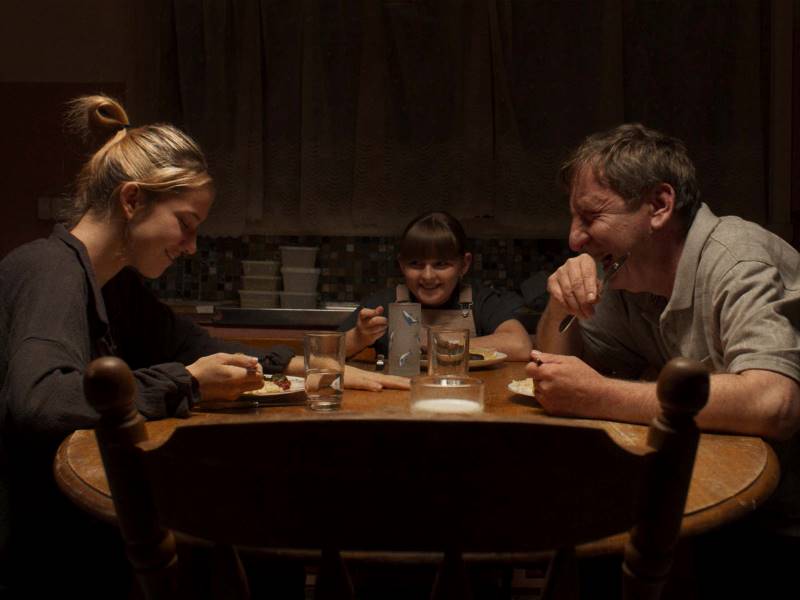
There is a complexity to Vesna’s mental health that we have a feeling is a genetic predisposition from her mother. Is mental health something that you were hoping to explore?
“Definitely. She hints quite a few times that the mother had a problem, and she was the first born and so she also hints to the fact that she was the one who was helping her mother through hard times. She then felt responsible for that, for not being able to help her in the end because she needed to get away and grow up and have her own life. Her mother died and Vesna’s the only one in the family who suspects that the death wasn’t accidental. But Vesna’s the only one in the family that allows herself to even contemplate this idea. She can’t get away from this idea because she feels that she was the one who knew her mother better than anyone probably because they had this closeness early on.
“I was really interested in exploring complicated grief. I mean, grief is complicated always. And it’s different for each of us. One woman dies in the family, one mother, but actually two mothers have died, because there are two daughters and there were two relationships. No two people have got the same relationship with the person who dies. I was really interested in exploring how there can be tensions, or people can feel even more isolated when there’s no consensus inside the family about what the person who died was like, or what they were going through.”
That’s partly Miloš’ (Gregor Bakovic) problem with communicating with both of the girls, in that he doesn’t really have the words to express his own feelings, let alone take on the feelings of Moja and Vesna.
“I think Vesna has given up on him ever being able to communicate with her and say to her anything meaningful, anything that she can use in any way. That’s part of the reason that she rejects even his language. I think he’s frozen inside of himself. I think there’s just too much. He doesn’t allow himself to even start exploring some of the feelings, or mentally he doesn’t want to go to places that are too difficult, that he might not be able to ever come out of.
“But with Vesna, there’s no option for her not to do that. She has to. I see her as someone who almost chases death through the film. But this is because maybe she’s looking to get close to the mother, to understand her a little bit better. It’s a self-destructive thing. But at the same time, she also is very alive. She chases death, but she’s also the only person in the family who actually is active in a way; through these destructive or sometimes harsh, violent acts, she actually brings new air through the house and new energy and she’s trying to renew something. She’s also pregnant. She’s literally bringing life into the world, even though she’s not on board with the pregnancy fully, but it’s happening, nevertheless.”
The fact that they’re Slovenian, in the outer suburbs of Melbourne, means that they don’t have a community around them for support. When they come across Claudia Karvan’s character Miranda, it’s almost like a revelation that there’s this other person around.
“It was very important to me that they are a migrant family. I think that going through something like mourning or grieving the death of someone, the death of a mother, it’s just so complex in itself. But then to also be a migrant and to be alone on the other side of the world, it just raises the complexity of things. Sometimes I think it can contribute to feelings of isolation. I think as a family, they’re closing in even more because they haven’t got a wider circle of family, or friends even. I think I see it as a very positive thing and a necessary thing for Moja to be reaching out and to be making a friend. And it’s very important for her future that she’s forging these connections. Miranda and her daughter Danger (Flora Feldman) are really important for Moja’s character to be able to live a life that is a little bit more normal in a way, or happy.”
She wants to be a normal kid.
“I think the migrant experience, it’s really hard to talk about it in general terms because it’s different for every migrant. I think if you move and you come to a new place with quite a lot of baggage from some other time, you’re maybe not so open to new experiences, to forging new relationships, because you’re protecting something, or you’re trying to work something out. This was a little bit my experience when I first moved from Slovenia. I was grieving for my grandmother, who was like my mother in a way, she was really important for me growing up, this really positive figure. She died a year before I moved. But I thought I was fine. I was over it; the grieving was all done. That’s what I thought.
“But then it kept coming back, and so I was going through this mourning process in this new land and it was very difficult. But it was interesting, in a way, also as an experience. I was surprised how complex it was and how isolating as well. That was one of the experiences that I drew from. Just the cultural differences. I didn’t want the whole migrant experience to be in the forefront in any way. But I think it can be felt a little bit in the film, just the slight differences between Moja’s family and Miranda’s family, for example even the class differences. And the language barrier for Miloš. So Moja is a cultural mediator as well on top of everything else.”
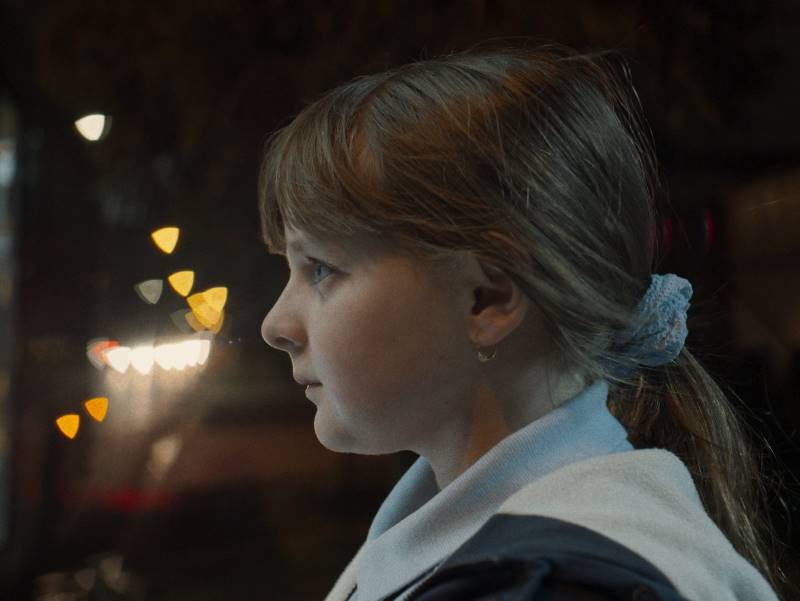
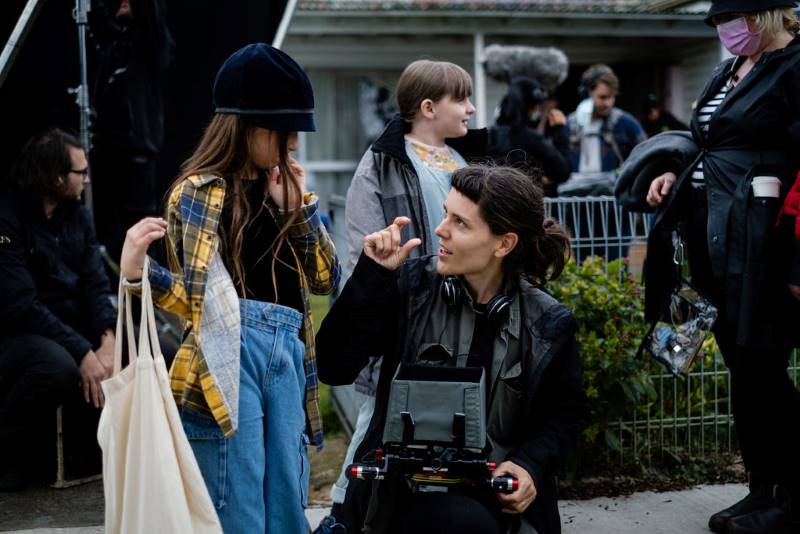
What is it like directing children? Loti Kovacic who plays Moja is incredible. In a year that has brought some amazing first-time screen talents, young talents, children, Loti is up there with the best performances. Can you tell us a little bit about how you worked with her and creating Moja?
“Working with kids is something that I started quite a while ago. Even my student films, I was already working with kids quite a lot and it happened naturally because I was interested in exploring this position of a child who finds herself alone inside a family where the adults are preoccupied with something else, and she’s alone to interpret these silences and to find her way forward somehow. This is something that comes from my childhood experience in some way. Quite a few stories have come from that, and then Moja Vesna is a longer version of this or a more in-depth exploration of this.
“I’ve gained quite a bit of experience working with kids. And the casting is really the key to find someone who has got this acting talent, but also this particular sensibility that fits, that is fitting for the role. I was just so happy when we found Loti because she just brought something completely… I don’t know what to call it. She’s just so special. She’s authentic. But then, she wasn’t playing herself in a way, we worked a lot on that distinction. This was one of the things that was most important to me was for her to have the clear distinction between Loti and Moja. And to be able to enter the role. She had a little bit of a shield on the set. It isn’t like ‘I’m now here as Loti personally’, in the absence of any strict lines, because I didn’t give her the script to read. I’m not interested in the kids learning the lines and then coming very prepared. It’s more important to me that through the rehearsals we establish a sense of trust. I trust her, she trusts me, and so she knows that she’s able to say, ‘okay, I don’t like this’, or ‘I don’t feel like doing this’, or whatever at any point.
“And then we talked a lot about the character. On set, we would discuss each scene before we started shooting it. We’d sit down and talk about it, and I’d give her the lines and then we kept shaping the lines through the takes. In a way, it’s a simple process, but it’s a very complex process also. The atmosphere needs to be right and then things can happen. The rehearsals were mainly for me, they were not so much for her, even though it was also for her, because I needed to explain to her what to expect because she has no acting experience. Before the film, she was just doing football and coding. Acting wasn’t on her list of things that she wanted to do until this opportunity came up.
“It was important for me to explain to her what to expect, so that there are no surprises for her. I don’t like creating these little surprises on set so that you get a natural reaction or something like that. It’s something that I really try to avoid. We talked a lot about the character and about the story, but in general terms. We didn’t go into very complex things and then we just went from scene to scene. She kept exploring the story as we went. It was important to me that I keep things fresh for her because I was anxious, I’ve worked with kids before, but not for 25 days. It was five days max on short films. It was one of my anxieties. I mean, it’s always a little bit.”
The film was shot in 25 days. It is mind boggling that you made something so powerful in 25 days.
“We worked very fast. And then we spent a lot of time in the edit as well, which I love, just being the writer and director. I just really like the fact that you can just keep writing and discovering the film as you go. Not just writing the script, but then through the casting process, and then during the shoot as well. From take to take, you can still throw things out or add lines. During the edit, I really enjoyed simplifying the story further and just really trying to get to the emotion and remove any unnecessary things or any things that are maybe just information for the sake of having more information. I like leaving a bit of space for the audience to just fill it in. If someone feels something, then they can bring their own experiences to it or explain things to themselves in the way that they want to.”
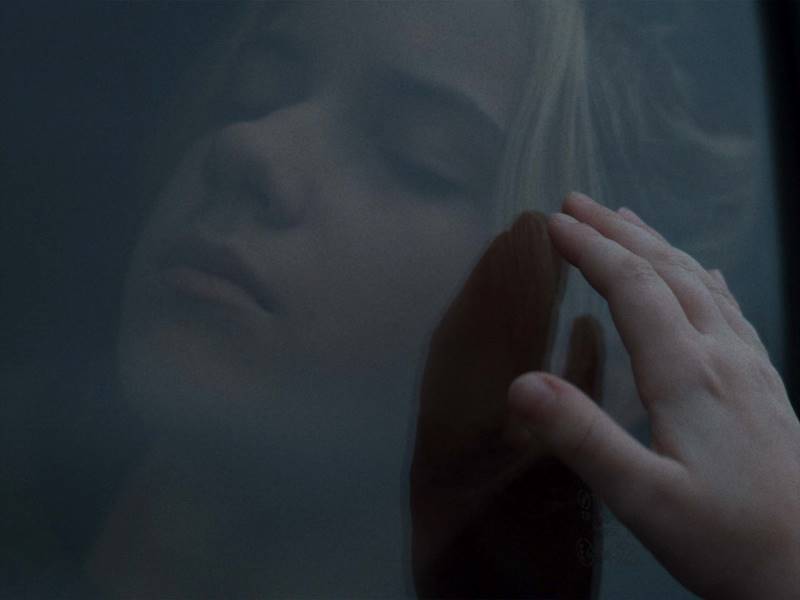
You employ some beautiful symbolism and metaphors. Water is one that comes up a lot, and also glass. And there’s a scene where Moja is talking to Danger and it’s just after she’s had to say, I can’t come out to play. But she’s standing with a window between them and there’s also a window between Moja and Vesna in a scene. There’s a sense that there are things that can’t quite be reached. Was that something that you were going for?
“I think it’s part of the thing that I mentioned before, this exploring of loneliness in the grieving process and how difficult it is to really connect with anyone. Especially if communication is not your strong thing. You’re not very eloquent or prepared to speak openly about your emotions or even find words for them. I like finding these visual things that can represent this. It’s a poetic way of thinking as well. The thing that you mentioned with the glass, when she’s stroking Vesna’s hair through the glass. I was just trying to find these ways of showing what’s happening inside of the characters. It’s like they’re trying to connect, but they’re failing to connect all the time. I think that’s what we do all the time in life. We’re trying to connect and then sometimes it happens for a moment, and it keeps you going, until the next moment.”
Can you tell me a bit about the areas you filmed in?
“We filmed in and around St. Albans. Northwest, the outer suburbs that are where there’s a lot of Slavic migrants there. Actually, the street that we filmed on is full of Croatian migrants and Polish, not really Slovenian. The Slovenian community is so small because it’s such a small country, only two million people. I broadened it out a little bit. If it’s Slavic it already feels very, very close. The languages are very similar.
“This was also the thing with finding Moja. I wasn’t hoping to find someone Slovenian, but we looked through the Slavic community for her character and we also looked for kids that have got acting experience, even though I’ve worked more with kids that haven’t got any. It’s not a problem for me to work with someone who hasn’t acted before. We extended the search really broadly, but Loti just came. She just appeared and she actually is a Slovenian Australian, so she had both languages, and it was really great, especially for her scenes with Miloš because they were able to, even in the rehearsals, speak in Slovenian and improvise things. Otherwise, she would have to learn these lines and then say them, and it would be hard to find these organic moments that sometimes happen.
“It was amazing that we found her, and her way of speaking Slovenian is very particular. She’s very good at it, but she’s got this slight accent because she lives here, so she couldn’t be more real in a way.”
Moja Vesna is in cinemas December 8, 2022. Find out where it’s playing near you HERE
Read Nadine Whitney’s review HERE
