


by Barry Locker
Australian cinema has always been drawn to people standing at the edge of a decision they can’t take back. It’s there in the outback thrillers, the racing pictures, the crime dramas set in suburban Melbourne, and the quiet domestic films where a single choice unravels a family. What unites them isn’t genre – it’s a fascination with luck as a narrative engine, and with what happens to characters when the odds turn against them. That preoccupation says something specific about the national screen culture, and tracing it through six decades of Australian film and television reveals a tradition considerably more coherent than it first appears.
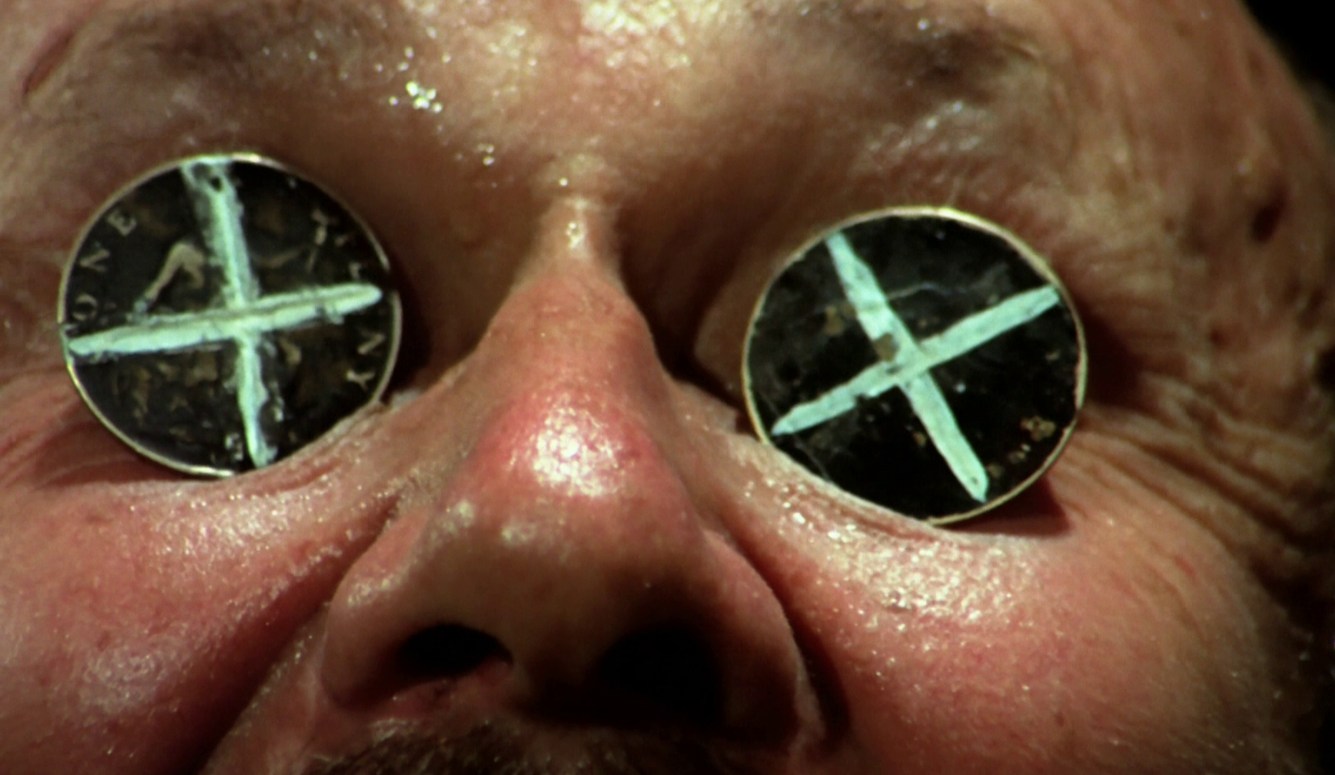
The starting point for most critical discussions is Ted Kotcheff’s 1971 adaptation of Kenneth Cook’s novel, Wake in Fright, in which a schoolteacher becomes stranded in a remote mining town and loses everything across a long night of two-up. The film was largely lost to Australian audiences for decades until a print was recovered and restored, returning to screens in 2009 to a reception considerably warmer than its original release. What makes it endure isn’t the outback setting or the notorious hunting sequence – it’s the structural precision of the descent. The protagonist’s ruin isn’t caused by any single catastrophic decision but by a sequence of small, individually reasonable ones, each following logically from the last.
That structure has proven remarkably durable in Australian storytelling. It appears again in the crime films of the late nineties and early two-thousands, where characters make one accommodation with the wrong people and find every subsequent option narrowing. It appears in racing pictures where a horse carries the hopes of an entire community. And it appears, in gentler form, across television drama where a family’s stability depends on outcomes nobody controls.
The Racing Picture as National Mythology
Horse racing occupies a peculiar position in Australian screen culture – treated less as a sport than as a national ritual with its own iconography, calendar and mythology. The 1983 biographical film Phar Lap about the champion racehorse that dominated the early 1930s remains one of the more commercially successful Australian productions of its era, and its appeal has little to do with racing mechanics. It works because it locates a Depression-era story of collective hope in an animal, which is about as efficient a piece of national myth-making as the local industry has produced.
Simon Wincer, who directed that film, returned to similar territory decades later with The Cup, a 2011 production dramatising the 2002 Melbourne Cup and the personal circumstances surrounding jockey Damien Oliver’s ride. The two films bracket a particular Australian screen tradition: the sporting event as a stage for grief, class, family obligation and national identity, with the actual competition serving as the container rather than the subject.
What both films understand is that the race itself is never the point. The dramatic tension lives in what people have staked – emotionally, financially, reputationally – on an outcome they cannot influence once the gates open. That’s a structure available to any storyteller working with chance, and Australian filmmakers have returned to it consistently enough that it constitutes a recognisable local mode.
When Screen Iconography Migrates to Interactive Formats
The visual language developed across those decades hasn’t stayed on screens where audiences watch passively. It has migrated wholesale into interactive entertainment, and the scale of that migration is easy to underestimate. Digital platforms serving Australian audiences – including operators such as WinSpirit Australia – host libraries running into the thousands of individual titles, and browsing one is an exercise in recognising borrowed cinematic grammar. Egyptian tomb imagery descending directly from a century of adventure filmmaking. Mesoamerican settings lifted from the same tradition. Norse apocalyptic material, wildlife documentary framing, Western iconography, fishing-show conventions, and fairy-tale illustration all appear as thematic packaging around interactive mechanics. The production values are frequently substantial: commissioned soundtracks, character animation, and art direction handled by studios employing designers who could work in film or games. The live-streamed portions go further still, operating from purpose-built studios with multiple camera angles, professional presenters and real-time vision mixing – production infrastructure closer to broadcast television than to software development.
For anyone interested in how genre imagery circulates through contemporary culture, this is one of the largest and least-examined distribution channels currently operating, and it processes visual conventions from film at enormous volume.
The critical question worth asking is what happens to that imagery when it’s separated from narrative. A tomb-raiding sequence in a film carries stakes because a character wants something and might not get it. The same iconography deployed as decoration around a probability engine carries no such structure. It’s atmosphere without story – which is a legitimate design goal, but a fundamentally different cultural object from the films it borrows from.
Documentary and the Counter-Narrative
Australian documentary has approached the subject from an entirely different angle, and the contrast is instructive. Where fiction filmmaking tends to find drama in chance, documentary work has consistently examined the machinery underneath it – particularly the poker machines that occupy an unusual position in Australian social life, given the country’s high concentration of them relative to population.
A 2015 Australian documentary, Ka-Ching! Pokie Nation, examining poker machine culture drew considerable attention for its focus on the design decisions behind the machines themselves: the sound engineering, the near-miss visual conventions, the pacing calibrated to sustain engagement. That framing – treating the machines as designed objects with intentional psychological effects rather than as neutral entertainment – represented a meaningful shift in how the subject was discussed in Australian media.
The tension between those two traditions is productive rather than contradictory. Fiction filmmaking uses chance as a narrative device because it generates drama efficiently. Documentary interrogates the same territory because the real-world version has consequences that fiction can dramatise but not represent statistically. Both are doing legitimate work, and the gap between them is where most of the interesting criticism sits.
Television’s Longer Form and Different Stakes
Serialised television handles risk differently from feature filmmaking, and the structural reasons are worth spelling out. A film has ninety minutes to establish stakes, escalate them and resolve them. A series has twenty hours, which changes what kinds of consequences can be dramatised.
Australian crime television has used that space effectively, particularly in the long-running true-crime dramatisations that dominated ratings through the late two-thousands. Those series could show consequence accumulating across years rather than days – the slow corrosion of relationships, the compounding of small compromises, the way a single decision made in episode two determines what remains possible in episode fifteen. That’s a structure feature films struggle to accommodate.
Domestic and workplace drama has found subtler applications. A character whose family finances depend on uncertain seasonal work, a small business owner extending credit they cannot afford, a farming family watching weather they cannot control – these are risk narratives without any of the genre trappings, and Australian television has produced them consistently.
Three Structural Devices Australian Screen Stories Use
Across genres and decades, a handful of recurring techniques appear frequently enough to constitute a local grammar:
- The reasonable descent – ruin arriving through a sequence of individually defensible decisions rather than one catastrophic error, which makes the protagonist’s fate feel inevitable rather than stupid.
- The community stake – an outcome that matters to a town, a family or a workforce rather than only to the individual at the centre, converting private risk into collective consequence.
- The uncontrollable variable – weather, illness, an animal, a market, a race – positioned so that human agency is genuinely exhausted before the resolution arrives.
The third device is the one that distinguishes the tradition most clearly. American screenwriting tends toward protagonists whose choices determine outcomes; the Australian mode is considerably more willing to strand characters in situations where nothing they do will change what happens, and to find meaning in how they conduct themselves anyway.
The Production Economics Behind the Pattern
There’s a practical explanation running alongside the cultural one, and it deserves acknowledgement. Australian screen production operates on budgets substantially smaller than its American or British equivalents, which shapes what stories get made.
Risk narratives are economically efficient. A story about a character facing an uncontrollable outcome requires tension rather than spectacle, which means locations rather than sets, performance rather than effects, and duration rather than scale. A racing film needs one race. A crime drama needs rooms and streets. An outback thriller needs a landscape that already exists. The dramatic weight sits in writing and performance, which is where a smaller industry can compete on equal terms.
That economic logic has arguably strengthened Australian screen storytelling rather than limiting it. Constraints force specificity, and the local tradition’s reputation for uncomfortable psychological precision owes something to decades of filmmakers who couldn’t afford to distract audiences with anything else.
How the Themes Reach Audiences Now
Distribution has changed more in fifteen years than in the preceding fifty, and it’s altering which of these stories get made and seen. Streaming platforms commission differently from broadcasters, international co-production reshapes what counts as an Australian story, and audience attention fragments across formats that didn’t exist when the canonical films were released.
For viewers wanting to explore the tradition, a reasonable path exists:
- Start with the 1971 outback thriller, ideally the restored version, since almost everything that follows is in conversation with it.
- Move to the crime films of the late nineties and early two-thousands to see the same descent structure relocated to urban settings.
- Watch the two Wincer racing films as a pair, separated by nearly thirty years, to observe how the sporting-event framework evolved.
- Add the poker machine documentary for the counter-perspective that fiction cannot supply.
- Finish with a long-form television series to see consequence dramatised across a timescale features cannot reach.
- Revisit the first film afterwards – its structural choices read differently once the tradition it launched is visible.
That final step is the one most worth doing. A film that seemed like an isolated curiosity in 1971 reads, from here, as the foundation document of a national screen preoccupation that has never really let up.
Performance and the Face That Carries the Scene
There’s a craft dimension to this tradition that deserves attention, because these stories place unusual demands on actors. When a narrative strands a character in a situation they cannot influence, the drama has nowhere to go except the performer’s face. There is no action to play, no decision to dramatise, no dialogue that changes anything – only reaction, sustained across scenes that would collapse without it.
Australian screen acting has developed a particular capability here, and it shows up consistently across generations. The register tends toward understatement rather than demonstration: a stillness that lets an audience read deterioration without being told about it. Directors working in the tradition have generally trusted that restraint, holding shots longer than commercial convention suggests and resisting the impulse to underline what’s happening with score or cutting.
That approach carries risk of its own. Performances built on restraint can read as flat to audiences trained on more demonstrative styles, and several of the tradition’s key films were poorly received on initial release before finding appreciative audiences years later. The 1971 outback thriller is the obvious example, but the pattern recurs – work that seemed austere on arrival often looks precise in retrospect.
Casting decisions in these films tend to matter more than in genre work generally, because the entire structure depends on an audience remaining invested in someone who is, by design, losing. Get that wrong and the story becomes an unpleasant procedural about a stranger’s misfortune. Get it right and it becomes uncomfortably universal, which is the effect the tradition’s best work reliably achieves.
What the Tradition Is Actually About
Strip away the genre furniture and Australian screen storytelling’s engagement with chance resolves into something fairly specific: an interest in how people behave when their agency runs out.
That’s a different question from the one most popular cinema asks. The dominant commercial mode globally is about protagonists who act decisively and change outcomes – a satisfying structure that flatters an audience’s sense of control. The Australian tradition, at its most distinctive, keeps arriving at situations where acting decisively changes nothing at all, and finds its meaning in what remains: dignity, humour, endurance, or their absence.
That’s why the tradition has aged well. Films built around the fantasy of control date quickly, because audiences eventually recognise the flattery. Films built around its limits don’t, because the limits are real and every viewer knows it.
Whether the interactive formats now borrowing this imagery will develop anything comparable remains genuinely open. They’ve inherited the visual vocabulary comprehensively – the tombs, the temples, the wildlife, the Western iconography – but the narrative structures that gave those images meaning haven’t travelled with them, and it isn’t obvious they can. A story requires someone who wants something and might not get it.
A probability engine requires only a player and a distribution. Those aren’t the same thing, and the gap between them is worth keeping in view whichever screen you happen to be looking at.
