



by Gill Pringle in LA
When you’re striving to create a full-length stop motion film out of thin air – built only on ideas, creativity and a passion for the craft – then there can be no greater fairy godfather to have on your side than Guillermo del Toro.
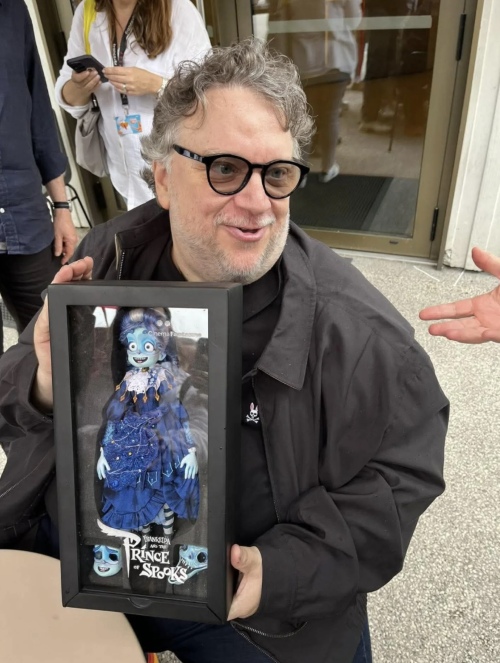 The revered filmmaker immediately recognised the singular vision of Mexican brother filmmakers Roy and Arturo Ambriz and their driving desire to work in the stop motion animation field despite everyone telling them to give up.
“I do believe that stop motion is a sacred space,” del Toro will tell us on a recent afternoon in Hollywood where the Ambriz brothers’ debut stop motion feature film, I Am Frankelda is playing at LALIFF, the Los Angeles Latino International Film Festival.
“I think that we are coming to a point in the culture where the act of resistance is to be yourself, to not give in, and I think the reason why I’ve stayed so close to these guys all these years, including on this movie, is because they are the real deal. They really do what they mean,” says the legendary Pan’s Labyrinth and The Shape of Water director.
“And that is very rare. I mean, some people do art for everything that comes with it, quote unquote, and some people do art because that’s what they do, and these guys have that,” says del Toro, 61.
“Their ambitions from the beginning, until now, have always exceeded their budget – and I think that we have that in common,” quips the filmmaker, who has known the brothers since before they were even enrolled in film school, calling upon him for his help with a fundraiser for their first medium-length film Revoltoso (Rebellius).
More than two decades later, that relationship has evolved into del Toro almost being like a family member while still remaining their greatest champion, and who understands that art comes at a price.
In order to produce the brothers’ unique dark fantasy I Am Frankelda, not only did they re-mortgage their family home, but they also enlisted their entire family, including parents and wives, to help achieve their dreams.
“What I think is very important to understand is that there are so many times when you hit a wall, but then you produce a miracle, and I think it’s important for young people to know that they will have many, many battles. We should not listen to the things that go right, because the concept of success is as depressing as the concept of romantic love. It’s very hard to achieve, and very much an impossibility that makes you feel that you failed before you start, so these are very important tales to tell,” says del Toro.
Between them, the Ambriz brothers have studied Digital Filmmaking at the New York Film Academy, Film and Television at Centro de Diseño (Mexico), and Creative Writing at the University of Salamanca (Spain).
Together, they wrote the award-winning stop motion TV series Frankelda’s Book of Spooks, spinning that out into their feature film I Am Frankelda – which was not only their debut feature but also made history as Mexico’s first feature-length stop-motion animated film, a remarkable achievement in itself.
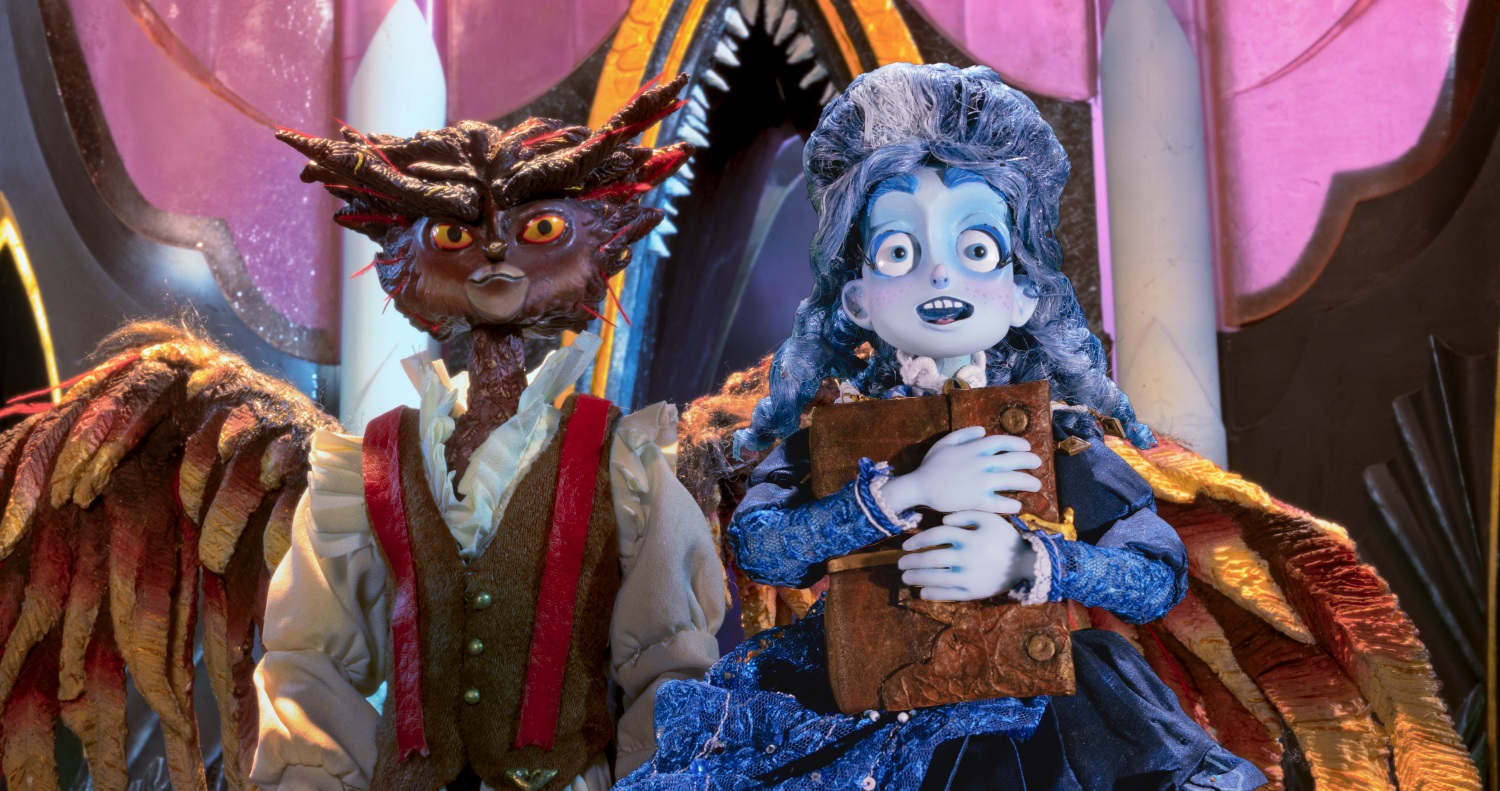
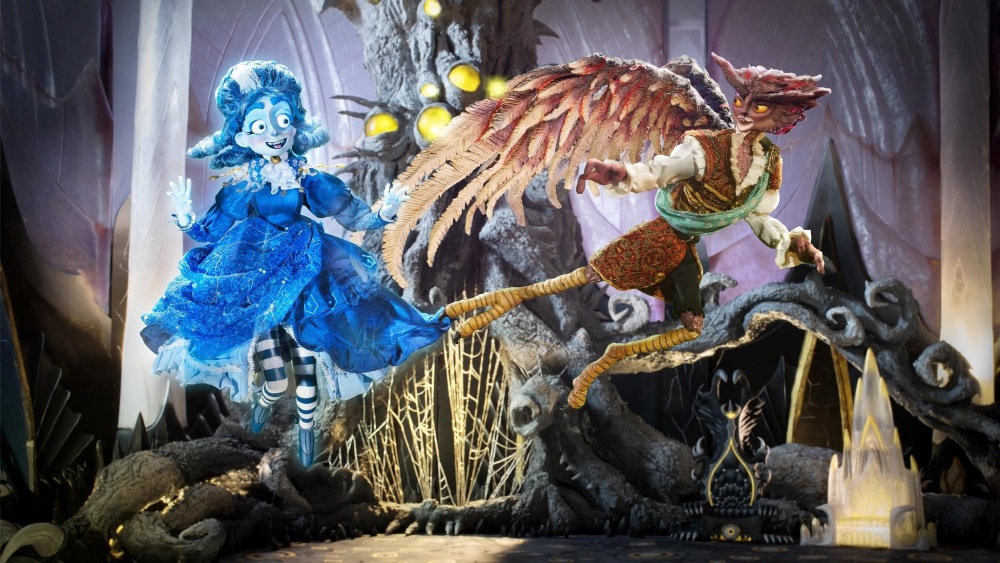
Set in 19th-century Mexico, the film follows Frankelda, a gifted writer whose dark and imaginative stories are routinely dismissed by the people around her. Rather than being celebrated for her creativity, she finds herself pressured to stay quiet and suppress her voice. But Frankelda refuses to give up.
When she is drawn into a strange realm born from her own subconscious, she discovers that the monsters and creatures that she has imagined are very real. What follows is a fantastical journey through a world where dreams, nightmares, fiction, and reality collide.
“First it was a TV series, only five episodes, actually. But we knew that the audience would love to see more of Frankelda, because she comes from a premise of what will happen if Mary Shelley was born in Mexico, thinking that probably it would have been a little bit harder for her, and she would originally have never published anything because of the machismo culture, so she would have to come back as a ghost to tell her stories. That’s how the idea was born,” explains Roy Ambriz.
One of the most appealing aspects of I Am Frankelda is its distinct visual style. The painstaking craftsmanship is evident in every frame. The characters, creatures, and elaborate sets have a handcrafted quality that feels increasingly rare in an era dominated by computer-generated animation.
Many viewers have compared the film’s gothic atmosphere to the work of Tim Burton, particularly classics like The Nightmare Before Christmas, though the movie maintains a distinctive Mexican identity of its own.
Those comparisons aren’t far off. “When we were three years old and we had a VHS of Nightmare Before Christmas in English that we didn’t understand really well,” explains Roy.
“But we were obsessed with that idea. Also, we have always loved to play with toys, to do costumes, to do dioramas for them, and we really enjoyed going to museums since we were kids or to the musical theatre, so there’s a special taste for us in tactile things like sculptures. For us, it has been like playing since we were really young kids,” he says.
“We also love Wes Anderson films; we love the work of Henry Selick; we love Aardman animation and, of course, we love Tim Burton,” adds Arturo.
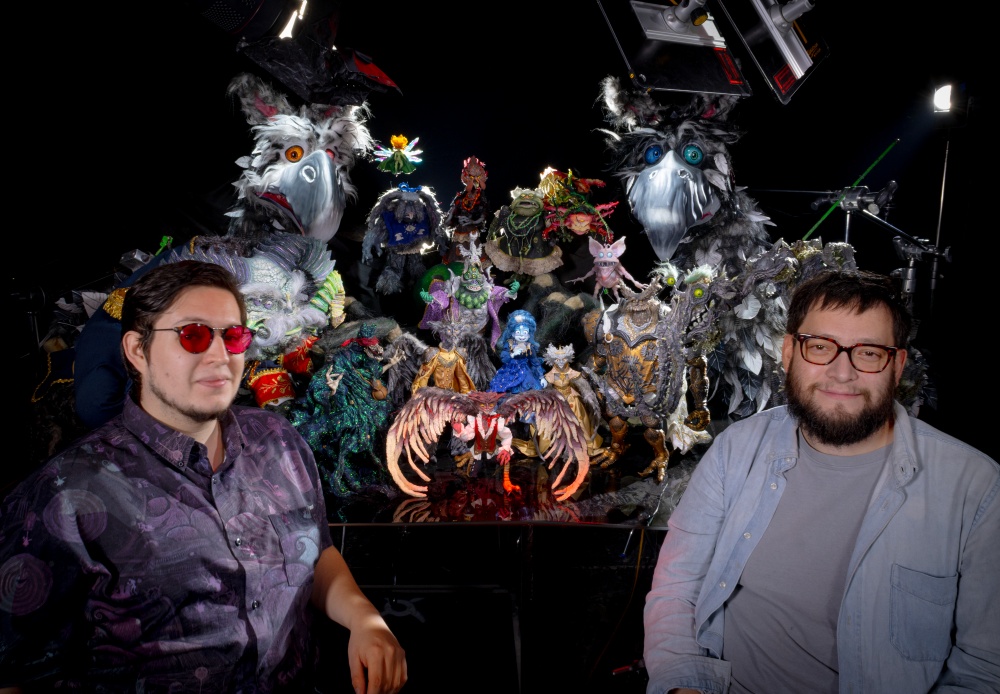
As the founders of Cinema Fantasma, an independent stop motion animation studio based in Mexico City, their studio spans films, television series, commercial animation, special effects, visual experimentation, and art objects, with producing credits including Women Wearing Shoulder Pads for Adult Swim.
But I Am Frankelda (soy Frankelda) is their most ambitious project to date.
“This film is our homage to the art of storytelling. As siblings, we have been captivated by fiction since childhood, starting with drawings and games and evolving into literature, theatre, cinema, and animation. Our passion for creating worlds led us to conceive Francisca Imelda, or Frankelda, a fictional Mexican horror writer from the 19th century.
“Like her, we have faced frustration from rejection, yet we remain determined to pursue our ambition for creative expression,” says Roy.
What makes I Am Frankelda especially noteworthy is that it represents a major milestone for Mexican animation.
While countries such as the United States, UK, and Japan have long traditions of animated feature filmmaking, Mexico has rarely had the opportunity to showcase a stop-motion production on this scale. The film demonstrates that world-class animation can emerge from a wide range of creative traditions and cultural perspectives.
At its heart, it’s a story about creativity, perseverance, and the importance of finding your voice in a world that may not appreciate it. Wrapped inside a visually stunning fantasy filled with monsters, magic, and gothic imagery, it offers both spectacle and an inspiring message.
“It’s a miracle that this film exists – that this film exists in Mexico,” says del Toro. “You have to have faith when you have no budget, and you have to have hope when you have no structure, and they pulled all this off without diminishing the scale.
“I’ve known the brothers since they were really, really young, and they’ve always wanted to do things beyond a reasonable scope,” he says with a paternal pride, having made all the introductions for them at Netflix where the film now has a home.
I Am Frankelda streams from 12 June 2026
