



by Anthony Frajman
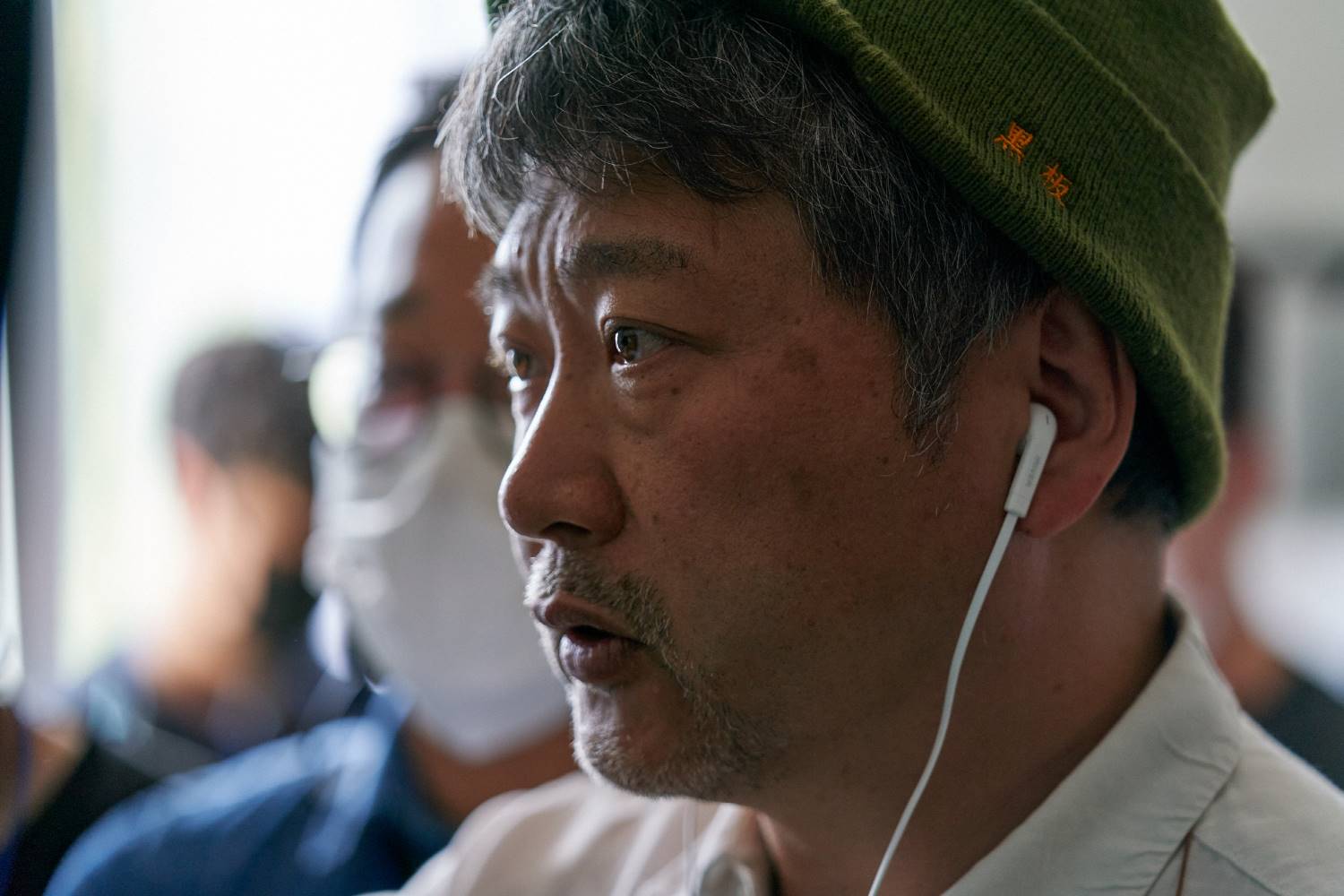
Hirokazu Kore-eda is one of the most exciting directors in world cinema today, with his film Shoplifters winning the Palme d’Or at Cannes in 2018.
He followed that up with his first film outside Japan, The Truth, shot in Paris, starring Catherine Deneuve, Juliette Binoche and Ethan Hawke.
Continuing on that path, Kore-eda returns with the South Korea shot and set Broker.
Starring a host of Korean talent including Parasite actor Song Kang–ho, K-pop star Lee Ji-Eun, and shot by Parasite cinematographer Hong Kyung-Pyo, Broker follows single mother So-young (Ji-Eun), who drops her infant at a church’s ‘baby box’, a place mothers can leave their unwanted babies, where the child is taken by child traffickers Sang-hyeon (Kang–ho) and Dong-soo (Gang Dong-won).
FilmInk spoke with Kore-eda via zoom ahead of Broker’s cinema release.
Broker shares many similarities with your film Shoplifters. Both are about the maternal bond and parent-child relationships. Did you see this film as a sibling to Shoplifters in a way?
“Yes, I did write the plot around the same time for the two films in 2016. And it was about a family that’s not related by blood. I sort of had this box that I was working within. But when I was making Like Father, Like Son, I felt like I was making a film where I was exploring paternal instincts, but I wanted to make films that were really exploring motherhood. And so, I think both Shoplifters and Broker really began from the idea of wanting to do that. But I think that they both found their ways to very different ends.”
We understand that part of what interested you in the story was the blame which is often placed upon mothers, which you uncovered during your research into baby boxes. Can you tell us about this?
“I first learned about these baby boxes back when I was researching Like Father, Like Son. There is a positive towards the existence of these baby boxes, but at the same time, there was also a lot of backlash. At the very beginning of the film, you hear Detective Su–jin’s character played by Bae Doona, say the line, ‘if you’re going to throw it away, you shouldn’t have given birth’. And there are these very intense critical ideas towards this. So, I knew that I wanted to start the film here and then figure out whether in two hours I could flip this idea and how much I can flip it.”
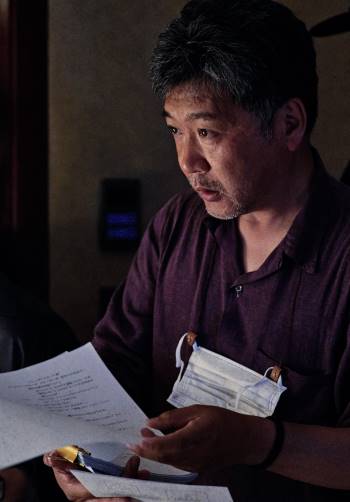 You’d wanted to work with Parasite actor Song Kang–ho for 10 years. You often start with an actor. Was that also the case on this one?
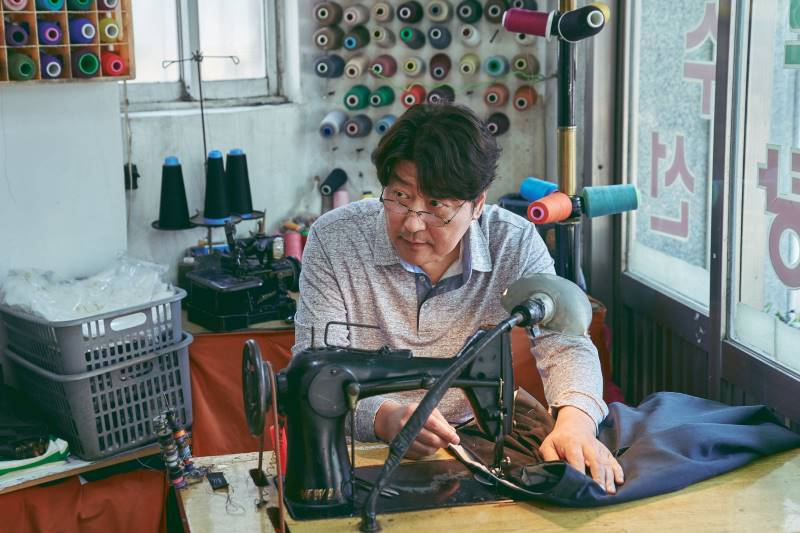
“Back when I first thought of the baby box story in 2016, I wrote a short plot synopsis. Even at that time, I had the character of Fake Priest, and for that, I already had Song Kang–ho in mind. With this film in particular, he was first and foremost, part of the story. Without him, it wouldn’t exist. And yes, as you mentioned, I think there are times where I start from having knowing who the cast is and then develop a story from there. But there are films that I don’t cast for my stories, but even when I do cast, I still do some rewrites on my script to suit that cast member. And so ultimately, I think the script really becomes for the cast as well.”
I understand you collaborated very closely with Song Kang–ho. Can you talk about working with him for the first time?
“First of all, he’s such a fun person to be around. He’s incredibly entertaining. He loves to entertain everybody around him, whether that’s on-set or off camera. So, when he’s around, everybody just seems very happy and excited. He’s an incredible professional, but he really has his specifics about what he likes and what he doesn’t like, whether that’s the dialogue or the expression that he’s making. He really doesn’t like those kinds of things to remain in the film, if he doesn’t feel happy with it. He sets a very high bar for himself, but ultimately, he says ‘I’ll leave it to the director’. But despite that, he would come in before I would come in and then ask to see what was shot the day before.
“And before I would come in, he would watch it and then at lunchtime he would come up to me and go, ‘I saw the edit, I think it was great. The scenes are great, the acting is great, but there’s one word that I really wanted to change. And I think that perhaps you should use the different take than the one that you’re planning on using. And if you’re going to plan on using this one, then I would like to come in and do some dubbing or retake that particular moment’. That kind of back and forth was happening every day with him. He would always watch the scene that was shot yesterday and then give me his opinions. And I think some directors may find this to be cumbersome, however, I think he was really thinking about the fact that I don’t understand Korean and really trying to support me in this way and thinking about different things. I really appreciated it. I really took his advice and I wanted to incorporate his opinions into things. I would ask him for advice or fix anything that he mentioned to me.
“I think Song Kang–ho has the brilliant ability to be able to express people with these dimensionalities; that they’re not good nor bad. That’s the film universe that I’ve also been interested in always depicting. I don’t really have specific heroes in my film, nor do I have somebody who’s completely evil. Things aren’t black and white, and I want to depict the world in a greyer manner. That’s the ideal for me. And so, when you first watch this film, there’s the character, the baby broker who you might immediately go, ‘this is the bad guy’. And then there’s the cops that you think, ‘they’re the good people’. But then as you watch, I wanted both of these characters to really start to blur and blend, where by the end, everybody’s grey. They’re not black and white. I wanted to express that change and to be able to see the world differently like that.”
This is your second time in a row working outside of Japan after The Truth. How did you find working in Korea?
“I think the filmmaking environment in Korea, it’s great in that they have many rest days. They also have many crew members. It doesn’t take a long time to prepare. I felt like we need to learn that in Japan. I’m trying to work within Japan by setting up a similar environment. I’m trying very hard, to try to get to the level of where Korea is at, to improve the labour conditions within Japan to that level.”
Can you tell us about your new film [Monster] which is set in Japan?
“I’m in post and currently working on sound and also some of the CGI and we’re in a stage right before completion. I shot this film last year in the spring and the summer. It’s set in an elementary school. It’s almost done.”
Broker is in cinemas March 30, 2023
