


By Erin Free
After enjoying great success with the recent cinematic re-release of his 1982 cult fave Going Down, Aussie director Haydn Keenan now dusts off his crazed, highly theatrical, and near-unclassifiable 1987 freak-fest Pandemonium for a very special screening at The Sydney Underground Film Festival.
It looks like Aussie writer/director Haydn Keenan might be on a roll. The recent cinema re-release of his1982 low-budget wonder Going Down has been a surprise success story, playing for weeks and turning on new audiences in droves. That rollicking, sparky joy of a film was Keenan’s first (he was also a producer on the cutting edge 1974 classic 27A), and now his sophomore effort is about to be pulled from the vaults and deservedly placed in the spotlight for a very special screening at The Sydney Underground Film Festival. Behold 1987’s Pandemonium, literally a film like no other…
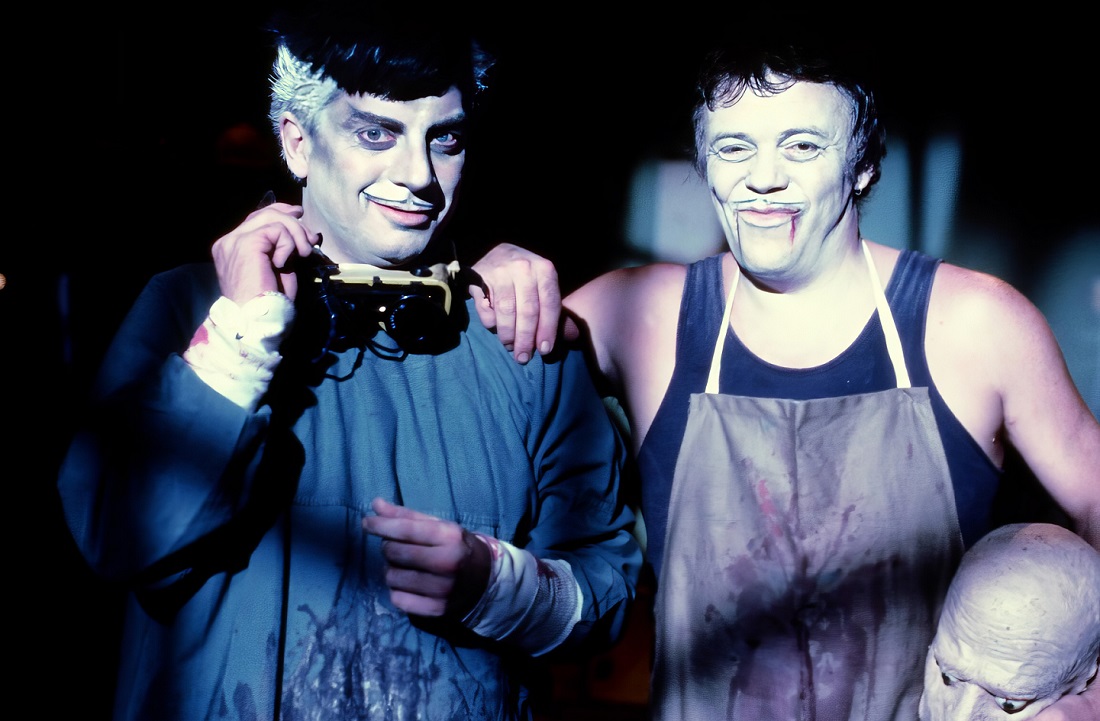
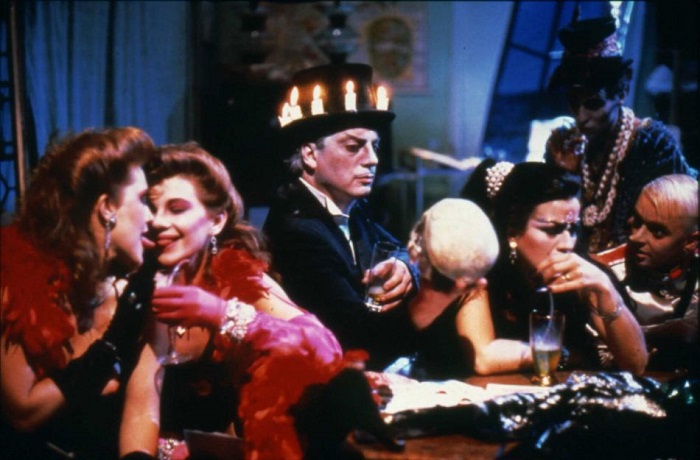
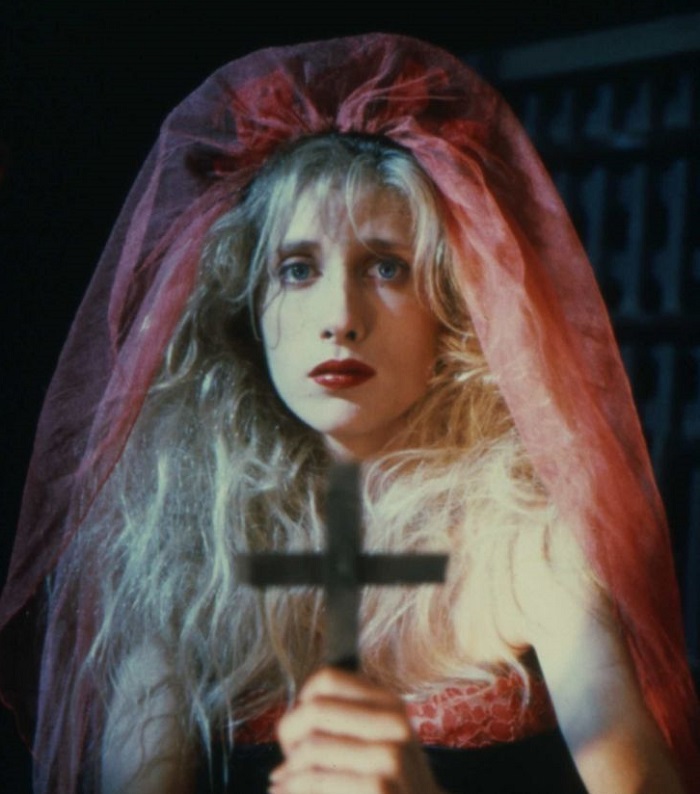
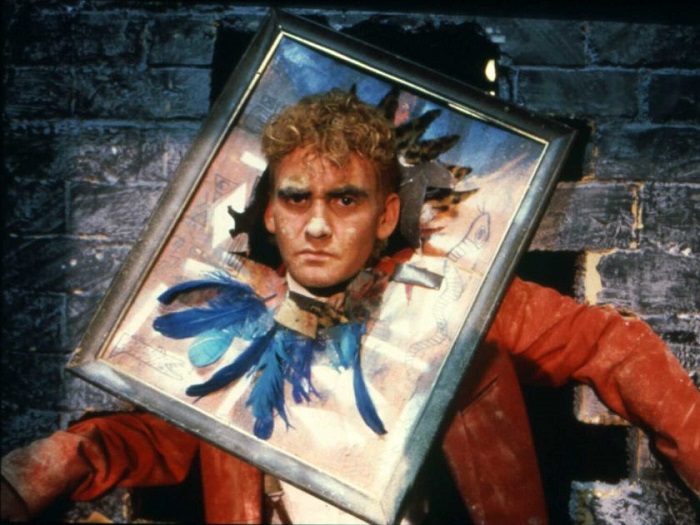
“Pandemonium’s plot was simple,” Haydn Keenan tells FilmInk. “A baby saved by dingos from murderous parents in the outback and brought up as one of their own comes back to find out why her parents tried to murder her and finds herself trapped in a disused movie studio in Bondi populated by discarded cinema monsters. She also crosses paths with David Argue as Kales Leadingham, the astral surveyor who stumbles across a perfect confluence of boree zones, lay lines and breakfast cereal toys which can only mean that ‘the big one’ is about to hit us.”
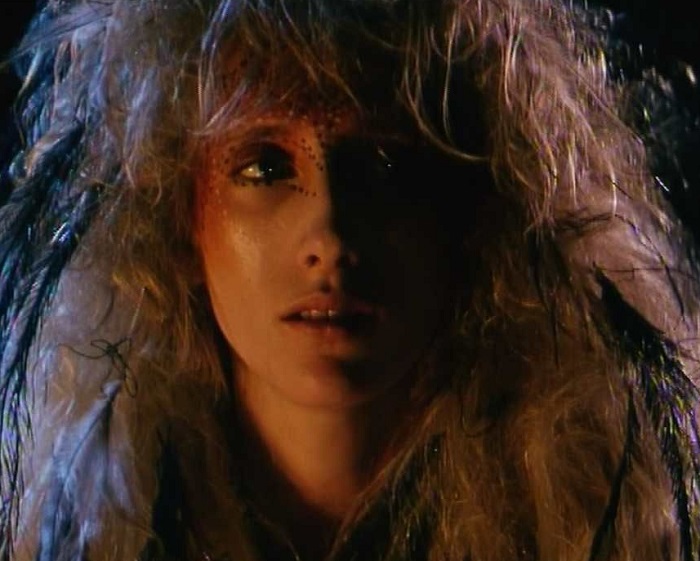
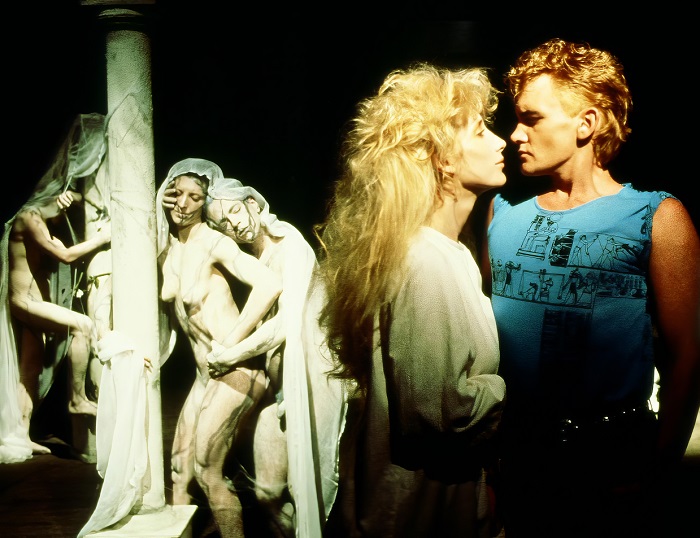
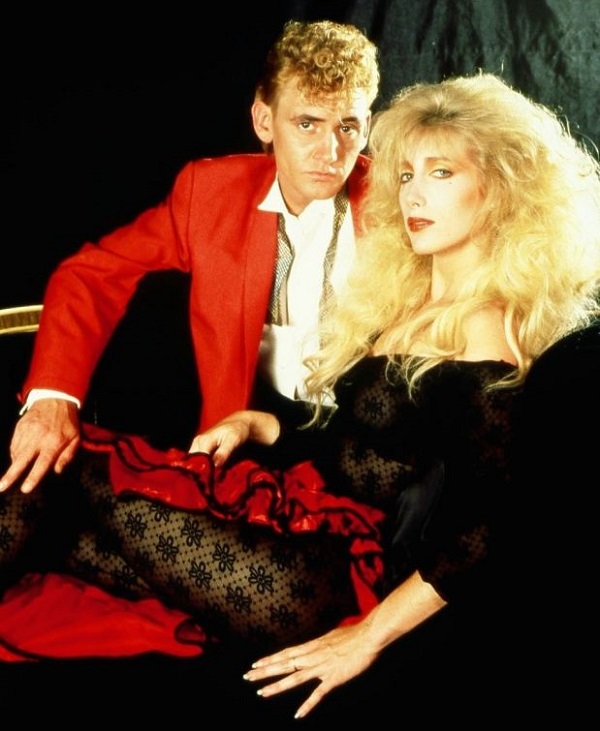
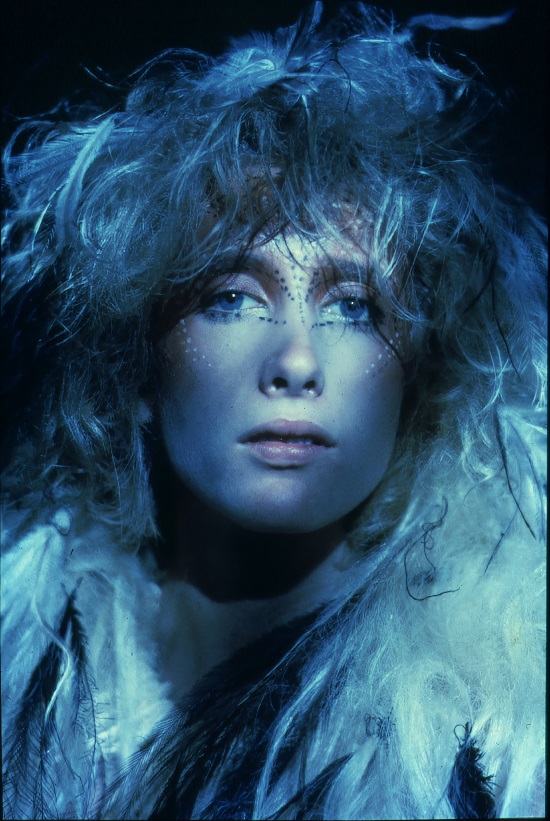
With the frequently unclothed Dingo Girl played by stunning Playboy model Amanda Dole; a cast packed with familiar and fascinating faces (including the aforementioned comic genius of the late, great David Argue); a narrative that melds low art with artistic daring; and an otherworldly, highly theatrical vibe, Pandemonium plays out like a wondrous, delirious fever dream.
“Pandemonium was always going to be triggering,” says Haydn Keenan. “Distributors were horrified and that was exacerbated by the fact that the film looks like it cost tens of millions of dollars. So, the plush settings and costuming by Melody Cooper and David Sanderson’s wonderful photography really created havoc when set against the outrageous fable we told.”
You’re enjoying a bit of a purple patch right now! How did the re-release of Going Down pan out for you?
“If you can hang in there long enough, you too will have a purple patch! There seems to be a young group finding my films and realising that Australia has a strong tradition in left-field indie filmmaking. Our company Smart St Films has been at it since the early 1970s, beginning with our feature 27A, a tough Ken Loach-style picture set in a psych unit when so much of local production was sex comedies and middle of the road historical melodramas. That pic won Best Film, Best Actor and a gold medal for fiction at the old AFI Awards. Going Down came out of the streets and struck a nerve when it was released in the 80s. The re-release we did recently has been a phenomenal success with sold out sessions all around the country. We had an older group having a look at how young and gorgeous they were in the 80s, but most importantly, we had a young crowd who had never heard of the film, discovering it for the first time. We even had a few people chucked out for being drunk, and a couple of complaints that girls were partying during the s screening. I can’t think of any other local film that has run nine weeks in its re-release. It’s worked better than we could have hoped. The key was connecting with young people through social media. That was made possible through the energy and creativity of young local filmmaker Billy White, who worked on the distribution with me. He connected with the film and then took that out to the audience with a sense of fun and energy. The purple patch has come about by connecting to a young audience. Our plan for Going Down was to treat it as a first release, and not a Sunday afternoon repertory screening. It worked perfectly.”
You’ve now got Pandemonium screening at The Sydney Underground Film Festival…how did that all happen?
“Jamie and Aspasia Leonarder aka Jay Katz & Miss Death are legendary counterculture entrepreneurs and cinephiles who do a lot of presenting at SUFF. We’d worked together on several other events. They’re wonderful people with an unmatched knowledge of film and love of cinema. They’d seen the film and loved it, and they spoke to Festival Director Katherine Berger about this unknown little picture. She took a look and invited us in. Jamie and Aspasia will be presenting the film and doing the Q+A afterwards. I’m looking forward to giving the movie an airing in front of a new young crowd.”
SUFF feels like the perfect fit for your films…
“Whether producing or directing, I’ve always worked the left field rather than underground as such. From social realism in 27A to youth cult in Going Down and surrealist fairytale in Pandemonium, they’re very different styles, but with something of my sensibility in each of them. I’ve always felt that a mature film industry should have room for a range of productions, from indie left field stuff through to mainstream and on to genre industrial. The mainstream is heavily oversupplied here and I work the left field. That gives you freedom and adds depth to Australian film culture. So, I haven’t tried to be underground, but I’m more than happy to screen at SUFF.”
Pandemonium has been off the radar for some time…what’s been happening with the film?
“While working the left field gives you freedom, as I’ve just mentioned, there can be costs you have to pay. Pandemonium’s plot was simple: a baby saved by dingos from murderous parents in the outback and brought up as one of their own comes back to find out why her parents tried to murder her and finds herself trapped in a disused movie studio in Bondi populated by discarded cinema monsters. Pandemonium was always going to be triggering. Distributors were horrified and that was exacerbated by the fact that the film looks like it cost tens of millions of dollars. So, the plush settings and costuming by Melody Cooper and David Sanderson’s wonderful photography really created havoc when set against the outrageous fable we told. Not many people got to see it here; the irony being that it was a great hit in Japan and Germany and numerous other territories where they couldn’t possibly have got the in-jokes and meta-text created for Australian audiences. I was regarded as possibly clinically insane in the industry at the time and that made it impossible to get work for quite a while. There are prices to pay…which brings us back to the current purple patch. If I can impart anything to young people it is this: don’t give up! Tossing in the towel means you are definitely out of the game. Hang in there and you might get to be an overnight success after forty years! The bottom line is: be clear about why you’re getting into film in the first place. If it’s to be rich and famous, you can be very disappointed. If it’s to tell stories and make people feel alive, then it’s almost impossible to lose. I’ll swap a meal and a bed for the night and tell you a story.”
Pandemonium is a film quite unlike any other…what were your inspirations behind the film?
“Producer Gai Steele and I had been to a market in Italy to sell Going Down and in that abattoir of scoundrels, grifters and independent filmmakers, it became apparent to us that there was no such thing as the unsaleable film. Every picture can find a home. You just have to have your budget right in relation to the market size. We came home excited to make an Aussie exploitation film that would be different. At the time, we were living in a block of flats in North Bondi filled with all manner of wildness. Actors Max Cullen, Claire Binney, Tracy Mann, along with The Divinyls, and my partner and school friend Esben Storm…it was a mad house and filled with creative energy. We decided that this was a perfect setting for a house of horrors. Peter Gailey and I set about writing a story that we could set on the beach that would slaughter every sacred cow we could get our hands on. We covered the wall with the mad, bad and corrupt news stories that made up the modern world which would go into our story.”
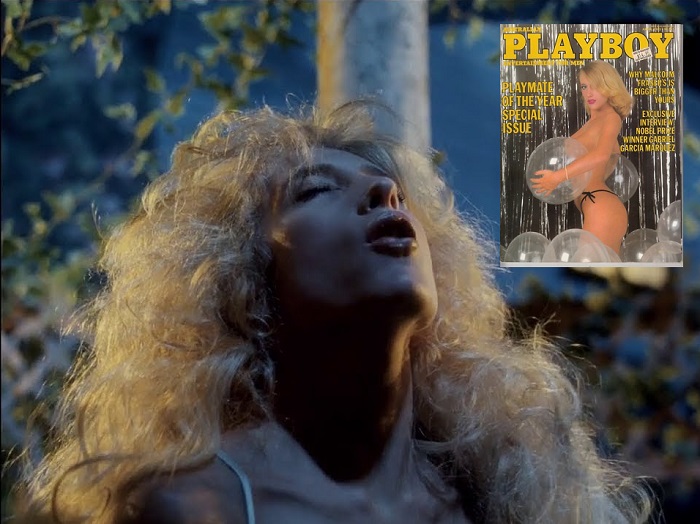
Your incredibly beautiful leading lady Amanda Dole was a big deal at the time as the Aussie Playboy Playmate Of The Year. How did you secure her for the film? She has pretty much vanished from the scene…what’s she up to now?
“You’re right! Amanda is one of those photogenic beauties that don’t come along very often. She was one of the people who came through our block of flats, and we asked her if she would like to play the dingo girl opposite the late, great David Argue as Kales Leadigham, the astral surveyor who stumbles across a perfect confluence of boree zones, lay lines and breakfast cereal toys which can only mean that ‘the big one’ is about to hit us. Amanda had worked with David on Midnight Spares, and they made a magical on-screen couple, her quiet grace and his Buster Keaton lunacy. Smart and with a strong sense of social justice, Amanda later became a senior figure in the trade union movement.”
Like Going Down, Pandemonium has an extraordinary cast…can you tell us how you brought some of these folks onto the film? Ignatius Jones, Lex Marinos, Greg Ham, Gary Foley, and of course friends and compatriots like David Argue and Esben Storm…
“For me, creating teams is the key, and I’ve been lucky to work with a fantastic group of people. Many of the people in the film lived in our block of flats in Bondi. Greg Ham was in Men At Work, and he provided music for the film. Some of the boys in Australian Crawl were also investors. Esben Storm and David Field were very dear old friends who I knew would eat the parts we gave them. Gary Foley was an old friend from 27A, and he’d been in Going Down too. Ignatius Jones, Lex Marinos, Arna-Maria Winchester and Rainee Skinner were all people whose work I’d admired for ages…I offered the outrageous pantomime we were proposing and they threw themselves in wholeheartedly.”
Shooting Pandemonium must have been quite the experience?
“The shoot was one of the most amazing experiences of my career. We had a cast and crew given the freedom to express themselves all pulling in the same direction. There was the most extraordinary energy around the film by people who were experienced, highly skilled and knew how to produce more value on screen than the budget actually catered for. There was a Dogme aspect to the whole thing. We didn’t want the film to look too Australian apart from the kangaroos and koala bears. We wanted it to be from nowhere and acceptable in the US as a domestic production. So, every cast member stuck a pin into a map of America and that was the accent they had…New Orleans, New York, and so on. We had to shoot the picture in 18 days, so unless there was a disaster, we decided no more than two takes on any set up. This produced a tension amongst the actors which made things electric. The whole film is shot on sets. The Sydney Theatre Company had just finished their production of Hedda Gabler and dumped the set at Tempe tip, so we sent a truck down and grabbed it. Legendary production designer Grace Walker rang to say they had just finished shooting on Les Patterson Saves The World, and asked if we wanted Arab streets, Sultans palaces, dungeons etc. It was all sitting in the disused tannery in Mascot near the airport. In both cases, we just repainted them to suit our purposes and there was $1 million worth of on-screen value. We had Richard Sharah who designed David Bowie’s Ziggy Stardust look doing the make-up, and to top it off, we recorded not one frame of sync sound. The whole film has dialogue recorded in post-production. How old school can you be?”
Can you let us in on a few highlights?
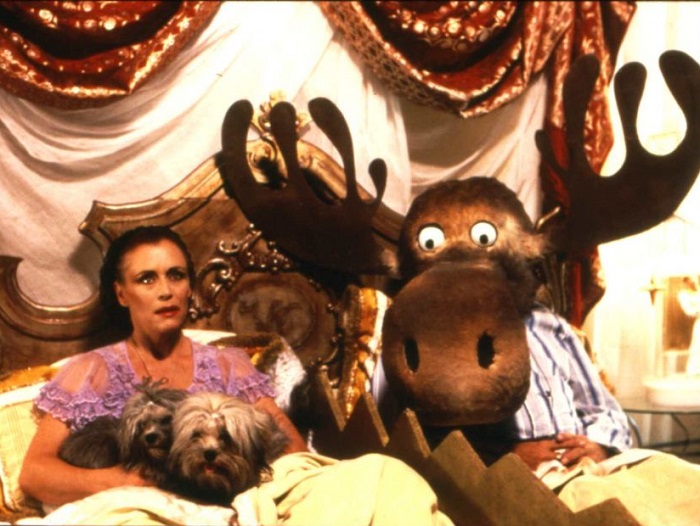
“Possibly one of the highlights of the shoot was a wedding scene where Australia’s leading stuntman Grant Page had to fall from a drain pipe two floors up wearing a Rocky & Bullwinkle-style moose head doubling for Esben Storm. The art department didn’t have enough time to produce the two ebony statues holding flaming torches for the wedding ceremony, so I talked to the two unit nurses, who in the spirit of the film, took off their clothes and painted themselves black and stood holding flaming torches in the ceremony. A wire broke during Grant’s fall, and he crashed to the ground heavily. The two nurses ran to his aid and an ambulance was called. You can only imagine what was going on in the minds of the paramedics as they got out of the ambulance to see a guy in a moose head being attended to by two naked women painted black. They turned around and got in the ambulance and prepared to drive off and had to be convinced that this was all real. Aaaaah, adventures in the screen trade.”
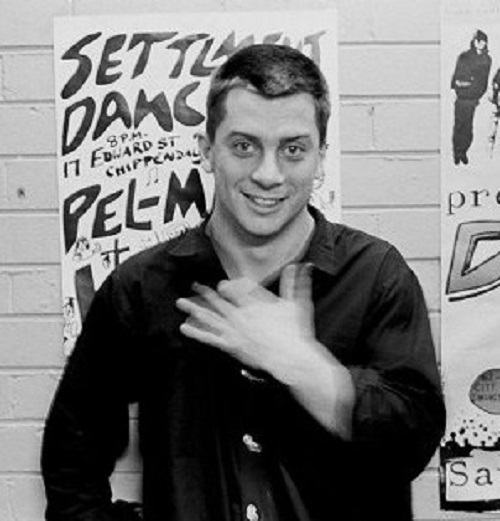
Pandemonium, however, is not the only film you have playing at SUFF…what can you tell us about your short film Motion Pictures?
“Esben Storm and I had won two of the three categories at The Sydney Film Festival short film competition in 1972, I think it was, and we realised how arbitrary awards are. The following year, we determined to make a film that was designed to win art competitions. So was born Motion Pictures. It’s designed to confront the audience, while on the soundtrack, up-themselves film critics discuss the meaning of the film. I won’t describe its content, but suffice it to say that at the 50th anniversary of The Sydney Film Festival, David Stratton named it as the most offensive film of the 9,000 he had programmed at the festival! So much so that the laboratory processing the film made one print and then destroyed the negative. The competition’s sponsor had said they would refuse to pay the prize money if it won, and subsequently pulled out of the competition. Dendy Cinemas had to move in the following year to create The Dendy Awards. Motion Pictures is four-and-a-half minutes long, two-and-a-half minutes of which are titles. It was screened along with the other finalists to 3,200 people at The Rose Bay Wintergarden, and over the course of those four-and-a-half minutes, more than 3,100 people fought their way out of the cinema, climbing over seats, elbowing each other, and fighting to get out.
That’s wild!
“In the foyer, we had actor Richard Moir dressed as Mike Willessee with a camera crew interviewing people as they ran from the cinema asking them how they thought the Australian film industry was travelling. At the end of the screening, there were only a couple of people left in the empty cinema, one of whom was George Miller. He told me years later that he would never forget that afternoon. Motion Pictures is a film that once seen can never be unseen. It’s screening as part of a short film program at SUFF and thankfully they have programmed it as the last film in the program as we didn’t want to mess up any young hopeful who was unlucky enough to have their film screened after our little movie.”
What’s next for Pandemonium?
“We’re in the process of restoring the film. We’ve got a beautiful 4K scan and hope to have completed the job later this year, after which I’m hopeful we can get it into some cinemas where a new young audience will get the chance to see what their parents were denied.”
Pandemonium will screen at The Sydney Underground Film Festival on Saturday, September 12. Click here for all ticketing and venue information.
