


by James Mottram
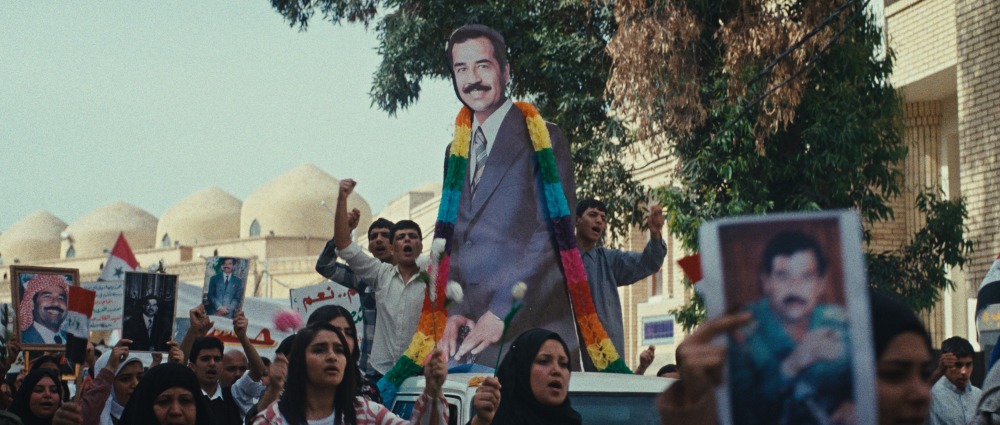
In the 1990s, dictator Saddam Hussein ruled Iraq with an iron fist, living in luxury while his citizens struggled to meet every-day needs. At the beginning of the decade, the UN Security Council placed a trade embargo and oil export bans on the country in response to the invasion of Kuwait. For most, the trickle-down effect was daily shortages of the most basic food provisions. It meant hunger, poverty and scars that cut deep.
“As a child, I was frustrated with my parents,” recalls filmmaker Hasan Hadi. “They cannot afford anything I want. They don’t provide proper food. And you see them selling everything they love and collected through years of work and hardship, bit by bit, to survive. Me now, as an adult, I feel so much pain and shame because it is about the pain, the inability to provide for your kids… that’s the worst thing any parent can go through.”
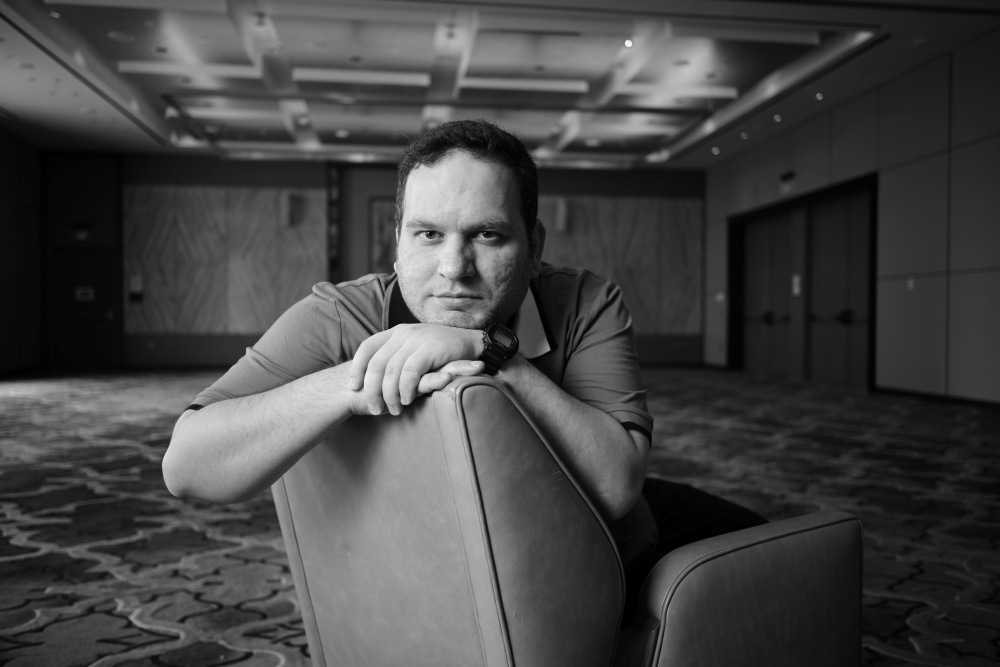
Being raised in Iraq in the nineties was an utterly isolating experience; the closest they’d get to the international community was watching fighter jets fly overhead. “We didn’t know anything outside the war,” he says. “It was almost like a prison Saddam made. We don’t have any access to outside the world. We don’t see any TV. We don’t see any news. You live in a bubble. It’s like a North Korea situation when you believe what you see.”
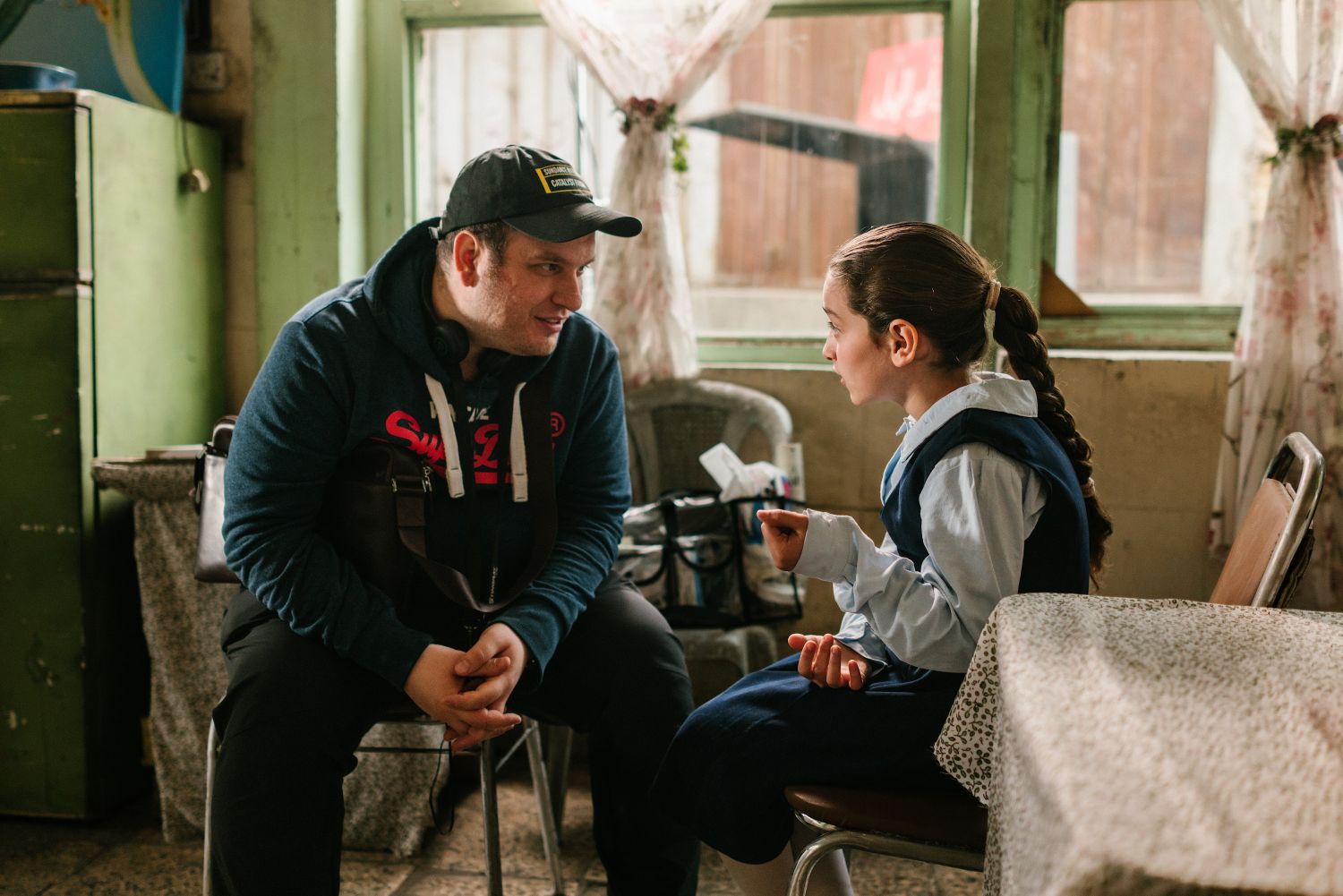
Hadi has now channelled these feelings into his new movie, The President’s Cake, a sublime view of life in Iraq from a child’s point of view. Set in Chibayesh, the film follows the plight of 9-year-old Lamia (Baneen Ahmed Nayyef), as she scrambles to find the ingredients to bake a cake in honour of Saddam Hussein’s birthday. Traditionally, the dictator celebrated getting a year older by demanding that the population celebrate with him.
In school classrooms, children were chosen to bring flowers and bake cakes – something Hadi feels is a great irony. “It was illegal in Iraq during that time to have flour, sugar,” he explains, noting that the government controlled access to these precious foodstuffs to keep a black market at bay. Yet Hussein requested cakes, to be made from ingredients “that are illegal to sell in the country.”
Growing up, Hadi witnessed this near-impossible task – the result of which very often wasn’t even shared with the pupils. “The thing is, teachers want the cake, to eat it. So that’s what they really care about,” he says. “Sometimes the teacher wouldn’t even cut the cake. He wants to take it to his kids at home. So it was that situation. I never tasted the cake until it was actually old. It’s not something I tasted. Somehow it would disappear from our radar and it was gone.”
Marking his first film as director, Hadi felt it was imperative to draw from his own experiences. “Because you don’t want to go into territory that you don’t feel confident as a first time director,” he says. “But at the same time, I think it was also the result of me as an adult questioning my childhood. What things happen? How did it happen? How do we allow that to happen?”
While Hadi was chosen as a flower boy on Hussein’s birthday, meaning he only had to pick flowers, he was friends with a boy who did have to make a cake. “He couldn’t deliver, and his fate changed completely, because the school expelled him. And then he had to join Saddam’s children’s army. This is one of the things I felt haunted by. What if it was me?” When I ask if Hadi remained in contact with the boy, his voice drops to a whisper. “Unfortunately, he…” He falls silent, thinking of his lost friend.
In Iraq at this time, it wasn’t just food that was in short supply. Cinemas were all closed, as sanctions made it impossible to import films from abroad. “So, my love for cinema was never born inside the theatre,” Hadi explains. “There were no cinemas at all, even though Iraq was actually one of the very first Arab countries to have cinemas.” Instead, Hadi learnt about movies another way. “I started to smuggle VHS tapes,” he says.
Family members began to send him on missions to retrieve pirated movies from others in the community. It sparked a love for movies, everything from Godzilla films to Tarkovsky. “It was so beautiful for me,” he says. “I remember I watched – and it will break your heart – Lawrence of Arabia on an 18 inch TV!” Soon, he was hooked by a medium capable of transporting you “into another culture, to another time, on an emotional journey.”
Learning English from watching movies, Hadi was one of the lucky ones, able to go abroad and study. He attended New York University [NYU], later teaching courses there too. “By the time of Covid-19, I started writing this project,” he adds. “And I applied to Sundance. I got lots of support from Sundance. Then I quit teaching at NYU and was like, ‘I have to go and make this film.’”
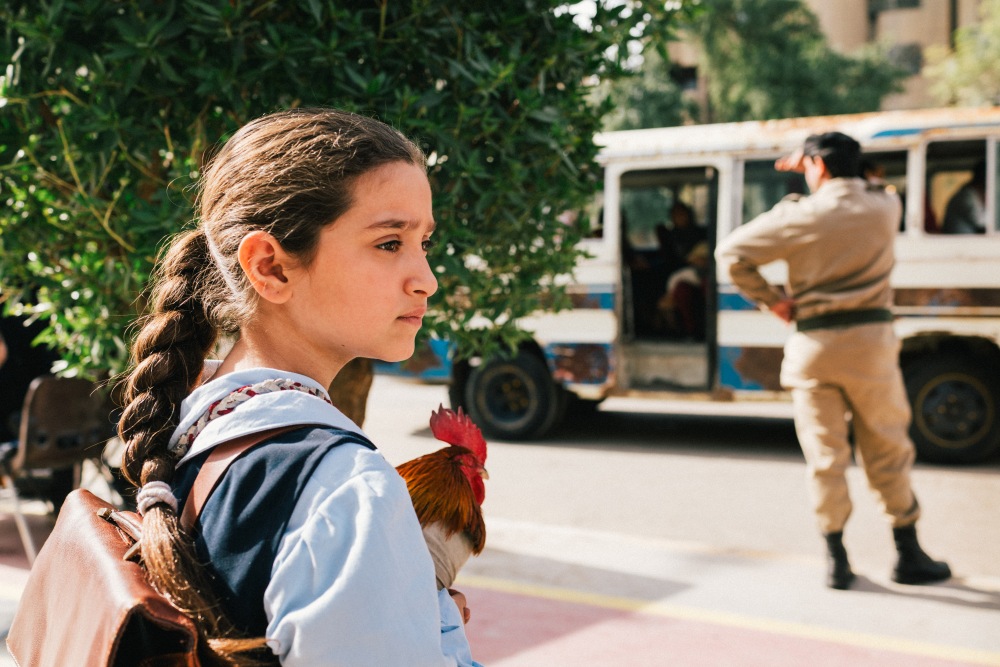
Influenced by Italian neo-realist classic Bicycle Thieves, Hadi elicits impressive naturalistic performances from the film’s young stars – particularly his lead. “I saw Baneen and I immediately felt she can carry the film. Her parents come from a conservative community, and they didn’t really want her to be on the screen. We had to convince them. Then they became very supportive. But they needed some convincing.”
When The President’s Cake bowed in Cannes last year, it became an instant favourite. The first ever Iraqi film to be selected for the Cannes Film Festival official selection, it won the Audience Award in the Director’s Fortnight strand and claimed the Camera d’Or – the prize given to the best first feature. While it was overlooked for an Oscar nomination, it’s been gaining admirers wherever it’s played.
Based in Baghdad, Hadi sounds a note of caution. “We are still a wounded nation and we are healing,” he says. “But the thing about this is that sanctions and dictatorship, they just don’t destroy buildings. They destroy the fabric of the society, the morale of the humans in that society. So, to build that, to heal, it’s really a lot of work… rebuilding the spirit of humans and the moral of the fabric of the society… takes the longest time.”
The President’s Cake is in cinemas from 2 April 2026
