


by Stephen Vagg
Dame Nellie Melba was one of the most, if not the most, famous opera singers in the world. Her death was a big deal in 1931 – in Australia, at least – and her fame has lingered on today, mostly in terms of slang (“doing a Melba”). Her success brought Aussies a great deal of pride, especially Melbournians (she hailed from that neck of the woods) and led to a series of biographical works: countless books, of course; Ken G Hall planned to make a movie, The Life of Melba, with Marjorie Lawrence in 1940 but it was cancelled due to war; Crawfords made a 1946 radio serial Melba; Lewis Milestone did the 1952 Melba; there was a 1988 mini-series starring Linda Cropper.
The 1952 Melba was a famously dull flop and the mini-series underwhelmed – in part because Melba’s life wasn’t that interesting, or so it seemed: she sang, succeeded, retired, came out of retirement, etc. Her life lacked an easy-to-grasp arc like, say, Marjorie Lawrence with her polio, or Caruso with his poverty and early death. Melba did get up to interesting things, but they didn’t fit neatly into the plucky-Aussie-conquers-the-world narrative: she left her husband to shag Prince Philippe, Duke of Orléans, she regularly undermined her potential singing rivals, she was convinced that the Germans wanted to assassinate her during World War One. These things made her a, well, three-dimensional person, which people tend not to want from biopics (eg Michael). However, they could be used to inspire a fictionalised character which was the case of the 1934 movie Evensong.
Evensong was based on a 1932 novel by Beverly Nichols, one of those colourful British writers of his generation, sort of like Somerset Maugham: hugely prolific, gay, ex-lover of Siegfried Sassoon, long-term partner of Cyril Butcher, a military intelligence officer in World War One, someone whose 1930s political opinions didn’t entirely age well. Nichols got to know Melba when he ghost-wrote the singer’s memoirs Memories and Melodies. Melba died in 1931 and the following year saw the publication of Evensong, which became a bestseller; it was also adapted into a play that did well in London (though not Broadway) where Edith Evans played the lead.
Evensong told the story of an ageing opera singer, Irela, who, it was widely assumed, was based on Melba. The portrayal wasn’t entirely flattering (i.e. it was dramatically interesting) – bitchy, boozy, insecure, worried about ageing, with a decaying voice, shagging an aristocrat, sledging rivals. Nichols admitted that the background of Irela had some similarities with Melba but claimed nine-tenths of the story was his imagination; he even insisted Melba had read the novel in manuscript form prior to her death and found it funny. In another interview, he said that the character was inspired more by the sex-positive actress Sarah Bernhardt. We’re not sure if you should believe Nichols – writers tend to lie about their inspirations for stories– but maybe there was an element of truth.
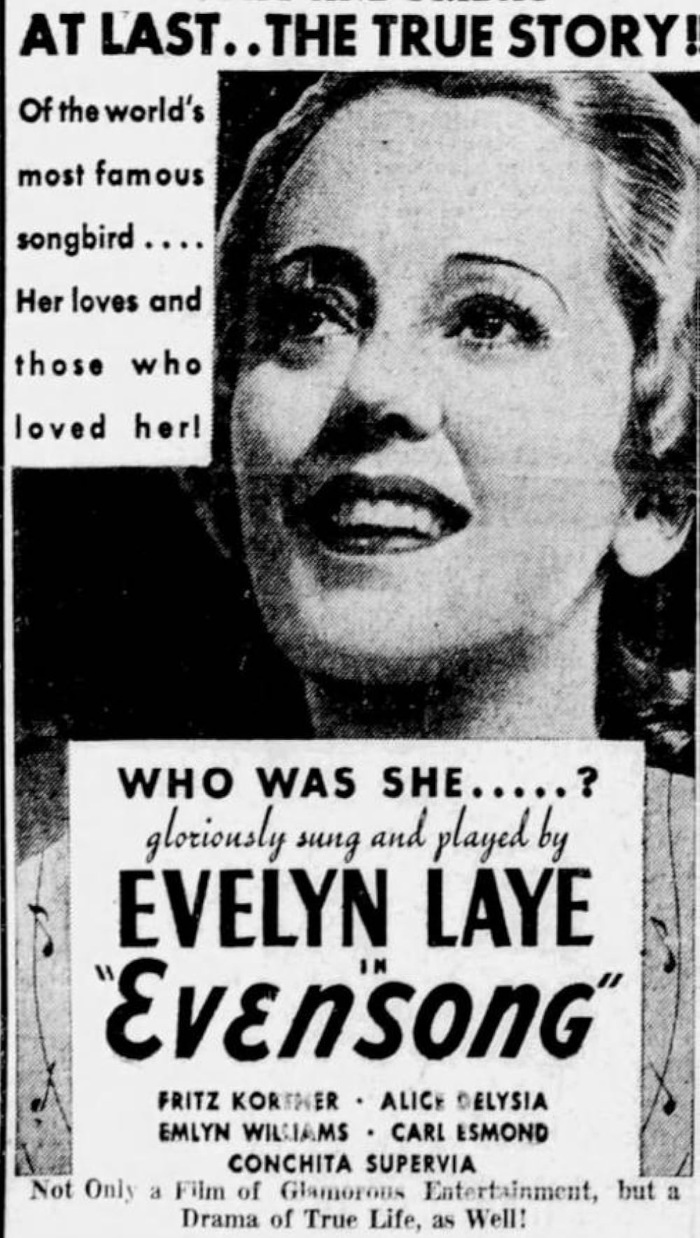
Film rights were bought by Gaumont British, one of the leading British movie studios, and the picture was directed by Victor Saville starring Evelyn Laye, who at the time was “the undisputed leading lady of the English musical comedy stage.”
Laye was mostly a stage star – she did Noel Coward’s Bitter Sweet on Broadway – but made the occasional movie.
Some gossip: when Evensong was being made, Gaumont’s big singing star was Jessie Matthews, who had hooked up with Laye’s husband, Sonnie Hale, back in the late 1920s, leading to a well-publicised divorce; things got heated, as they can do in such situations – Laye even once stuck her hatpin into the tyres of Matthews’ car when she found it parked outside their flat.
Anyway, Victor Saville had just made Evergreen (1934) at Gaumont with Matthews prior to Evensong. Before making the movie, Gaumont’s head of production Michael Balcon checked with Matthews if it would be okay to have Laye on the lot; Matthews said yes. The two women did bump into each other in an elevator and it was all tense and quiet but no claws were scratched. Victor Saville even made a joke during the Evensong shoot to Laye about having recently “directed your sister-in-law in Evergreen” which made Laye laugh. (Laye remarried happily to actor Frank Lawton while Matthews would divorce Hale and then a third husband; Matthews lived in Australia for a bit and wound up in an ABC television play Dinner with the Family. Oh and Sonnie Hale… no oil painting, for what it’s worth, he must have had other things in his favour. We’re really getting off topic now…)
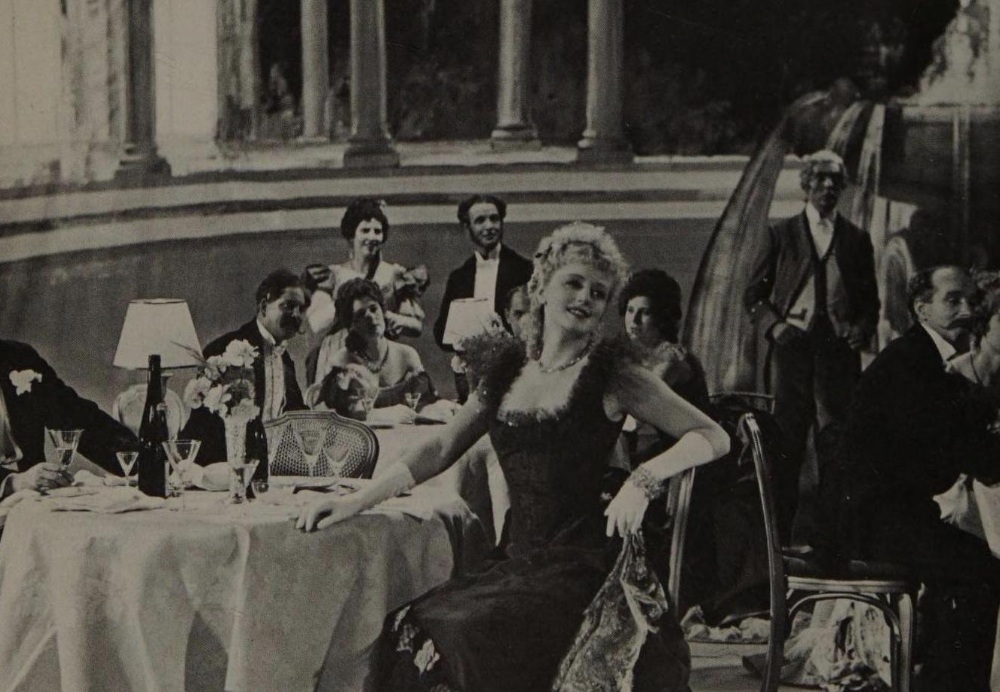
Evensong had a healthy budget – 25,000 pounds – and there was plenty of production value in the final movie. Alec Guinness was an extra, and he disliked the experience of moviemaking so much that it put him off film work for over a decade (his next picture was a good one: 1945’s Great Expectations). The movie was the only screen appearance of Conchita Supervía, a top singer who played a role rumoured to be based on Toti Dal Monte, Melba’s rival; not long after making Evensong, Supervia died in 1936, shortly after having given birth to a (stillborn) child. The cast also included Australian singer Browning Mummery, who had performed opposite Melba.
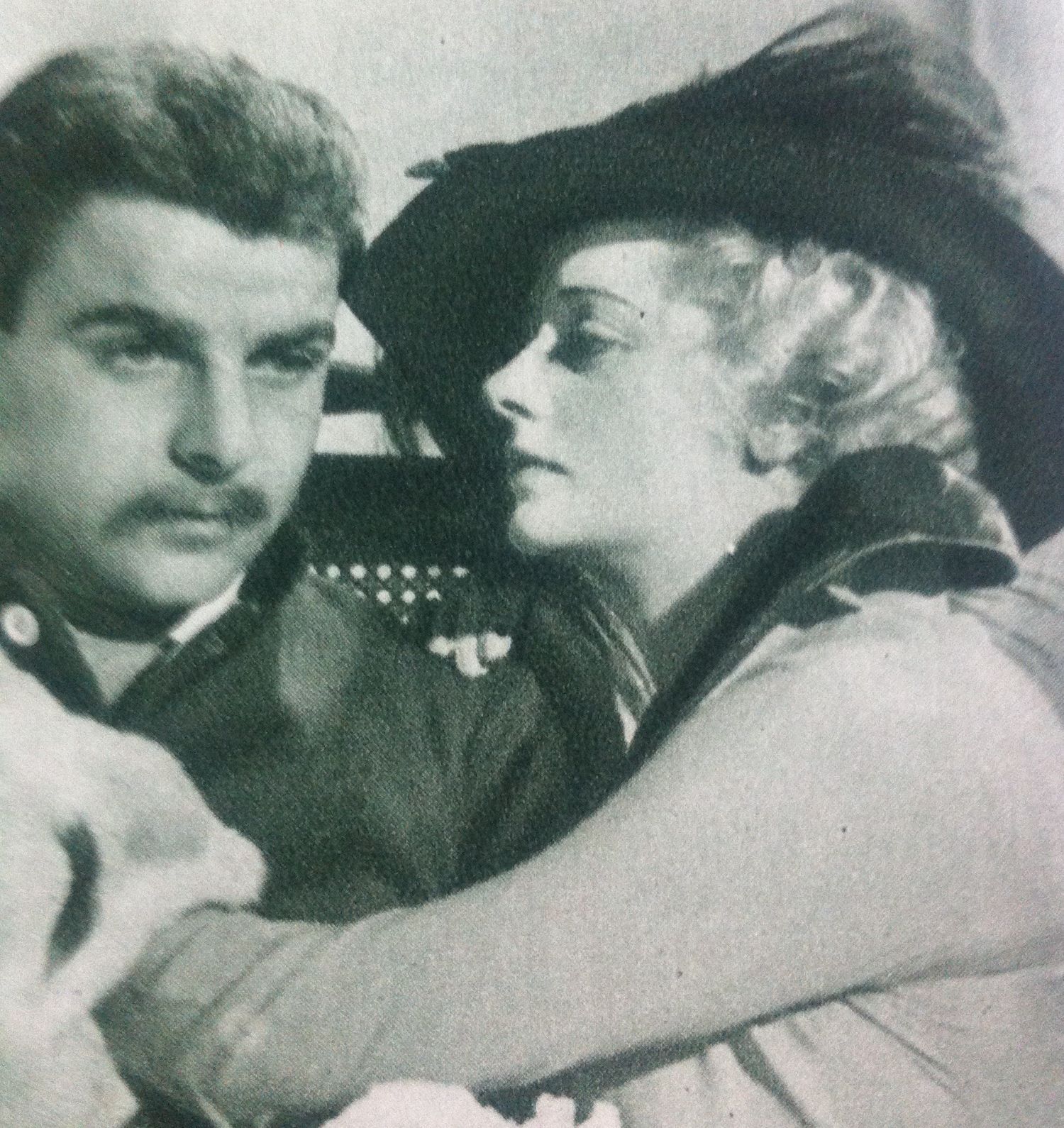
 To be honest, Evensong is a boring movie, which lacks humour, spark and romance. Laye’s on-stage magic doesn’t come across on-screen, at least not here – Matthews was a less accomplished performer but better value in front of the camera. There’s too many European leading men in the movie – this was the era of Anton Woolbrook and Conrad Veidt – and the story lacked an interesting relationship to hang on to; the script is basically a bunch of men lecturing Irela: a controlling, possessive pianist who she lived with without being married (Emlyn Williams), a member of the Austrian royal family who dumps her; a controlling manager (Fritz Kortner). We think the audience is meant to feel sad for this singer to have sacrificed everything for love but all her romantic options seem bad.
While the novel was criticised for its harsh depiction of the Melba-like lead character, watching Evensong you wish it had been harsher, and just gone full camp. Opera fans will get a lot out of the movie, but it’s not hard to see why this wasn’t a big hit.
Incidentally, the film of Evensong was banned in Australia by the slack-jawed Commonwealth Film Censor of the time, Cresswell O’Reilly – he didn’t give reasons but it was reportedly on the grounds that the lead character was a slight on our Dame Nellie Melba. This seems like a dumb decision now and to be fair, it did at the time – O’Reilly’s verdict was overturned on appeal. But it should be noted that Melba had only died a few years earlier and she was held in extremely high regard. And we’re not immune from such behaviour now. Remember all those Australians who lost it when Germaine Greer said Steve Irwin deserved to be killed by an animal? Cresswell O’Reilly was one of the most damaging figures in the history of Australian cinema – up there with Robert Menzies, Charles Davidson, James McGowen, Alexander Mair, and Norman Rydge – but if you think that he was isolated in his beliefs, you don’t know Australians.
Anyway, Evensong. Not a good movie. But Dame Nellie Melba buffs will enjoy it.
