



by Stephen Vagg
A film about horny Americans on shore leave in Australia
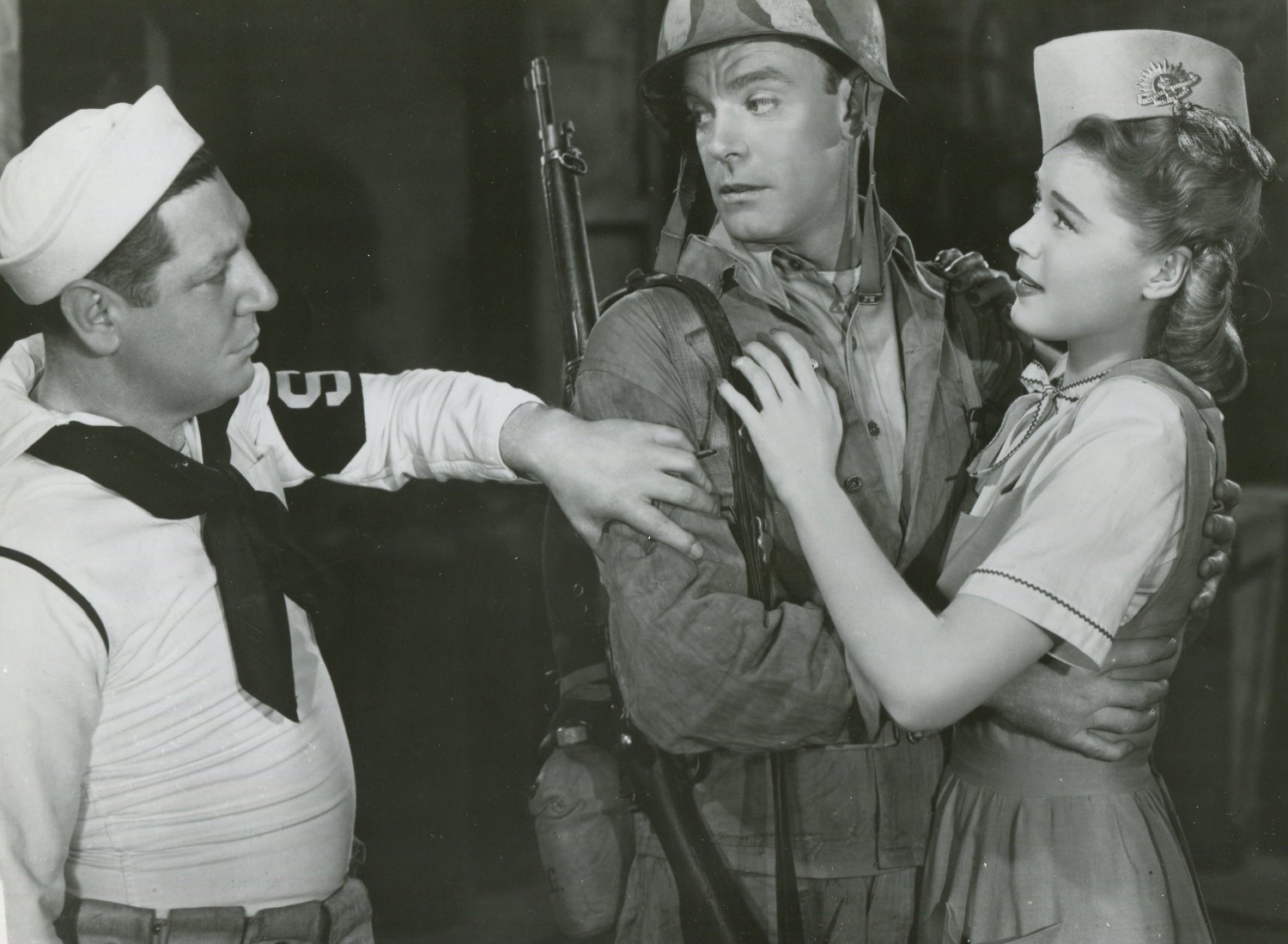
A common expression of the war years in Australia and visiting American troops was “over sexed, over paid and over here”. That’s clearly how Americans saw themselves too, at least according to the 1944 American comedy Abroad with Two Yanks, a story of American servicemen trying to shag as many Australian women as possible while on leave.
This was a medium-budget comedy from producer Edward Small, who churned out scores of movies over the years in all sorts of genres. He wasn’t a low-budget producer, more a specialist in “A minus” or “B plus” films.
Small was best known for his swashbucklers (The Count of Monte Cristo, The Man in the Iron Mask), but also did Westerns (Kit Carson), film noirs (Kansas City Confidential), biopics (The Toast of New York), the occasional “A” (Witness for the Prosecution) and farces, such as Abroad with Two Yanks.
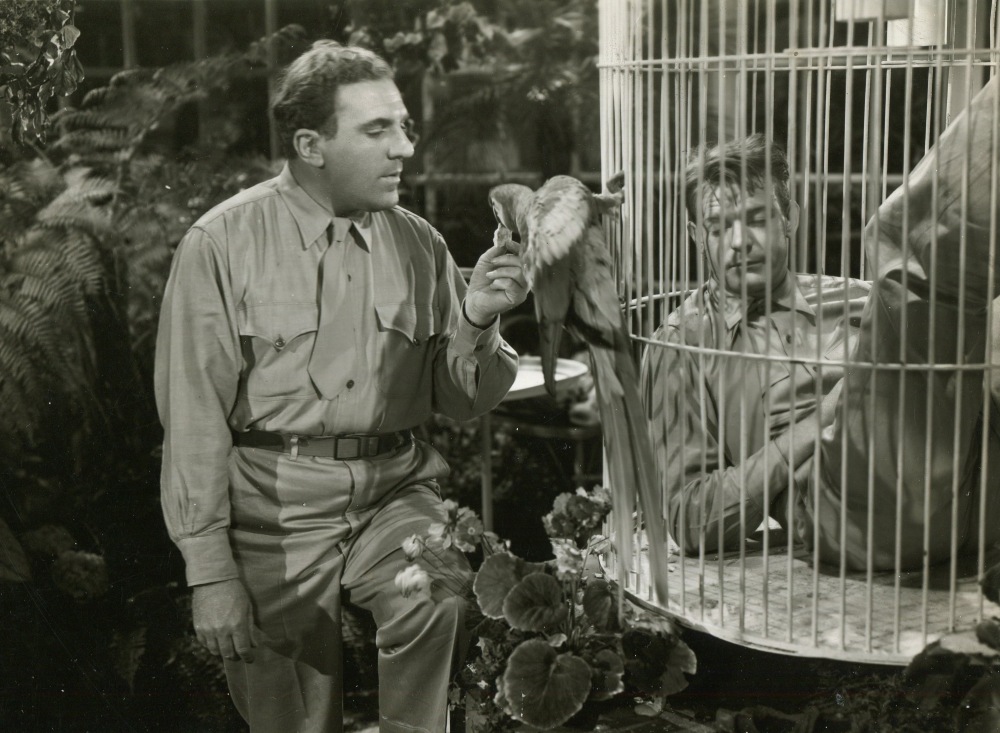
Small had a soft spot for farce – he started his producing career with movies such as McFadden’s Flats and The Cohens and the Kellys franchise, and returned to the genre during World War Two, with adaptations of old stage comedies like Up in Mabel’s Room, Getting Gertie’s Garter and Brewster’s Millions. Those three films were, like Abroad with Two Yanks, made during the war, directed by Allan Dwan and starred Dennis O’Keefe. Unlike those three, Abroad was not based on a play but was an original – well, it was technically an original (credited to Fred Guiol) but one gets the sense that the filmmakers had read/seen Maxwell Anderson’s and Laurence Stallings’ classic stage play What Price Glory?
What Price Glory? told the story of two American soldiers in France during World War One, Flagg and Quirt, who were always double crossing each other in pursuit of some woman – a rival comedy more than a buddy comedy. The play is almost forgotten now, but at one point, it was hugely influential – people have said that it and The Front Page were the stage plays that most influenced Hollywood comedy in the 1930s and 1940s. Guiol made a lot of buddy/rival service comedies over the years, some with the team of William Tracy and Joe Sawyer.
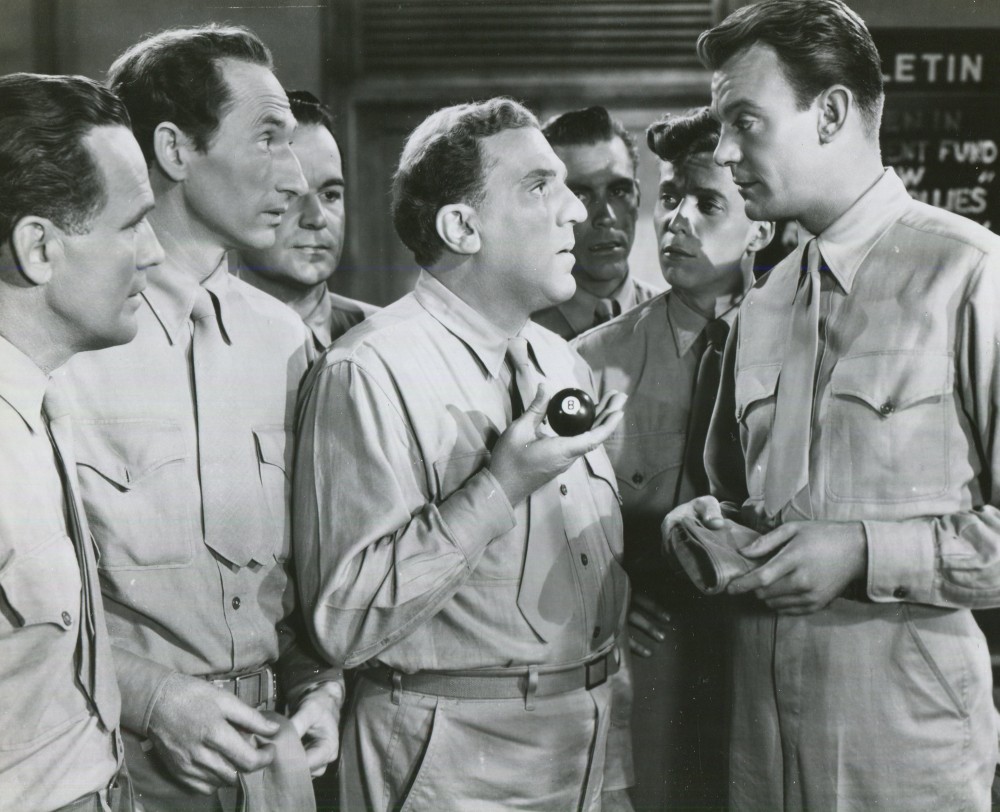
Anyway, Abroad with Two Yanks – check out the trailer here – was originally meant to be a feature from Hal Roach called Yanks Down Under (Guiol worked for Roach for many years). Roach had an interest in Australia, as indicated by his 1939 down under Western Captain Fury, and he planned to shoot the film with William Bendix. However, Roach then went into the army; Guiol hoped to make the film himself, but instead Roach sold the project to Edward Small, who turned it into a medium-budget Allan Dwan/Dennis O’Keefe farce. Finance came from United Artists who called the project “a good low bracket picture with broad appeal”.
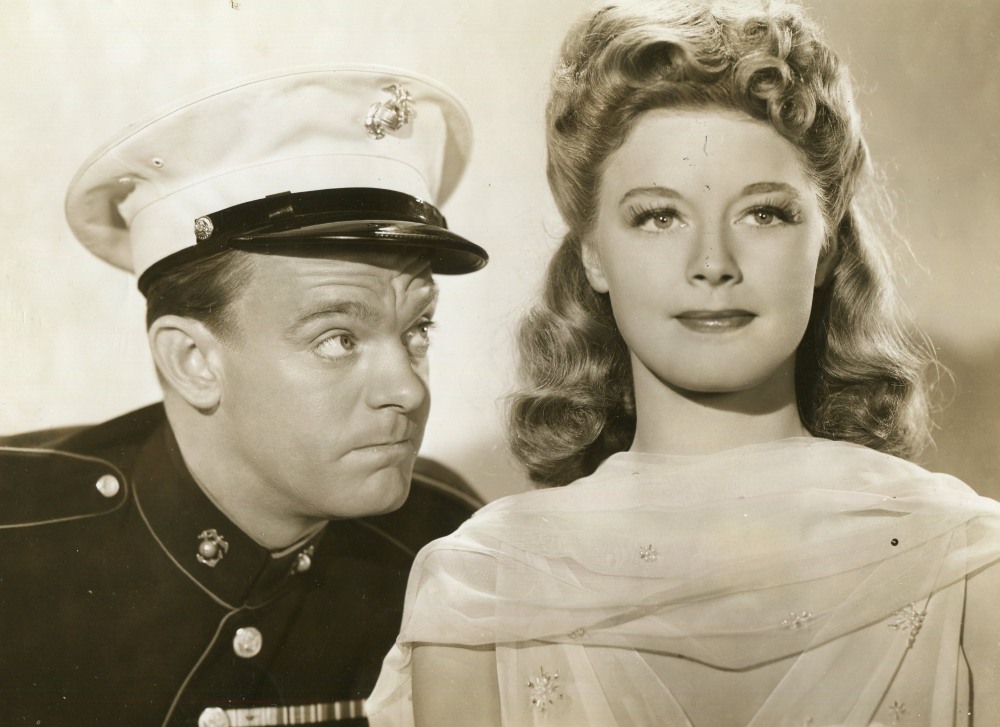
Abroad with Two Yanks focuses on two American soldiers (William Bendix and Dennis O’Keefe) in Australia on shore leave. In the film, the friendship of O’Keefe and Bendix is threatened by O’Keefe constantly chasing women that Bendix is interested in – O’Keefe is no oil painting, but William Bendix looks like, well, William Bendix, so you wonder why O’Keefe doesn’t get his own women.
O’Keefe hears about a girl (Helen Walker) who is the family friend of an Aussie (John Loder) whose life Bendix has saved, so O’Keefe pretends to be Bendix in order to seduce her, which isn’t very nice, but very much What Price Glory? O’Keefe then keeps chasing Walker, even after Bendix falls for her himself, and then later on, when Loder reveals that he loves Walker, Bendix steps aside, but not O’Keefe, so when you think about it, O’Keefe is the villain (or, at least, antagonist). But basically, Bendix and O’Keefe keep playing tricks on each other with Walker as the stakes.
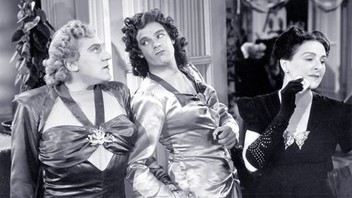 The film loses momentum in the middle but recovers at the end when O’Keefe and Bendix wind up in drag and attend a party. (The writers were likely influenced by another stage farce, Charley’s Aunt.) Dwan told Peter Bogdanovich that making the film was “a lot of fun” with Edward Small having the script changed constantly during the shoot and Dwan doing whatever he wanted; all these things come across in the final project. The script is a big jumble (five writers are credited) and it’s definitely not as tightly plotted as the stage adaptations from Small/Dwan/O’Keefe, but the energy levels are high, and you sense that the cast will do anything for a laugh.
From an Australian point of view, it is fascinating to see a Hollywood film set almost entirely in Sydney – Walker doesn’t really try an Aussie accent but some of the other actors playing locals do and the results (eg Loder) are weird and wonderful. The writers make some attempts at Australianisation, with characters having names like Cyril and Joyce, and local slang popping up in dialogue. It’s affectionate towards Australians and the finale does have two men in drag – you can’t get more Aussie than that.
The cast is interesting. William Bendix specialised in lugs, either lovable or threatening; here, he’s in lovable mode and is very winning. O’Keefe is mostly forgotten now, but he had a decent run as a leading man in comedies such as these as well as noirs (T-Men, Raw Deal). Helen Walker – a last-minute replacement for original choice Anna Lee – was a beautiful leading lady, who appeared in some fun films (Murder He Says) but had a fondness for the bottle; one night, she was driving drunk behind the wheel of a car when she crashed, killing one of her passengers – she didn’t go to prison and continued to act (Nightmare Alley, The Big Combo), but died of cancer aged 47. John Loder was a good-looking ex-British soldier who was married five times (once to Hedy Lamarr), but never learned to act.
Abroad with Two Yanks did quite well at the box office and was adapted for radio. A sequel, Two Yanks in Paris, was proposed but never made – Small moved on from farces after the war.
Americans having romances with Australians while on leave during the war is, one would think, a natural subject for a movie. And it has been done from time to time – the 1985 film Rebel (based on the Mel Gibson-starring play No Names No Pack Drill) and the 1970 ABC TV play Chimes at Midnight as well as the 1945 documentary Americans in Australia. We think there is a limit, though, to how much people appreciate that story – no one really likes the idea of foreign soldiers shagging local women (for instance, 1979’s Yanks was a box office disappointment). Abroad with Two Yanks gets around this by having the Americans lose out on the girl to an “Australian” guy. The movie is fun.
