



by David Michael Brown
The first two Oscar-winning films were always going to be a tough act to follow, but now, with Coppola’s director’s cut, the freshly monikered The Godfather, Coda: The Death Of Michael Corleone, we can watch the film as he originally intended. Here is the story behind the film’s tumultuous journey to the big screen.
Paramount Pictures had a long-standing open offer with Coppola to make a third film in The Godfather saga. While the studio was keen for another film in the series – so keen that they had also approached Michael Mann, Warren Beatty and Martin Scorsese to direct – Coppola was not. It was only long-running financial concerns following the box-office failure of his 1981 Nastassja Kinski starring musical One From The Heart that swung a change in heart and the director signed up.
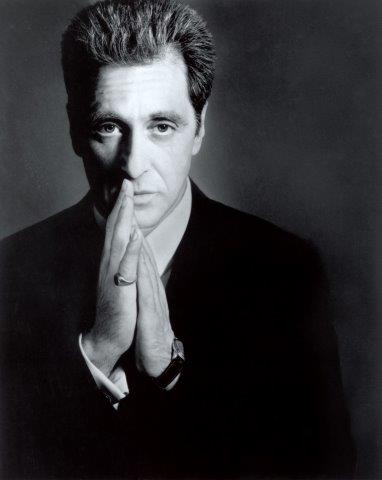
On the commentary track on The Godfather Part II, Coppola states that he felt The Godfather saga was, despite the focus on Marlon Brando in the first film, essentially Michael’s story, the tale of “a good man becomes evil”. With that in mind, the director had to lure Al Pacino, by now a huge Hollywood star, back into the role that made him famous. Pacino had issues with the moral direction that the script took Corleone, as well as the size of his salary. In terms of storytelling, the actor felt that Corleone would not seek redemption for his many sins, especially ordering the cold-blooded murder of his older brother Fredo (John Cazale). Coppola disagreed and ensured that the crux of the storyline involved Michael craving forgiveness and a way out of his criminal life while trying to find a successor to his empire. When talking cash, the actor wanted more than the $5million offered but was persuaded to accept when the director threatened to kill Corleone off. Robert Duvall on the other hand, was not so lucky. He disputed his potential salary and did not revisit the role of the family consigliere Tom Hagen.
With Pacino in place, Talia Shire, playing Michael’s sister Connie Corleone Rizzi, and Diane Keaton, as his estranged wife Kay Adams Michelson, soon signed along the dotted line. It was the new generation of Corleones, however, that provoked the most interest. The chance to appear in a film steeped in Hollywood history was a huge drawcard. Two roles perked the interest of hot young Hollywood talent. Alec Baldwin, Charlie Sheen, Val Kilmer, Nicolas Cage, Matt Dillon, and Billy Zane all threw their fedoras in the ring to take on the role of Michael Corleone’s hot-headed ear-biting successor Vincent Mancini, eventually played by Andy Garcia.

And the pivotal role of Mary Corleone, Michael and Kay’s daughter and Vincent’s forbidden love interest, was originally offered to Julia Roberts, but the then fledgling actress chose Pretty Woman over a gangster life. Madonna did a screen test in front of Coppola and Robert De Niro. Rebecca Schaeffer was in the running, but she was tragically murdered on the morning of her audition. Finally, Winona Ryder was given the role. The young actress was coming off a dream run of Heathers, Great Balls Of Fire and had just finished shooting Mermaids. Arriving in Rome to begin filming, Ryder was diagnosed with nervous exhaustion and pulled out of the film. After considering Annabella Sciorra and Laura San Giacomo, the director opted for his daughter Sofia.
Inexperienced as an actor, the soon-to-be-director of The Virgin Suicides and Lost In Translation gave a performance that was panned by the critics. One of the reasons Coppola wanted to return to the film was for audiences to reappraise her performance. “I want to show Sofia a new version,” he explained to Deadline back in 2019. “She is so beautiful in it and so touching. She wasn’t an actress. But she was the real thing, playing a 19-year-old Italian girl in love with her own cousin.”
It wasn’t just the casting of the film that caused the filmmakers consternation. They were refused access to Vatican City in Rome. The Corleone family are deeply ensconced in the Catholic Church, especially Michael who wants to repent for his sins. When the church discovered that The Godfather Part III would parallel its storyline with fictionalised versions of real-life scandals that had blighted the Vatican Bank in the late Seventies and early Eighties, including the murder of Pope John Paul I, the Vatican doors were closed.
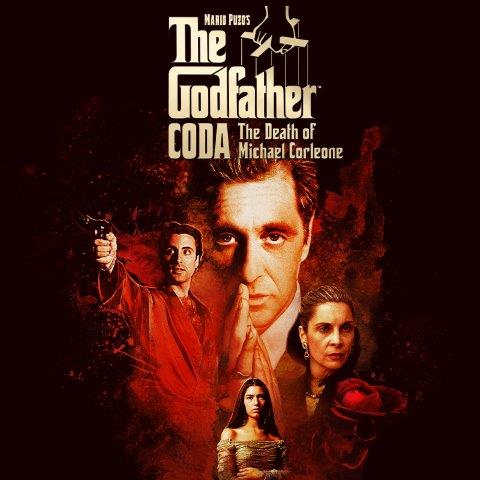
Now, despite the turmoil of the film’s production, Mario Puzo’s The Godfather, Coda: The Death of Michael Corleone can be seen in a new light thanks to Coppola’s fine-tuning. “For this version of the finale, I created a new beginning and ending, and rearranged some scenes, shots, and music cues. With these changes and the restored footage and sound, to me, it is a more appropriate conclusion to The Godfather and The Godfather Part II, and I’m thankful to Jim Gianopulos and Paramount for allowing me to revisit it.”
Just when he thought he was out, they pulled him back in.
THE GODFATHER, Coda: The Death of Michael Corleone – on Blu-ray™ and Digital December 9, and select cinemas December 3, 2020
