



by Gill Pringle at Toronto International Film Festival
Having moved to Los Angeles two decades ago, she left raging fires behind her in the Hollywood Hills, only to arrive to a whole other level of bushfires in Australia.
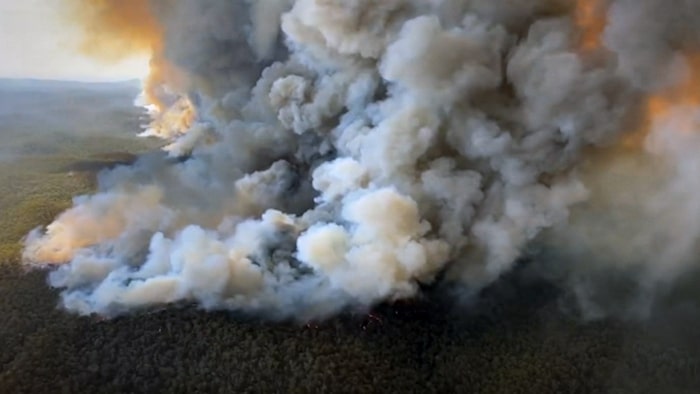
“I was there for a month and the whole time the fires were raging and it was just shocking. So many of my friends were effected. It was Christmas, so everyone’s holiday plans were cancelled and everyone was flipping out and a lot of people’s homes were under threat,” says Orner, referring to Australia’s Black Summer.
“We spent our last week in Sydney in early January where our eyes were watering all the time and we were coughing.
“We would get up in the morning and go for a walk along Bondi and we couldn’t see anything, and people were going around doing their usual activities which kinda freaked me out – running and surfing – and we were weeping from the smoke thinking, ‘What is going on here? Why isn’t everyone flipping out?’ It was just something I’d never seen. I’d spent the first 34 years living in Australia and then I moved to the States. I realised this wasn’t Ash Wednesday, which I experienced in my childhood – this felt very different,” she recalls.
“In late December, in my hometown of Melbourne, it was a 47-degree day, and I’d spent 34 years living there when it never got above 44. I ain’t no climate scientist and I know they say temperatures have gone up by one degree – but this was a three degree increase in my lifetime – 47 degrees in Melbourne is like Baghdad; that’s not normal.
“It really got me thinking, and then a couple of friends lost homes really tragically. I saw the devastation and the impact on them. Sitting on the plane going back to LA, my eyes still watering from the smoke, I just felt like I should do something. Things were getting really crazy.”
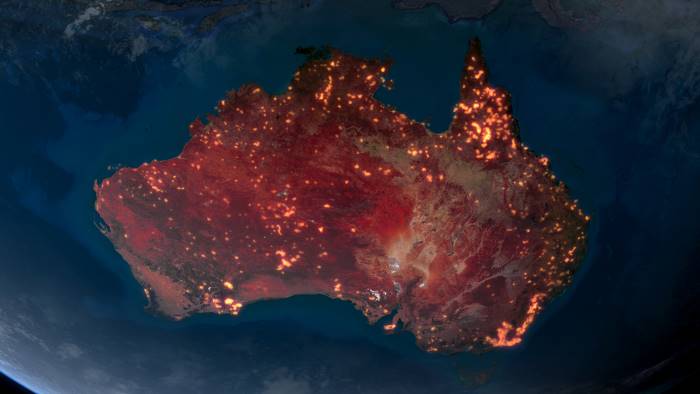
The storied documentarian whose many producer credits include the Oscar- and Emmy-winning documentary Taxi to the Dark Side (2007), while she directed documentaries The Network (2013), Out of Iraq (2016), Chasing Asylum (2016), and Bikram: Yogi, Guru, Predator (2019), immediately set about researching Australia’s Black Summer, resulting in her compelling documentary, Burning, premiering at the Toronto International Film Festival.
In Burning, she revisits PM Scott Morrison’s ill-timed family vacation to Hawaii while his country burned; entire communities being wiped off the face of the earth, at huge cost to human and animal life.
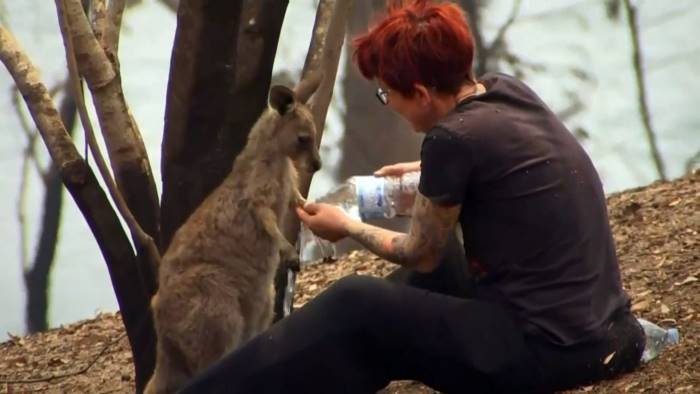
If Australians are already familiar with the Black Summer’s devastating imagery – burned birds falling from the sky, piles of scorched kangaroos laying to waste on roadsides and families picking over scorched embers of their destroyed homes – then Orner’s documentary incorporates undeniable data and facts courtesy of former Fire Commissioner Greg Mullins; prominent climate change expert Tim Flannery, and teenage activist Daisy Jeffrey, representing the growing international movement of young people pushing back on the status quo.
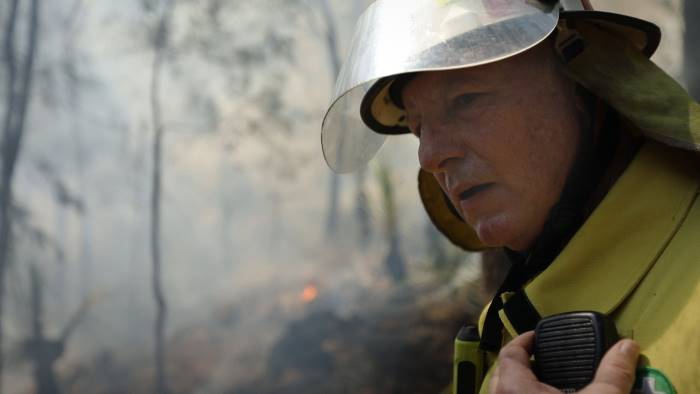
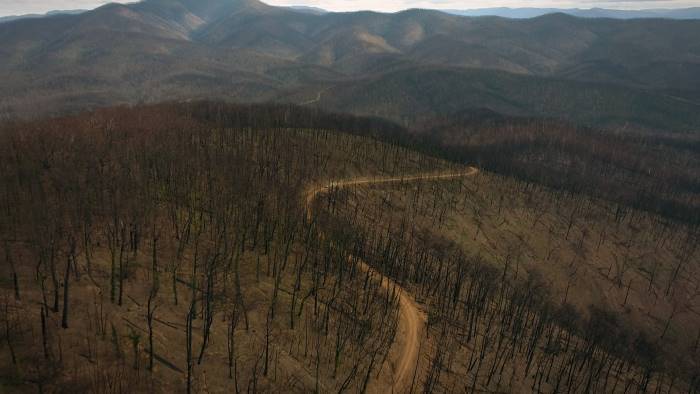
Burning certainly brings the fact of Australia being at the epicenter of the climate crisis into stark perspective: In 2019, the Amazon rainforest wildfires burned 2.2 million acres while the 2020 California wildfires burned 4.4 million acres – both rendered almost insignificant by the Black Summer which burned 59 million acres.
Australia’s bushfires destroyed over 5,900 buildings, enveloping Sydney in clouds of smoke. Even by today’s jaded standards, the footage is astonishing, with flames reaching over 200 feet high, creating new weather patterns of pyro-convective storms that shocked the most seasoned fire fighters.
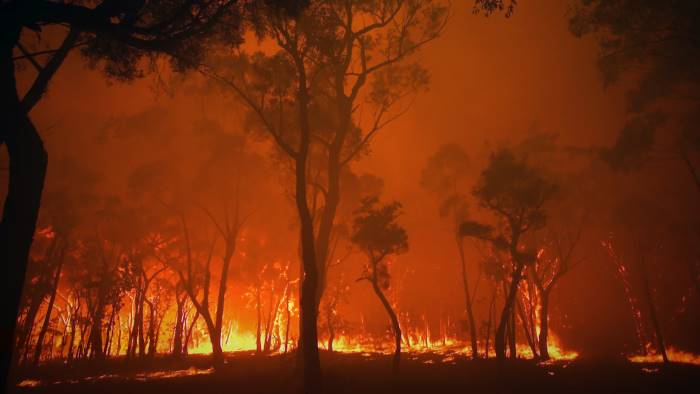
“It was the sheer scale of it. It felt like it effected everybody and it just felt really scary and really different. It just felt like everything was burning. We all knew this was coming but we didn’t do anything. I just felt overwhelmingly sad and wanted to talk about it more,” says Orner whose work has won an AFI, Logie and Human Rights Awards.
She’s unapologetic about going hard on PM Scott Morrison. “Look, I’ve done it to him before on my refugee film, Chasing Asylum, but I always give credit where it’s due and we do praise ScoMo for his initial handling of Covid in the film.
“I think that’s very important because it was an example of him trusting the science – and when he did that, he was so clear on it and locked the country down and prevented the initial massive spread of Covid with the result that we were relatively Covid-free for the first 12 months while the rest of the world was suffering. So, when you think how we’ve seen him trust the Covid science, why doesn’t he trust the climate science data? The data is pretty substantial and conclusive, and a big chunk of the world is against what he’s doing.
“But it’s motivated by money and lobbyists and the fossil fuel industry.
“We mine a lot here. Australia is a very resource heavy country.”
Australia is the world’s largest exporter of coal and gas, creating a deeply entrenched power structure that is slow to respond.
“And we all use mined goods from our iPhones to our Macs – and look, I’m wearing gold,” says Orner, pointing to her ring as we chat. “We all depend on mining, so it’s a little unrealistic to suggest a ban on mining. We’re just mining the wrong things and we’re not using our natural resources and it makes no sense.”
In Burning, we see Australian tech billionaire Mike Cannon-Brookes laying out an ambitious plan to export renewable energy through an underwater pipeline all the way to Singapore.
“What’s interesting to me about Mike’s plan is that it’s not government. It’s entrepreneurs leading the way, whether it be Elon Musk or whoever.
“I’m of a certain age that if you told me back in the ‘70s, that we’d be talking on our phones, looking at each other on video, that was like Jetsons stuff. We couldn’t imagine that happening. Things can change. If you’d told me I would drive an electric car, I wouldn’t have believed it 20 years ago. Cables underground and under oceans have been built, so why can’t you capture renewable energies and send it through a pipeline under an ocean? It’s actually not that crazy,” she argues.
“The big thing about this story is that we’ve known about it for 30 years, this is not new. The science gets stronger and stronger, and the temperatures have gone up and we see the impact of forest and crazy weather, fires, flooding.
“You can’t argue with the science anymore, and yet people are arguing with the science and to me that’s astonishing.”
If Cate Blanchett is a co-producer on Burning, then Orner is leery of adding celebrity talking heads to her documentary. “I love celebrities that use their voice for purpose but it’s not my style to put them in the film. To me, Greg Mullins and Tim Flannery are the people we should be listening to,” she says.
Orner doesn’t want audiences to just feel shocked by her documentary – she wants them to take action.
“There’s a lot of tough scary stuff in the film but, the bottom line is, if we act now – this year – and if everyone came together and got Net Zero Emissions by 2030, we’d have 20-30 years of getting hotter and then it would stabilise and then it would start reversing and we would save the planet. If we leave it to 2050, it won’t be as rosy as that and if we don’t do anything, we’re going to be very hot and dry very quickly.
“It makes no sense to me why we can’t all come together and say: let’s fix this problem. It’s baffling.”
She appreciates that she faces an uphill battle in winning hearts and minds, so her biggest piece of wisdom to offer is this: Vote responsibly.
“Don’t vote for a government that doesn’t believe in Covid or Climate Change. Talk about it, educate yourself, vote for the right people. Support businesses who are going Net Zero.”
Quoting Tim Flannery, she adds, “Drive electric cars, get solar, use less water – do everything you can.
“But, at the end of the day, that’s not going to save us. What we need is leadership; unified global leadership. We need every single country to commit to Net Zero by 2030.”
Burning is streaming now on Prime Video
