


by Gill Pringle
Downton Abbey: A New Era presents a gorgeous and nostalgic return of the upstairs downstairs inhabitants of Downton Abbey – the titular home of one of the most beloved TV shows of the past decade.
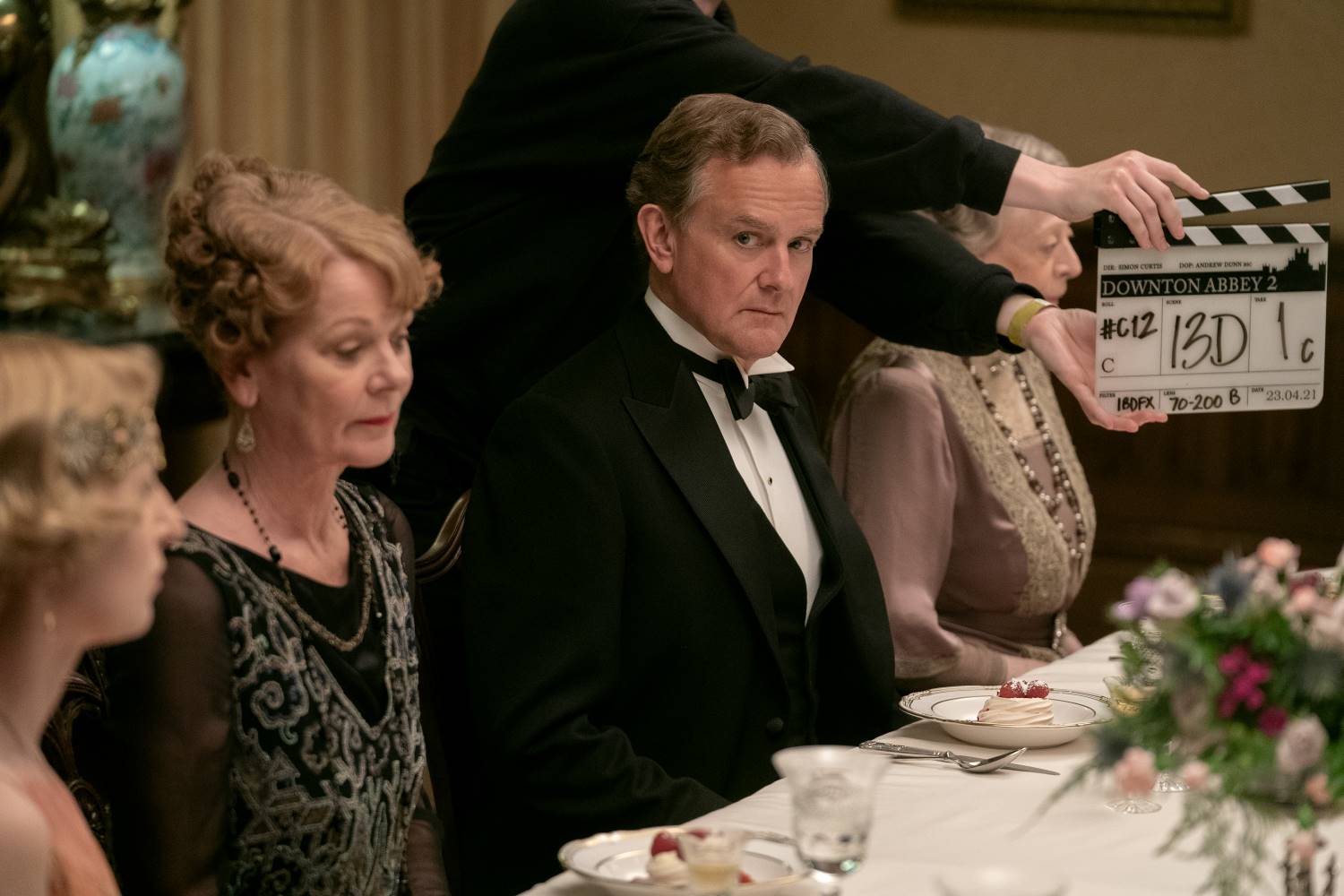
However, behind the scenes, for creator Julian Fellowes and director Simon Curtis – this was probably the most teeth-biting, anxiety-plagued experiences of their careers, struggling to pull off the almost impossible feat of filming in the South of France during lockdown.
FilmInk talks to Fellowes and Curtis about the logistics of returning a production the size of Downton to the big screen during a global pandemic.
For the first time in the history of Downton Abbey, the cast gets to travel overseas to the South of France. How crazy was that given how France actually had its borders closed for nine months in 2020?
SIMON CURTIS: It was even worse than that because we had to prepare a UK version of the French scenes in case we couldn’t go. And there was one point where I was standing looking at a pond in Gunnersbury Park, Ealing, with the producers trying to persuade me that this looked like the French Riviera!
It was a real achievement that you got it all figured out in the end?
JULIAN FELLOWES: It was quite a bumpy journey and pretty stressful for us all. We actually started filming the English scenes not knowing whether we’re going to be able to complete it. So certainly, on that day when our planes flew out to France and landed, and all the crew cleared the controls… I mean, these are things that should not be difficult in any normal circumstances. But everything became so possible and once we knew, we all breathed a great collective sigh of relief when we got there, and we knew then that the film could be finished as we’d imagined it.
COVID protocols must have been a nightmare?
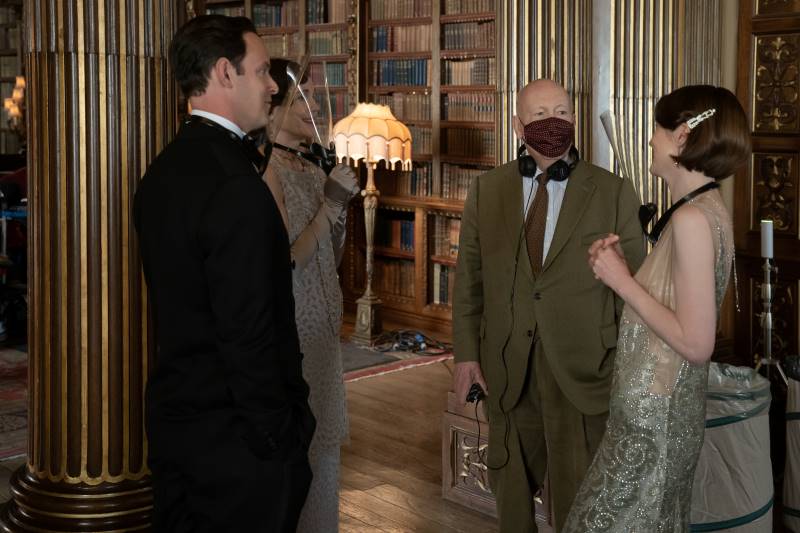
SIMON: Yes. We did more than 15,000 COVID tests on the film. If one of those actors test positive for COVID, you’re looking at shutting the production down for days. Fortunately, that didn’t happen to us. The actors were all juggling other jobs. So, they’re coming off one production onto us and then they’re going on to another one after us – well, all of these productions were being delayed and pushed and it really was a huge nightmare – as if it’s not hard enough making films in the first place without adding all of that on to it. But then you had 10 days quarantine in the South of France, so it has its pluses.
Why were you keen to direct this film?
SIMON: I’ve always loved the show. And I think it’s the greatest ensemble of actors potentially ever assembled. And I love actors. And so that was a real bonus. And then of course, I’m a huge admirer of Julian. And when I was told there was a trip to the South of France, that was the clincher.
The movie is set in 1928 and involves the film industry. Could you talk about why you thought it would be interesting to weave showbusiness into the lives of the Crawleys and what sort of social interplay did you want to come out of it?
JULIAN: We wanted to have this very strong sense of the modern world invading the halls of Downton. I think the point about show business is that this was definitively a 20th century phenomenon. And it is now part of our daily lives. Showbusiness has invaded almost every house on the planet. And so, it has a kind of universality, the experience of showbusiness. What’s it like being an actor? What’s it like winning an Oscar? All of these things, that people give their acceptance speeches in the shower, from here to everywhere. And I think that gives it a kind of accessibility and we’re testing the Crawleys against something we already have a kind of feeling about. So that was the idea.

Did you feel the 1920s era is more like a gift or a responsibility to be able to return to that specific time in history of cinema?
SIMON: I think that one of the reasons the show historically has resonated is that everyone empathises with one or another of the characters. And for me on the set, I didn’t want to get too bogged down in the rules of the 1920s. I wanted to say, these are human beings who fall in love and have good days and bad days and just give the actors the liberty to be as fresh and as natural as possible.
JULIAN: The mood and tone of the film and the series has all been mixed up in a kind of bouillabaisse of different kinds of drama, and we took that onto the big screen for an audience who was already kind of expecting that. The Downton audience expects a few laughs and to have a slightly moist eye.
Are you paying tribute to Singin’ in the Rain in this film?
JULIAN: Well, Singin’ in the Rain is a wonderful film. And of course, it’s exactly the same moment of when sound came through and threw Hollywood into a frenzy. I don’t know if we’re paying tribute any more than every medical drama is paying tribute to Emergency-Ward 10! We’re part of a tradition.
Knowing the series as well as you do, how did this film script surprise you?
SIMON: I thought it was a very satisfying script that brought resolution to so many of the stories in a really satisfying way, even more than the first film did. It gave the key characters really great storylines to work with. Tapping into the history of filmmaking in the UK with the film within a film storyline and a trip to the South of France. I basically said ‘I’m in’ at that point because they are two passions of mine. I’d made a film about the making of a film [My Week With Marilyn] before and it’s very close to my heart, as is the South of France.
What is the background to A New Era’s film within the film storyline?
SIMON: A director, Jack Barber, played by Hugh Dancy, makes a call to Downton Abbey to request the use of the house as a location for his next film, The Gambler. Interestingly, just like the famous story, of Hitchcock’s Blackmail, which was a silent film made in the ‘20s, just when sound in films came along. Hitchcock had to scramble around and turn it into a talkie and that’s what happens to Barber’s film, The Gambler at Downton. Inevitably, our characters get involved in the making of that film and its transformation from a silent film to a talkie with much hilarity and consequences for all.
Having worked with lots of actors previously, what was it like directing such a large ensemble?
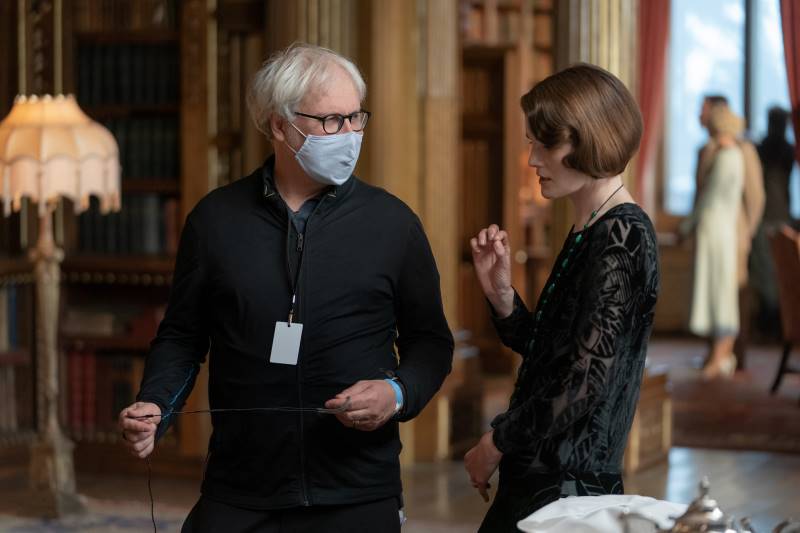
SIMON: I’ve been very lucky in that some of the things I’d made in television, like David Copperfield and Cranford, meant I’d had experience working with a big ensemble cast. What’s intimidating about directing Downton, which I’m sure all the previous directors have also felt, is that there’s no such thing as an easy scene in Downton. There might be as many as four mini scenes within one bigger scene and four different clusters of conversations that all require coverage from various different angles and that all takes time. In this film, we had the usual ensemble of actors, then add in the crew and actors for the film within the film, plus our own crew and that amounted to over 50 setups for one particular dinner scene across three days. It was a relief to get to the end of that scene.
What were you looking for in your guest actors Hugh Dancy, Laura Haddock and Dominic West?
SIMON: I have really admired both Hugh Dancy and Dominic West for a long time and so I was thrilled they could join us. Laura Haddock was a great addition to the cast and very good as the actress who’s panicked at the prospect of these Talkies arriving. Then in France, the brilliant Belgian actor Jonathan Zaccaï joined us along with Nathalie Baye, who is one of the great French actresses. I have always loved her work so it was thrilling to work with her. During the first week of quarantine in France we organised for the crew to watch her film Day for Night, which is a love letter to making a film in the South of France and that was very meaningful.
How do you explain the enduring appeal of Downton Abbey?
SIMON: The thing that Julian does so well is give everybody a dignity and a humanity, whether they’re young or old or whatever their job or class is, and I think people the world over respond to that. The kitchen maid and the lady of the house are equally as important in the mix of the story and it’s an example of society working together. Not that everything in 1928 was great for the people who lived at that time, but there were things and elements of that life that seem enviable now, where people did all work together. I hope this film will come at a time where, particularly, coming out of the pandemic, and a few years that have been so difficult for so many people all over the world, it will provide some much-needed familiarity and entertainment. I hope this will be a gift to the world of an enjoyable emotional, entertaining roller coaster, just when it’s needed.
Did you expect Downton Abbey to be this much of a success when it began?
JULIAN: Well, no. I mean, I think if you had expected it to be this much of success, you’d maybe need to go to the funny farm. I mean, we thought we made a good show, and we knew we’ve got a very good cast. And so, we thought people who did tune in would be pleased. But I don’t want to sound as if we doubted the product. But you can’t expect a show to be a phenomenon in a way that only a handful of shows are in your lifetime, really. And to be part of that has been extraordinary for all of us really.
What were the highlights of the filming experience?
SIMON: This has been a real career highlight for me, and the chance to work with these actors. There were times as a director and you’re looking at the monitor and you see Dame Maggie Smith, or Sophie [McShera] or Elizabeth [McGovern], and you thank your lucky stars, quite honestly; it becomes a very special, meaningful moment.
JULIAN: I come on the set, and I always have this almost surreal feeling when you know you remember a line that you compose when you were in the bath or waiting for the light to go green… And suddenly there are actors saying it and they’re in costume and people are photographing it and people are holding microphones. That, every time for me, it’s a marvelous moment. I can’t describe it. It’s thrilling.
What are your hopes for this film?
SIMON: It’s very simple. I hope this film will be a two hour escape for audiences all over the world; that they’ll laugh and cry along with a group of characters that they have come to love.
JULIAN: I just think we want our audience to have a great evening and to have a wonderful time watching the film, laugh, cry, go out and have a decent dinner, go back and they’ve had an evening off the modern world which can be so oppressive just at the moment. I heartily hope they have a good time with it.
Downton Abbey: A New Era is in cinemas now
