




by Damien Spiccia
With her short film Morning Afternoon Night, Russian born, Perth based filmmaker Dasha Melnik has captured the emotional life of a new immigrant.
You studied as a cinematographer, and this is the first film that you’ve directed. How did it all come together?
“Around the time when I was graduating, my mum died, and it was a big loss and a big transformation moment for me as well. She died in Russia, and the only thing that I had left of her here [in Australia] was her messages on my phone. I listened to them again and again and again. And I thought, I really want to show this transition when you’re in a different country and you’re actually not there with somebody who you loved most. And then my friend Anna [Martianova], she plays Marta in the film – she’s not a professional actor, so this was her first acting experience …”
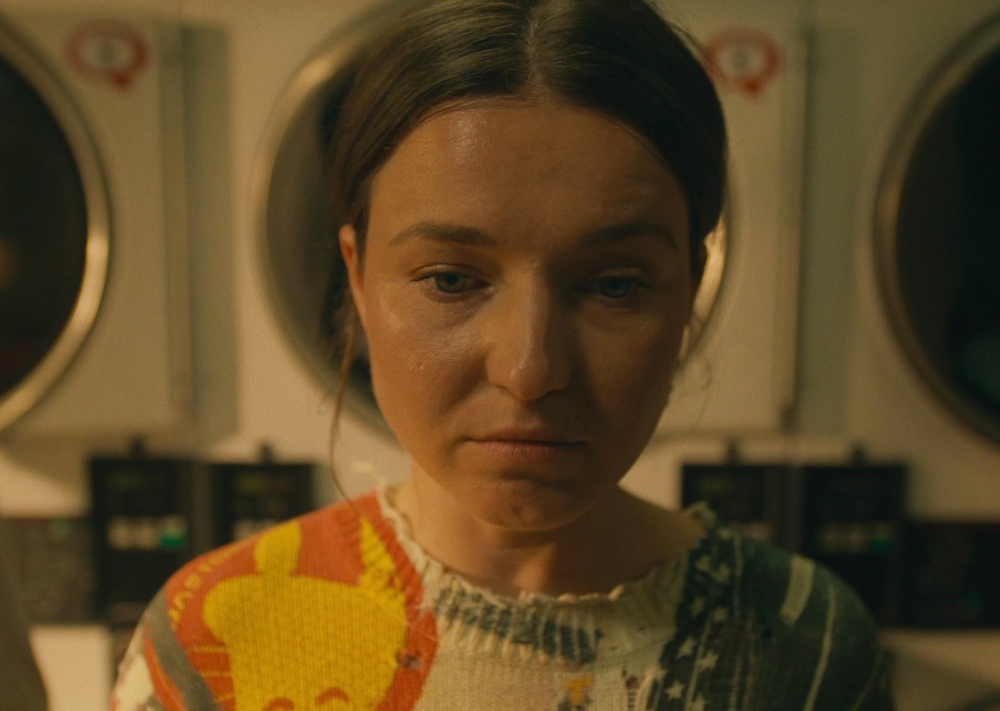
Really? She’s brilliant.
“Oh, she’s fantastic. And when she came here from Russia only four years ago, her English is not perfect, she is an artist, and she started to study at TAFE – all things that reminded me about myself when I came here, 13 years ago. And of course, I feel different now, but she was at the stage where she was between these two worlds. So, yeah, this is where things came together, my personal story, her personal story, and I thought, wow, what a great director’s opportunity to express all your feelings, all your grief in a little drama. Because as an artist, I think it’s the best way to express it, and hopefully, to give some inspiration to somebody else. I really hope people won’t judge the film because there’s not much story or so much action. I did that on purpose! I really wanted to show only the emotional journey that the character is going through, and make it a little bit different. Hopefully it works.”
I loved how you focus on the human side of the immigrant experience, rather than something more political. Why was that important to you?
“I think we have so many political stories at the moment on the screen, and I really wanted to talk about a small person in a big world. The human experience is much more universal for me, rather than about someone from somewhere particularly. Marta can be from Iran, or from Latin America, from anywhere. It doesn’t matter. The experiences for us as immigrants is pretty much the same.”
There’s this strong sense of isolation with Marta in the film – how she’s framed, how people respond to her.
“She’s absolutely alone, and she’s going through this transition where she’s between two cultures and languages, where she can’t truly express herself in new environment. She can’t even make normal conversation in a cafe. If you’re not speaking another language properly, it’s so much slower, and it’s so much harder to think. It’s something that probably every immigrant feels at the start. But it’s very important to understand, yes, we feel very small and quite lonely, but it’s not forever. We can change it, we can find new people that will be so happy to communicate, who will be so happy to be your new friends. Marta is just at the zero point where, yeah, everything is possible.”
 Can you tell me a little bit about the title, Morning Afternoon Night?
“It’s the routine, the cycle of the same day, every day. Using a washing machine, buying a cup of coffee, it’s these little things. I use Marta’s day as a metaphor for different stages of life and states of mind. I just wanted to show that while we’re stuck in this cycle, of our mind and our feelings, it’s really hard to see the escape, but there is escape, definitely, 100%.”
What else are you working on at the moment?
“There are a couple of stories that we are working on. One has cultural roots and some folkloric elements in it from Russian mythology, the story of Koschei the Immortal. It’s about this guy who was really afraid to die, and hides his death in different objects. I want to use it to explore this important part of our human nature, how fear can make us immortal from one point of view, but at the same time, it is the thing that paralyzes us and stops us from moving forward and finding new adventures. There’s also a web series that we want to do. It’s about God and psychotherapy sessions in Eden, with Adam and Eve and Lilith. I just want to move forward as a director as well as a cinematographer, because I think I’m slowly starting to finding my own voice and my own understanding of what I can bring to the Australian screen, as a woman, as an immigrant, as a storyteller.”
Morning Afternoon Night screens at 2026 CinefestOZ
