



By FilmInk Staff
It’s fitting that we resurrect a column that we started and put to bed in the ‘90s with a focus on an issue that has crept up in our own backyard.
We seem to have bugged a filmmaker we greatly admire, Alex Proyas (Knowing, Gods Of Egypt, The Crow, Dark City) again. We’re getting used to it.
Proyas has made his intense dislike of the world’s film critics plain and clear, publicly pouring acid on the profession after his adventure epic, Gods Of Egypt, was met with much scorn and derision from the “critical fraternity”, though not actually by FilmInk itself. “For those willing to accept eyebrow-raising casting choices and the ancient-deities-as-flawed-superheroes premise, Gods Of Egypt offers a frequently spectacular, light, and knowingly silly good time,” ran our review, which gave the film a pretty solid score of $16.50. We also chatted with Mr. Proyas – who was a very nice fellow, and a pleasure to interview – prior to the film’s release, and happily publicised Gods Of Egypt right here.

Since then, however, things have gone sour, and Alex Proyas has now called FilmInk out again, this time responding to a personal Facebook post by our publisher Dov Kornits, featuring a response that we received from an Australian filmmaker questioning a review of their film that FilmInk had run. Here’s what Dov put up which, opening line aside, is a verbatim quote of an email he received from the filmmaker.
LOVE AUSTRALIAN FILMMAKERS
Firstly, the entire review is incredibly oversimplified.
You either didn’t pick up on them (which is a concern), or chose to ignore several key layers of the film that go beyond chemistry and witty dialogue. These layers include the Shakespeare thread and proving that no matter what the world sees as normal and stereotypical, none of us can be put in a box, and love can be unsuspecting. You missed threads of life after death too. You didn’t mention a thing about the music, the cinematography, the editing or the direction. What kind of review is this?
Above all else, you refer to the film having too many minutes of outrageous and narratively irrelevant moments. Well here’s the facts:
These ‘too many minutes’ equate to somewhere between 5-10% of the entire film. So I think it’s a little unreasonable to say there are too many of these moments?
I think based on all the above mentioned factors, you should maybe reconsider your review? It’s largely inaccurate and ultimately unfair. It’s obvious it was rushed, and that time has passed since you watched the film. I believe I deserve more than this. And I appreciate you’re very busy, but if you’re too busy to do the review correctly, please don’t worry about doing it because it’s only hurting my film when it really deserves more credit.
If your review was more in-depth and had fair criticisms I could accept what you’ve written, but this is just simply oversimplified and not accurate.
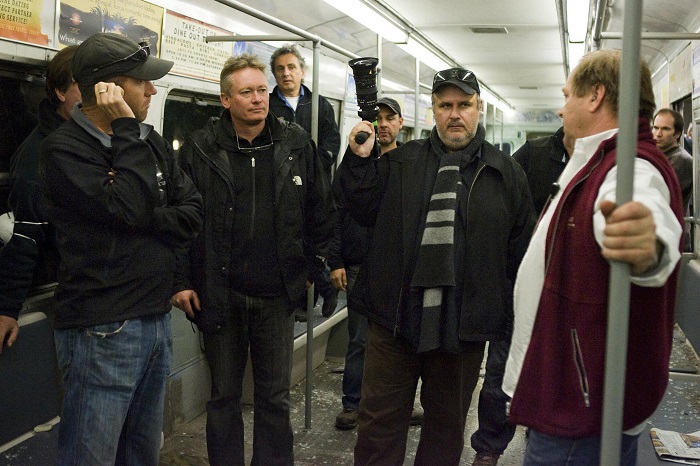
Alex Proyas happened across Dov’s Facebook post, and took it upon himself to weigh in on the matter… in no uncertain terms.
SOME PEOPLE JUST DON’T GET IT
Recently I stumbled across a post here by one of my “friends”, as you do, and I was thoroughly shocked by how misguided the original poster and most of the comments were.
It was by a “film critic” or what passes for that in the land I call home, Australia. It was titled “I love movies” or something equally maudlin – just to remind us the poster had our best interests at heart. It was a transcript of a letter from a film-maker who was unhappy with the review the critic had written of her film. Though the critic published the letter, so he and his friends could further deride the film-maker in question, he did not have the strength of character to publish his review or mention the film’s title so we might make up our own mind. He and his small sack-full of “yes men” merely fell back on the old tried and true “film-maker ranting again!” In their minds, only critics are allowed to rant, because “that is, like, well, our job, mate!” One fellow “critic” even went so far as to suggest that his ilk possessed a kind of “nobility” because in his mind he was saving some poor unemployed unmarried mother with kids, who maybe could afford one movie for the year, from paying to see a turkey.
The arrogance of these dunces! These deluded mockeries of film-writers actually believe people read and are swayed by their D-grade critical opinions…
I got the feeling the film in question was some independent Aussie movie — as if it didn’t have an up-hill battle getting anyone to see it without the “unemployed mother’s saviour” chipping in. That people like this need to use social media to make their case is truly pathetic. That they are surprised and annoyed when someone they’ve crapped on responds, shows what spineless, petty and jealous wannabe film-makers these fools often are. That they pretend to not realise the release of an independent is a life and death struggle for film-makers, is heartless. That they act like it is some kind of epiphany when they piss off film-makers with their shitty, ill-conceived, poorly written reviews, is a joke.
I commend the film-maker in question for sticking up for her work. Though I do not know her name – her letter has made me want to see her film, and I wish her the very best.
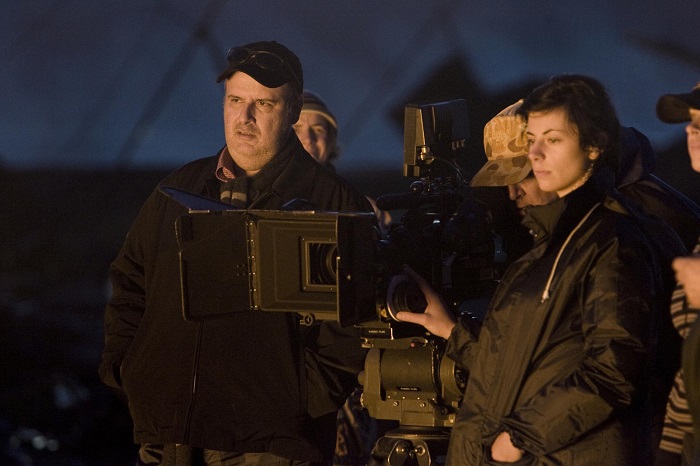
For someone who consistently denounces film critics as redundant and unimportant, Proyas – more than any other director that we can think of – really lets them get under his skin. “Let’s eradicate critic vermin for good,” he once said. “They are all scum!” A filmmaker certainly has the right to respond to their critics – it would actually be interesting if more of them did – but Proyas, in what appears to be an increasingly forthright hatred of the film reviewing profession, ignores the bigger picture.
Yes, we run reviews, and they are one of the most popular parts of the website. Some reviews are positive and some of them are negative, because they’re reviews and they’re directed at our audience – that’s the nature of the beast (the review in question, by the way, was positive, in case you were wondering). But we also run other material that is keenly and wholly supportive of cinema, such as interviews and feature stories, where directors are provided with a platform to speak openly about their cinematic vision. There’s no agenda here, no in-built, festering desire to take a scythe to the tall poppies of the Australian film industry – if there was, none of that material would exist.
To deride the entire critical profession is the very definition of throwing the baby out with the bath water. The internet has, of course, opened film criticism up in massive ways, making what was once a media profession into something far different entirely, with often unsourced and unchecked opinions flying in from all over the place. It often gets ugly out there, and the landscape has undeniably changed, but there’s also a lot of support online for films and their makers. It’s all part of a big, weird conversation that now exists around the world of film.

In response to Mr. Proyas’ statements, FilmInk certainly knows how difficult it is for independent Australian filmmakers to get their films made and released. We’ve talked to hundreds of them about it over our twenty-year history, and have published countless stories about their struggles, challenges, and triumphs. We’ve directed our readers to their Kickstarter campaigns, and written letters of support to government funding agencies. We’ve seen their films, and informed our readers of how to track them down. We’ve provided a platform for young, untried filmmakers to talk about their work, and what they hope to achieve. We’ve taken a more direct hand in helping such films find an audience, via our FilmInk Presents banner.

Also, neither Dov nor FilmInk have any “yes-men” that we’re aware of, and nor are we “jealous wannabe filmmakers”, which seems to be a filmmaker’s default response when they don’t like what a critic has to say about their film. Not everybody aspires to be a filmmaker, despite what you might think, and repeating such a worn-out axiom is insulting, not just to critics but to everyone else in the industry. And referring to our reviews as “shitty, ill-conceived, [and] poorly written” in such a derisive, all-encompassing fashion is just ridiculous. When FilmInk runs a negative review of a film, we’ve certainly watched said film – we doubt very much, however, that Mr. Proyas has read any of our reviews, making such a statement unfair and unfounded.
But more broadly, in our 20 years of bringing FilmInk into the world, we have rarely encountered a critic with an agenda other than to pass on their love of cinema.
Despite what Mr. Proyas might think, we also don’t get pissed off when filmmakers respond to us about what we’ve written about their work… we actually encourage it, by having a comments section under every story, and by making our email address clearly available. In fact, we encourage this discourse so much that we’d love to engage with Proyas in a chat – a debate even, if it would be helpful to frame it that way – about this whole, big, thorny issue. As always, our door is open…
Moving forward, we look forward to bringing you the Critic Watch column on a regular basis, but hopefully never again about us.

It’s rich him throwing around criticisms of using social media to make your case, considering how his initial tirades were conducted on Facebook. Apparently, criticism should only be restricted to random sycophantic Facebook friends.
There’s no doubt, as you say, that the landscape has changed with the emergence of the web and all the self-styled amateur film critics banging out their reviews, but this “artist” vs “critic” war has been raging since the genesis of art itself.
I’ve got a foot in both camps. I once held similar views to Proyas, but since joining the ranks of the now-countless blogger film reviewers on vague impulse in 2009 I’ve done a lot of navel gazing and have come to appreciate that good reviewing is not something that just happens cos you can write and have an interest in film.
My academic background was in literature, and I have been freelancing as an editor/copy-editor for 30 years, specialising in academic research papers and doctoral theses. I have relatively advanced critical thinking, reasoning and analytical skills. With my background and skillset, I assumed I would easily take to film reviewing. I see myself as competent and better than most of the web reviewers, but nowhere near the best. I have come to realise over the course of writing hundreds of film reviews that I will never be a GREAT film reviewer. That requires an extraordinary depth and breadth of knowledge and an immersion in film that my level of interest precludes. And I say that as someone who has maintained an avid interest in serious cinema all my adult life, but without caring much about keeping abreast of actors and directors, or being moved to read up on film history and engage at the levels required of a great – or even very good – film critic.
Bottom line for me: great film reviewing is a highly specialised field, and a worthy and necessary part of the film industry. That said, in my view the standard of reviewing, especially on the web, is generally pretty low. I can see why filmmakers might get pissed off at the proliferation of poor reviews by bloggers – mostly, it seems to me, driven by ego – who pay no heed to the responsibility that comes with criticism. That’s a whole nother topic relevant to this discussion, but that’s enough from me for now.
A parting thought. How many people actually read a film review to completion, I wonder. My blog traffic isn’t terribly impressive, but I get a lot of hits between comments. Concentration spans on the web are notoriously low. Most of the time I can’t be bothered reading right through a review, even a well-written one. My shortcut is to open up Rotten Tomatoes, check the splat/tomato ratio, and perhaps – ie: less often than not – select a ‘Top Critic’ review or two to read. Maybe Mr Proyas is getting his artiste’s knickers in a knot over nothing much at all.
“Good reviewing” is helpful. What do you like, what do you love, and why? What have I missed that I should see? What was done well? What did you not understand or not see a reason for? What can you teach me or explain to me or highlight for me? And some critics do that. The good ones. But too many ‘wannabes’ only write reviews so they can revile those they ARE secretly envious of. They write about what is’worth seeing’ and what ‘nobody should waste their time on’. They write derisive about the filmmakers, actors, writers, techs, without investigating any of the difficulties involved. And many, many, many only write so they can be as snarky as they want to be, as snarky and insulting as they can be, to get a laugh or feel ‘clever’. “Criticism” is not just about what’s wrong, it’s about what’s right, and there is far too little of that in amateur, and too much professional, criticism. Honest opinions are good, as long as the critic understands it is an opinion, sometimes an informed opinion, and that there are people (artists) who are struggling to express something good even when it doesn’t appear to end up that way. For critics who are so eager to pass opinion on the work of others, they do seem extremely touchy when the ‘others’ pass an opinion on them. Human nature, huh? LOL