


by Dov Kornits
“While the story of Anak resonates with my experiences growing up, these characters are purely fictional,” Caleb Ribates tells us ahead of his debut feature Anak’s premiere at MIFF.
“What was real was the emotions and feelings of my characters. I feel lost in my identity and insecure about my place here in not only Australia but also the Philippines. I feel lost in between two worlds where cultural significance is sometimes conflicting with each other. One prominent idea I explored was the inherent Filipino masculinity within Filipino families and the importance of being a man. It was tough for me growing up surrounded with the expectation of what it means to be a Filipino man, and Anak is a reflection of that. There are a few moments in the film that are personal to me, whilst the ‘rock’ is a fictional story in the film, it is inspired by conversations I have had growing up with the men in my family.”
The ‘rock’ in Anak is the weapon used to ward off a bully in the story of a young boy in suburban Melbourne, whose Filipino immigrant parents are about to split up.
Born in Australia, Ribates would visit the Philippines with his family at least once a year as a child. “I felt I didn’t belong to either world, even as a child. When my parents separated, I visited less frequently.”
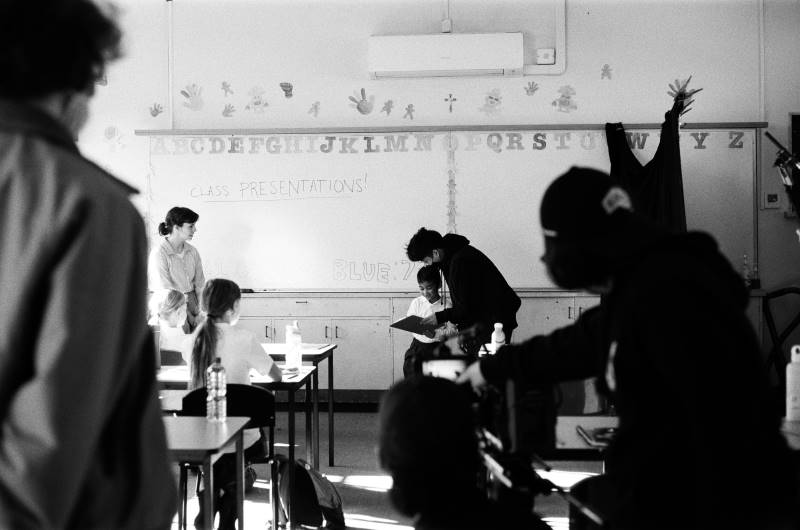
Ribates found his groove at the Victorian College of the Arts (VCA) film school. “The film school has always been supportive of me even after graduating,” says the 22-year-old. “For Anak, I gained permission to shoot in one of our rooms at school, however the real winner was the film students within the school. Most of my crew came from VCA or Swinburne University, it is crazy that our production was mainly driven by the University students with a passion for film, this made the film even more exciting.”
VCA was also where Ribates was introduced to indie filmmaker Matthew Victor Pastor, who helped produce Anak. “They wanted to introduce me to another Filipino filmmaker,” says Ribates. “When I first met him, he gave an incredible energy to the types of stories we are telling. During that first period, I had finished my graduate film Filo Boy and Matthew gave me great feedback and support. At the time, I didn’t really believe I had the skills of storytelling to share significant work as I was a young filmmaker. Matthew pushed me and made me believe that my work has value and can resonate with people within and outside the community.
“I initially asked Matthew if he wanted to help me produce this film during the writing of the script a year ago. However, due to his own work capacity he was unable to assist me in that time period. After the completion of Anak, I privately shared it with Matthew for some feedback and he was incredibly impressed with the film. As I started entering the film festival strategy, he offered to come on board to help out as he had a lot of experience with film festivals and networking opportunities.”
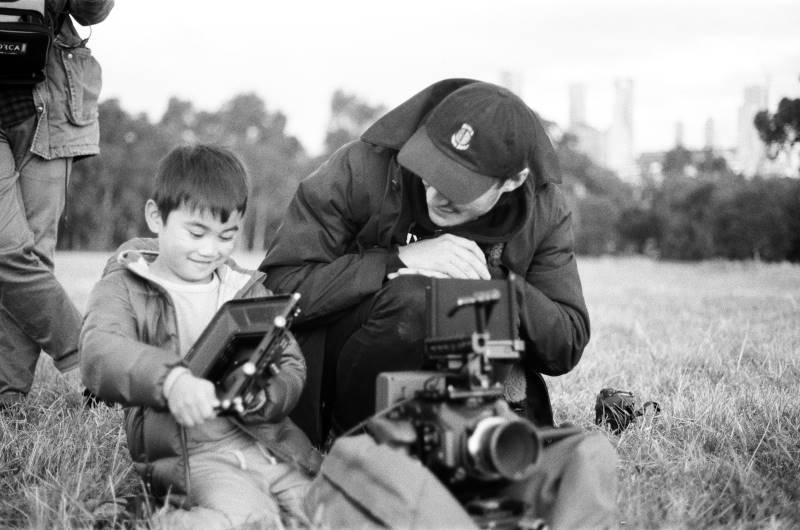
Something that film school doesn’t teach a filmmaker is working with child actors, which was one of the biggest challenges of Anak. “The challenges are trying to get them to understand the ideas behind the story,” Ribates says. “It’s difficult to explain the landscape of the Filipino diaspora as they are in the process of unknowingly experiencing it themselves. With enough patience and support from parents we are able to navigate a way for them to connect with the story with them knowing it is a fictional reality. Luckily for me, Gabe [Ramos, his young star] is one of the most mature and talented actors I have ever worked with, he is truly a star.”
 Ribates’ influences are varied, from Wong Kai Wai, Alfonso Cuaron to Richard Linklater, he tells us. “I love observational and the nuance expressions that are present in their films, they feel organic and authentic. I hope to create films that reflect my own personality and attitudes similar to the mentioned filmmakers.
“For Anak I was inspired by Lav Diaz and Apichatpong Weerasethakul, especially Uncle Boonmee Who Can Recall His Past Lives.
“I do consume social media content and definitely feel like a Gen Z. I do like watching random TikToks,” he laughs when we ask him if the nature of cinema is being lost on the youth. “There is a difference in consuming this type of media compared to consuming cinema. I treat social media as a place to take it easy and have fun indulging in memes; you can’t be serious all the time. Honestly, TikTok and other forms of social media have been a great indicator of the contemporary world, you can indirectly learn a lot about the state of the world through silly videos. However, I do think that younger generations who are not in film/art school are out of touch with art that is being produced now. I think there is less appreciation of independent cinema and auteurship as we are too focused on products that sell rather than products that share a story/experience. There is too much focus on clout and less attention on expression. I wish the younger generation would care less about trends and more about creating.”
As we wind up, Ribates politely thanks us, and tells us that he’s just finished a short film as part of his Honours degree. “Hopefully you keep an eye out as it is as much of a banger as Anak.”
Anak is screening at the Melbourne International Film Festival, August 4 – 28, 2022
