



By Julian Wood & Erin Free
“When a film is created, it is created in a language, which is not only about words, but also the way that very language encodes our perception of the world, and our understanding of it,” Andrzej Wajda once said. Few filmmakers could be credited with helping to create the very film language of their home country, but the legacy of the late Andrzej Wajda – who passed away on October 9 at the age of ninety – is tied inextricably to the entirety of Polish cinema itself. Though the nation has produced an impressive roster of directorial talent (including the likes of Roman Polanski, Jerzy Skolimowski, and Krzysztof Kieslowski), they all owe a debt to the great Andrzej Wajda.
After surviving the horrors of Nazi-occupied Poland during WW2 (Wajda’s army officer father was killed in 1939 at the infamous Katyn massacre, which the director would later document in his 2007 feature, Katyn), the filmmaker developed an obvious preoccupation with the war and the post-war period, which saw the Soviets effectively take over from the Nazis in their occupation of Poland. Wajda was a young film student when he was invited to make his big screen feature debut with A Generation (which featured a very young Roman Polanski) in 1955. Told right from the heart, and highly compelling from beginning to end, the film tells of a group of young friends drawn to the anti-Nazi resistance during WW2, and also to the heady possibilities of Marxist politics. A slice of little-seen Polish history, A Generation showcased a filmmaker abuzz with youthful energy. It would form the first part of Wajda’s “War Trilogy”, which still stands as a keystone of the filmmaker’s career.
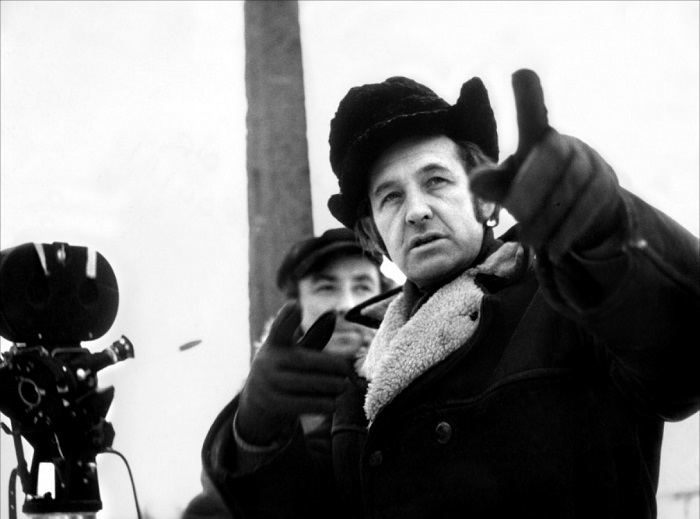
The second film in the trilogy, Canal (1957), follows the heroic young communists who volunteered to fight alongside the Jews in The Warsaw Uprising, a 63-day battle between The Polish Home Army and the Nazis, ultimately ending in surrender. Wajda was told at the time that no one would enjoy a film that takes place, as this one does, mostly in the sewers. Like A Generation, the similarly energetic Canal owed an intentional debt to Italian neo-realist cinema, but Wajda already had a style all of his own. Though taking in a number of influences (Russian film pioneer, Sergei Eisenstein, was an obvious aesthetic reference), he combined them to create one unique vision. In short, Wajda led the way in making Polish filmmaking part of the language of world cinema.
His early films, however, are not just paeans to youthful optimism though, already exhibiting the maturity and reason of a far more seasoned filmmaker. By the masterful Ashes And Diamonds (1958) (along with 1977’s Man Of Marble, this remains Wajda’s most celebrated work), the young idealists have realised that the post-war influence of the Soviets in Poland brings with it occupation of a different kind, and the inevitable hardening into Stalinism. By this final film in the trilogy, the young resistance fighters have seen the revolution betrayed, and they become instead different fighters, trying to be beyond dogma and systems, and even beyond Polish jingoism and nationalist struggles.
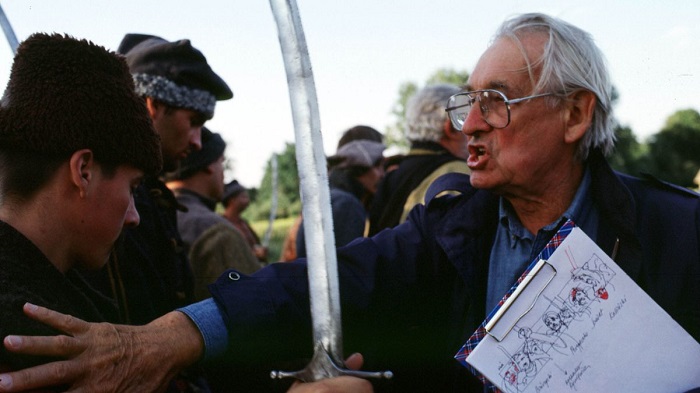
Though he would make many, many more films, “The War Trilogy” is what many commentators still point to when attempting to distil the passion and power that defines Wajda’s body of work. When asked by Sight & Sound in 2008 if he was unhappy that too much attention was paid to his early career, Wajda responded with characteristic iconoclasm. “I owe my first international success to Lindsay Anderson’s review of A Generation,” he said. “This meant that the newly established Polish Film School was carefully monitored in the West. When asked, ‘What is behind The Berlin Wall?’, the Polish directors of the fifties gave the truest answers of anyone in The Eastern Bloc. Now I stand alone. There is no wall and nobody behind me. Besides, it was half a century ago.”
If “The War Trilogy” is a keystone of Wajda’s career, it has a near equal in Wajda’s other cinematic triptych, which the filmmaker finally finished at the age of 87 with the rousing 2013 political biopic, Walesa: Man Of Hope. The belated final chapter of a thematically linked trilogy that began with 1976’s Man Of Marble and continued with 1981’s Man Of Iron, the film chronicles the rise of workers’ rights crusader and eventual Polish President, Lech Walesa. A bold and determined figure, played magnificently here by Robert Wieckiewicz, it was Walesa’s “Solidarity” movement that brought an end to communism in Poland and, in turn, helped topple The Berlin Wall. These three films showed not just Wajda’s close affinity and understanding for Poland’s politics, but also his unchallenged ability to make the political personal.

As strong and resolute a figure as the worker heroes of his Man Of… trilogy, Andrzej Wajda never had the word “retirement” in his vocabulary. The aforementioned and deeply personal Katyn was released when Wajda was 83-years-old, and unlike the later works of most directors, it showed no signs of dissolution when it came to his cinematic strength. Wajda would continue working right up until his passing, with 2009’s Tatarak; the aforementioned Walesa: Man Of Hope; and Afterimage (about avant-garde artist Wladyslaw Strzeminski), which premiered at this year’s Toronto Film Festival. “I’m growing older, which is inevitable,” Wajda told journalist Barbara Hollender in 2009. “My problem is that a director must be healthy and in great shape so he is available to his crew at any moment. So, I’m trying, because I want to make one or two more films…I’ve got so many projects planned.”
Sadly, we will not get to see them, but the extraordinary work that Andrzej Wajda did produce will stand as a towering legacy to one of Poland’s – and indeed the world’s – most vital and important filmmakers.

Hi, to all readers. We just started with our new cultural project Wajda Art. Andrzej Wajda was actually working on his drawings album for a long time in order to tell more about his inspiration to his fans. Our goal is to promote artistic style and methodes that famous polish movie director Wajda used in his art. Have you ever dreamed to support good art? Now you can participate in this project too! Soon you would have possibillity to fund this special project and earn precious gifts.