



by James Mottram and Jessica Mansfield
There’s method acting, and then there’s actually doing. “We both worked for two weeks, separately, at two different farms before we started filming. By the time we started filming we were already exhausted,” Josh O’Connor says of his preparation for the Sundance hit, God’s Own Country, which sees his Yorkshire farmer Johnny enter into a complex, intense relationship with Romanian immigrant Gheorghe (Alec Secareanu). “I worked with the farmer whose farm we see in the film, the farm we shot at.”
“And I worked with Francis’ [Lee, director] dad, he has a farm on one of the hills you see in the film. He’s very familiar to that world,” Secareanu adds of their writer/director.
“We really got to understand what the life of a farmer is, and how it works,” Secareanu continues. “You’re not really allowed to take a day off, ever. Because every single day you have to work from 6am to 8 or 9 o’clock in the evening. And we really did this, and understand how a farmer’s life works.”
“They can’t have holidays or anything, they’re just flat out. So unforgiving and not an attractive world, it’s an ugly world,” O’Connor reminds us. “And the other thing is, I feel like everyone’s having to rethink how we farm. It probably stems back to localised economics, how we don’t have localised economics and it’s a more commercial world we live in. But now for instance John, who I worked with, his sheep used to be sold to the local butchers, that would be bought by someone in the community and the money would stay localised. Now his meat doesn’t go to the butchers, because they don’t exist, and they don’t go to Tesco, because they have commercial farms. So that lamb basically only goes to kebab shops, and he barely makes any money off it. So now he has to do stuff for the local council through winter to pay his rent, so that’s a way of income; and selling off land. It’s a big problem.”
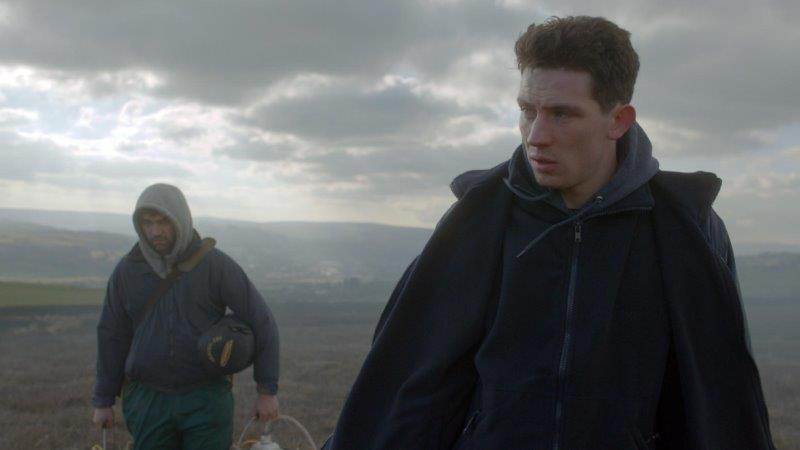
“But they transform it, after they buy the farm they transform it into flats, and there are a lot of people that are moving into the countryside, from the city,” Secareanu suggests.
“Yeah, they don’t use it for farming,” O’Connor agrees.
“Farming is the same in Romania, in all of Europe it is a big problem because now, for some years, all the big, industrial farms have started to appear, and all of the small farms have problems,” Secareanu, who himself is from Bucharest, explains. “But the different thing is that in Romania, all the farms are self-sustained, they try to use all the things that come from the animals, they make cheese, they use the wool, and they use all the things that come from the farm to try to sustain themselves.”
However, God’s Own Country is not merely about farming; instead this is the background to an incredibly complex relationship, between an emotionally isolated farmer and an immigrant looking for a new life. And Francis Lee, in his pursuit of authenticity, had a few tricks up his sleeve to get the best out of his actors – not only did they shoot the film chronologically, he also kept O’Connor and Secareanu separate in the lead up to production.
“In the first two weeks, when we started the rehearsals, and worked on the farm two weeks before, we didn’t live together, we lived separately,” Secareanu reveals. “And I think after one week of shooting we moved in together, and in the first three weeks, we bumped into each other, we rehearsed some scenes, but Francis tried to keep us apart as much as he could, for the characters to be – and their story to be – as truthful and natural as it could.”
“Yeah, it was really important to us that the hostility from Johnny to Gheorghe, at the beginning of the film, was recreated as vividly as possible,” O’Connor concurs. “Initially, in early meetings with Francis I suggested not meeting Alec at all, but that’s really hard when you have to rehearse the love scenes, which are very technical. It’s like choreographing a dance. So that wasn’t going to work. But what was really effective was that we would only cross paths in rehearsals, and when we were out, so we didn’t really communicate for the first two weeks of rehearsals, and the first week of shooting. And then because we were shooting chronologically, as soon as Johnny started to warm to Gheorghe, we started to hang out a bit more.”
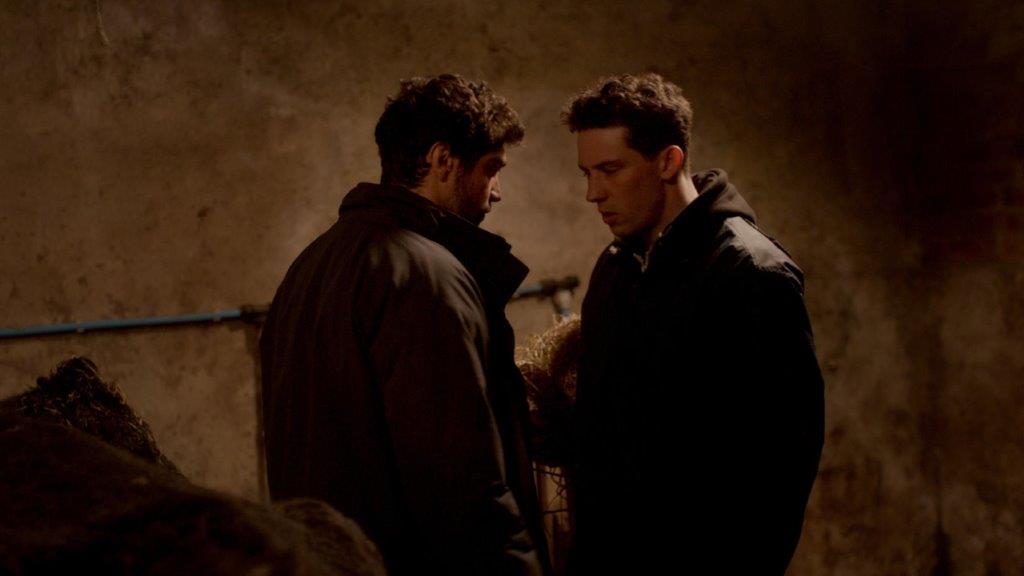
“And our relationship developed in parallel to the characters,” Secareanu adds.
Whilst God’s Own Country is a film about dissatisfaction with the life around you and coming to terms with your emotions and desires, O’Connor insists that it’s not a film that focuses solely on sexuality. “From Johnny’s point of view, and I can’t speak for Gheorghe, but again, for me, for Johnny, he’s frustrated at not being able to articulate the feelings he’s having. And that goes across the whole film, even at the end, when he has that big passionate speech, he doesn’t really say anything, and he just cries and still doesn’t quite know what to say. And at that moment, he doesn’t know how to deal with this beautiful man that he’s in love with. He deals with it in the only way he knows how. One of the things that I really loved about the film is that it’s not a film about repression, or it’s not a coming out film – the issues in that family are about lack of communication.”
God’s Own Country is in cinemas from August 31, 2017
