



by Jamie Henry, our resident Irish expat
There is a particular kind of homesickness that can catch you unawares. It might be a familiar voice, a landscape you recognise immediately, or a story that takes you somewhere you haven’t been for years. For those of us who have left Ireland, the connection to home can be complicated. Time changes the place we remember, while distance can make the smallest details feel disproportionately important.
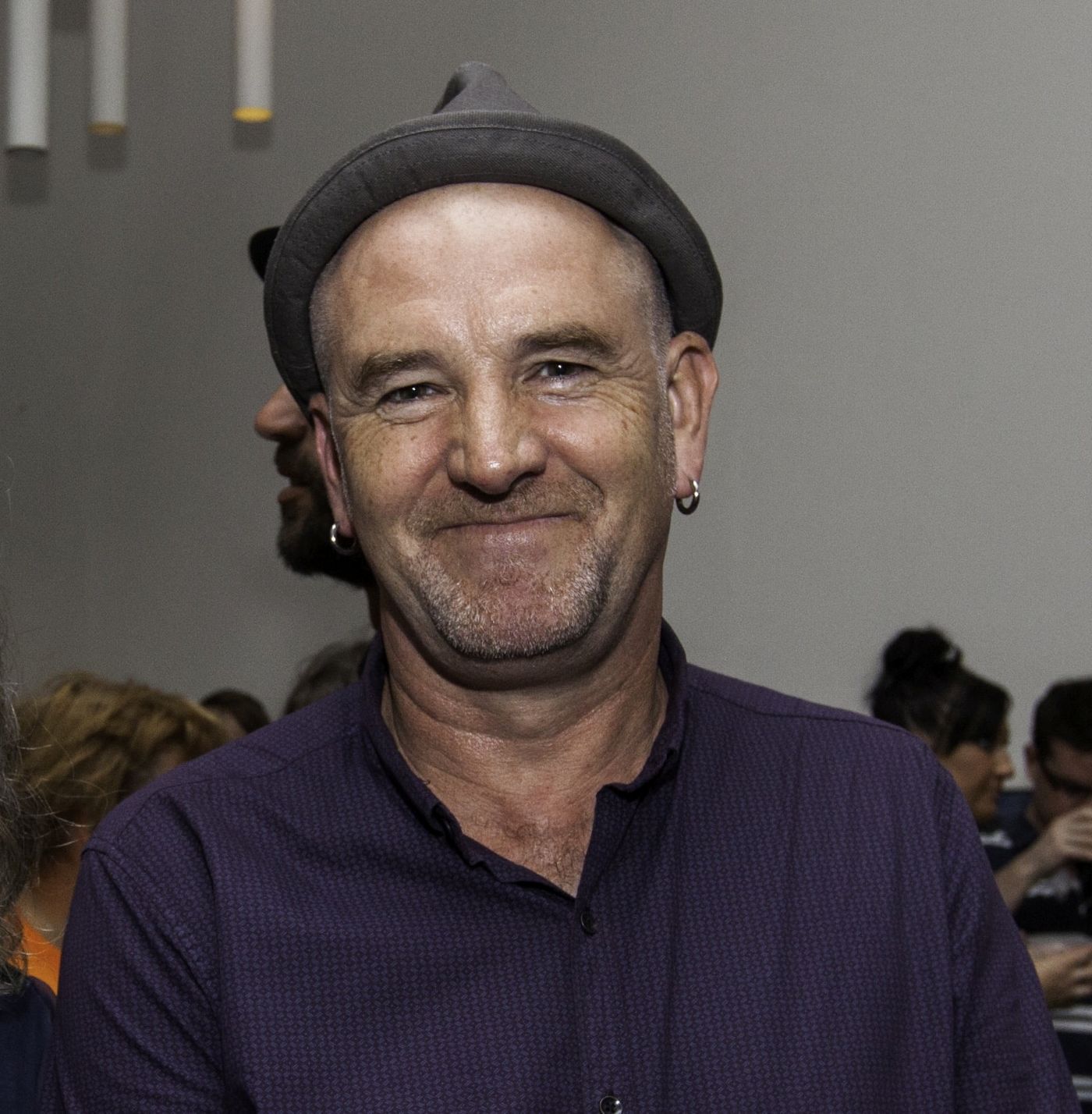
Cinema has a way of bridging that distance. For festival director Enda Murray, who has spent the past decade bringing Irish films to Australian audiences, it also offers a revealing picture of how Ireland itself has changed.
Murray left Ireland in 1985. When he looks back at the films that interested him in the years that followed, he remembers a generation of filmmakers determined to examine the realities of Irish life, particularly poverty and the influence of the Catholic Church.
“I was very interested in the Irish ‘70s New Wave,” he recalls, citing Joe Comerford’s Down the Corner and Cathal Black’s Pigs as films that spoke directly to the social problems of their time.
The Ireland depicted in those films was a country wrestling with its institutions, its inequalities and the power that those institutions exercised over ordinary lives. The films were not necessarily comfortable viewing, but they were asking questions that needed to be asked.
Four decades on, Murray sees a markedly different landscape.
“Now I think Ireland is much more plugged in to the world of film entertainment with lots of to-ing and fro-ing between Ireland, Europe and America,” he says. Irish talent, both in front of and behind the camera, is increasingly internationally focused.
“There is a much more confident vibe to Irish filmmaking at the moment,” he adds.
It is a confidence that extends beyond production budgets, international distribution or the growing visibility of Irish performers. It is also about the freedom to tell different kinds of stories, to look directly at the past without being confined by it, and to explore an Ireland whose social and cultural identity has changed considerably since Murray left.
This year’s Irish Film Festival Australia offers a compelling snapshot of that transition. Its programme moves between dark comedy, supernatural horror, music, documentary and family drama, reflecting a cinema that is difficult to reduce to any single idea of Irishness.
Among the films is Aoife Kelleher’s Testimony, which follows survivors of the Magdalene Laundries and Mother and Baby Homes in their pursuit of justice. For Murray, it represents the determination of Irish women who are no longer prepared to accept the roles imposed upon them by Church and State.
He also points to Girls and Boys, a film about a trans romance that he describes as “such a fresh and delightful film”. For him, it reflects an Ireland that has moved beyond the social restrictions that once defined so much of public life.
The contrast between these films is revealing. One confronts the devastating consequences of institutions that exercised power over generations; the other explores contemporary relationships and identities that would have been far less visible in the Ireland of Murray’s youth. Together, they suggest a national cinema increasingly comfortable with complexity.
Ireland’s international success has helped create the conditions for that confidence. The achievements of actors such as Cillian Murphy, Saoirse Ronan and Barry Keoghan, alongside filmmakers including Martin McDonagh and John Carney, have brought Irish talent to a global audience. But the festival’s value lies partly in looking beyond the most familiar names, giving Australian audiences access to stories that might otherwise pass them by.
For Murray, the festival is also about what happens when those stories are shared.
Since 2015, the Irish Film Festival has developed into a gathering point for Irish communities across Australia, bringing screenings, live music and social events to audiences in multiple cities. This year is particularly significant, with the festival presenting its biggest programme in 12 years and marking the 80th anniversary of diplomatic relations between Australia and Ireland.
The Irish Embassy has embraced the festival as part of that anniversary, recognising the role that culture can play in sustaining relationships between countries. Murray describes this as an example of “soft power in action”, a reminder that national identity is communicated not only through diplomacy and politics, but also through the stories a country chooses to tell.
For a small island with a diaspora spread across the world, those cultural connections matter. Ireland’s history of emigration has left generations of people with family ties, inherited memories and varying degrees of connection to the place that their parents or grandparents left behind. For some, Irish identity is an everyday reality; for others, it is something rediscovered through music, language, literature or film.
Murray sees the festival as a contemporary expression of that relationship.
“In past years, emigrants came together for church and for county associations,” he says, “but the festival has become a social event for the 21st century emigrant.”
He delivers the thought with characteristic humour, adding that it “even beats a good funeral!”
There is something telling in that observation. The Irish funeral has long served as a place of reunion, remembrance and communal storytelling, drawing people together through grief as much as affection. The festival offers a different reason to gather: not simply to remember the Ireland that was, but to engage with the Ireland that is.
Murray says the festival begins in each of its five cities with live Irish music and a few drinks, creating a celebratory atmosphere before audiences settle in for films that might make them laugh, cry or reflect on their own lives. The online programme extends that opportunity to people who cannot attend a cinema screening, including Irish communities living far from Australia’s major cities.
It is an approach that recognises something easily overlooked in discussions of diaspora culture. Maintaining a connection to home does not always mean recreating the past. Sometimes it means finding new ways to participate in a culture that continues to evolve.
I recognise that feeling myself. Originally from Northern Ireland, with family roots in Ballycastle, I have spent 16 years living in Australia. Distance has a way of changing your relationship with home. You begin to notice things you might once have taken for granted, while the place itself continues to move on without you.
That is part of what makes Murray’s observations about contemporary Irish cinema interesting. The films are not simply cultural souvenirs for people who miss home. They can challenge the nostalgic version of Ireland that emigrants sometimes carry with them, revealing a society that is changing, arguing with its history and imagining new possibilities for itself.
Nor does the festival require an Irish connection to be meaningful. The questions raised by its films — about belonging, power, family, identity and the legacies inherited from previous generations — extend well beyond Ireland. The particularity of a story can be precisely what makes it resonate elsewhere.
For Murray, the invitation to Australian audiences is straightforward. Irish filmmaking is enjoying a particularly strong period, building on the country’s longstanding reputation for writers and musicians while finding new ways to tell stories on screen.
As the festival arrives in Canberra in November, that invitation carries additional weight. The 80-year diplomatic milestone provides a reason to celebrate the relationship between the two countries, but the films themselves offer something more enduring than an anniversary commemoration: an opportunity to encounter Ireland through the voices of the people making its culture now.
After leaving Ireland in 1985, Murray has spent much of his life working across countries and cultures. His festival brings those experiences into a shared space, connecting filmmakers and audiences, the Irish-born and the Irish-curious, people who remember home vividly and those discovering it through someone else’s story.
Perhaps that is the quiet achievement of the Irish Film Festival. It offers a way to stay connected without insisting that Ireland remain frozen in time. The country has changed, its cinema has grown more confident, and the diaspora has found new ways to gather around the stories that matter.
Home, after all, is not only the place we leave behind. It is also something that continues to be made, argued over, reimagined and shared — sometimes on a cinema screen, thousands of kilometres away.
The Irish Film Festival is on in Perth – Palace Raine Square, between 30 October and 2 November; Canberra at Palace Electric, between 6 and 9 November and online via ACMI Cinema 3 until 15 November.
