




By Erin Free & Gaynor Flynn
“It’s important, creatively, to do something as different as possible from what you did the last time,” Jonathan Demme once told film commentator David Thompson. “It keeps you from falling into certain ways that seem to work and then doing them over and over again.”
Born in 1944 in New York, Jonathan Demme was raised by his father, a public relations executive for the Fontainebleau Hotel in Miami, and his actress mother. As a young man, Demme made his first steps on what could have been a very different career path. Working at a local vet cleaning cages, the young Demme was convinced that he was headed into a life working with animals. He even began studying to be a veterinarian at the University Of Florida, but soon realised that the profession demanded a lot more than just a deep love and care for animals; Demme was brought undone by the complicated science and chemistry that the degree required, and his dreams of becoming a vet were quickly scuttled. Demme’s other chief passion – movies – soon rose to the fore. He began writing film reviews for the university newspaper, which circuitously led to his career as a movie director.

After writing a rave review of the 1964 epic Zulu, Demme’s well connected father arranged an introduction to the film’s producer, Joseph E. Levine, who was instantly impressed with Demme’s charm, enthusiasm and film knowledge. The veteran producer hired him to write press releases, and Demme moved to New York, where he eventually found work as a movie publicist for United Artists and Embassy Pictures. In 1968, Demme moved to London, where he shifted sideways, and started supplementing his film writing with work in the field of rock music journalism. Demme was and is an ardent lover of music, and it would always remain a vital element of his creative DNA, with the director not only placing great importance on the use of pop music in his films, but also working within the industry itself by helming music videos and rock documentaries.
In the early seventies, Demme, like so many other aspiring writer/directors, soon hurtled into the orbit of producer/director/impresario Roger Corman, the B-movie icon who would also help launch the careers of Martin Scorsese, Francis Ford Coppola, Ron Howard and many, many others. The pair crossed paths in Europe, where Corman was working on a couple of projects, while also setting up his new company New World Pictures. “Roger was in desperate need of screenplays,” Demme explained to Movie Maker. “He was stuck over there in Ireland, and suddenly here was this avid film buff, who could write press releases, in his office. And he asks, ‘Wait a minute, do you want to write a script? I’m starting up this company.’ I said, ‘Sure’. [Laughs] He said, ‘Do you like motorcycle movies?’ And I said, ‘Yeah, especially your film The Wild Angels’. So he said, ‘Okay, why don’t you take a crack at it?’”
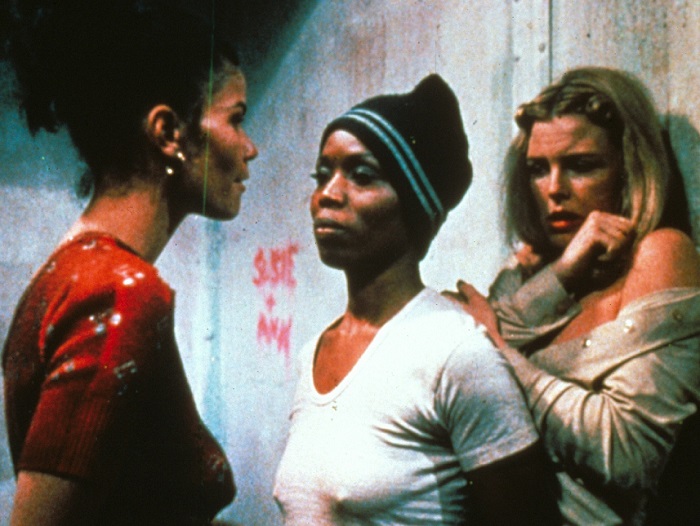
Now on staff at Corman’s New World Pictures, Demme worked on the screenplays for the aforementioned 1971 biker flick Angels Hard As They Come, as well as the raunchy 1973 prison break movie The Hot Box (on which he doubled as second unit director), and the racially driven 1973 action bust-up Black Mama, White Mama. In 1974, Corman gave his protégé an opportunity to get behind the camera, and Demme was assigned a women-in-prison picture, a lurid staple of the ever-exploitative New World Pictures. While not exactly turning the genre on its head, Demme certainly put his own spin on Caged Heat, injecting dark humour, absurdity and social commentary into the compulsory mix of violence and T&A. Though a film made to a formula, it would point to Demme’s future interest in the unusual, and his predilection for unconventional filmmaking. Caged Heat remains a B-movie favourite and genuine cult classic, and is filled with vivid, imaginative imagery rarely glimpsed in the slamming, salacious women-in-prison genre.
“It was completely understood that if you didn’t complete the day’s work on any given day, that you would be replaced,” Demme told The Guardian of working for Roger Corman, a cash-savvy businessman who claims that he’s never lost a cent in his many movie ventures. “That instilled in me a very strong discipline, and a sense that first and foremost your priority was to keep the movie on schedule and on budget. That’s one way you get to stay on the job. That was very valuable. Roger also said something that I’ll never forget: the formula for a director was 40% artist, 60% businessman. He also had a little pat speech that he’d give you before you did your first directing job, and there were a lot of really good rules – ways to keep the eye entertained, the value of well-motivated camera movement…that kind of thing. He was great. We called it The Roger Corman School Of Film Technique. You really did learn on the job.”
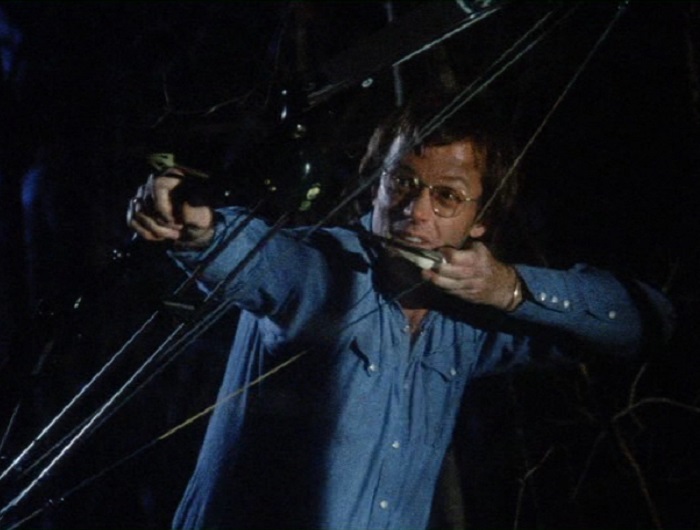
Demme continued his “apprenticeship” with two more films for Roger Corman: the raucous comic crime road movie Crazy Mama (starring the delirious Cloris Leachman) and the one-man-against-the-system actioner Fighting Mad, with Peter Fonda. As with Caged Heat, Demme found his own very personal entry points into these strict genre pics, again throwing in absurdist touches and social relevance. Though a favourite of Corman’s (he could shoot fast while delivering solid results), Demme felt that he had learned all that he could under the cinematic svengali, and broke out to work on his own. “Working with Roger was a fantastic experience,” Demme told Movie Maker. “He was presenting you with these opportunities that would not have presented themselves under any other circumstances. He was a brilliant teacher, a great encourager, and an honourable guy. I love Roger, for a myriad of reasons.”
Demme’s first effort away from New World Pictures was the picaresque, rootsy 1977 comedy Handle With Care (also known as Citizen’s Band), which interlaces the stories of several characters in a small town united by their use of CB radio. Though seen by its studio Paramount as a potential cash-cow because of the then-current craze surrounding CB radio, Demme instead made a gentle, folksy movie filled with wit and warmth. Paramount wanted another Smokey And The Bandit, and they got something altogether different, with Demme planting himself firmly as a storyteller richly interested in character rather than a director with his eye on the box office. Handle With Care was acclaimed by many critics, but failed miserably in financial terms. “Nobody went,” Demme said of the movie to American Film in 1984. “Everybody was so convinced that it was going to be an unqualified success because of the CB mania of the day that their attitude was, ‘Get it together, get it out there, and get ready to count the receipts’. And nobody went.”

Demme’s dreamed-of career as an individualist filmmaker appeared to be dashed: after directing Columbo for television, he helmed the studio thriller Last Embrace, starring Roy Scheider. Though “journey-man” type work, Demme (as he did at New World Pictures) made the most of the job, plying the film with all manner of Hitchcock-derived stylistic flourishes and psychological inflections. Last Embrace didn’t click with Demme’s auteurist strut, but it works extremely well as a thriller. “The story had the potential to be a contemporary film noir, and I thought that Roy Scheider could be the Humphrey Bogart of the seventies,” Demme told American Film. “Screenwriter David Shaber and I had a terrific time working together, and if we’d been able to do one more draft, we would have had something hot. But it got the green light too soon.”
The director’s next film, 1980’s Melvin And Howard, was a far more personal project. With the same kind of warmth that he utilised on Handle With Care, Demme told the strange but true story of Melvin Dummar (Paul Le Mat), a gas station attendant who claimed to have received a will that named him as the heir to the fortune of eccentric, reclusive billionaire Howard Hughes (Jason Robards). Though not exactly a smash hit, the film was much loved, and won Oscars for supporting actress Mary Steenburgen and screenwriter Bo Goldman, as well as a nomination for Jason Robards. Melvin And Howard was the film that really established Demme’s reputation, and is a fine distillation of his directorial concerns: off-beat characters, unconventional humour, American pop culture and endearing rootsiness. The film remains one of the essentials on Demme’s resume, though its success would ultimately lead directly to the director’s darkest career moment.
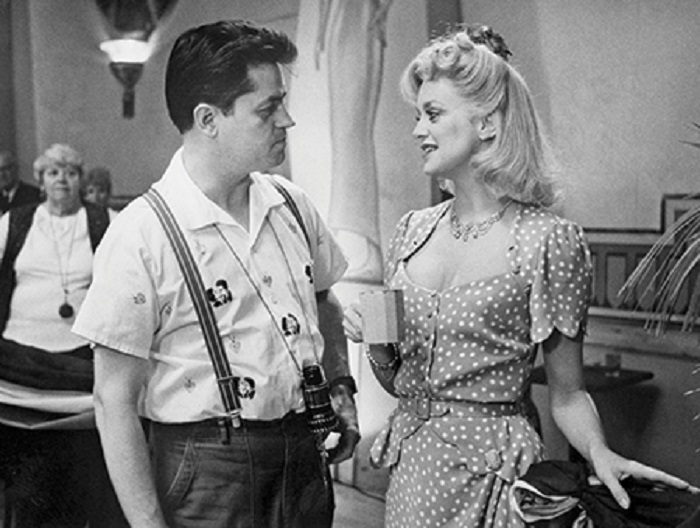
Following Melvin And Howard, Demme was tapped to direct 1984’s Swing Shift, a WW2 drama about the women who did the home front factory work while most of the men were away fighting. The film – with its strong vein of Americana and interesting political/gender viewpoint – appeared to be a good fit for Demme. It was, however, a disaster. The studio saw the movie as a romantic comedy rather than the more edgy, politicised film that Demme imagined, and took it out of his hands to be recut and refashioned. The film’s stars, Goldie Hawn and Kurt Russell, had become a real life couple, and Warner Bros. were keen to capitalise on any potential on-screen sizzle. “A very high profile Hollywood writer was brought in to rewrite the movie as more of a Tracy and Hepburn film, a light romance,” Demme explained to The Guardian. “We had this hard-nosed feminist, all-women-together thing, and Kurt Russell was supposed to be a bastard, and suddenly all these scenes were being rewritten. I found myself in a very awkward position because I had to co-operate with these new scenes; otherwise I would have been in violation of my contract.” Pushed around by Warner Bros. and his powerful leading lady, Demme ultimately walked out on the film.
The director bounced back from the failure of Swing Shift with Stop Making Sense, his 1984 concert film for New Wave icons Talking Heads. Along with the likes of The Last Waltz and Gimme Shelter, it’s one of the all-time great music movies, bristling with energy, excitement and all of the band’s inherent eccentricities. “I wanted to capture the energy and the flow and that unrelenting progression of music,” Demme told LA Weekly of his work on the film, which would be the first of many music related projects.

“Stop Making Sense was character-driven,” Talking Heads frontman David Byrne told The Guardian in 2017. “Jonathan’s skill was to see the show almost as a theatrical ensemble piece, in which the characters and their quirks would be introduced to the audience, and you’d get to know the band as people, each with their distinct personalities. They became your friends, in a sense. I was too focused on the music, the staging and the lighting to see how important his focus on character was – it made the movies something different and special.”
An unqualified success of its genre, Stop Making Sense salved the wounds inflicted upon Demme by Swing Shift, and he followed it up with two joyous films: the sexy, anarchic comedy-thriller Something Wild, which boasted brilliant turns from Melanie Griffith, Jeff Daniels and Ray Liotta; and the screwball mafia comedy Married To The Mob, which provided the excellent Michelle Pfeiffer with one of the most interesting, against-type characters of her career. In between these two delightful efforts were a series of documentaries, including Swimming To Cambodia (a performance film featuring humourist and commentator Spalding Gray) and Haiti Dreams Of Democracy, which showcased Demme’s political bent and interest in human rights issues. It also sparked his lifelong fascination with the troubled nation of Haiti, and his continuing love of the documentary format. “I discovered the joy of working in reality,” he says. “I also discovered that the further I moved away from feature films, the more comfortable I felt.”

In 1991, Demme found himself smack-bang in the middle of a success that he never could have imagined. An unlikely choice to bring Thomas Harris’ smash hit novel The Silence Of The Lambs to the screen, Demme fashioned nothing short of a modern masterpiece. Chilling, perfectly controlled, and flawless in its execution, the film picked up five Oscars (including Best Film and Best Director) and still stands as one of the greatest thrillers of all time. Demme held it all together, and the phenomenal success of The Silence Of The Lambs was both hard won and thoroughly deserving. “At certain points, I was afraid that there was something – a missing chink of skill – that was going to prevent me from having a movie that was financially successful,” Demme told Rolling Stone. “That frightened me. So when The Silence Of The Lambs became an unqualified success, I took a huge sigh of relief. I can’t tell you how wonderful that felt.”
Interestingly, after that very success, Demme spent much of the nineties making music videos and documentaries, including Cousin Bobby (about Demme’s cousin, an Episcopalian minister in Harlem) and Storefront Hitchcock, a concert film for cult performer Robyn Hitchcock. Aside from The Silence Of The Lambs, Demme’s only other features during that decade were 1993’s Philadelphia and 1998’s Beloved. The former was another hit, scoring an Oscar for leading man Tom Hanks and drawing controversy – from all corners – for its story of a high powered gay lawyer discriminated against because he has AIDS. Some gay groups claimed that the lyrical, deeply moving film was too chaste in its depiction of its homosexual characters, others derided it for being too politically correct, and riled-up conservatives questioned the film’s very existence. “We looked for a story for a long time,” Demme told Rolling Stone when discussing Philadelphia. The director’s well established social conscience and political concerns had driven him to want to make a movie about the divisive subject of AIDS. “We decided that it would be pointless to make a film for people with AIDS, or for their loved ones. They don’t need a movie about AIDS. They live the truth. We wanted to reach people who don’t know people with AIDS, and who look down on people with AIDS.” The film succeeded, and is a landmark in Hollywood’s on-screen treatment of the disease.

Beloved, however, was far less successful. Produced by and starring cultural phenomenon Oprah Winfrey (“She said that she loved the movies I had made,” Demme told Premiere. “That was more than enough for me”), the film mixes the supernatural with a story about family fracture and slavery in America’s Deep South. A bizarre and occasionally unpalatable combination, Beloved was ignored by audiences and largely slammed by critics. Though ultimately a failure, working on the film was a happy experience for Demme. “Oprah has the best kind of respect for directors having the last word on certain decisions on a movie,” he told Premiere. “I saw her as the mother of this project. I trusted her completely.”
By the time the nineties drew to a close, Demme admits that he had “no interest in making movies. I was getting deeper into documentaries and performance films.” Still, he didn’t sever ties completely. In 2002, he made The Truth About Charlie, an update of the classic Audrey Hepburn/Cary Grant film Charade, and followed that up two years later with a remake of John Frankenheimer’s paranoid Cold War thriller The Manchurian Candidate. “Remakes are perfectly fair game,” Demme told reel.com. “What matters is that the remake is a picture that can stand on its own two feet.” Though both films were indeed major departures (in style and content) from the originals that had inspired them, neither clicked with audiences, with The Truth About Charlie also copping a major kicking from critics.

After the negative responses to The Truth About Charlie and The Manchurian Candidate, Demme moved again more wholeheartedly into documentary and music-related filmmaking, directing 2003’s The Agronomist (the story of Jean Dominique, a Haitian radio journalist and human rights activist), 2006’s Neil Young: Heart Of Gold (a wonderfully stirring concert film showcasing the legendary Canadian singer/songwriter) and 2007’s Jimmy Carter Man From Plains (a chronicle of the former US President’s tour spruiking his book Palestine: Peace Not Apartheid).
Four years after The Manchurian Candidate, Jonathan Demme finally got back to features. The warm but biting Rachel Getting Married centres on the profoundly damaged Kym (Anne Hathaway), a recovering, regularly rehabbed drug addict who reunites with her family at her sister Rachel’s wedding, opening up all manner of old wounds. Freewheeling and original, the film has the same humanistic spirit and ragged energy of Demme’s best work. “Normally before I make a movie, I know exactly how each scene will be shot,” he told FilmInk at The Toronto International Film Festival. “The script for Rachel Getting Married was so loose that I didn’t think that would work, so I had to figure out another way to draw the audience in.” Demme decided to use hand held cameras and loose framing, and to do away with rehearsing altogether. “I wanted it to seem as naturalistic as possible,” he says. The result is the director’s best effort in years.

In press interviews, Demme has even mentioned the influence of the much-discussed and controversial Dogma movement (which playfully espoused a raw, unadorned, documentary-style brand of filmmaking) on the loose, organic feel of Rachel Getting Married. “I say one stupid thing,” Demme laughs when FilmInk brings this up at Toronto. “I swear that we weren’t trying to make a Dogma movie! We thought that we were watching Dogma movies, but no one had told us that Dogma had died ten years ago, and now everything was post-Dogma! We did watch them though. I like stripping off the artifice in the hopes of getting much closer to a certain kind of truthfulness. That’s what a documentary is: it’s literally stripped-down truths. Jenny Lumet’s script seemed so truthful, and this process of stripping things down really appealed to us.”
After Rachel Getting Married, Demme characteristically continued to bounce all around the thematic, formal and stylistic map. He worked again with the great Neil Young (2009’s Trunk Show and 2011’s Journeys); made socially motivated documentaries (2011’s I’m Carolyn Parker) and bizarre performance pieces (2015’s Another Telepathic Thing); worked consistently in quality television (The Killing, Shots Fired, Seven Seconds, Enlightened, A Gifted Man); and directed daring features (2013’s curious Wallace Shawn Henrik Ibsen adaptation The Master Builder). Jonathan Demme’s final film, however, would be 2015’s Ricki & The Flash, in which Meryl Streep memorably rocks out opposite Rick Springfield as a messed-up muso trying to get her life back on track.

Jonathan Demme died at his home in Manhattan on April 26, 2017 at the age of 73 from complications from esophageal cancer and heart disease, leaving behind an incredibly diverse body of work. “If you get to pick what you’re going to be perceived as, I would pick being perceived as unpredictable,” Demme told Film Comment in 1991. “Because for me, I’m unpredictable: I haven’t got the foggiest idea what’s going to turn me on next, and what’s going to speak to me as something that I want to make.”
Stop Making Sense is re-released for its 40th anniversary in cinemas on November 9.
