



by Dov Kornits
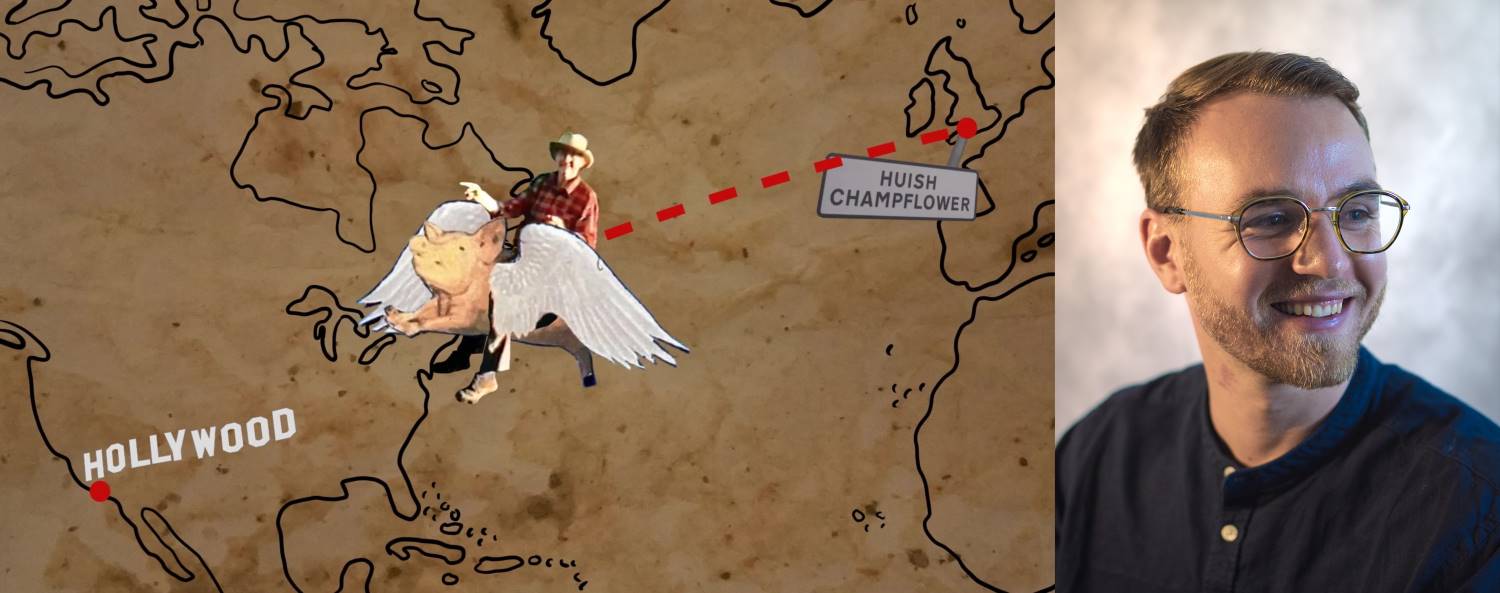
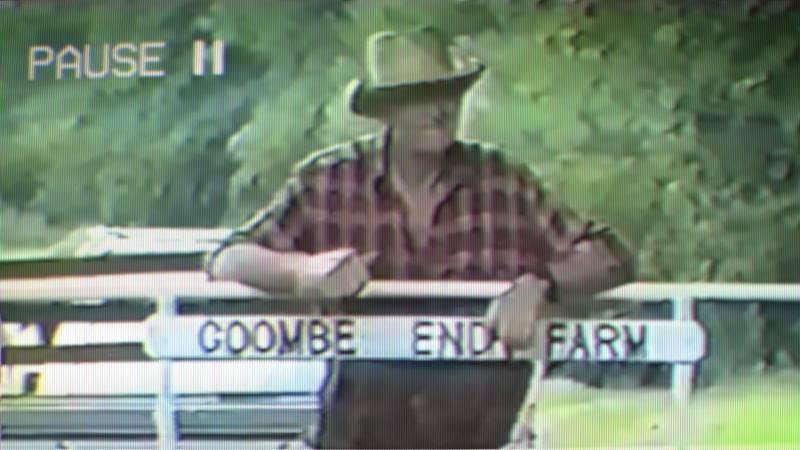
Charles Carson was a quirky farmer in Somerset, England, who used to make strange videos in the 1980s and distribute them to his neighbours. Cut to today, and filmmaker Oscar Harding’s jaw dropped when he played one of these VHS tapes. In it, Charles playfully buries dead animals, decorates his mother’s corpse for a number of days after she passes, addresses the camera in various unusual ways… basically, what you could justifiably assume as behaviour befitting a serial killer.
But there’s a whole lot more to the Charles Carson story, which is expertly unraveled in the documentary A Life on the Farm.
“When someone watches the documentary, we want them to go on the exact same journey that me and Oscar went on,” says producer Dominik Platen. “We saw that tape and we were just shocked. And then we started to try and find out as much as we could about it.”
Primarily made by Dominik, Oscar and Edward Lomas, who met whilst at university in UK, the journey that started off with one VHS tape expanded considerably after they started digging, uncovering photos turned into macabre greeting cards, more tapes and a global cult for Charles Carson’s creative work.
“We share a love for B movies, films that are so bad that they’re good, and that’s why we agreed to find out more after we found the tape,” says Platen.
A Life on the Farm is ultimately not unlike Tim Burton’s Ed Wood, in the way that the filmmakers pay tribute to someone whose life work many would simply dismiss as an easy laugh.
“At first, when you watch it, it’s easy to laugh at a character like him,” admits Platen. “That’s the first thing everyone’s going to do. You’re going to look at that tape and you’re going to laugh at the guy for not pulling off a stunt or an effect so well. But then, if you look at it more deeply, and that’s what we wanted to do, we didn’t want to just scratch the surface, we wanted to explore that one particular character, Charles Carson. You can see the passion that he puts into all of it. He was in his sixties when he first picked up a camera, and it’s the ‘90s, where it’s actually not that easy to edit things on a VCR. And he figured it out reading these magazines, when most people in their sixties, they probably don’t ever pick up a new skill.”
These comments are particularly resonant for someone like Platen, who works in high end visual effects.
“If you think about this, if he had started making films at seven or eight years old, the time when we all started making our own films, who knows where he would’ve gotten to, or what he would’ve achieved? Even though his effects and the end result might not have the production value, or it might not be as professional as you would expect, I think you still have to appreciate the inventiveness he had, and basically making everything up as he went, and inventing his own techniques and tricks to do these effects… Same thing that I did when I was young, and I had no idea how to do it. I just tried things out.
“One of the things that we found so universal about the Charles Carson story, is that it doesn’t matter if you’re a farmer in a rural area, but him trying to use this as a creative outlet from his normal life… There are so many other people who have jobs and then, on the side they do something else, something more creative, and just that passion… That’s the one thing that we think almost anyone can relate to.”
A Life on the Farm screens at the Sydney Underground Film Festival on Sunday, September 11, 2022 at the Sydney Underground Film Festival, with Dominik Platen in attendance.
