



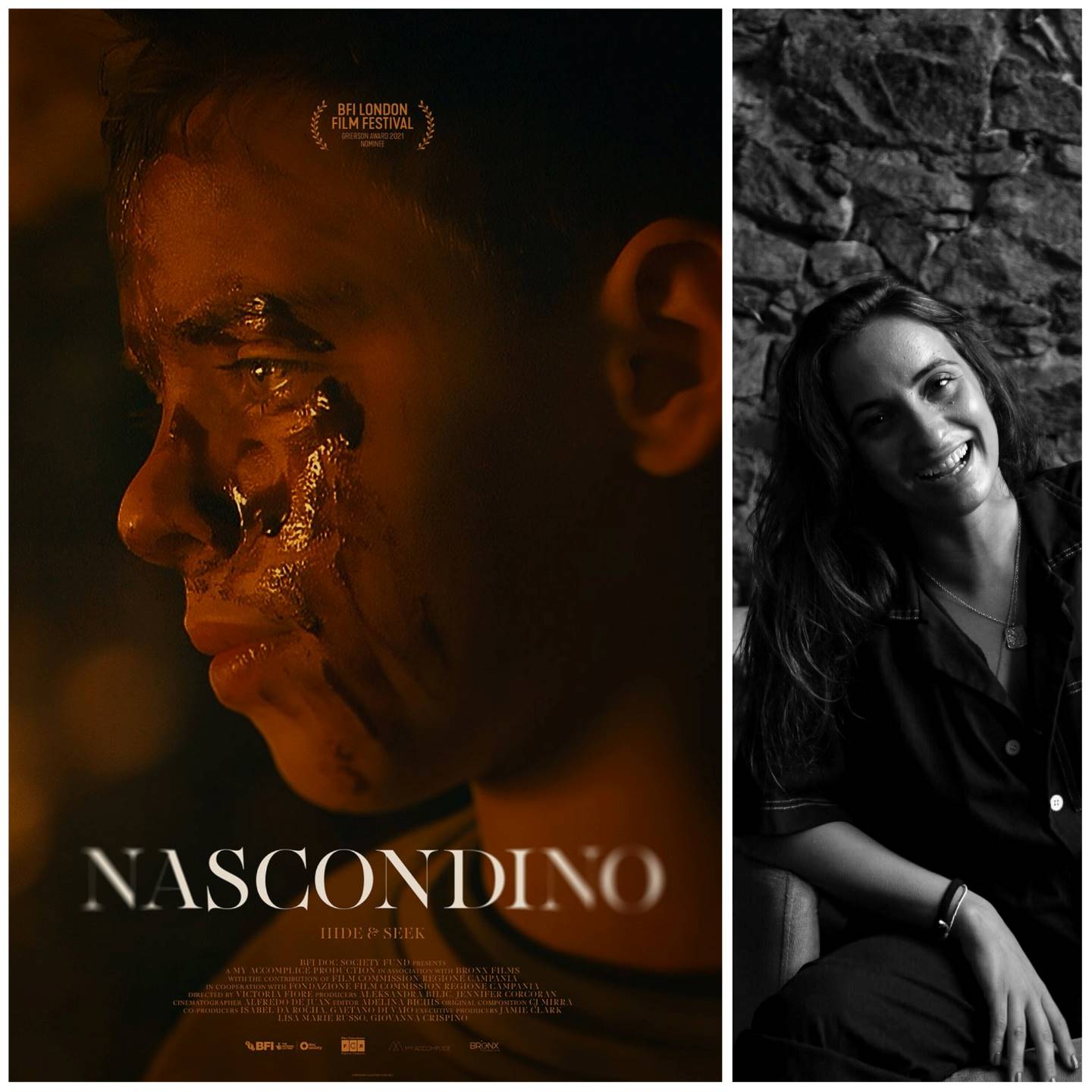
by Julian Wood
It is often said that documentaries can reach parts that fictional films cannot. This was certainly part of the appeal of film Nascondino (Hide and Seek), which was one of the strongest films in any category at the recent Sydney Film Festival.
When we speak with director Victoria Fiore, her easy laugh belies the very tough subject matter that she worked with: kids in poverty and often dysfunctional families and the lure of petty crime.
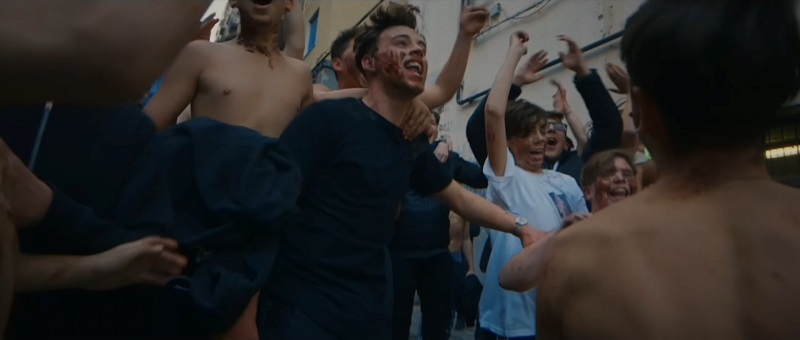
Hide and Seek was shot over several years and provides a uniquely engaging close up portrait of the kids in the Spanish Quarter of Naples.
t
We started by asking Fiore about the boundaries (and overlap) between documentary filmmaking and fiction.
“The whole idea with this film was to go into the detail of what was going on in the minds of the kids, and for some of that it wasn’t possible to do solely by observations.”
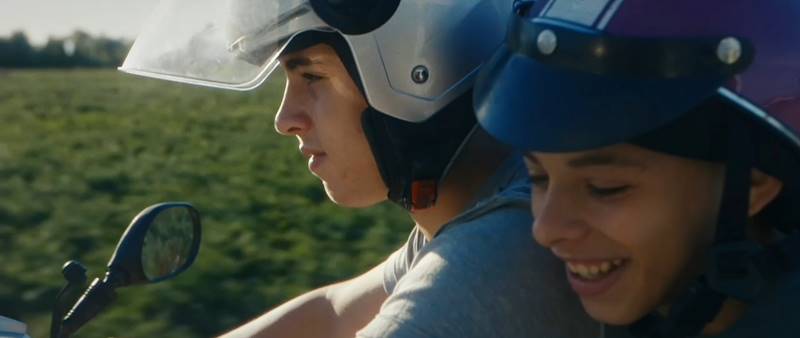
At the very centre of the story is a young teenager called Entoni, who lives with his grandmother in a crowded flat. His father is in jail, and Entoni is already working hard on the kind of swagger and street smarts that he hopes will carry him through in this rough neighbourhood. Within that, there is also his vulnerability and his care – for example, in relation to his younger brother Gaetano who looks up to him.
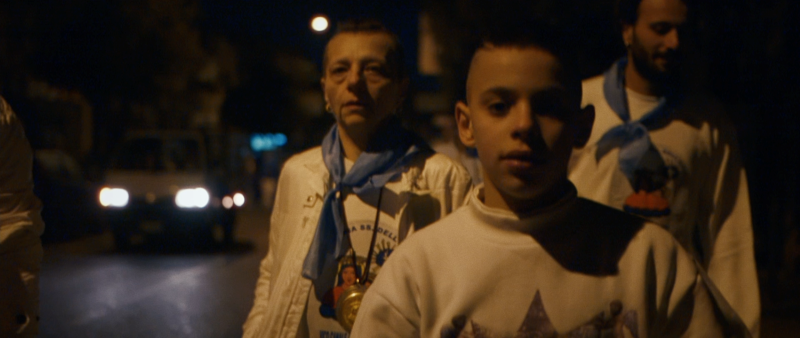
All this makes Entoni documentary gold. It is clear that Fiore was drawn to Entoni too, and she recognises that his long-filmed journey/coming of age is what gives the film its special truthful quality.
“Entoni’s greatest desire was to escape, and we wanted to show this escape. And in a way, what we were able to show was more real than just following him. So, in that case you bring in fictional elements, I guess. But it is only to show what is truly happening under the surface of what he was feeling, and, in a way, that makes it even more documentary. So yes, lines are blurred but we reach for a greater truth.”
In terms of technique and considering that so much of the action takes places in confined spaces such as a small apartment, it is important that the fly on the wall camera work is up close but does not call attention to itself. Fiore praises her cameraperson for bringing this off over the many years that it took to make the film. “He [Alfredo de Juan] is so fluid, he is like a human steadycam. He is able to capture the moment like few others. And do not forget that this was created over years to create that effect. It was a five-year journey. It comes across in the film as 3 ½ but it was shot over 5, and we had no idea where it was going.”
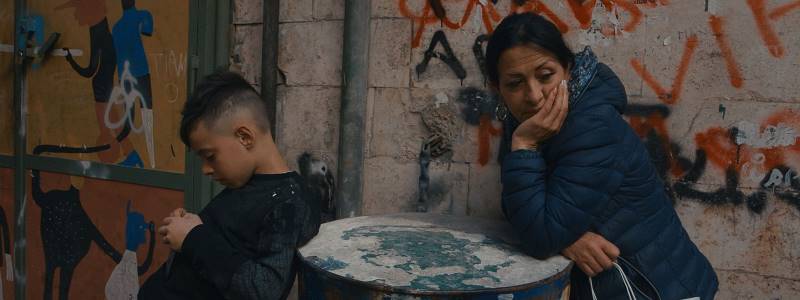
As indicated, the film evolved from its original premise over the years of filming. As Fiore explains, its essence was in her contact with the kids. Her affection for them comes out in her description of the involvement of the film team.
“The story just unfolded. In the beginning, it was a simple idea. We started with young people to see how they wanted to tell their version of Naples. All these crazy undoable ideas! But the story really started happening when I first saw Entoni. When I first laid eyes on him, I knew. Then, as we followed him, he got more comfortable with the camera and then he wanted to tell about it and involve all his friends. And it became impossible to stop!”
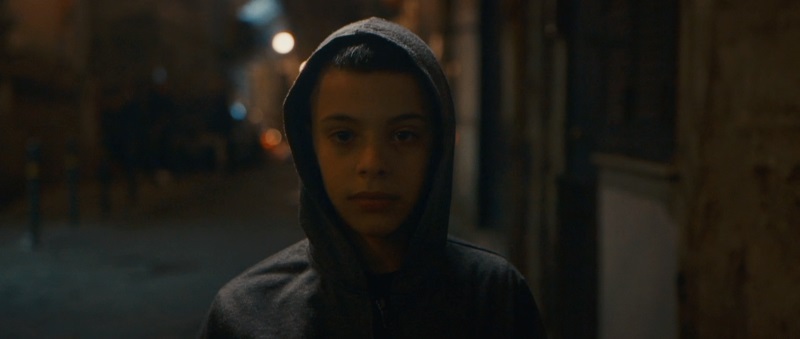
The filmmakers had to get absolute trust and that could only come about if the kids sensed that they were being respected. Beyond all the distracting ideas of filmmaking and glamour and fame, there is the desire to really let them tell their own story. This was the heart of the ethical pact that Fiore felt that she had with the kids.
“Yes, there is an effect [being the subject of the film and the kind of attention that goes with it] but, at the same time, these are kids who have never really had the opportunity to express themselves. It is difficult for them to speak about how they are feeling or what they really want. This mattered to me. I spoke to a social worker about the impact we might have. She is someone who knows the kids and the families well. And that was part of our process to make sure we were doing this process well. Because we know that they are vulnerable kids.”
At least there is an adult who takes a real interest in their lives. And there is the great satisfaction that you get from getting their trust. The warm, engaged approach is completely opposite from a cold-eyed view, but as she shows, the benefits from that bond flows both ways.
Fiore enthusiastically agrees and adds, “Yeah. I love them so much.”
The film does not just feature the kids in isolation. It opens up via small but significant ways to what we might think of as the sociological conditions of their lives. Part of this also concerns the kinds of families that are possible in this Southern Italian context.
Fiore is very much aware of the unreconstructed gender dynamics of the situation but, equally, she did not want to make the focus of the film so broad that it becomes a completely different work.
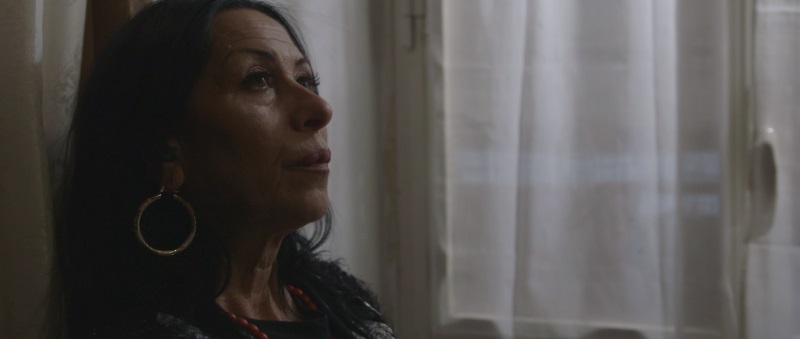
She reflects on the fact that so many of these families are, at various times, fatherless and on how this shapes the women’s lives too. She also has to recognise that the filmmaker’s role is to sketch in elements of the dilemmas rather than actually redesign the society.
“You know they are in a community where all the men are incarcerated, and they [the women] still live in this patriarchy and are somewhat downtrodden because their men aren’t there and what are they meant to do? It is something that one would love to change in society, but movies can’t do that… The pressures [they experience] are generic, it is not just the police for example, it is the whole of society that contributes with its ideas and preconceptions that make Entoni’s story a little inevitable.”
Towards the end of the film, we see the street kids collecting used Christmas trees which they intend to throw into a giant sinkhole and then set it alight. Their aim to is to make the biggest bonfire that they can on a special feast day.
Fiore explains the back story to this sequence as well as what it shows about the kids and their self-policing community. “That ritual is traditionally on 17th January. It is a very old tradition where you burn your sins through the fire, and you come out anew. It goes right back to pagan times. And in Christian terms, it is because the patron saint was supposed to have walked through the fires of hell in order to reach truth or salvation.
“But it becomes important too, in this part of Naples, because different children battle it out to make the biggest fire and they will go about stealing trees. They hide them in abandoned buildings. They look after them 24/7 in case other gangs might steal them. And this creates an incredible hierarchy where these kids self-organise as to who will watch them, etc.
“I admire that because if you try to get kids to organise in school they won’t do it in the same way, but then they organise like this! And the fires have that wash your sins idea, but also, they dedicate it to kids who are no longer there. Either because they are in prison, or they have been killed. So, it is kind of a battle, but it is very personal to them too.”
Even the existence of this giant sinkhole in a major city is an indictment of the way in which the local state has failed the city and its inhabitants. Fiore agrees. “Yes, the existence of that sinkhole is a demonstration that the state doesn’t care or provide properly. There is not a single space for the kids to play. There is that one square in the neighbourhood, which is a drug dealing square basically, but there are quite a few abandoned buildings and sinkholes which could be converted. That sinkhole has been there for decades! There was a movement of volunteers to make something of it but the police just built the fence around it higher so no one can enter. But the kids are going to use if anyway, so it is now much more dangerous. The kids need a space. It is state abandonment in a word.”
As noted, this is partly a slice of Entoni’s life, so the question would have been when to end the film. The ending is ‘there’ but, artistically speaking, you still have to find it. One wonders how Fiore and her team thought through the process of finding a good end point in such an open-ended narrative.
“The choice of when to end comes round to what the film means to me and what is the note we want to end on. And it is about the cycle appearing to be never-ending. So, we have a symbol of that. I wanted to end on [Entoni’s dad] coming out of jail but it didn’t happen. We tried for that four times! So, I realised that wasn’t going to be our ending.”
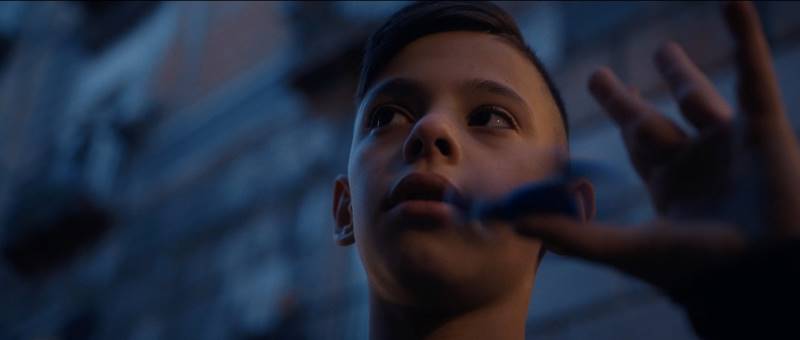
Does the fact that Entoni is so repeatedly disappointed in relation to his dad’s release, and the continuing dangers of going astray, make his story one of inevitable tragedy? At this point Fiore references the British films of downtrodden working-class life, ie. Ken Loach, but she is not temperamentally suited to that view.
“I hope that we go beyond tragedy. Pessimism can be elevated. I watch British realist films and it is all so dark and depressing!”
Instead, she sees herself and her film as being more ‘Italian’ about such things. “It is tragic but in a very Southern Italian way. I cannot imagine tragedy without a touch of humour and grace and beauty. And I don’t lose hope or want to become cynical. So, it is a tragedy of sorts. Despite all that, we will persevere. I love the quote by Italo Calvino that we need to be able to see in the midst of hell, what hell is not.
Hide and Seek is screening and streaming at the Melbourne International Film Festival
