



by FilmInk Staff
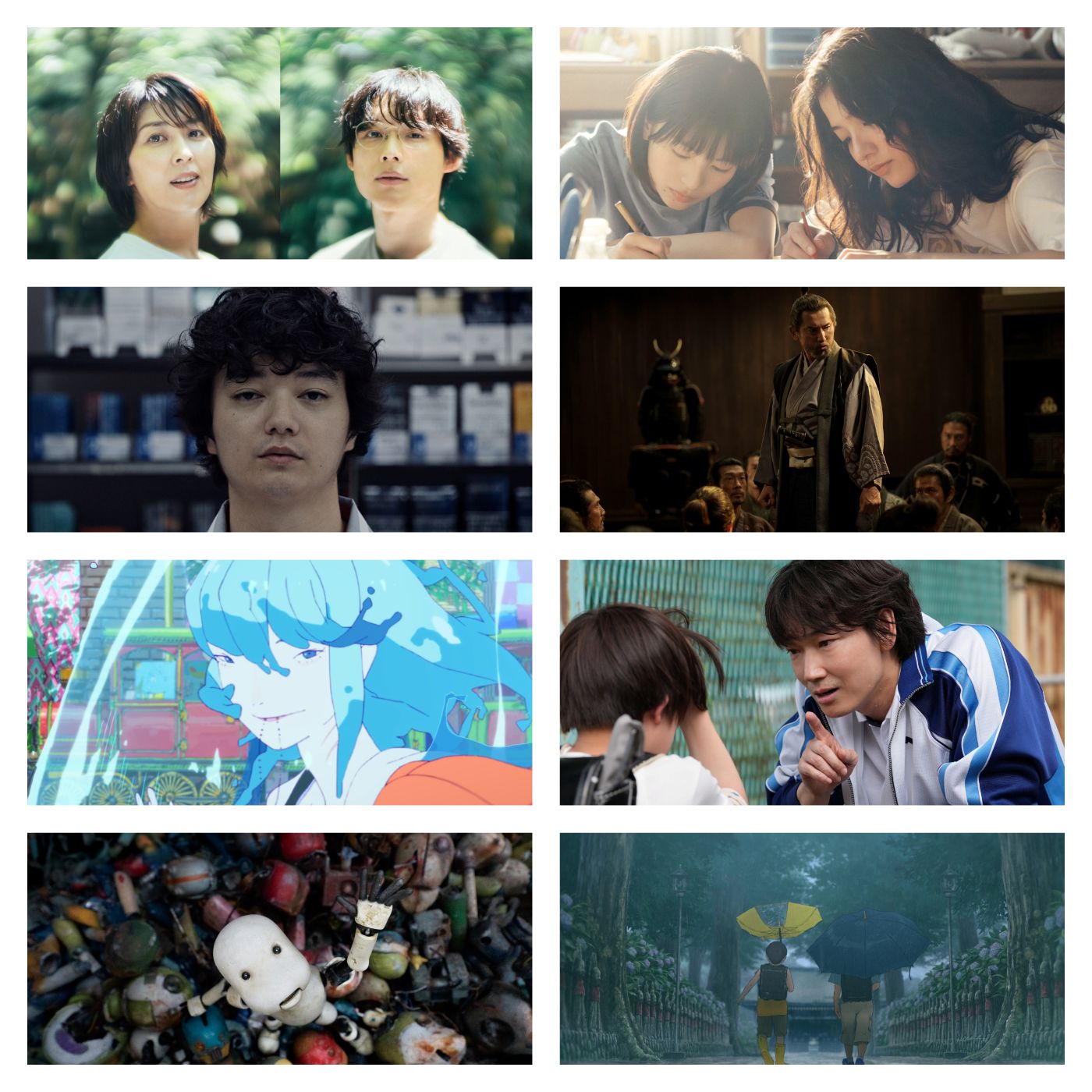
The Japanese Film Festival (JFF) celebrates 30 years of Japanese filmmaking on Australian screens, unveiling the 2026 program which runs nationally from 26 September to 20 December in Canberra, Perth, Melbourne, Brisbane and Sydney. The program features Hirokazu KOREEDA’s latest film, Look Back as the opening night film, bringing audiences exclusive Australian premieres alongside samurai epics, horror, animation, high-stakes social dramas and more.
The milestone falls in the same year Australia and Japan mark the 50th anniversary of their Basic Treaty of Friendship and Cooperation. The 2026 line-up shares multiple generations of Japanese filmmaking in one program, from 94-year-old Yōji YAMADA, sharing his 91st feature Tokyo Taxi, to debut animator Kōhei KADOWAKI, whose film We Are Aliens premiered at Cannes this year. The wider program spans official selections from Venice, Cannes and Berlin, alongside prize winners from Annecy, the Berlinale and the Japan Academy Film Prize.
Japanese Film Festival Programmer, Manisay OUDOMVILAY said, “Thirty years on, the Japanese Film Festival remains the premier destination for Australian audiences to experience Japan’s best contemporary cinema. From samurai epics to stop-motion animation, international film festival prizewinners to the biggest hits of the Japanese box office, this year’s program celebrates both the masters who shaped Japanese cinema and the filmmakers redefining it. We’re incredibly excited to reveal what’s in store for the festival’s 30th edition, which coincides with the 50th anniversary of the Australia-Japan Basic Treaty of Friendship and Cooperation.”
PROGRAM HIGHLIGHTS
Look Back is adapted from the manga by Tatsuki FUJIMOTO, the artist behind the 35-million-selling Chainsaw Man. Hirokazu KOREEDA adapted, directed and edited it himself, and the film returns him to the official Venice Film Festival Competition for the first time since The Truth (2019). It follows two young manga artists whose childhood rivalry turns into friendship, and eventually, real grief, against the quiet isolation of a small town in northern Japan. This is the second screen adaptation of the manga, following the 2024 anime film directed by Kiyotaka OSHIYAMA.
Yōji YAMADA’s Tokyo Taxi, a remake of the French drama Driving Madeleine, made for Shochiku’s 130th anniversary, stars Takuya KIMURA as a driver taking his elderly passenger on a road trip defined by memory and loss. His co-lead, 85-year-old Chieko BAISHO, won her second Best Actress prize at the 49th Japan Academy Film Prize earlier this year, 45 years after her first.
Ryōta NAKANO, whose films Capturing Dad, Her Love Boils Bathwater, A Long Goodbye and The Asadas have drawn comparisons to YAMADA, returns with Bring Him Down to a Portable Size, in which a woman travels to northern Japan to settle her estranged brother’s affairs and finds a gentler man than the one she remembers.
Purehearted closed the Toronto Japanese Film Festival 2026 and stars Sairi ITŌ as a young Okinawan entrepreneur fighting to launch an authentic sugarcane rum, a role modelled on real distiller Yūko KINJŌ, who has publicly praised the performance.
LEE Sang-il’s 2006 drama Hula Girls returns in a newly digitally remastered edition, following the true story of women in a declining Fukushima coal town who train as hula dancers to save their community. The revival arrives after LEE’s Kokuhō became the highest-grossing Japanese live-action film in history, inviting audiences to see where the director’s career began.
JAPAN’S BIGGEST BOX OFFICE HITS
Two of the biggest commercial Japanese film successes of 2025 screen in the program. 1ST KISS topped the box office on debut and finished on roughly 2.88 billion yen (approximately A$25 million) from 1.97 million admissions. It pairs Takako MATSU, the Japanese voice of Elsa in Frozen, with SixTONES member Hokuto MATSUMURA as leads. The screenplay is by Yūji SAKAMOTO, who won Best Screenplay at Cannes for Hirokazu KOREEDA’s Monster. The film earned director Ayuko TSUKAHARA a Best Director nomination at the 49th Japan Academy Film Prize.
SUZUKI=BAKUDAN grossed 3.16 billion yen (approximately A$28 million) at the domestic box office and earned 12 Japan Academy nominations. It follows a man who predicts a string of real-time bombings and never quite reveals whether he is psychic, lucky or the bomber.
SAMURAI EPICS, HORROR AND SOCIAL DRAMA
The Samurai and the Prisoner is the first period drama from horror auteur Kiyoshi KUROSAWA and premiered at the 79th Cannes Film Festival. It depicts a besieged samurai lord who forms an uneasy alliance with a brilliant, dangerous prisoner while a traitor hides within his own court. Samurai Vengeance, from director Takashi MINAMOTO, follows a young man who avenges his father’s murder outside a kabuki theatre. Eighteen months later, a samurai investigates the revenge act, uncovering the hidden motives, in a mystery that brings actors Tasuku EMOTO and Ken WATANABE (The Last Samurai, Godzilla) together on screen for the first time.
AnyMart and Sham are both defined by crime and moral ambiguity. AnyMart follows a convenience store clerk whose numbing routine spirals into darkly comic violence, a story that director Yūsuke IWASAKI based on his own father. The film won the FIPRESCI Forum Jury Prize at the 76th Berlinale. Takashi MIIKE’s Sham dramatises a real 2003 Fukuoka case in which a teacher was publicly named in the press before the allegations against him reached court and is the first true story from a director with more than 100 films to his name.
The Girl Who Sees is a live-action take on the horror-comedy manga Mieruko-chan, starring SixTONES member Taiga KYOMOTO, and follows high schooler Miko who gains the ability to see spirits. In pursuit of a normal life, she ignores them at all costs.
A STRONG YEAR FOR JAPANESE ANIMATION
Three animated features arrive as sequels, prequels, and adaptations of existing hits. We Are Aliens writer-director Kōhei KADOWAKI will attend the festival in Sydney. Born in 1996, KADOWAKI graduated from the Department of Design at Tokyo University of the Arts before joining an animation production company. He later became independent and has since worked with the likes of Japanese band YOASOBI. We Are Aliens marks KADOWAKI’s directorial debut, and follows two boys whose close-knit childhood friendship is shattered by a single careless moment. The film premiered in Directors’ Fortnight at Cannes in 2026, where it competed for the Caméra d’Or before playing in Competition at Annecy.
ChaO is the first Japanese film in eight years to win the Annecy Jury Prize, a genre-bending romantic comedy about a mermaid princess who proposes to the human office worker she falls for.
ALL YOU NEED IS KILL adapts Hiroshi SAKURAZAKA’s science fiction novel, the book behind Hollywood’s Edge of Tomorrow, this time telling the story from its female lead. Studio 4°C animated it for Warner Bros. Japan. Chimney Town: Frozen in Time is the sequel to Poupelle of Chimney Town, which drew close to two million admissions in Japan. JUNK WORLD had its international premiere in Midnight Madness at the 50th Toronto International Film Festival. In this prequel to the cult stop-motion hit Junk Head, robot escort Robin and human commander Tris descend into an underground city to investigate a strange anomaly and a fanatical cult.
THE JFF SPECIAL SERIES
The JFF Special Series returns with a retrospective of films featuring film scores by Tōru TAKEMITSU (1930–1996), marking 30 years since his passing. TAKEMITSU, one of the most influential composers in Japanese cinema, composed music for more than 100 films across four decades. The classics on the program include collaborations with postwar Japanese filmmakers, including New Wave figures Masahiro SHINODA (Pale Flower, Silence, his adaptation of the Shūsaku ENDŌ novel) and Nagisa ŌSHIMA (The Ceremony), alongside films by Masaki KOBAYASHI (Harakiri, Kwaidan), Hiroshi TESHIGAHARA (Woman in the Dunes) and Akira KUROSAWA (Ran, Dodes’ka-den). The series will screen in Canberra, Melbourne, Sydney and Brisbane.
The full 2026 program is available now at jffau.jpf.go.jp.
TICKET PRICES
Tickets are on sale from 2 September 2026 at jffau.jpf.go.jp
General admission tickets are available for $20.5 in Brisbane and $25 in all other cities, with concession, member and group discounts available. All screenings in the JFF Special Series: Tōru TAKEMITSU Retrospective are free.
2026 JAPANESE FILM FESTIVAL SCREENING DATES AND VENUES
CANBERRA: 26 September – 13 October 2026
•Palace Electric, 2 Phillip Law Street, Canberra ACT
•National Film and Sound Archive, McCoy Circuit, Acton ACT
PERTH: 13 – 21 October 2026
•Palace Raine Square, 300 Murray Street, Perth WA
MELBOURNE: 29 October – 17 November 2026
•The Kino, 45 Collins Street, Melbourne VIC
•ACMI, Federation Square, Flinders Street, Melbourne VIC
BRISBANE: 12 November – 20 December 2026
•Palace Barracks, 61 Petrie Terrace, Brisbane QLD
•Queensland Art Gallery & Gallery of Modern Art, Stanley Place, South Brisbane QLD
SYDNEY: 17 – 29 November 2026
•Palace Norton Street, 99 Norton Street, Leichhardt NSW
•Palace Moore Park, 22 Lang Rd, Moore Park NSW
•Palace Central, Level 3, Central Park Mall, 28 Broadway, Chippendale NSW
•Hayden Orpheum Picture Palace, 380 Military Rd, Cremorne NSW
