


by Annette Basile
Worth: $17.50
FilmInk rates movies out of $20 — the score indicates the amount we believe a ticket to the movie to be worth
Cast:
Tecla Insolia, Michele Riondino, Andrea Pennacchi, Fabrizia Sacchi, Valentina Bellè, Stefano Accorsi
Intro:
… beautiful and involving …
Set in 18th century Venice, Primavera begins with the prioress of an orphanage (Fabrizia Sacchi) brutally throwing a sack of newborn kittens into, one assumes, a Venetian canal (we just hear the splash). This turns out to be symbolic of how the film’s central character, Cecilia (TV actress and singer Tecla Insolia), feels – discarded.
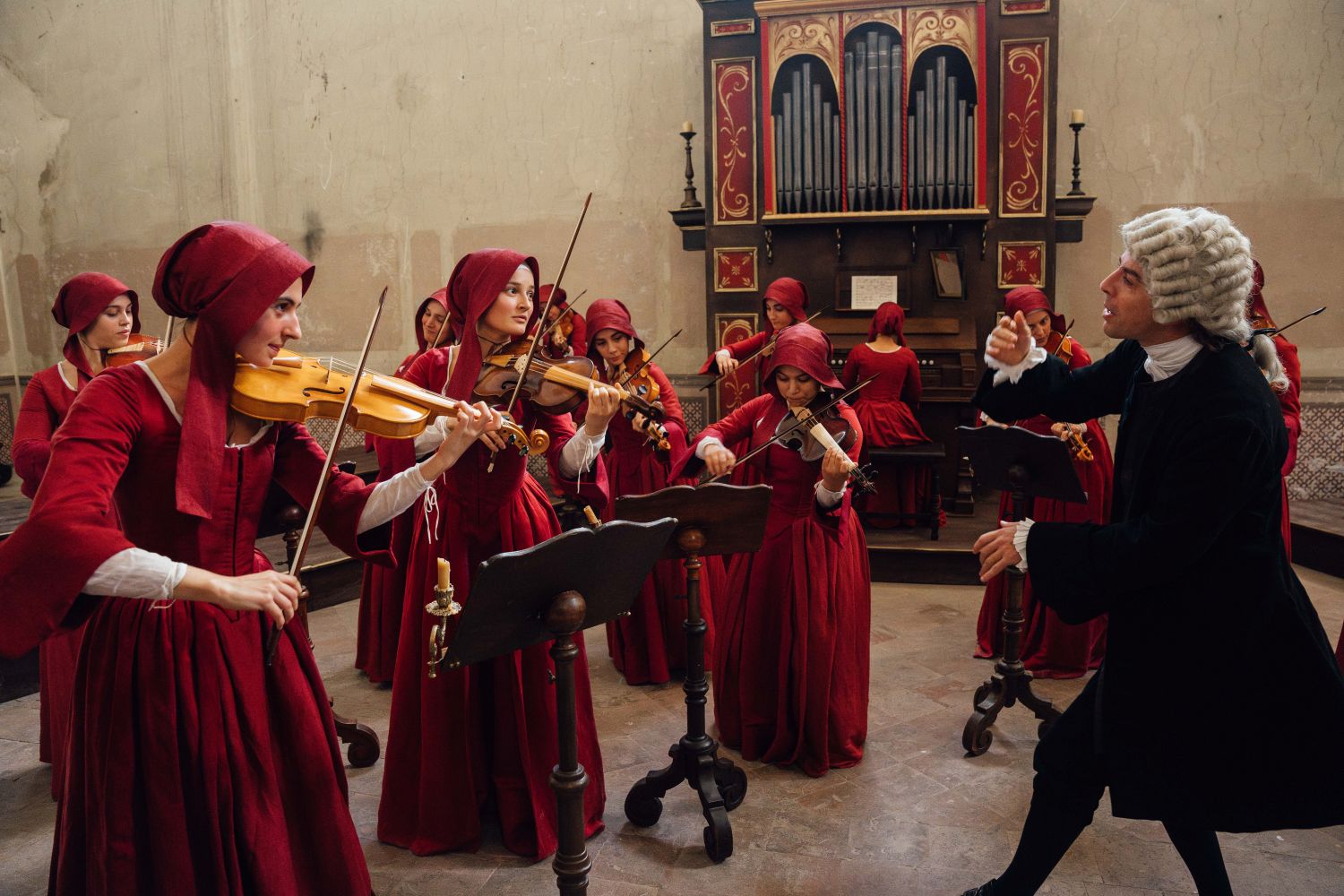
Cecilia, aged 20, is a fictional character but this tale is based on historical fact, and she narrates via letters that she writes to the mother she has never met. But the mothers that abandoned their daughters, she says, gave them a gift – these girls of the Ospedale della Pietà are taught to play music, and a mighty orchestra they make, giving concerts for the well to do. Hidden behind a grille on an elevated stage, the girls play as wigged gentlemen and their consorts look up in amazement.
Facing competition from a rival institution and dreading the loss of patronage, the orphanage reluctantly re-employs priest and maestro Antonio Vivaldi (Michele Riondino) – the extraordinary Italian Baroque composer – to bolster the musical offerings. Vivaldi arrives, coughing and spluttering, and soon sees something special in violinist Cecilia. She doesn’t play for the praise, he tells her. Cecilia’s passion for music is so great that she acutely dreads the arranged marriage to the much older army commander, Sanfermo (Stefano Accorsi) because once married, a woman is not allowed to play music ever again, such were the customs of the times.
But there is much more to this story – it has a couple of surprises that will make you smile and gasp. The relationship between Cecilia and Vivaldi is nuanced and intriguing; she hides in the darkness watching him compose, writing down the notes playing in his head.
While it mostly takes place in the dark and moody orphanage, there are occasional but beautiful scenes of Venetian streets and canals, and the period detail is exquisite. The orchestral music elevates the film, especially the choral arrangements towards the end. The music is not just cut and pasted in between dialogue scenes, it’s interwoven into the narrative as if it’s another character.
Taking its title from the concerto Primavera (meaning spring) from Vivaldi’s Four Seasons, the composer – who really did work at Ospedale della Pietà – is a key (and rather lovable) character, but Cecilia is the film’s heart.
The narrative slowly builds and by the time the real drama happens in the third act, you are engrossed. It’s impressive writing from director Damiano Michieletto and Ludovica Rampoldi (who also wrote the book that this film is based on).
Michieletto is an experienced and acclaimed opera director and it’s hard to believe that this is his first foray into celluloid. His direction is masterful. With great acting, music and storytelling, you would have to send out a search party full of cynics to find a flaw in this beautiful and involving film.
