



by Bianca Jimenez
Casino scenes have become some of the most memorable set pieces in cinema. From tense card tables to glittering gaming floors, they offer filmmakers a ready‑made environment for drama, glamour, power shifts, and psychological warfare. A great casino scene isn’t really about gambling, it’s about what gambling represents. Risk, control, confidence, and consequence all collide in a visually rich pressure cooker. When done well, a casino scene can define a character, heighten stakes, or become an iconic moment in film history.
So, what separates a forgettable casino sequence from one that audiences remember for decades?
- High Stakes That Go Beyond Money
The most important ingredient of a great casino scene is meaningful risk. The chips on the table are rarely the true cost. In the best examples, characters are wagering something deeper: their reputation, their freedom, their relationships, or their life.
Money works as a visual shorthand for risk, but emotional or narrative stakes make the scene matter. A protagonist might be trying to outwit an antagonist, expose a flaw, or prove their identity. When the audience understands what will be lost if the hand goes wrong, every glance and gesture becomes charged with tension.
Without stakes beyond cash, even the most lavish casino scene can feel hollow.
- Clear Character Dynamics at the Table
Casino scenes excel when they function as character studies. The way someone gambles tells the audience who they are without exposition. Are they calm under pressure, cocky, reckless, deceptive, or calculating?
A great scene establishes:
- Who holds the power entering the casino
- How that balance shifts during play
- Who realises they’re outmatched and when
The table becomes a battleground of personalities. Small choices like hesitation, eye contact, chip placement often matter more than dialogue. When the audience understands the emotional chess match, the mechanics of the game fade into the background.
- Visual Storytelling and Atmosphere
Casinos are already cinematic environments: glowing lights, reflective surfaces, rhythmic sounds, and constant motion. Great films use this visual noise deliberately, either to overwhelm characters or to isolate them within the chaos.
Effective casino scenes often use:
- Tight close‑ups on hands, eyes, or cards for tension
- Wider shots to emphasise isolation or confidence
- Lighting that contrasts glamour with threat
- Sound design that rises and falls with emotional beats
Some scenes heighten realism with muted sound and concentrated focus, while others lean into excess and spectacle. What matters is that visuals support the emotional tone rather than distract from it.
- Authenticity Without Over-Explanation
Audiences don’t need to understand every rule of blackjack, poker, or roulette to feel tension. In fact, excessive explanation often kills momentum. The best casino scenes strike a balance between authenticity and accessibility.
They typically:
- Establish rules briefly and visually
- Focus on decisions rather than mechanics
- Use reactions and consequences instead of narration
This approach keeps non‑gambling audiences engaged while still feeling believable to those familiar with casino games. Authenticity is about tone, not technical accuracy.
- Momentum and Pacing
A casino scene lives or dies by its pacing. It often mirrors the rhythm of the game being played slow, deliberate builds followed by rapid escalation.
Strong casino scenes:
- Start with confidence or curiosity
- Slowly introduce doubt or tension
- Build toward a decisive, irreversible moment
Editing plays a crucial role here. Cuts become faster as stakes rise, or conversely, slow down to stretch out a pivotal moment. The timing of reveals such as a final card or hidden move must feel earned rather than rushed.
- Use of the Casino as a Microcosm
In the best films, the casino isn’t just a location, it’s a symbolic space. It represents the world that the character is navigating; one ruled by chance, wealth, deception, and power imbalance.
A great casino scene often reflects broader themes such as:
- Fate versus control
- Appearance versus reality
- Moral compromise
- The cost of ambition
The outcome of the game frequently mirrors the character’s trajectory. Winning might come at a personal price; losing might expose a flaw that drives the story forward like people wanting to learn how to win at casino slots.
- Consequences That Carry Forward
What elevates a casino scene from spectacle to substance is what happens after the bet is resolved. A truly great scene leaves a mark on the story.
Strong consequences might include:
- Shifts in alliances
- Escalation of conflict
- Character transformation
- Moral reckoning
If the scene could be removed without affecting the narrative, it wasn’t doing enough work. The best casino moments change the direction of the film.
It’s Never About the Cards
At their core, great casino scenes are pressure chambers for human behaviour. They strip characters down to instinct, confidence, fear, and greed, all under extreme scrutiny. The casino simply provides a beautiful, volatile stage.
When filmmakers understand that the real game is psychological not mathematical, casino scenes become unforgettable. Not because of the winning hand, but because of who the character becomes when everything is on the line.
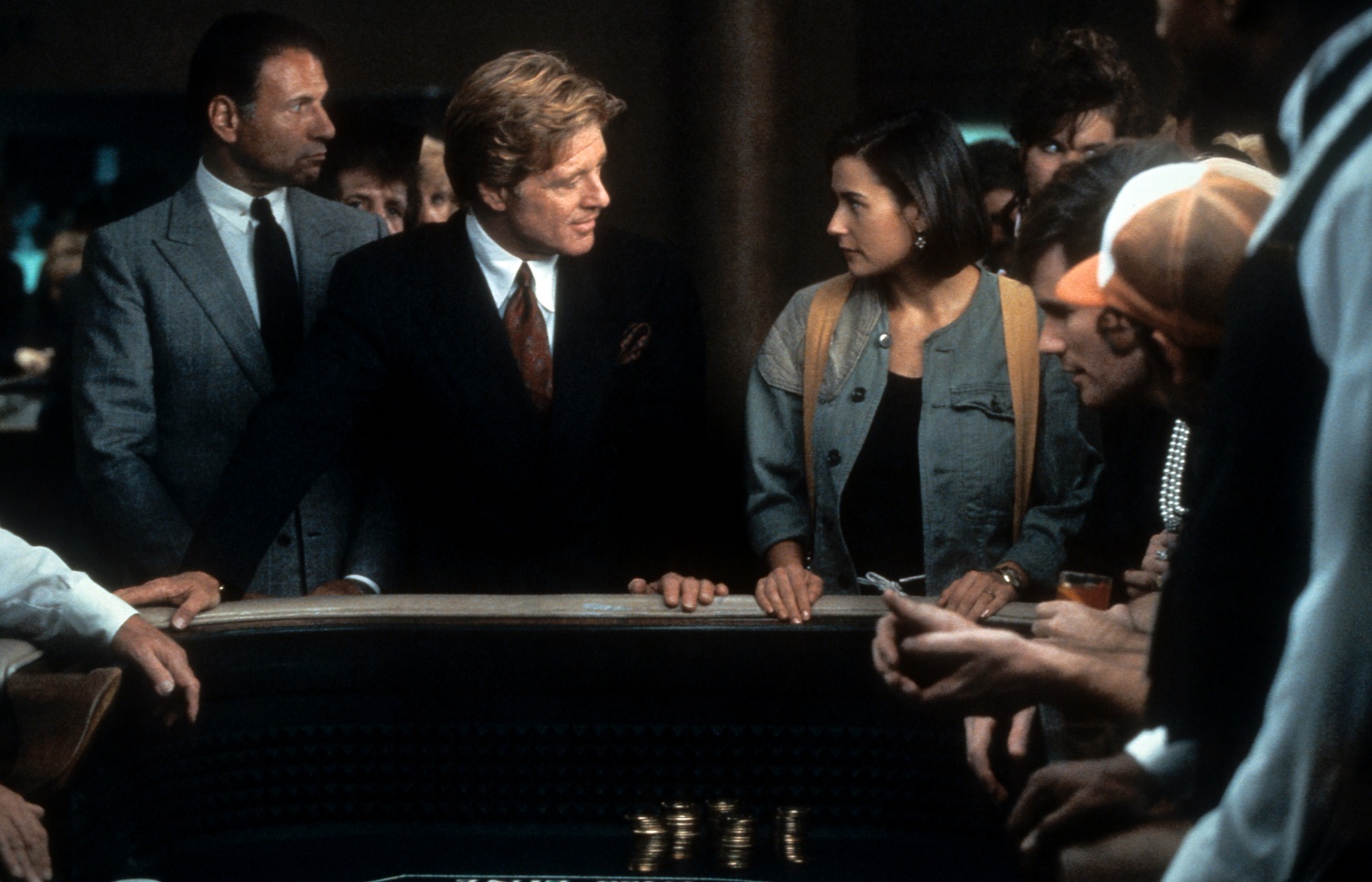
Image: a scene from Adrian Lyne’s Indecent Proposal
