


by Helen Barlow
Before Thursday’s announcement of the 79th official programme, Cannes artistic director Thierry Fremaux had warned that Hollywood studios no longer want to send their tentpole films to the festival. Essentially, this is in case they bomb at the box office after the exposure and that it’s hugely expensive to send all the actors and their entourages, as well as producers etc to the festival at the hugely expensive Riviera city.
After Joker 2’s Venice premiere, the film never recovered from the negative reviews. One might have thought that Cannes regular Tom Cruise could have braved the throng with Digger, but it looks like Alejandro G. Inarritu’s film, in which he stars, is headed for Venice just before release.
But who knows for sure? Venice’s proximity to the Oscar campaigns certainly helps, yet this year’s Oscar winner One Battle After Another directed by Venice regular Paul Thomas Anderson, didn’t play in Venice, nor did Marty Supreme directed by Josh Safdie, whose brother Benny took The Smashing Machine instead.
“It’s important to note that when studios have a smaller presence at Cannes, it’s because they’re simply less active in the kind of cinema that used to allow them to come here,” Fremaux said in his opening statement on Thursday. “Independent cinema, cinema made outside of Los Angeles, continues to exist, and this selection will bear witness to that.”
In any case, in recent years Cannes’ arthouse bent has resulted in films from various countries attracting major awards, from 2023’s Anatomy of a Fall and The Zone of Interest, to 2024’s Anora and Emilia Perez to 2025’s Sentimental Value and It Was Just an Accident.
So far, with 95 per cent of the 2026 official programme announced, there are no Australian films or even Australian actors headed for the Croisette. Still, both Directors’ Fortnight and Critics’ Week are yet to announce their programmes, so there could be something there. After all. Australia’s Dangerous Animals screened to a hugely enthusiastic crowd in Directors’ Fortnight last year.
As usual, in the previous weeks, the festival had announced its honourees, Peter Jackson at the opening ceremony and Barbra Streisand at the closing. Park Chan-wook would be the jury head, while in the non-competitive Premieres programme, seasoned aviator John Travolta would present his directorial debut about flying, Propeller One-Way Night Coach, an adaptation of Travolta’s 1997 book, which follows a young aviation enthusiast setting off with his mother on a cross-country odyssey to Hollywood. It streams on Apple TV from May 29.
 The opening film, Pierre Salvadori’s The Electric Kiss, was also previously announced, and it marks the recent tradition of French films opening the festival. A romantic 1920s-set comedy, it follows a celebrated painter (Pio Marmai) who is unable to work after his wife’s death. In the hopes of contacting her, he hires a medium (Anais Demoustier), who is actually a fraudster and they fall in love.
Fremaux notes that there are many newcomers to the festival this year, so we might be in for some surprises. Five of the directors in the competition are women, though only Austria’s Marie Kreutzer (Corsage) who has Gentle Monster starring Lea Seydoux and Catherine Deneuve, is widely known.
Still, prominent in the competition are some big-name Cannes regulars.
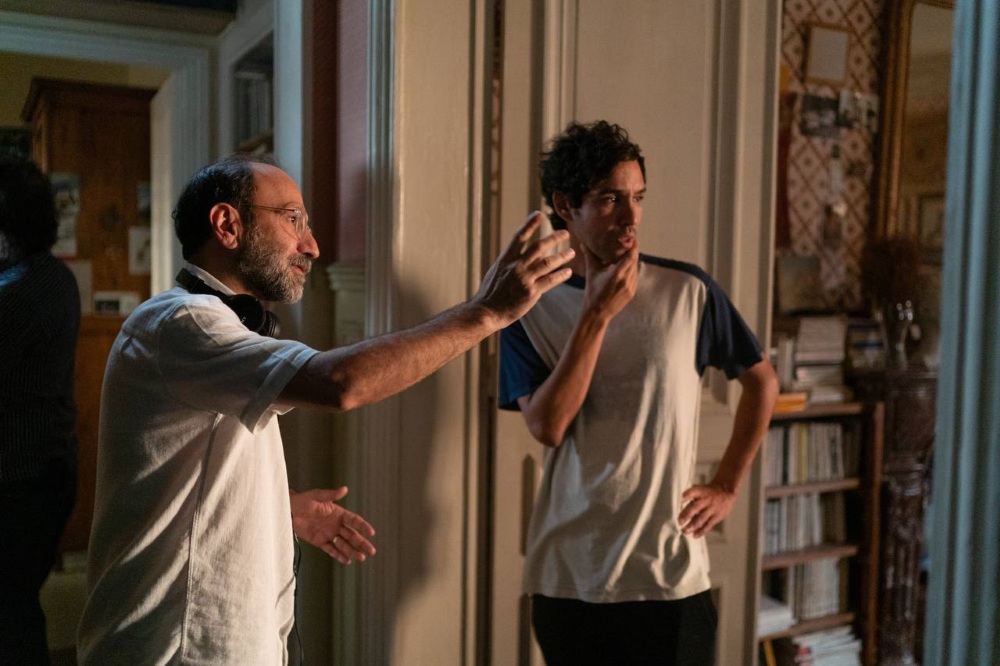
Oscar-winning writer/director Asghar Farhadi (A Separation, The Past, Everybody Knows) [below] has his French film, Parallel Tales, which follows interconnected narratives exploring the 2015 Paris terrorist attacks. It stars Isabelle Huppert, Vincent Cassel, Virginie Efira, Pierre Niney and Catherine Deneuve.
Romanian director and previous Palme d’Or winner, Cristian Mungiu teams for the first time with his country’s biggest star, Sebastian Stan, for the Norway-set Fjord.
Belgian director Lukas Dhont (Girl, Close) will present his third Cannes film, Coward, about a Belgian soldier’s struggles in World War Two trenches.
Russian master Andrey Zvyagintsev (Leviathan, Elena, Loveless), premieres his powerful new drama Minotaur [below] about the emotional and moral collapse of a Russian businessman under the strain of personal and political crises.
Polish-born British director Pawel Pawlikowski (Ida, Cold War) has Fatherland, which centres on the relationship between the Nobel Prize-winning writer Thomas Mann (Hanns Zischler) and his daughter Erika (Sandra Huller) an actress, writer and rally driver. Set at the height of the Cold War, the father and daughter embark on a challenging and emotional road trip in a black Buick taking them across a Germany in ruins. It marked the first time since the war that Mann returned to his native Germany, having made the difficult decision to flee for the safety of the US.
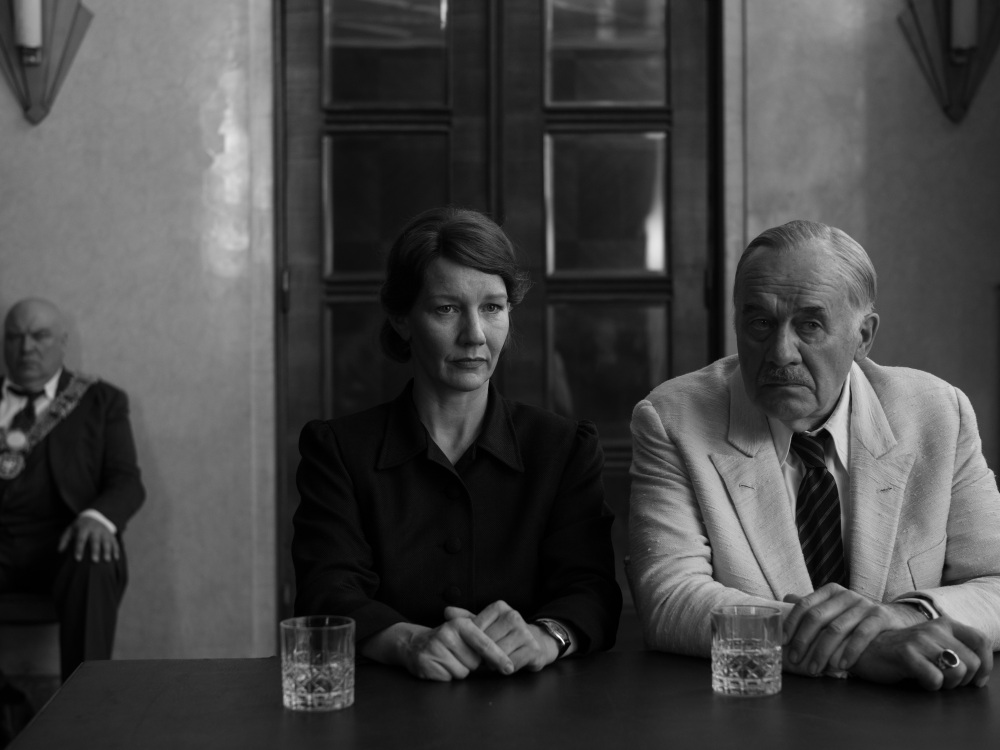
Hungarian filmmaker Lazlo Nemes, who made his name in Cannes with 2015’s Son of Saul, which went on to win the foreign film Oscar, has a World War Two historical drama, Moulin, his first movie in French. It follows Jean Moulin (Gilles Lellouche), who united French resistance fighters and at one point was captured and tortured by Klaus Barbie (Lars Eidinger).
Japanese director Ryusuke Hamaguchi (Drive My Car) will premiere All of a Sudden set in a Paris nursing home, while his fellow countryman Hirokazu Kore-eda has the science-fiction drama Sheep in the Box about a couple who welcome an infant humanoid robot following the death of their son.
Pedro Almodovar’s Bitter Christmas, like many of his previous films, comes to Cannes after its Spanish release. His previous collaborators, Javier Bardem and Penelope Cruz, also appear in new Spanish films—Bardem in Rodrigo Sorogoyen’s The Beloved, while Fremaux notes how Cruz has a memorable cameo in Javier Calvo’s La bola negra, which explores what it means to be gay throughout different eras.
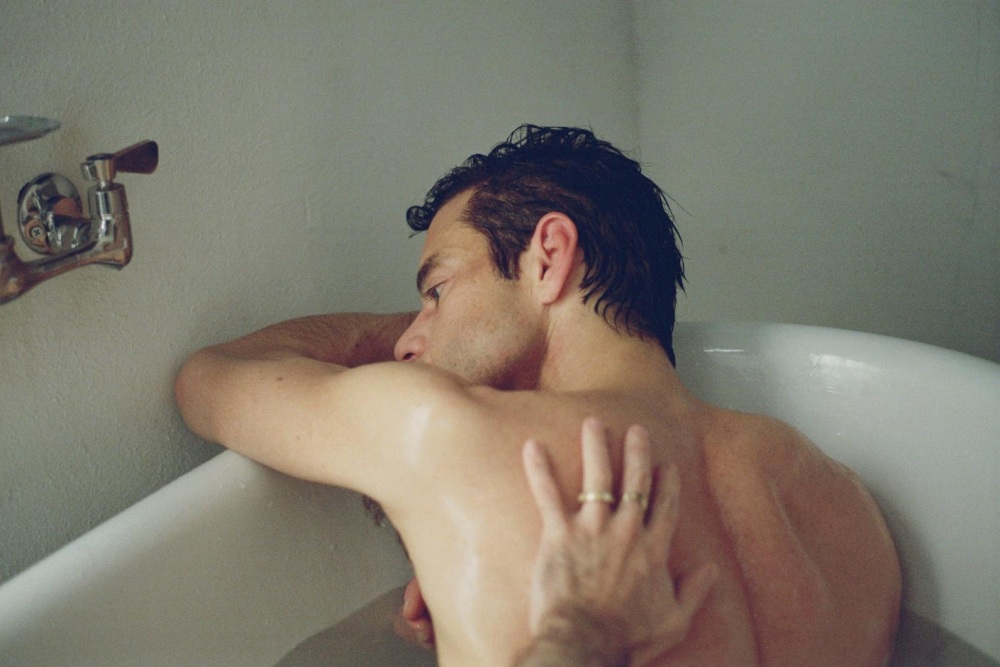
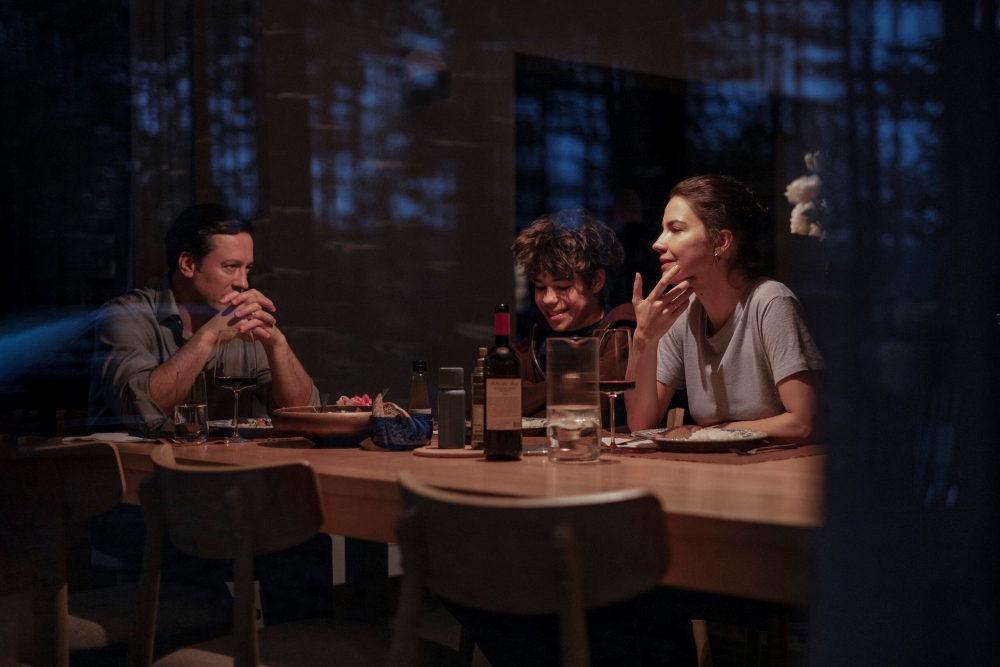
New York filmmaker Ira Sachs, who usually premieres his films in Sundance-Berlin, has The Man I Love [above], a musical fantasy dealing with the AIDS crisis in 1980s New York and starring Rami Malek, Rebecca Hall and Ebon Moss-Bachrach. The film is the only American competition entry so far, but after the announcements, Fremaux confirmed to Variety that he is hoping to add James Gray’s crime drama Paper Tiger, which stars Scarlett Johansson, Adam Driver and Miles Teller, at a later stage.
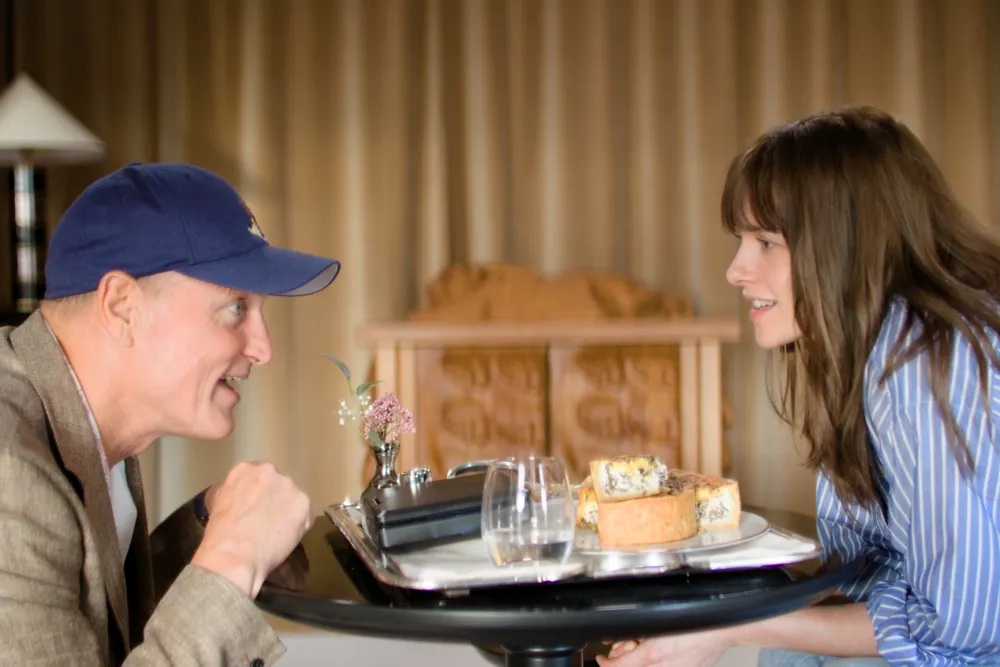
Eccentric French filmmaker Quentin Dupieux’s films usually don’t make a huge impact in Australia, but maybe his latest English-language offering, the Paris-set Full Phil, starring Woody Harrelson and Kristen Stewart, will prove popular.
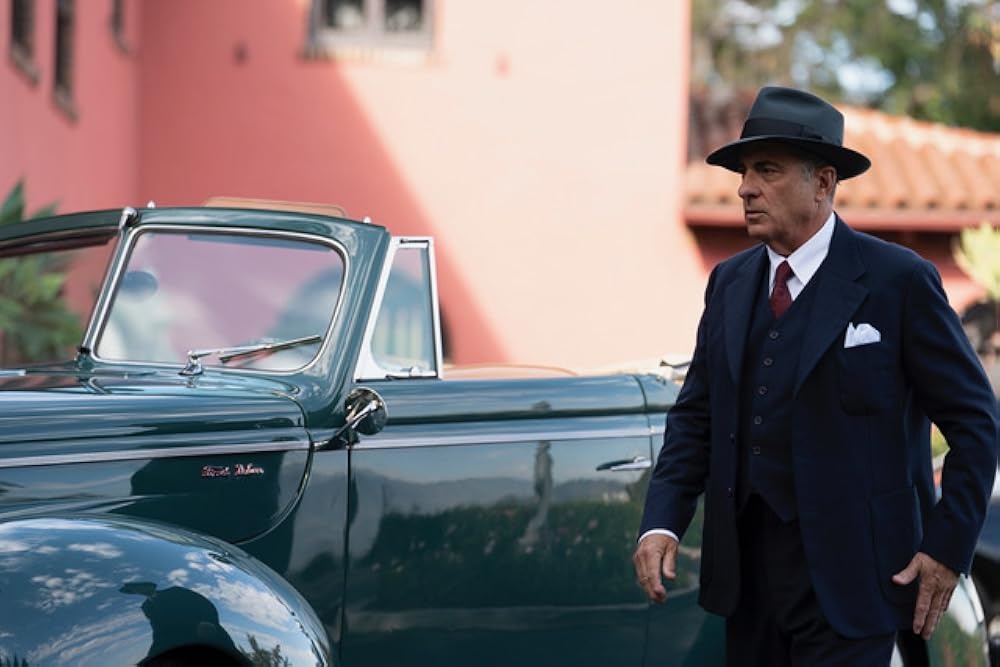
So too might Andy Garcia’s contemporary noir Diamond, which likewise has a starry cast including Brendan Fraser, Bill Murray, Dustin Hoffman, Vicky Krieps, Danny Huston and Garcia. It focuses on Garcia’s character Joe Diamond who has keen observational skills to solve crimes.
Opening the Un Certain Regard section is Teenage Sex and Death at Camp Miasma by American filmmaker Jane Schoenbrun (I Saw the TV Glow), which Brad Pitt’s Plan B produced and where Hannah Einbinder (Hacks) and Gillian Anderson star.
Documentaries are being highlighted this year, with Steven Soderbergh’s John Lennon: The Last Interview focusing on the interview Lennon gave the afternoon before he was shot; and Ron Howard’s Avedon, about the American photographer Richard Avedon. In the year of the World Cup, a documentary about outspoken legendary forward Eric Cantona will surely suit soccer fans, as will a second soccer film The Match, about the notorious and incredible England-Argentina game at the 1986 World Cup.
The Cannes Film Festival runs from 12-23 May 2026
