



by Nataliia Serebriakova
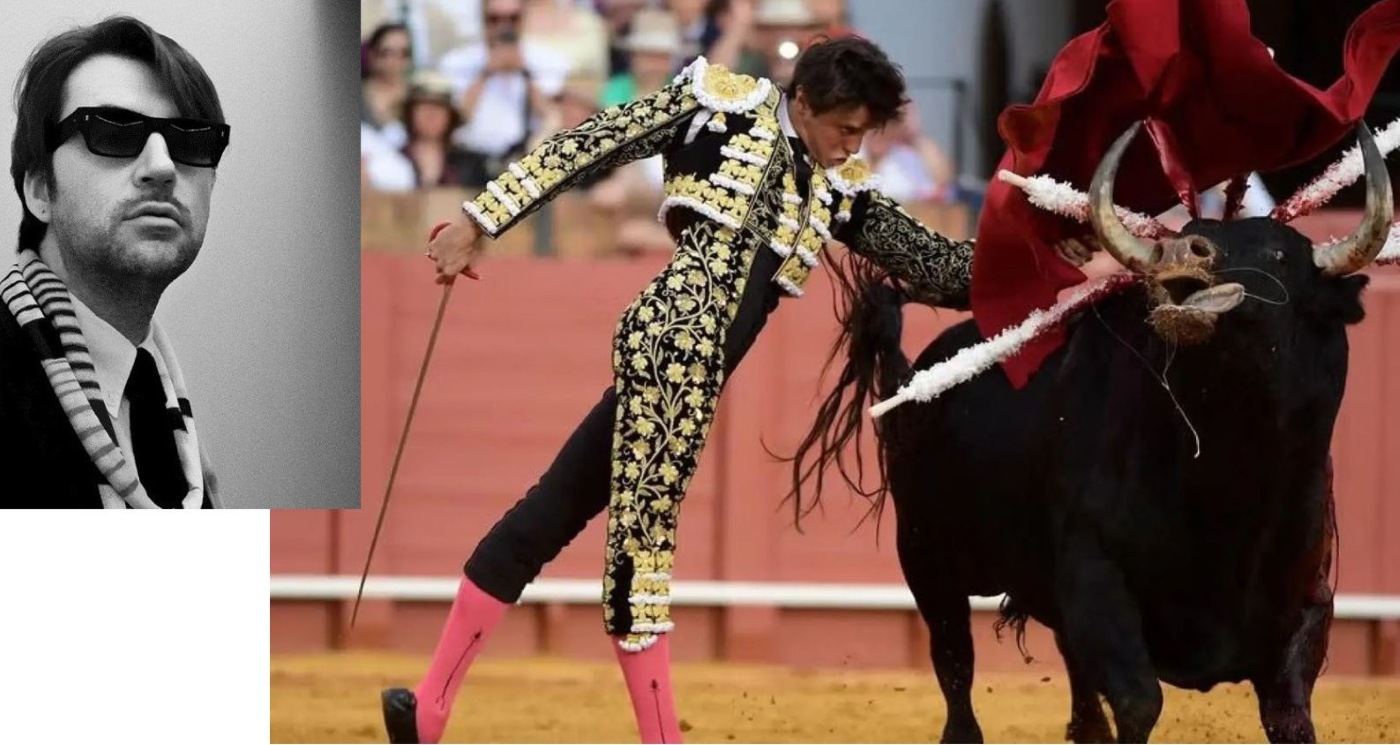
The conversation took place during the day of the European Film Awards ceremony in Berlin, where Albert Serra’s Afternoons of Solitude was nominated in the documentary section. The setting was formal, almost ceremonial, yet Serra seemed slightly out of sync with it — dressed in a sharply tailored blue jacket, fashionable but relaxed, and wearing his unmistakable patterned neck scarf, less an accessory than a permanent extension of his image.
Contrary to his reputation for austerity and distance, Serra proved to be an unexpectedly talkative interlocutor. What might have been a brief exchange unfolded into a long, drifting conversation, moving freely between childhood memories, ritual and sacrifice, sound and silence, control and the loss of it. Bullfighting, editing, fiction, death, and concentration emerged not as fixed subjects but as recurring obsessions, circling back again and again, much like the rituals at the centre of his film.
Albert Serra does not describe his first encounter with bullfighting as a revelation. There is no origin myth, no sudden conversion. Instead, there is hesitation, distance, and time.
“I wouldn’t say I was impressed,” he says. “Interested, yes. I was there when I was a child, with my father, with my parents. It was something you did. Then, for thirty years, I never went again. Not once as an adult. Bullfighting was simply not part of my life anymore. It existed somewhere in the background, like a memory you don’t really visit.”
The return was not motivated by passion but by coincidence, by the strange way personal histories intersect.
“I had some friends connected to this world, but one friend in particular. It’s a strange story. He is the manager of José Tomás, who is maybe the most famous toreador of his generation. He is retired now, but still very present. What is strange is that this man is from Catalonia, where bullfighting is forbidden today. And even stranger: he comes from my village, a very small town. He was the brother of a friend of mine. One day he simply said, ‘You have to come.’”
When he did return to the arena, nothing resembled a turning point.
“I went once, maybe twice. It was impressive, of course. But not in a way that changes your life. Not in a way that suddenly makes you believe in something. And in the end, I didn’t go because of fascination. I went because someone asked me to make a documentary.”
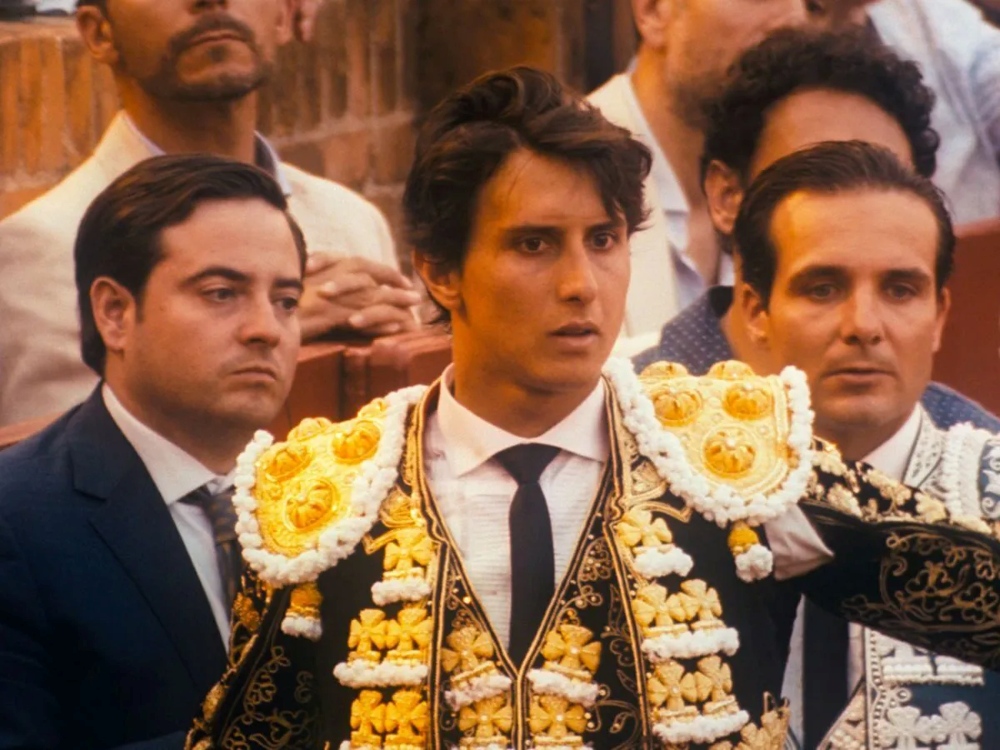
This request came with resistance. Documentary cinema has never been his natural language.
“I don’t usually like documentaries,” he says without hesitation. “I respect serious documentary filmmakers deeply, but I am not very interested. For me, the most important and most difficult aspect of cinema today—and probably for the future of cinema—is fiction. This is where real innovation happens. Fiction allows you to be extremely organic and extremely outrageous at the same time. You can represent everything. There are no limits. That is where my desire is.”
For years, he refused to enter the documentary form.
“There was a professor in Barcelona who specialised in what they called creative documentary. They wanted me to make a film in Greece. I said no. I said, ‘I don’t have a subject, and I’m not interested.’ I’m not interested in neighbours’ problems or what happens in the streets. That’s not my focus. They insisted, they wanted me to come with students. I kept saying no. No subject, no subject.”
His refusal was grounded in admiration.
“I admire filmmakers who go to places like Gaza, where their lives are at risk. That is another level. I cannot reach that. I felt that nothing around me could compare to what those filmmakers were doing.”
Then, slowly, bullfighting returned—not as spectacle, but as a question.
“One day I thought: bullfighting. This is something I know a little. It is something unique to Spain and completely strange for the modern world. In our society, it survives as a ritual.”
He lingers on the word ritual.
“People travel to Africa, to South America, to the Amazon, to see rituals. Everyone says, ‘You have to see this.’ And I thought: okay, bullfighting is not just entertainment. It is a sacrificial ritual. There is blood. I was reading The Iliad recently, and it is full of sacrifice. This idea of sacrifice goes very far back. Bullfighting comes from very far away.”
Access to this world, however, depended less on theory than on presence.
“I talk to people. I talk to the bullfighters. I am a nice person,” he says, almost apologetically.
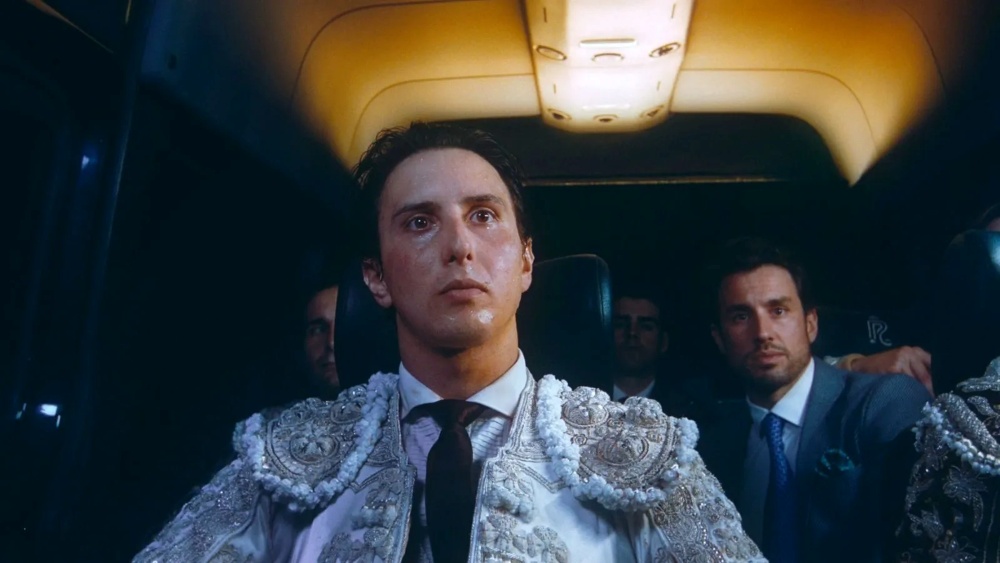
At first, the film had no fixed centre.
“We started shooting with two bullfighters. But little by little, I realised that one of them was much more interesting from a cinematographic point of view. The one you see at the end of the film. I talked to him for maybe ten minutes. I didn’t really convince him. He was very silent, very concentrated, with his manager. And then he said, ‘Okay. We will do it.’”
Trust was partial and fragile.
“At the beginning, he didn’t want to wear the microphone. He didn’t want me to hear everything. I think it was fear. Or caution. Maybe nervousness. Even so, we recorded a lot of things that are not in the film.”
The negotiations continued throughout the shoot.
“I had to insist. Very politely. I explained why it was important. I asked him if he could allow it. Finally, he accepted. And this changed everything.”
What followed had never been heard before.
“Nobody has ever had this perspective on bullfighting. Even people who have been to thousands of bullfights have never heard this sound. The breathing. The words. The atmosphere.”
Technology made this intimacy possible.
“It’s only because of new technology. Now batteries last four or five hours. Before, transmitters lasted one hour, one hour and a half. It would have been impossible. We turned it on at four in the afternoon and removed it at ten at night. It recorded everything.”
The discovery came later.
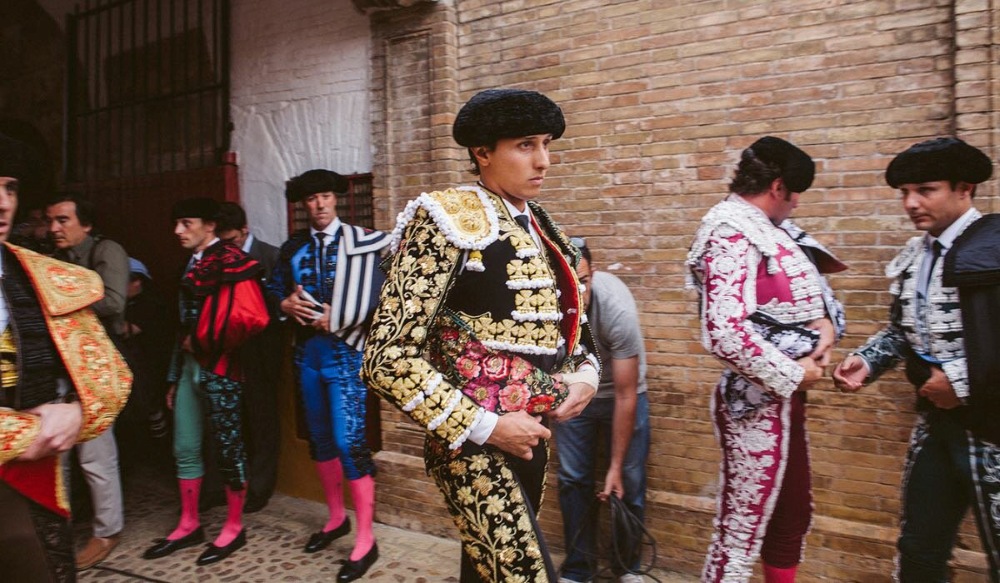
“I only understood what we had during editing. I had never heard this sound before. The sentences are strange. Crazy. Silly. Visionary. Sophisticated. You never know exactly what you are hearing. You don’t know if these people are simple or extremely skilled.”
This uncertainty became central.
“You never know what you are seeing. And that was the most fascinating thing for me.”
He edited the film himself, alone, surrounded by excess.
“We shot hundreds of hours. On one trip alone, around seven hundred hours. When you watch all of it, you don’t know if it is serious. But in the end, it is serious, because it is life-threatening. There is no doubt about that.”
Yet seriousness was not enough.
“The real question is: how spiritual is this? That is one of the key questions of the film. Is it spiritual, or is it just a show?”
The image offers no resolution.
“Visually, the gestures, the movements, the repetition are everything. There is a static perspective, a plastic point of view. It’s not exactly art. At the same time, it is deeply popular. Tradition, ritual, repetition. You never know if it is deeply meaningful or just a simple show.”
The editing lasted seven months.
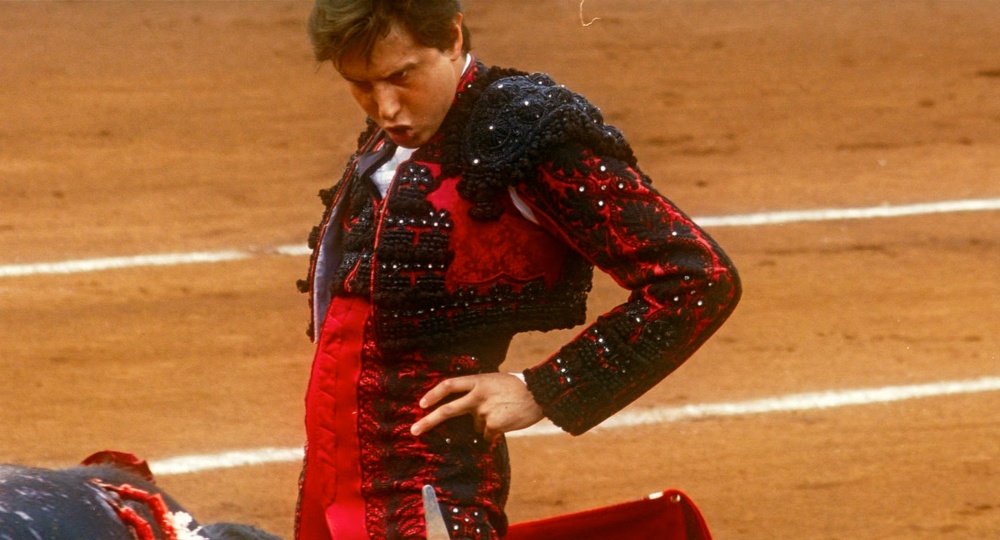
“Every day. Seven days a week. All the time. Very few people work like this, especially in documentary. I’m not saying everyone should do it. Everyone has their own method. Some people shoot two hours and make a masterpiece. That’s fine. But at my level, very few people work this way.”
Fourteen bullfights remain in the final cut.
“We understood that not every arena is the same. A main arena is like the Champions League final. The danger is higher. The tension is higher. The bullfighter is more afraid, more concentrated.”
Paradoxically, death hides elsewhere.
“Most of the famous bullfighters in history died in secondary arenas. In the main arenas, the pressure is enormous. The bulls are dangerous. The audience is demanding.”
In Madrid or Seville, the arena becomes something ancient.
“It’s like a Roman circus. The audience wants something. Not blood, maybe. But bravery. Sometimes they complain if the bull is not dangerous enough.”
The possibility of tragedy never disappears.
“People say the bull doesn’t always die. But of the ten greatest bullfighters in history, maybe six died in the arena. People think it’s under control. When the camera is so close, you see that nothing is under control.”
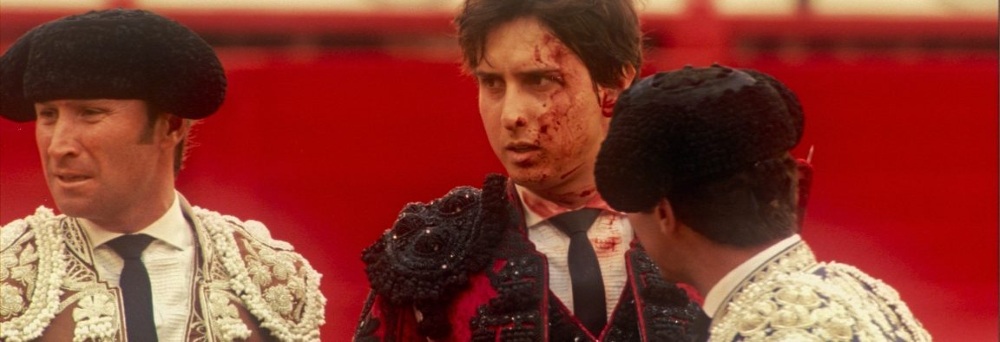
This lack of control mirrors his own process.
“That’s also how I make films. Losing control. Letting the film take its own direction. Ninety percent of what happens is unexpected. You have to face that.”
What remains is concentration.
“Bullfighters are fascinating because they are not distracted. They are calm. Focused. They listen. They look at you. Even when there is no bull, they are attentive. Survival depends on concentration.”
The comparison with boxing feels inevitable.
“Lower-level boxers take the same punches as champions. Passion and skill make the difference. The best bullfighters are brave but not reckless. They go to the edge, but they don’t cross it.”
As for the next project, he insists on distance.
“It’s not a political film. It starts with the Ukrainian war, yes, but it’s mainly about economics between Russia and the United States. It’s more like a farce. I have four hundred hours of material. The politics are in the background. The real question is simpler: which liar will win.”
Afternoons of Solitude screens at the Europa Europa Film Festival in February 2026. More information here.
