


by James Mottram
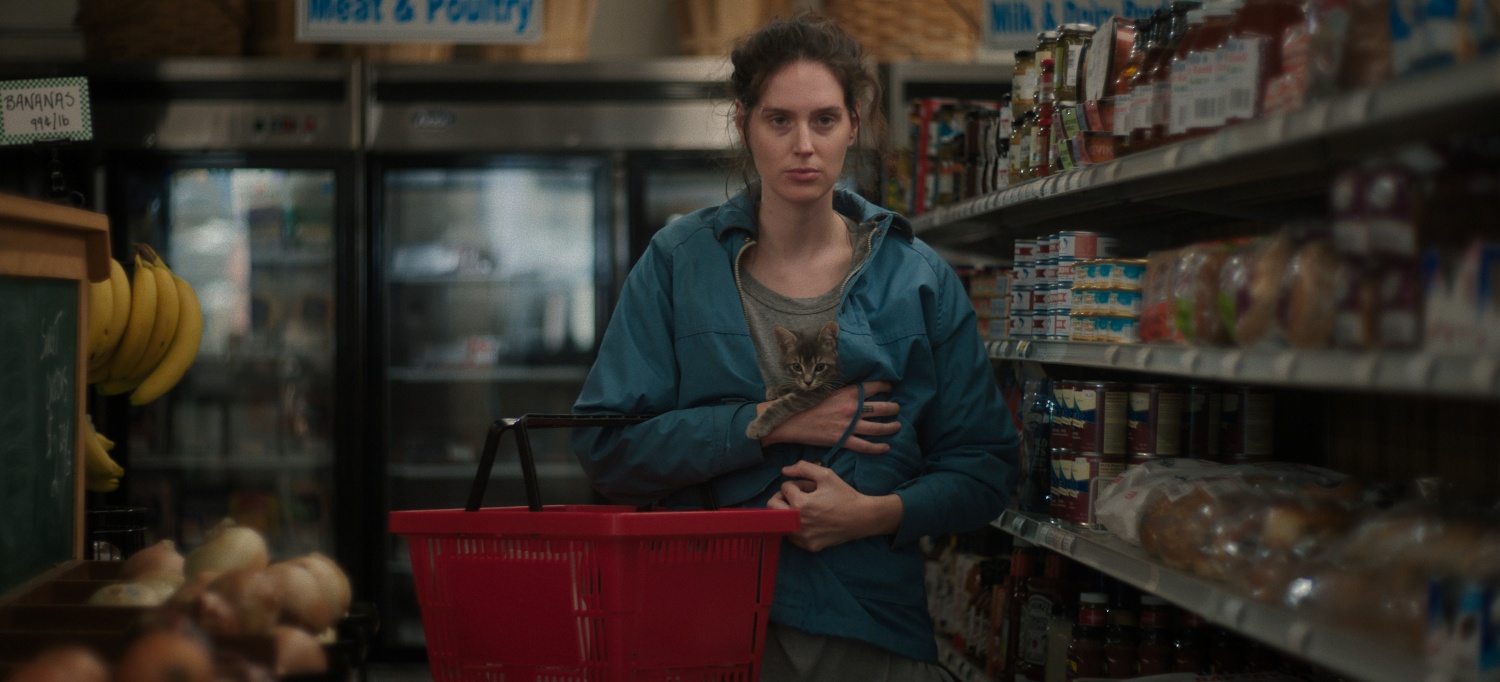
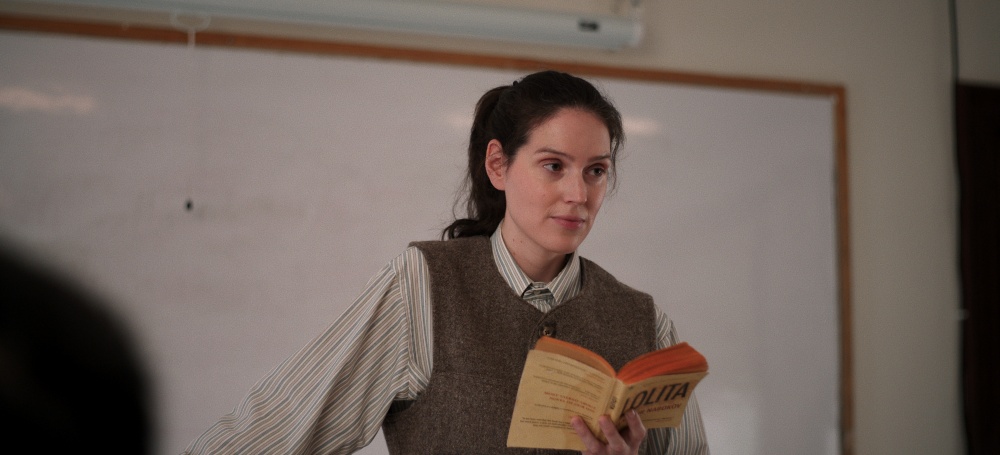
In Sorry, Baby, Victor plays Agnes, a student who is left traumatised by a sexual assault committed by her professor (Louis Cancelmi).
Produced by Moonlight’s Barry Jenkins and co-starring Naomi Ackie as Agnes’ best friend Lydie and Lucas Hedges as her kindly neighbour Gavin, it’s a subtly-drawn indie that swaps hysteria for humour as it tackles a subject that, finally, has become more prominent in the post-MeToo era.
Shortly after the film closed Cannes’ Directors’ Fortnight strand in May, FilmInk spoke with the 31-year-old Victor to discuss this remarkable work.
What was the inspiration for Sorry, Baby?
“It’s a very personal story and it’s also narrative fiction. I was able to take a lot of emotional truths that felt important for me to put into words and ideas I wanted to wrap my head around, that were swirling around in my head. But also, it’s narrative fiction.
“I was really thrilled to build a world around this person and I got to build a world that felt more supportive. Not characters who are more supportive, but the film itself supports this one person’s journey by being cohesive in a way that the world isn’t cohesive. I keep citing Anna Karenina, the novel… there’s mention of trains throughout the whole book. So, by the time something happens with the train, it feels inevitable. And I think the amazing thing about building a whole film that is fictionalised is that you get to add the trains in. While in real life, the train happens, but it doesn’t have any threading of the train. So that writing, building, weaving care was really the joyful part of building the script.”
So, it was part personal, part fiction?
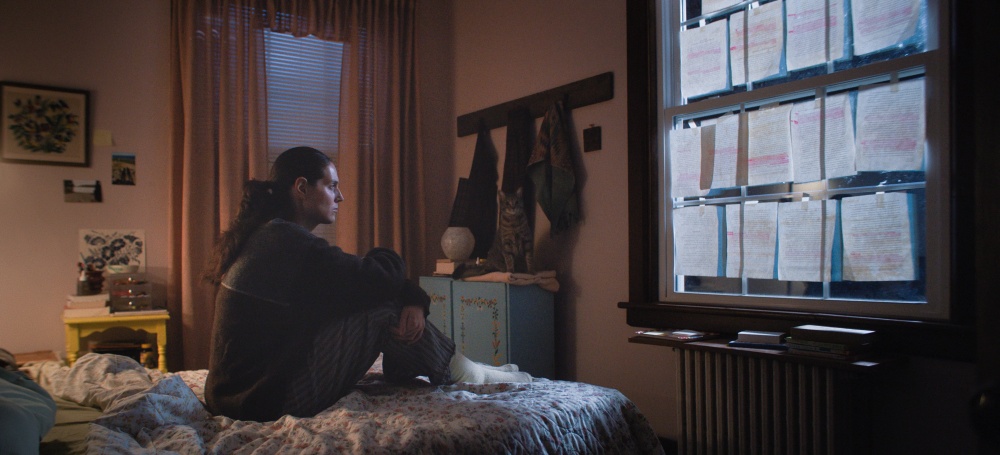
“I think, yes, some from my personal experiences and some from worlds I was interested in exploring. It’s wish fulfilment… like grad school. I’d never been to grad school. I never went to school in New England. And getting to build a world in a wintry New England was just artistically fulfilling… all these things that are the artistic parts of talking about the real world.”
Were you always planning to act in Sorry Baby, as well as write and direct?
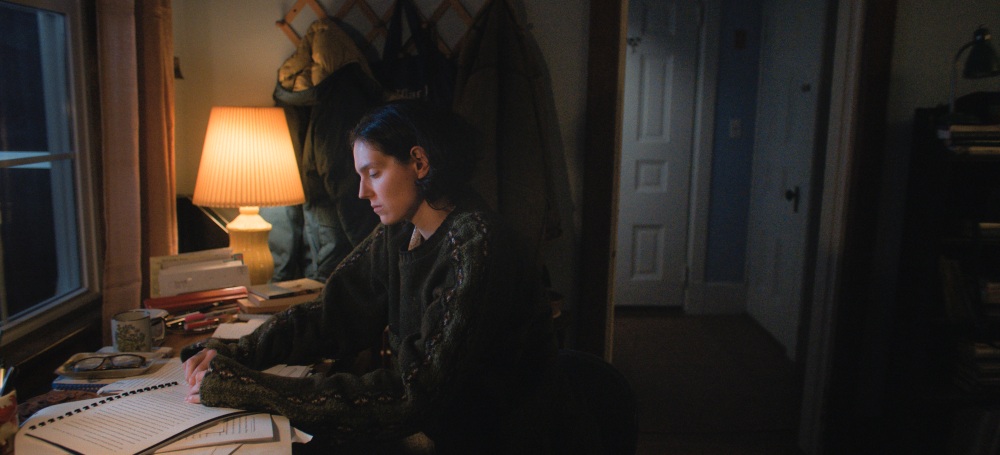
“It was really never a question for me. I wrote it with my cadence, and I knew just inherently that it was something I wanted my body to do. It took a little longer for me to accept that I desperately wanted to direct the film, and I was in denial about that for a little bit, but I honestly felt more comfortable acting in the film, because I’d been on a TV show for a long time, and I really wanted to say words that I’d written, that felt really right in my mouth. I was really craving just having something fit like a glove. It took me a little longer to accept that I wanted to really direct the film, but I wrote Agnes… she’s not me, she’s like a version of me, with aspirational qualities that I wish I had. She’s very blunt, and she also is very comfortable in silence. And I really liked playing in a world where someone can sit in silence for a long time and not say something.”
Does this feel like a film only possible in the post-MeToo era?
“The crazy thing about making a movie… it took five years from the idea of the film to the release, and you have to believe that for whatever reason you’re making the film, it will be something that will be a question you have still, when you grow and change as a person and when the world evolves. I don’t know if it will ever be irrelevant to talk about this. All I really know is that my experience of what was eating at my mind and what I needed to talk about in relation to this topic. And the thing that I really wanted to focus on was less about the assault itself and more about the healing process and the time after the assault and the journey this person is going on, to try to unstick themselves from a place that has constant reminders that you’re different from other people. There is a larger political conversation, obviously. And the thing that grounded me in making this film was just really, really trying to constantly think about Agnes and Lydie and this one story. Because when things get too big, sometimes your mind gets confused about what you’re doing.”
You won a major prize in Sundance and then closed Cannes’ Directors’ Fortnight. How did that feel?
“It’s a very bizarre experience to still be wrapping my head around the fact that the movie exists outside of myself, that it’s not just this fantasy movie that I imagine. It’s like, here is the film, and that is a very moving experience. But there’s a bit of grief to it too, because the creative part of the making of the film is now over.
“I felt so honoured to be in both of those festivals – complete dream come true – because I think at both of those festivals, there’s a real understanding of why film is so life-giving and saving, and being in those spaces is very affirming as an emerging director, and as a first time director, to be among the other directors, there’s a real honouring of what we tried to do.
“It’s a real vulnerable journey to be making a film. It’s beyond. It’s so intense. And it’s a bit bizarre too, because I don’t think anyone knew the film existed. There was no announcement of the film, or anything about the film, until it went to Sundance. And since then, it’s just been me moving around with the film.”
What’s your upbringing? Is it true that you were born in France?
“I was a baby in Paris, and then we moved to San Francisco. My grandparents are in Marin and they helped with after school care, and they were a huge presence in my life growing up. But I go to Paris whenever I can. And the first time that I got to go and could afford to go on my own… I finally had a paycheque and did a solo trip to Paris, and that was a huge marker of adulthood for me. That meant a lot.”
You mentioned earlier the TV show you were on, which was Billions. How was that experience?
“I had never been on a professional set like that before, and the way it ran was astounding to me. It was such a well-oiled machine. Everyone was so kind to each other. And I was so scared going in, because I’d seen the whole show, and I felt like… I was scared of everyone, because everyone is so hardcore on the show. I was like, ‘Oh, they’re all gonna be mean.’ And then I got there, and everyone was so kind. I didn’t know that you had to hit your mark in a scene so that you’re standing in the right spot. Asia Kate Dillon, particularly, they took me under their wing and taught me everything. You have to banana to the camera! So instead of walking in a straight line to the camera, you have to go in circles, because it looks like a straight line on screen. There’s all these little things that, in another context, would’ve broken my brain, but everyone was so kind to me and so accepting that I was there, and I was so lucky, I got to do three seasons because I was only supposed to do three episodes, and then they let me keep going, which was really awesome. But Brian [Koppelman] and David [Levien]… I owe so much to them, because they saw my videos [for Comedy Central] online and were like, ‘You should be on the TV show’ and that is remarkable to be able to imagine that I could do something like that from what I was doing. So I’m very grateful to them for seeing that.”
Sorry Baby is in cinemas on 4 September 2025
