

by Stephen Vagg
For context read our earlier pieces on British Film-Makers (1951-53), Group Film Productions (1953-56) and Rank in 1956.
The Rank Organisation began 1957 with a degree of optimism. It was coming off some monster hits the previous year – Reach for the Sky, A Town Like Alice, Battle of the River Plate – and knew it had some Norman Wisdom and Doctor movies up its sleeve. The company had expanded into America, setting up the Rank Distributors of America so that its films could get a “fair shake” with American audiences. Rank had a line-up of contract artists that it was convinced would be stars. The studio was well aware of the television threat and was planning to combat it by using more colour and interesting locations. It was poised to take over the world.
By the end of the year, Rank was in a financial crisis and had to sack 300 workers at Pinewood.
What happened?
There were, by our count, fourteen films released in 1957 that were made by Rank’s main producing arm, Rank Organisation Films. The studio had money in other movies produced through different companies – such as Seven Thunders from Dial (producer Daniel Angel’s company) and Across the Bridge from Independent Film Producers – but we will concentrate on the key fourteen.
The movies comprised of:
– four comedies – a Doctor sequel (Doctor at Large), Norman Wisdom vehicle (Just My Luck), married couple comedy (True as a Turtle), and black comedy (The Naked Truth);
– two war films based on true stories (Ill Met by Moonlight, The One that Got Away);
– two crime thrillers (Hell Driver, The Secret Place);
– four melodramas – a fairy tale in Soho (Miracle in Soho), a woman’s picture in Canada (High Tide at Noon), a terminal illness/flooding dam drama in Canada (Campbell’s Kingdom), a white man’s burden marital drama in war-torn Malaya (Windom’s Way);
– two historical adventures (Dangerous Exile, Robbery Under Arms).
This was easily Rank’s most diverse slate to date. Yes, there were lots of comedies, but all the comedies were different – ditto the melodramas. Three movies featured its biggest star, Dirk Bogarde. Two had Peter Finch, coming off two hits the year before. There were exciting new directorial talents (Cy Endfield, Clive Donner, Julian Aymes).
On paper it was a strong line-up.
John Davis, Managing Director of Rank, confidently declared, “We know that in our line-up of product we have stories, stars, backgrounds that cannot fail to appeal… Top line productions tailored for the international market. These are big pictures, pictures to be reckoned with: Their stories come from best-selling books, top plays and the best of original screenplays; their casts include world popular names; their producers and directors have earned high acclaim in every continent.”
Yet by the end of the year, the film division of Rank recorded a big loss, leading to all those sackings.
What happened?
Let’s look at the comedies first. Doctor at Large was one of the biggest hits of the year at the British box office – and it’s breezy, cheery fun, reuniting Bogarde with Donald Sinden and Muriel Pavlow from the original, and giving Bogarde’s character a decent “arc”. Just My Luck, an amiable John Paddy Carstairs comedy about horse racing, made money as well, although less than previous Wisdom movies.
True as a Turtle was an attempt to do another Genevieve, with John Gregson on a yacht instead of a car, and June Thorburn as his wife instead of Dinah Sheridan and Australia’s own Keith Michell instead of Kenneth More and Elvi Hale instead of Kay Kendall… only it didn’t work (it’s not a very good movie).
The Naked Truth was really interesting, Rank’s first black comedy, a genre that had proved enormously popular at Ealing (Kind Hearts and Coronets, The Ladykillers); it was made by Mario Zampi, who’d worked for Associated British for years, and starred Terry Thomas, Dennis Price and Peter Sellers. The film marked an exciting new direction where Rank could go; one just wishes the film was a little better.
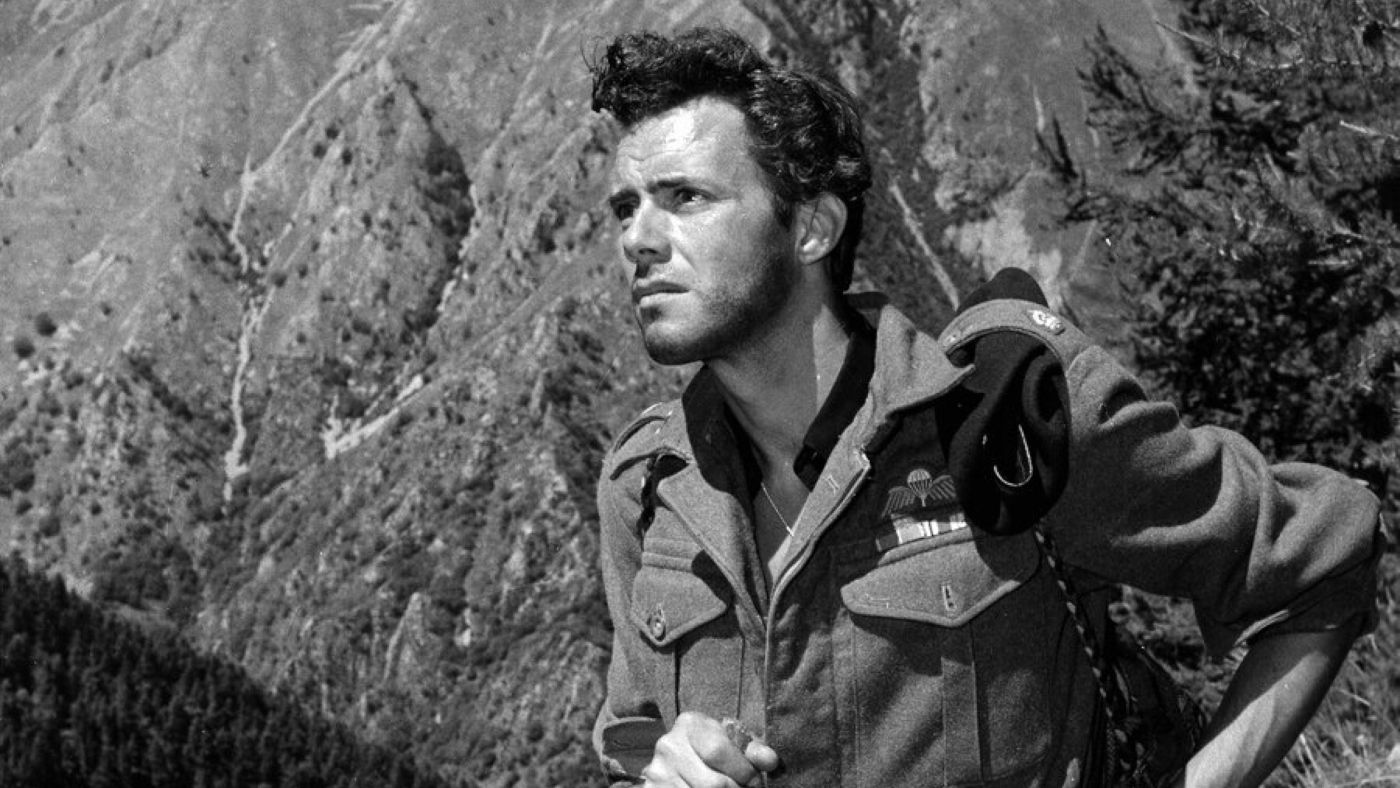
The two war films were both hits. Ill Met by Moonlight doesn’t have the reputation of a decent movie, in part because director Michael Powell complained about it so much over the years – but it was one of the most popular films of the year. Powell’s memory might have been stained because the shoot led to so many fights with the director splitting up with not only Emeric Pressburger, but also Rank. This was a terrific shame as Powell and Pressburger were behind some of the most legendary movies in history, and Powell was the most talented director at Rank (he would reunite with both briefly for They’re a Weird Mob, but it wasn’t the same).
There appear to have been no major dramas making The One that Got Away, the story of a German POW who escapes from a British POW camp. The movie was a blockbuster, especially in Germany, making Hardy Kruger a star in English language countries for a red-hot second. This would cause Rank to go all-in on German themed stories and stars (Bachelor of Hearts, Whirlpool, Ferry to Hong Kong).
War films weren’t flop proof – no one went to see Seven Thunders, made for Rank through company Dial Films. This was a weird combination of POW on the run and serial killer movie with the C-grade star power of Tony Wright and Stephen Boyd; the secret sauce for this genre seems to have been to make something based on a true story or base it on a bestselling novel with a prominent female role.
There were only two thrillers, in contrast with 1956 where Rank had released five, indicating the studio had gone off the genre. Both were excellent.
The Secret Place was seen through the eyes of a child, and Rank had a decent track record of movies with child protagonists (The Little Kidnappers, The Spanish Gardner). The film was well received critically, launching the directing career of editor Clive Donner and film career of David McCallum, but (unfairly) not very commercially successful. Hell Fury was a terrific trucking melodrama from Cy Endfield, one of several blacklisted Americans who brought a great deal of life to the British film industry during this period (eg. Carl Foreman, Joseph Losey).
Miracle in Soho and High Tide at Noon might both best be called women’s pictures – not a great description but these were both female focused stories. Rank had a mixed track record in this genre – for every A Town Like Alice there was an It Started in Paradise. Miracle in Soho was a passion project of Emeric Pressburger (who almost got the film up in the 1930s, set in Paris). It’s odd that Rank greenlit this, notwithstanding the success of Pressburger’s two war movies, which had been, after all, war movies; maybe the executives were hoping for another A Kid for Two Farthings, another Soho story which had been a hit in 1955. Also, we can’t help shake the feeling that John Davis had a soft spot for movies that could have starred his wife Dinah Sheridan, even though he wouldn’t let her act anymore (Belinda Lee played the lead). The film flopped, killing off Pressburger’s career as a producer and any hope director Julian Aymes had of establishing himself in features.
Another flop was High Tide at Noon, the story of a woman in a Nova Scotia fishing village loved by three men. It’s the sort of movie that should have been made fifteen years before at Gainsborough under Maurice Ostrer and Ted Black (not Sydney Box), or a few years later with additional sex content. The film did have a splendid lead part for a female, and it’s ironic that a few years previously, when Rank had a staggering line-up of female stars that it put in lousy roles (Kay Kendall, Diane Cilento, Diana Dors), they’d all since moved on to greener pastures; the studio offered it to Virginia McKenna who turned it down, so they went to Betta St John, who is nice and pretty but simply doesn’t have “It”. The movie was set in Nova Scotia and reunited the writer and director of Little Kidnappers, which had also been set in that province, but lacked the earlier film’s sense of place and heart.
Campbell’s Kingdom was a so-so adventure tale – the team of Betty Box and Ralph Thomas deserved the right to make something different, as did Dirk Bogarde, but all were kind of miscast in this genre. Like High Tide at Noon, although it was set in Canada, it featured no Canadians in significant roles and wasn’t even filmed there. Nonetheless, Bogarde’s popularity helped this to some success at the box office.
Robbery Under Arms was a pointless misfire. This should have been a slam dunk, but it was killed by poor writing.
Windom’s Way was an enjoyable hodge podge. A contemporary colonial war drama, it lacked the focus of The Planter’s Wife or Simba – those were pro-white settler action/adventure tales, Windom’s Way was more of a pro-white marital drama with a little bit of action and a little bit of politics. It’s actually a really interesting, complex movie that tries to be quality with some strong performances from Peter Finch and exciting Rank newcomer Mary Ure, and Corsica standing in for Malaya, but it flopped.
We’ve always had a soft spot too for Dangerous Exile, a historical adventure drama with great central idea – the young Louis XVII arrives in a balloon and royalists try to keep him alive while republicans try to assassinate him. Louis Jourdan’s hero is a bit of a fanatic, and it probably doesn’t have enough action but there’s lots to admire. The movie does not seem to have been a commercial success.
As an aside, after Ealing Studios “broke up” with Rank in 1956, it wound up making six films for MGM and one with Associated British. We think that they were all developed at Rank because they all have a Rank feel – two thrillers (Nowhere to Go, The Siege of Pinchgut), a military drama/thriller (Man in the Sky), a true war story (Dunkirk), a drama about a man whose heart is melted by a kid (The Shiralee), two comedy vehicles for stars, one of them well established in films (Barnacle Bill with Alec Guinness), the other new (Davy with Harry Secombe).
That was not a bad slate with some terrific films in there. Dunkirk, Barnacle Bill and The Shiralee did well; Davy, Man in the Sky, Pinchgut and Nowhere to Go did badly (Nowhere to Go is splendid but Davy and Pinchgut were inept). Ealing wound up. (Some films announced for 1957 by Rank but never made included Precious Bane, Nelson, Mayor of Casterbridge and The Gay Galliard.)
In January 1958, Rank announced that it would be cancelling several planned films and sacking over 300 workers in an economy measure due to an overall fall in cinema attendances caused by television.
Looking back, in terms of quality, 1957 was actually a strong year for Rank. There were some very solid comedies, thrillers and war films – all genres where the studio had a lot of experience. The adventure stories and melodramas, where the studio was less skilled, were far more variable. However, costs of the movies had increased significantly, especially with location filming – some films would have lost considerable money, such as High Tide at Noon, Windom’s Way, Miracle at Soho and Robbery Under Arms.
Rank became a little better at handling stars – in addition to doing well by Dirk Bogarde and Norman Wisdom, the slate featured Stanley Baker – hitherto restricted to villains – as a sympathetic lead in Hell Fury. The films also showcased exciting new names such as Patrick McGoohan, David McCallum and Mary Ure – someone at Rank had a genuine eye for talent.
Against this, the studio damaged Peter Finch’s career with two flops (Robbery Under Arms, Windom’s Way), and kept foisting its talent roster on the public in lead roles despite no demand or even that much interest from said public (Tony Wright, Michael Craig, Belinda Lee, Betta St John). (This is no diss to their capabilities as performers, it’s their abilities as stars – and we note that Belinda Lee became a star in Europe in different roles).
The studio made a mistake letting Peter Sellers slip through its fingers – only a few years after The Naked Truth, he would be the biggest star in Britain, but few of his movies would ever be made for Rank.
We actually have a great deal of affection for Rank’s output in 1957, having grown up with these movies on television. But the studio remained unable to crack the code on how to be consistently successful commercially. Fortunately for Rank, around that time the company made a lucky investment in Xerox which turned out to be very lucrative.
The studio was hanging in there. The following year would really test Rank’s policy of becoming the new Hollywood.
