


by Helen Barlow
Last year in Cannes, future sensation Parasite won the Palme d’Or. In Venice, future Oscar winner Joker took out the Golden Lion. In Berlin, the French/Israeli/German co-production Synonyms won the Golden Bear though managed to not yet gain a cinema release in many countries including French-speaking Belgium and of course in Australia, even if it screened at festivals.
Synonyms is a strong film and the Berlinale has to be given credit for shining a focus on world cinema. This year, no clear winner had emerged for the Golden Bear and as is often the case it came at the end with Iranian director Mohammad Rasoulof’s There is No Evil, a film that interweaves four stories related to the death penalty and the government-sanctioned killing of dissidents and political opponents.
Rasoulof was not on hand to accept the award as he’s not been allowed to leave Iran since he returned from Cannes after winning the top 2017 Un Certain Regard prize for A Man of Integrity. In fact, for “spreading propaganda” he was forbidden from making any further films and sentenced to a year in prison, a conviction he recently appealed. He filmed There is No Evil in secret and got away with it thanks to other directors making the submissions to the government contending they were making four short films.
“On the final day of shooting I got the text from the court,” he tells The Hollywood Reporter in a Skype interview before the awards. “They upheld the sentence. I’m going to jail.”
He has yet to be imprisoned.
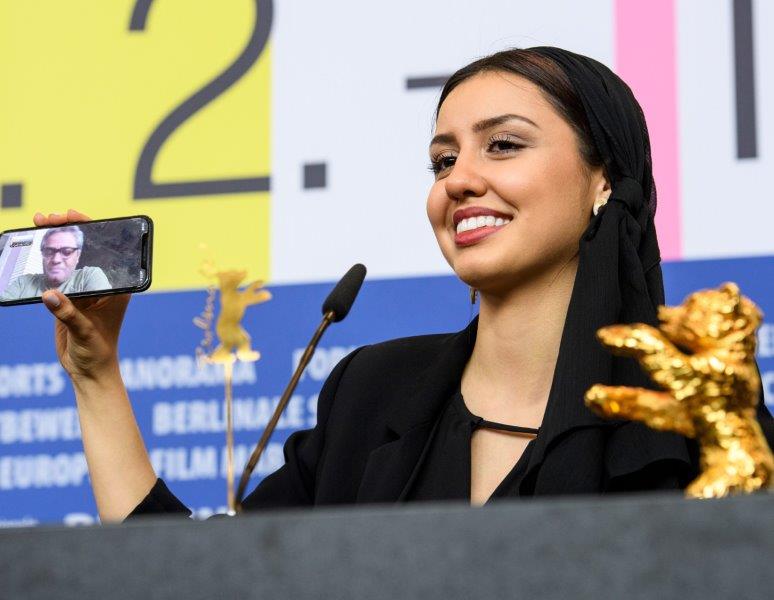
At the press conference following his Berlinale win, the film’s producers along with the filmmaker’s daughter Baron Rasoulof, who appears in the film, spoke on his behalf explaining that the film was made in a hurry four months ago with a crew who took great risks as they were worried he would go to prison. They also managed to get him on his mobile phone – he fumbled to find his glasses as it all came as a huge surprise.
“The film is about people taking responsibility when they are living in a totalitarian regime,” Rasoulof says. “We want to say they can say no, they can participate and say no.”
The film looks set for wider international distribution than Synonyms.
Sadaf Asgari, the lead actress in Yalna, A Night for Forgiveness, another film from Iran (and a co-production with France), suffered a similar fate when she was unable to attend as she stuffed up the date for her visa and the authorities refused to change the date.
Again focusing on Iran’s death penalty, it’s a highly original film that came as a welcome surprise.
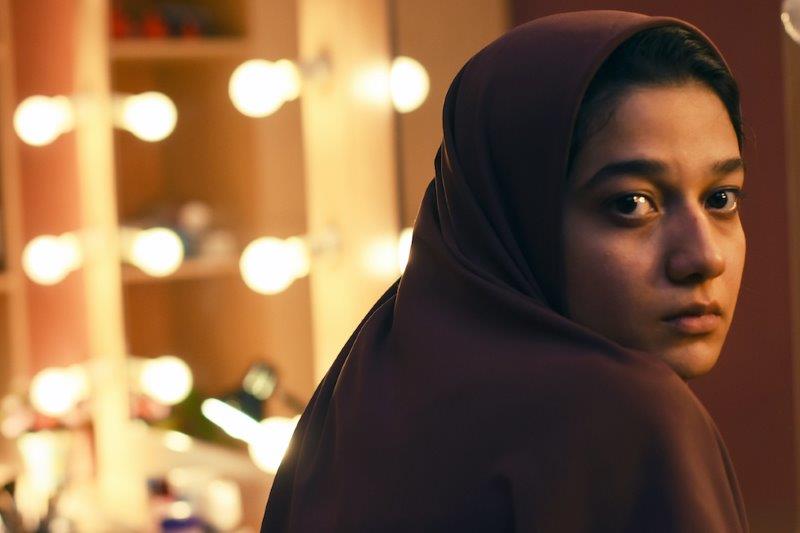
Set during the winter solstice festival of Yalda, a young woman arrives at a television studio in handcuffs to appear on the Joy of Forgiveness reality show. She has been sentenced to death for the murder of her much older husband and her last chance to stay alive is by gaining forgiveness from his daughter, since Iranian law allows that. The film, by male writer/director Massoud Bakshi (A Respectable Family) shows how both women are ultimately victims of a society controlled by men.
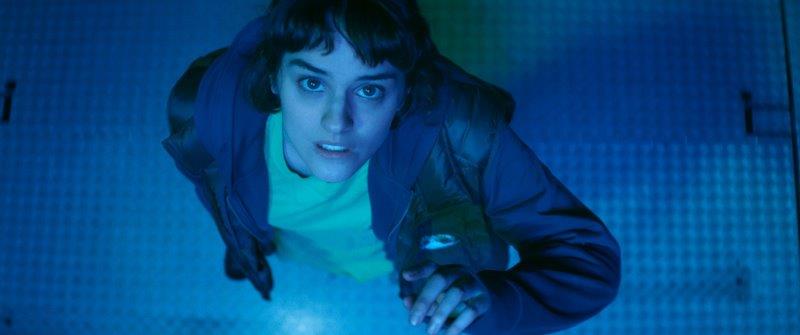
Likewise, from France, a female protagonist is at the forefront of Zoe Wittock’s Jumbo, which Noemie Merlant filmed before Portrait of a Lady on Fire. She seems much younger, though one imagines it’s just that she is an actress of many guises. An unconventional love story, Jumbo has her falling in love with an amusement park ride. Thankfully the film is far better than the dire Cannes entry All About Yves where Doria Tillier (fabulous in La Belle Epoque) fell in love with a fridge. Jumbo won the AG KINO GILDE award in the 14plus Generation section.
Since the Australian projects screened away from the competition, they weren’t up for the major Berlin awards. Also, in the youth-oriented Generation section John Sheedy’s H is for Happiness received a special mention in the Crystal Bears awards voted on by children who delivered the following statement:
“A motivating film from start to finish in which the protagonist attempts to bring the family back together. We were easily able to identify with the characters. The alphabet led us through a humorous and at the same time profound film.” H is for Happiness has already played in Australian cinemas.
The main Crystal Bear went to US indie stalwart Alexandre Rockwell (In The Soup) for Sweet Thing.
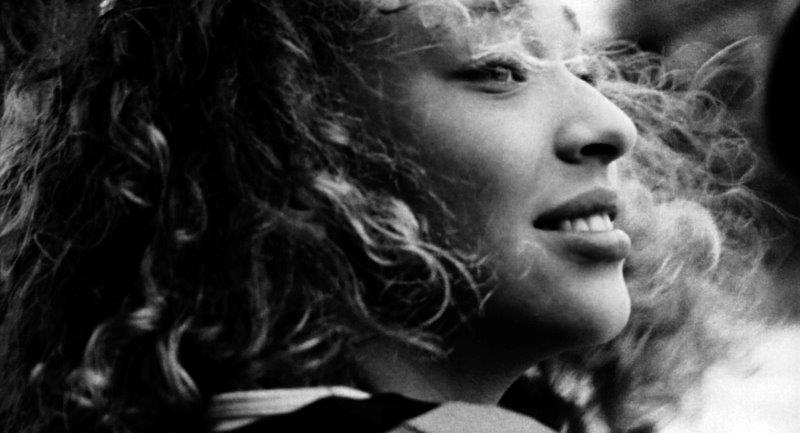
With Charlatan, which screened out-of-competition late in the festival, Polish director Agnieszka Holland did not disappoint with her superb visual style. Set over 40 years, it follows extraordinary real-life Czech healer Jan Mikolasek, a cult figure in the 1930s who could diagnose illnesses simply by looking at a patient’s urine. The film leaves no doubt that he wasn’t a charlatan and also allows for some conjecture that he was conducting a discreet love affair with his assistant over many years.
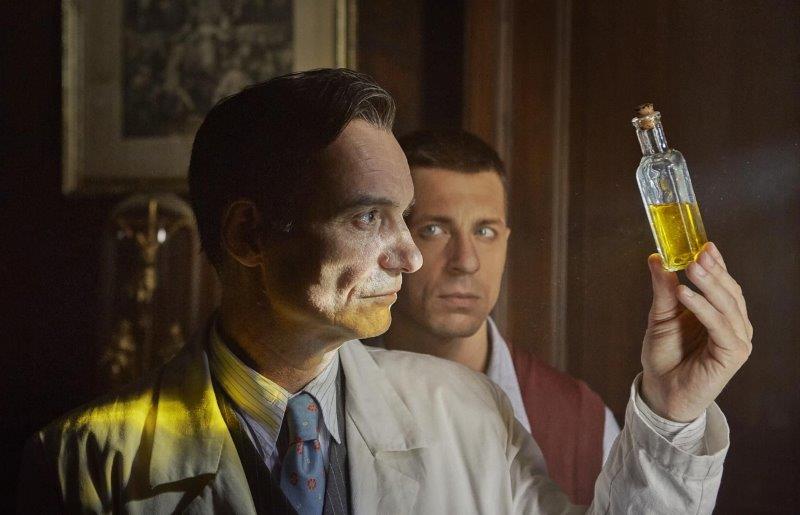
Mikolasek is played by well-known Czech actor, Ivan Trojan, while Slovakian Juraj Loj is stunning as his assistant and lover.
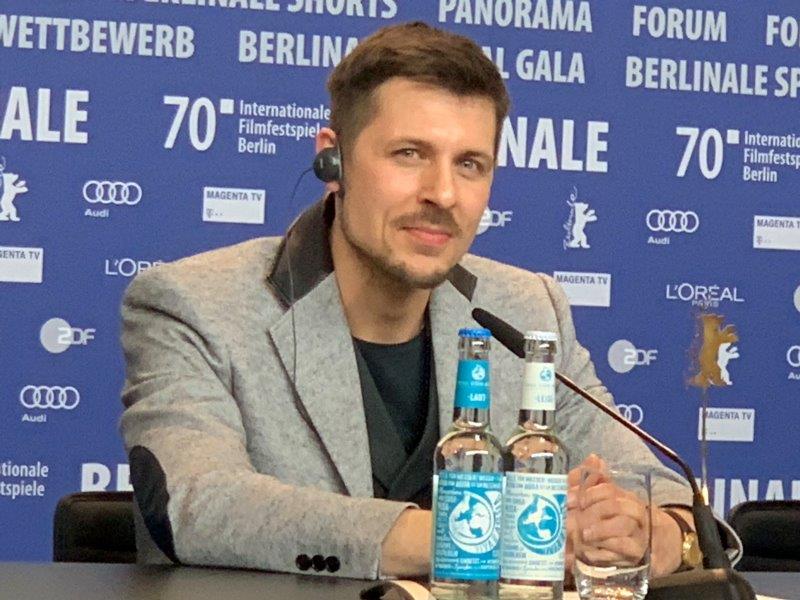
Seeing Loj in the flesh reminded me of the time when then unknown Josh O’Connor (Prince Charles in The Crown) came to the 2017 Berlinale with God’s Own Country, Francis Lee’s gay love story co-starring hunky Romanian actor Alec Secareanu. Secareanu now frontlines Romola Garai’s directing debut Amulet, which premiered in Sundance. Berlin is a breeding ground for uncovering European talent.
This year, many of the films from Sundance created the greatest excitement, like Eliza Hittman’s abortion drama Never Rarely Sometimes Always, which took out the Jury prize, while the film won a similar prize in Sundance. David France’s excellent HBO documentary Welcome to Chechnya, about activists fighting for LBGTQ rights, went down well too, taking out the Panorama section’s documentary award.
German star Paula Beer was a popular best actress winner in the competition for her mythical water nymph role in the romantic fantasy Undine. She praised her director Christian Petzold for his ability to write a screenplay as if it was a novel, and also her co-star, Franz Rogowksi who also starred with her in Petzold’s previous film, Transit.
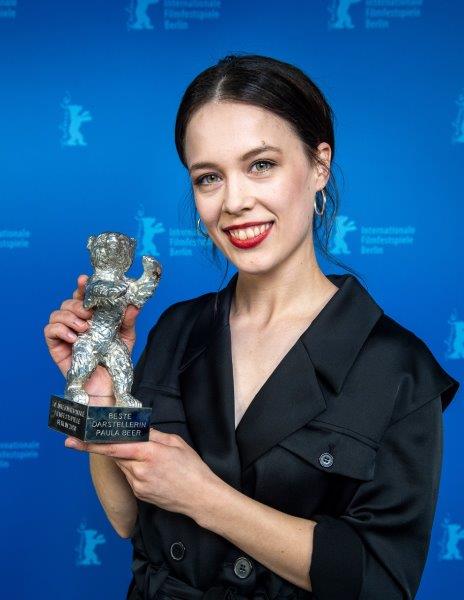
“You’re only as good as who you’re playing across,” she says. “Playing people in love is one of the most difficult of things. I hope we get to make many more films together.”
The rather tiddly Left-leaning French directing duo Benoit Delepine and Gustave Kervern (Saint Amour and Mammuth with Gerard Depardieu) were fun at the winners press conference dangling their mobile phone on their Silver Bear for Delete History, a laugh-out-loud comedy about the human cost of our online world. “The more data we feed into our cell phones, the less we have in our brains,” they quipped.
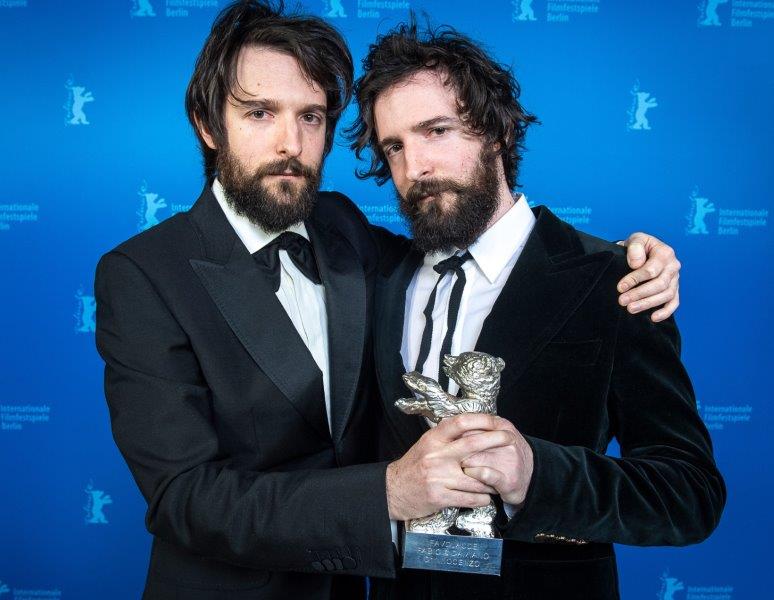
The best screenplay prize went to Bad Tales from another eccentric directing duo, the D’Innocenzo Brothers, billed as Italy’s answer to Todd Solondz for their cynical view of families and relationships. The star of their film, Elio Germano won the best actor prize for another Italian film, Hidden Away by Giorgio Diritti.
South Korea’s Hon Sangsoo received huge applause when he won the best director award for The Woman Who Ran. “I don’t have a big premise and always try to focus on a few details and to build on that and resist the temptation to make a flashy big picture,” he explained at the winners’ press conference.
The official best documentary award went to Irradiated, a bleak montage of war in the 20th century directed by Cambodia’s Rithy Panh, who had produced Angelina Jolie’s 2017 film First They Killed My Father.
“It’s a difficult film that is opposed to any kind of racism, xenophobia or the extreme violence that people are capable of inflicting on other human beings,” Panh said. “It’s devoted to the hope that we are still able to champion freedom and liberty.”
Main Photo: Erik Weiss / Berlinale 2020
