By Erin Free
In this regular column, we drag forgotten made-for-TV movies out of the vault and into the light. This week: the true-life 1985 drama A Bunny’s Tale, based on the life of the late Gloria Steinem, and starring Kirstie Alley, Diana Scarwid, Deborah Van Valkenberg, Delta Burke, Lela Rochon, Romy Walthall, Joanna Kerns and Mary Woronov.
“You should write about take-no-shit women like me. Girls need to know they can break the rules.” Gloria Steinem, My Life On The Road
Indeed, we shall, Ms. Steinem, indeed, we shall! When American writer, journalist, provocateur, Ms. Magazine founder and cultural figurehead Gloria Steinem passed away on September 2 at the age of 96, the world lost one of its true feminist pioneers, a woman who paved the way for others with bravery, grace, wit, empathy, warmth, intelligence and good humour.
Steinem was a major force in American cultural politics, and has been essayed a few times on screen. Julie Taymor’s 2020 biopic feature film The Glorias stars Julianne Moore and Alicia Vikander as older and younger versions of Steinem, respectively, while Rose Byrne effectively portrayed the feminist icon in the 2020 TV mini-series Mrs. America. Steinem has also been the subject of documentaries (2011’s Gloria: In Her Own Words, 2025’s Dear Ms.: A Revolution In Print), as well as making a few good-natured cameos and film appearances as herself (First Wives Club, The Good Wife, The Larry Sanders Show).
One of the best representations of the late Gloria Steinem, however, came with the telemovie A Bunny’s Tale, which was first broadcast on major US network ABC on February 25, 1985. The film is based on one of Steinem’s earliest and most epochal journalistic pieces, and has a sensibly and solidly behind-the-camera feminist bent, with groundbreaking TV pioneer and Unsung Auteur Karen Arthur in the director’s chair, and a cogent, punchy, no-holds-barred script courtesy of Deena Goldstone (1984’s When She Says No, 1994’s Safe Passage) and Lynn Roth (a host of impressive telemovies and TV series).
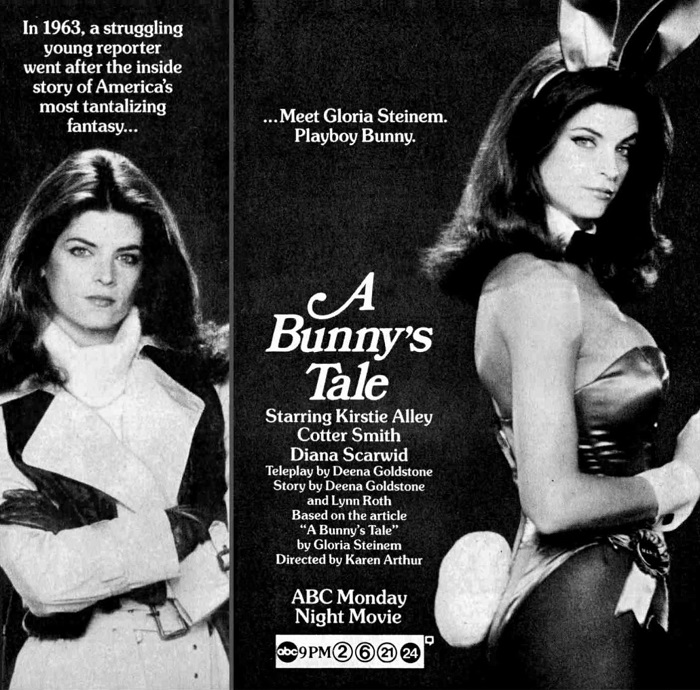
In A Bunny’s Tale, Steinem is engagingly played with abundant spirit and vulnerability by the ever-underrated Kirstie Alley, who is at her charming, feisty, beautiful best here. Alley had appeared in a few cool flicks (1982’s Star Trek II: The Wrath Of Khan, 1984’s underrated Runaway with Tom Selleck and Gene Simmons) prior to this, and her star was well and truly on the rise. This strong, high-profile leading role was one of Kirstie Alley’s first, and was a major stepping stone on her often-rocky journey to stardom via TV’s Cheers and the Look Who’s Talking films.
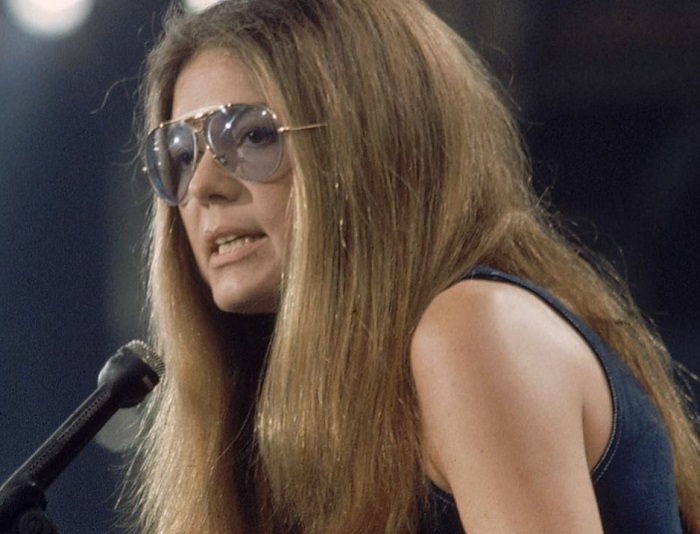
Set in 1963, A Bunny’s Tale’s Gloria Steinem is a young reporter fighting to get decent stories and struggling to make ends meet; this is years before the 1970s-chic, aviators-jeans-and-long-cool AF-straight-hair that would make Steinem a fashion icon as well as a feminist one.
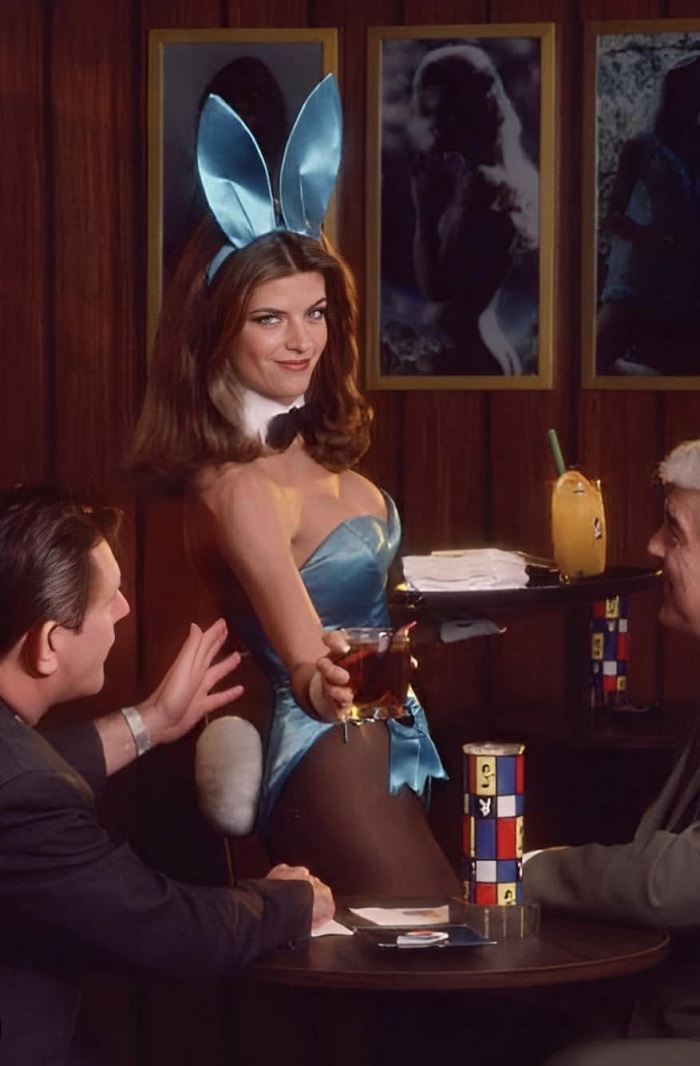
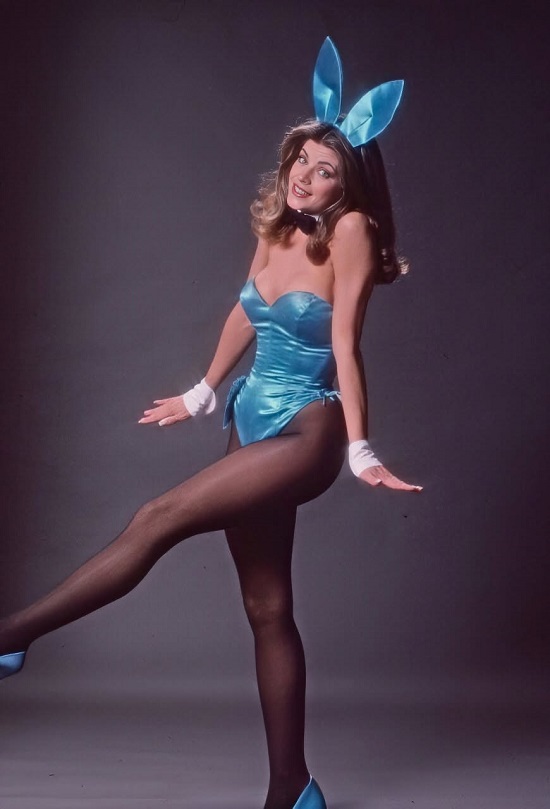
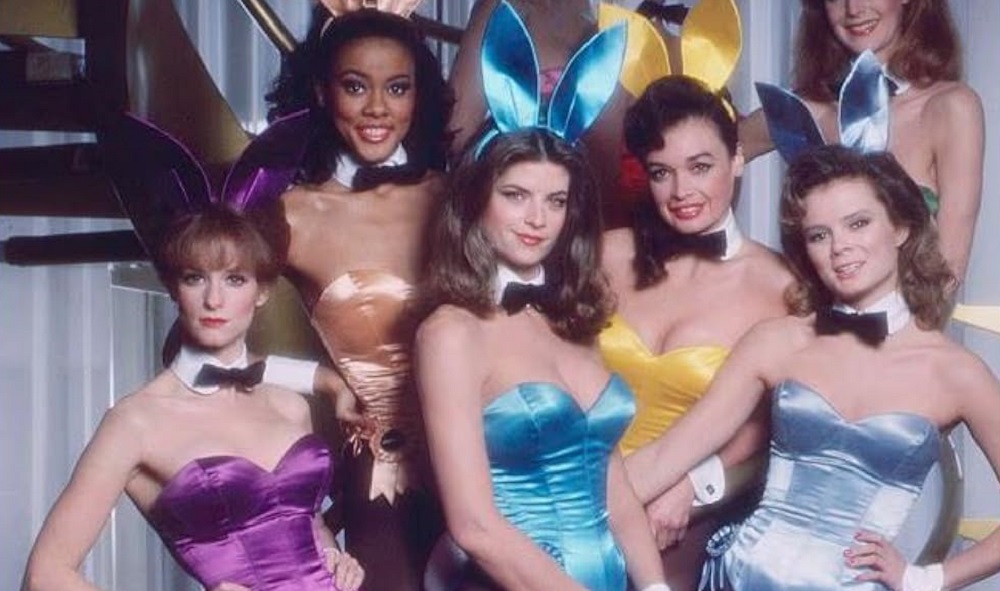
When Steinem sees an position vacant ad for waitresses at the New York branch of Hugh Hefner’s famous, glamour-central Playboy Club, the hustling journo pitches a story to her doubting magazine boss, and goes undercover to write about her experiences at the club. Pretty soon, Steinem is tagged “Bunny Marie” and wearing leotards, bunny ears and a cottontail, all while being ruthlessly ogled and harassed by wealthy drunks.
Though her boss wants a “fun story”, Steinem finds something else altogether. Despite the glamorous facade, the women who work as waitresses at The Playboy Club are grossly underpaid, graft under gruelling conditions, get treated like shit by their supervisors, and toil under a long list of draconian rules that would have any union delegate seeing read. On top of that, the women have to undergo invasive and unnecessary internal physical medical exams prior to employment.
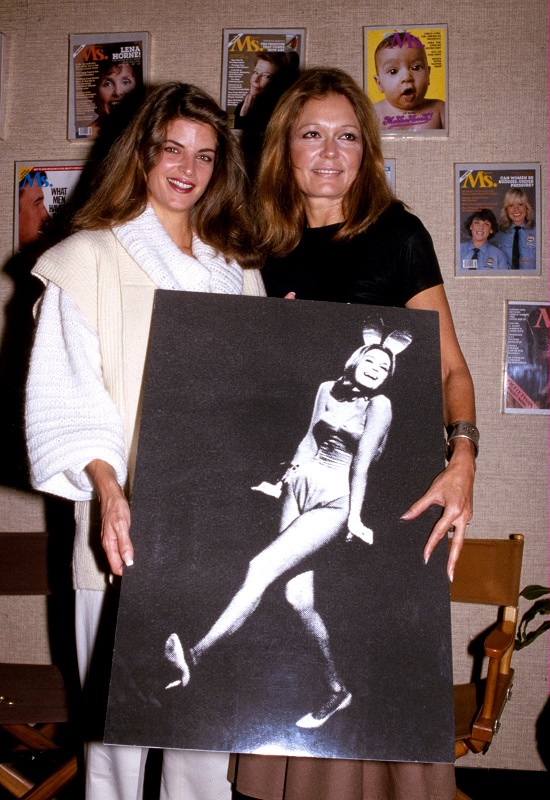
As well as the rampant sexism, Steinem is also struck by the glaring class divide present in this very unusual workplace. Poor and uneducated, many of the women have no other option but to keep working at the club just to keep their apartments and stay off the breadline. Largely raised by her mentally unstable mother in Toledo, Ohio, Steinem feels a real sense of kinship with her colleagues and newfound friends. “All women are Bunnies, but it doesn’t have to be that way,” Steinem wrote of the struggles she witnessed while working undercover at The Playboy Club.
All of this is effectively and unflinchingly captured by director Karen Arthur and her female screenwriters. In one telling and quietly powerful scene that could only have been crafted by female creatives, the women of The Playboy Club hang out in their dressing room and openly discuss their at-odds disappointment in but often desperate need for men, and their frustrating inability to live without them. It’s honest, sad and funny all at the same time.
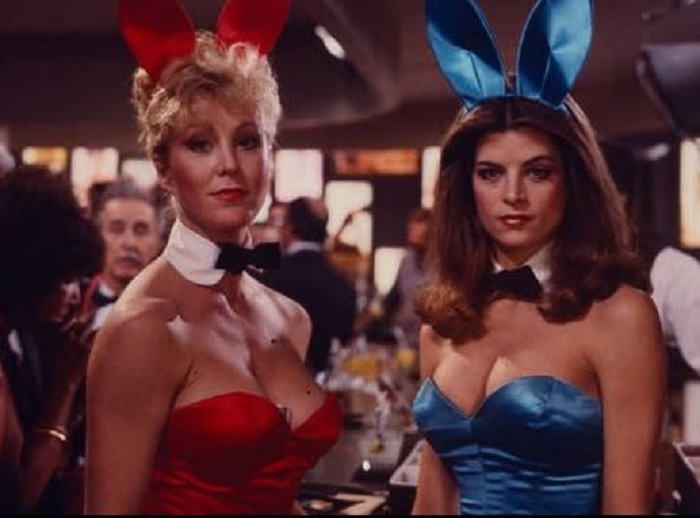
The acting here is excellent, with Kirstie Alley backed up by a great female cast. Diana Scarwid is entertaining as Gloria’s funny, man-hungry roommate, but the best supporting roles go to the Playboy Club Bunnies: Deborah Van Valkenberg (The Warriors, Streets Of Fire) is the tough talker of the group, Delta Burke (TV’s Designing Women) is the vivacious southerner, Lela Rochon (Waiting To Exhale, Any Given Sunday) is just looking for a rich husband, Romy Walthall is the naive innocent, and Joanna Kerns (TV’s Growing Pains) is the single mother caught in an abusive relationship.
True scene stealer status, however, is bestowed (pretty much as always) upon perennial cult darling and one-time Andy Warhol Superstar Mary Woronov, who drips icy venom as the imperious Miss Renfro, The Playboy Club’s cold, unfeeling supervisor. Though best known for her cult features for Paul Bartel and Roger Corman, Woronov also had a very rich and prolific career on the small screen, usually with roles not too dissimilar from her nasty, eye-catching one in A Bunny’s Tale.

Though Gloria Steinem’s article about The Playboy Club would prove to be something of a millstone around her neck (“To this day, when people don’t like me, they introduce me as a former Bunny, as a put-down,” she said many years later), it stands as a seminal moment in her extraordinary career, and the entertaining and thought provoking A Bunny’s Tale gives it its appropriate and well-deserved due.
Availability: A VHS staple, A Bunny’s Tale is very easy to find online, and it’s in fairly watchable shape too.