


by Bailey Ferris
There’s a moment in Drive (2011) where Ryan Gosling is just… driving. No dialogue. A synth pulse low in the mix, neon smearing across wet asphalt, the city folding around him like a fever dream from 1984. That scene didn’t feel like a heist film. It felt like a memory of one.
That mood – call it retrofuturism, outrun, or the more familiar synthwave – didn’t come from nowhere. It’s a sound and a look that’s been quietly rebuilding itself since the mid-2000s. And cinema, eventually, caught up.
Where the Wave Started
Synthwave was never really about the 1980s as they actually were. Big hair, shell suits, questionable lifestyle choices. None of that. It was about the idea of the 80s. The version that lived in John Carpenter scores, Vangelis soundscapes, and the glow of an arcade machine at midnight.
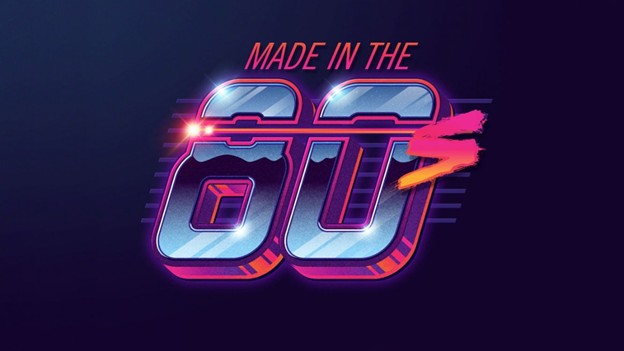
The visual side runs on a short list of elements. Magenta and cyan. Grid lines vanishing into a horizon. Chrome typefaces. A sun made of stripes. Put those things together and something happens in the brain – some limbic shortcut that bypasses logic and lands straight in nostalgia. It’s exactly that pull that platforms offering payid pokies have leaned into: the same colours, the same grid, the same after-dark atmosphere. The aesthetic does the heavy lifting before a single reel spins.
Drive didn’t invent this. But it weaponised it. Suddenly everyone noticed what Nicolas Winding Refn had understood for years. Neon, when used with restraint, doesn’t just look good. It implies an entire world.
The Casino as Visual Anchor
Vegas has always been cinema’s most cooperative collaborator. Martin Scorsese used it as a character in Casino (1995). Soderbergh made it stylish and fast in Ocean’s Eleven (2001). Both films understood something most directors don’t bother learning: the casino floor is one of the few places on earth where excess is the baseline. Nothing needs to be exaggerated. You just point the camera.
The neon casino became the visual shorthand for risk, transgression, and – crucially – the feeling that something important is about to happen. That’s not an accident. It took decades of cinema to build that.
What synthwave did was strip the casino aesthetic down to its bones. Forget the Bellagio fountains. Forget the Rat Pack swagger. What remained was the light. The grid. The pulse. Those elements turned out to be highly portable. They moved into music, then gaming, then digital entertainment – in ways nobody really planned.
It’s worth noting that this cultural pull was already being documented. Music critic Simon Reynolds wrote extensively about pop culture’s obsession with its own past. His analysis, covered in depth by The Guardian, argued that the accent had shifted from discovery to recovery. Synthwave was, possibly, the visual proof of that thesis.
From Screen to Spin
So how does a film aesthetic end up inside a slot machine? Faster than you’d think.
The same visual language that drives synthwave cinema has quietly colonised the design of PayID pokies and online gambling platforms. Not as a deliberate tribute – more like market instinct. Developers noticed that players responded to this kind of atmosphere. Dark backgrounds, neon symbols, synth-adjacent soundtracks. The retro-future casino floor, compressed into a browser window.
NetEnt made this explicit with Neon Staxx. A slot that arrived with a synthesiser soundtrack and a grid backdrop lifted straight from a Tron deleted scene. The company described it plainly: a game designed to take players back to the 80s with neon colours and a synth soundtrack. That’s not incidental. That’s a creative brief borrowed from cinema.
Play’n GO followed a similar path. Games that mix cinematic framing with retro visual DNA. The result is a genre of gaming that owes more to Blade Runner concept art than to anything found in a traditional casino.
What Australian Players Made of It
The synthwave aesthetic landed particularly well in the online pokies Australia market. Australian players have always had a specific relationship with pokies. The format is part of the culture in a way that’s distinct from how Europeans or Americans relate to slots. It’s familiar. It’s almost domestic.
So, when Australian online pokies started arriving with this heightened cinematic quality – dark atmospheres, neon geometry, driving electronic scores… They didn’t feel foreign. They felt like an upgrade. The same game, reimagined through a filter that happened to match exactly what modern cinema had been doing.
Pokies in Australia were never just about the mechanics. The social side, the setting, the sense of occasion – all of it matters. A game that looks like it belongs in a Nicolas Winding Refn film brings a kind of prestige that earlier designs simply couldn’t.
Providers who understood this moved fast. The best Australia online casino platforms now feature catalogues built substantially around this visual identity. Dark, neon-lit, atmospheric. The design choice isn’t arbitrary. It’s borrowed from movies too.
The Films That Kept the Flame
Mandy (2018) pushed the aesthetic into horror. Only God Forgives (2013) drenched Bangkok in the same colour palette that had made Vegas iconic. Even Netflix’s Stranger Things helped normalise this visual language for a generation that had no actual memory of the decade. Borrowed nostalgia. And it worked.
Here’s a short list of films that did the most to build this aesthetic:
- Blade Runner (1982) – the original text; every neon city owes this one
- Drive (2011) – the moment synthwave cinema entered mainstream conversation
- Only God Forgives (2013) – neon as menace, not glamour
- Mandy (2018) – psychedelic and synth-heavy; horror through a retro lens
- Blade Runner 2049 (2017) – a technical and aesthetic masterclass in retrofuturism
Each film pulled from the same source material. Each one fed back into the broader culture – including, eventually, the casino floor.

Two Things That Make This Aesthetic Work
Whether in film or in games, the neon casino revival runs on two mechanics:
| Element | What it does |
| Contrast (dark background, bright symbol) | Creates visual focus; makes every detail pop |
| Synth score / electronic atmosphere | Sustains tension; triggers nostalgia without direct reference |
Take either one away and you lose the effect. Drive with a rock soundtrack is a different film. Neon Staxx with a generic loop is just a slot.
The Loop Keeps Turning
The cinema borrowed the casino. Synthwave borrowed cinema. Online gaming borrowed synthwave. And now Australian online pokies are borrowing from all three at once. The result is something that offers an authentic casino experience that never actually existed in a physical building. Something invented in post-production, refined in album art, eventually built into software.
The neon was always a lie, of course. A representation of energy rather than energy itself. But that was always the point.
The wave isn’t crashing. It’s just finding new places to break.
