



by Stephen Vagg
Female-heavy production staff
Women were crucial to the behind-the-scenes success of Corman’s operation over the years. Chief among them: Frances Doel, his legendary story editor; Julie Corman [pictured with Corman in main image], his wife and producer of many movies (who gets her own entry on this list later on); Stephanie Rothman, production assistant before turning director; Barbara Boyle, chief operating officer and executive vice president; Barbara Peeters, second unit director and later director; and Gale Ann Hurd, producer. Corman admitted he preferred working with women to men, saying they would work harder for less money and were more loyal. I think he also just preferred their company to men, with whom he was more likely to clash. It’s significant that the big fights in Corman’s life – with Columbia, AIP, the new owners of New World, and, most of all, his sons (who are also discussed later in this list) – were with men, not women.
Female directors
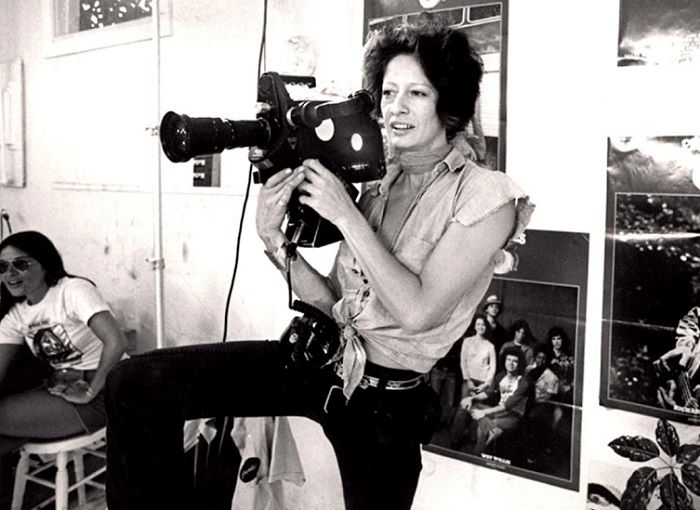
For a long time, Corman was the only Hollywood producer to consistently give women a chance to direct, including names such as Stephanie Rothman, Barbara Peeters, Penelope Spheeris [above], Amy Holden Jones, and Katt Shea. In return, they gave him some of his biggest hits (The Student Nurses, Summer School Teachers, Humanoids of the Deep, Slumber Party Massacre, Stripped to Kill). Corman’s hiring of women did not always end well, and his legacy as a feminist progressive is, ahem, a complex one, but he did a hell of a lot more for female directors than pretty much every single one of his contemporaries. (An excellent piece on Corman and female directors is here)
Sexual assault on screen
Oh, boy. This is not going to be fun to write about, but anyway, I feel that it has to be discussed – lots of trigger warnings…
Corman had a huge box office success in 1966 with The Wild Angels, which had several scenes of the bikers committing sexual assault on women. One of the lessons Corman took out of that film (as did other moviemakers) was that a section of the public really, really like seeing rape scenes on screen. And so they kept popping up in his work: there was one in A Time for Killing (which Corman was fired off, though not for that scene as it’s in the final movie), some comical rapes in Gas (football jocks on cheerleaders, and Elaine Giftos out-sexing gang rapists) and Bloody Mama (perhaps Corman’s least enjoyable movie as director) is jam packed with them.
Pretty much all of Corman’s biker films have rape scenes (eg. The Devil’s Angels), as do his women in prison films (The Big Bird Cage varies things by having a female prisoner assault a gay male guard), his three-girls’ films (even the generally good-natured Hollywood Boulevard has Candice Rialson sexually assaulted not once but twice) and his sword and sorcery films (which, like the women in prison pictures, throw in a lot of torture too). Corman also financed films about a necrophiliac rapist serial killer (Sweet Kill), and a woman raped by a police officer (Jackson County Jail) and his more serious “life on the streets” dramas had plenty of sexual assaults (Suburbia, Streetwalkin’).
Corman’s rape fixation hit an apogee in 1980 with the notorious assault sequence in Galaxy of Terror, plus his insistence that a rape be depicted on screen in Humanoids from the Deep over the objections of its star (Ann Turkel) and director (Barbara Peeters). Corman has always been upfront about these scenes, insisting they were part of the appeal of exploitation films for his audience, giving them something not found in regular studio pictures – and he may have been right: Galaxy of Terror and Humanoids of the Deep were hits, as were other films that featured these scenes. But it was depressing. And you can’t really discuss Corman’s claim to be a feminist filmmaker without examining his history of putting in scenes of sexual assault.
Nudity
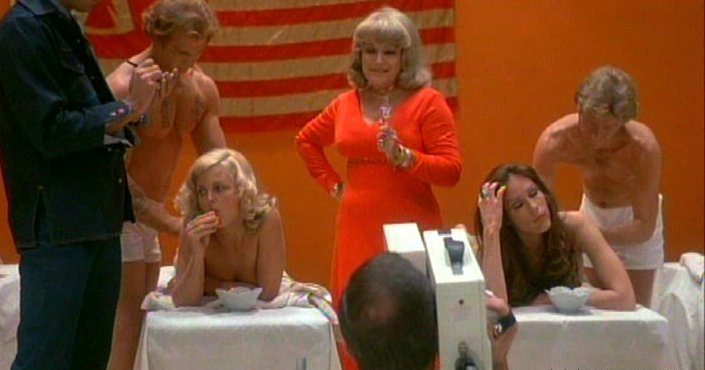
From the late sixties onwards, Corman was a strong proponent of onscreen nudity as an exploitable element in his movies. Indeed, he pretty much insisted on it in every film every fifteen minutes to keep the audience interested, even for something more art house-ish like Love Letters or Suburbia (he had specific limitations too: total nudity from behind but only from the waist up from the front, no pubic hair, it did not have to be part of sexual activity, it just had to be there). A 1998 documentary featuring Corman was entitled Some Nudity Required (Corman reportedly tried to block the release of this film, made by his former music supervisor, Odette Springer).
The topic of onscreen nudity is one that a lot of people don’t like to discuss – violence and gender seem more popular. My take, for whatever it is worth: if handled well, nudity can really liven up a film – I mean, that’s what it is there for in Oppenheimer. And nudity is very effective in Corman movies when it suits the film – The Trip, for example, where it’s arty and wild, or Death Race 2000 [above], where it’s athletic and hedonistic in a way that perfectly suits the world, or Summer School, where it’s fun and open, or Candy Stripe Nurses where Robin Mattson and her co-star seem really into each other, or Love Letters, where it provides a jolt of electricity in amongst all the talking. It is less effective when it is perfunctory, gratuitous to the point of comedy (eg Forbidden World), tied in with sexual assault (see the above note), or done by a director who is clearly uncomfortable with it. But there are PhDs you can read on this, I’m sure.
Femme-driven genres
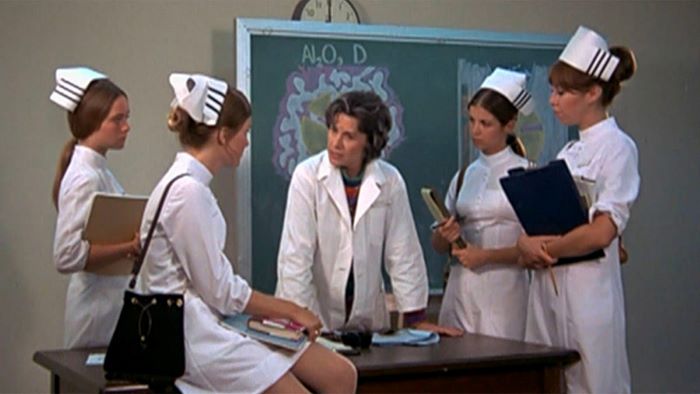
In the seventies and eighties, Corman got into female-driven cycles in a big way – you had the “three girls” cycle (nurses, teachers, models), the “women in prison” cycle, the “female gangsters” cycle, the “cops going undercover as strippers” cycle, the “female warrior” cycle, the “women having a slumber party and escaping a serial killer” cycle – then, later on, the Black Scorpion TV series. These films used recurring character tropes (the kinky one, the comic one, the political one, the wild one, the drug addict, the hot Amazonian warrior), but it’s got to be said, that they had a lot more variety than there was to be found in Hollywood movies of the time, with its abundance of smurfettes.
Passive male leads
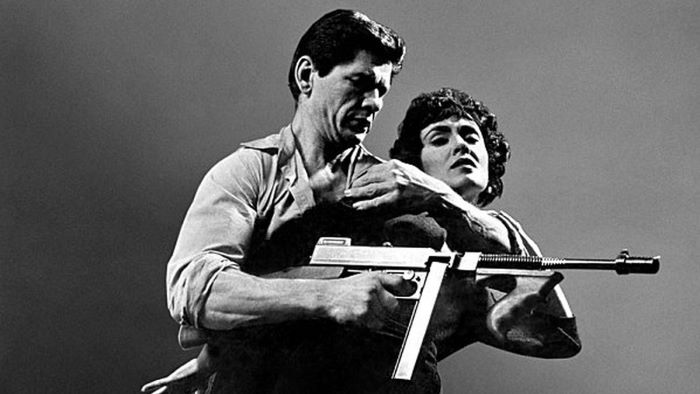
Looking back, it’s remarkable how many Corman movies featured male leads who were passive, if not downright wimpy. Most of the Poe films, for instance, have Vincent Price as a victim of mental illness being driven mad, combined with particularly wet male romantic leads (John Kerr, Richard Ney, Mark Damon); the female characters (played by Hazel Court, Barbara Steele, Elizabeth Shepherd, Jane Asher, among others) are routinely stronger than the male ones. Little Shop of Horrors and Bucket of Blood had nebbish lead male characters, Charles Bronson in Machine Gun Kelly was completely emasculated by his wife, and even in his more traditional action films, Corman liked to use beta male type actors such as Peter Fonda, Richard Thomas and (dare we say it) David Carradine, rather than rugged, muscular types; he did use some of the latter (John Ireland, Steve Cochran, Stewart Granger), just not that often. Corman was not a traditionally macho guy IRL – no Raoul Walsh/John Ford/John Huston style boozing/adventuring in his spare time – and I think this was reflected in the sort of movies he preferred to make and male actors he would cast.
Pro-choice movies
Hollywood traditionally steered clear of making any sort of statement about abortion. Corman financed several films with a very pro-choice message. Most notably was The Student Nurses from director Stephanie Rothman, which featured, at her instigation, an abortion subplot; this retains amazing power even today, and gives the film a depth that none of the others in the cycle matched. There was also The Terror Within, where a woman responds to a sexual assault from an alien by declaring her right to choose. Alright, that is only two films, but it’s two more than the majors at this time.
All male disappointments
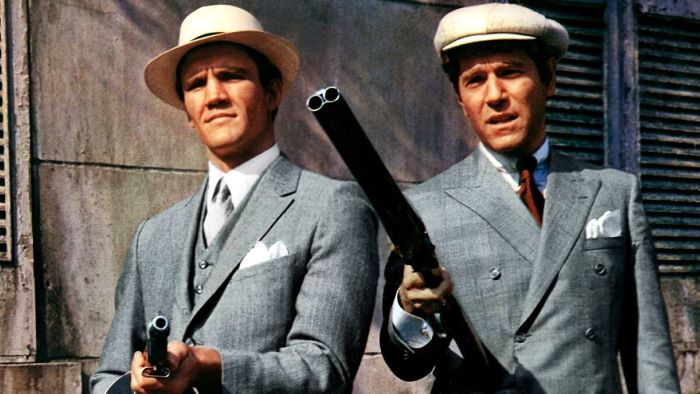
A flipside of Corman’s preference for movies with women – when he made ones with barely any in them, they tended to underperform. For instance, Corman’s movies for the major studios – The Secret Invasion, The St Valentine’s Day Massacre and Von Richthofen and Brown – had barely any women in them, and all were box office disappointments. There were other reasons for this, of course, but I think Corman was basically more energised by films with women in them.
Julie Corman
Julie Corman’s influence on her husband’s output has been under appreciated. She produced some of New World’s strongest femme driven films (Summer School Teachers, Lady in Red), the best movies made by Jim Wynorski (Chopping Mall) and Barbara Peeters (Summer School Teachers), and early films from Martin Scorsese (Boxcar Bertha) and Jonathan Kaplan (Night Call Nurses, The Student Teachers); she tried to get Shirley Clarke on to direct Crazy Mama (Clarke quit, so Jonathan Demme had to step in); she encouraged Roger to diversify his slate into kids’ films (The Dirt Bike Kid, A Cry in the Wind), broad comedies (Saturday the 14th, those Don Knotts-Tom Conway films) and Irish drama (Da); it was she, rather than Roger, who took artistic swings during the New Horizon years (Nightfall, Brain Dead). It cannot have been easy being married to someone so highly regarded, or tight with the buck, but they were married for over fifty years – and Roger Corman didn’t get married until very late in the day.
His daughters versus his sons
Sigh. The last twenty years or so of Roger Corman’s life had very heavy King Lear vibes, as one of the smartest men in the history of Hollywood found he could never quite master a skill many successful businessmen are found wanting in – handling his children, particularly his sons (he had two, plus two daughters). As an outsider, it is tricky to know exactly what went on within the Corman family, but not impossible because his sons sued their father (and Julie) several times, and the court documentation is available online.
Basically, his sons wanted money that they thought they were entitled to, which is a bit rich because they had not worked for it, but a lot of it had been put in a family trust, presumably to minimise tax, and promised to them, presumably to make them feel loved – you’ve got to be careful with stuff like that, as any succession lawyer will tell you. But, that’s the thing with families – they run on emotion rather than logic. Roger and Julie had some difficulties with their daughters too (all the kids were fired from New Horizons in 2009) but they seem to have been overcome; this was not the case with their sons. It’s hard to read, hear or imagine much that is good about Roger Corman’s two sons and it speaks volumes that when Roger died, his official account says he was survived by his wife and two daughters, despite the sons being alive. I’m sure that it wasn’t easy being the sons of Roger Corman, but that doesn’t mean they couldn’t go out and get a job. I hope Beverly Gray, who wrote the most comprehensive, complex book about Roger Corman by far, does a revised edition.
