



By John Noonan & Mark Demetrius
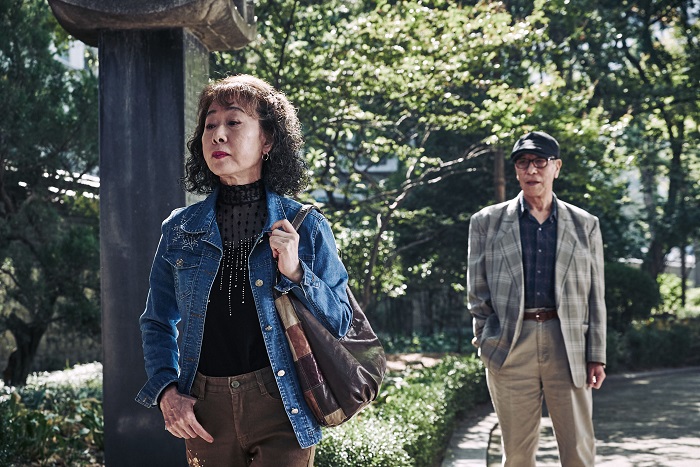
THE BACCHUS LADY: $18.00 The welfare system in South Korea is such that there is a culture of women at pension age prostituting themselves to make ends meet. Dubbed “Bacchus Ladies”, they got their name by offering Bacchus, an energy drink, to prospective clients. The Bacchus Lady, from director, E j-yong, is the tale of just one of those ladies. Played with upmost dignity by veteran actor, Youn Yuh-jung, So-young plies her trade in the parks of Seoul. Witnessing the stabbing of a man by a jilted Filipino lover, So-young, for reasons that she admits she doesn’t understand, takes the son of the couple under her wing. Looking after the child, So-young must balance the needs of her patrons and the no-longer-to-be-ignored symptoms of old age that are taking over her body. Youn offers a character that tries to paper over the cracks of fragility with a piercing sense of humour and stoicism, and it almost works when she’s in the company of others. But to the audience, it’s her distant stares into the past that highlight that everything is not what she hoped it would be. Naturally, the subject of death raises its head, and So-young is forced to face this issue when she sees her clientele passing into decrepitude. It’s from here that The Bacchus Lady goes down a dark path, one which sees the already under-duress sex worker becoming a face of death amongst those close to her. Shot with a whole heap of heart and emotion, E J-yong’s film skillfully skips between melodrama and black comedy without breaking a sweat, before offering an ending that is heartbreaking in its honesty. The Bacchus Lady is a stark reminder of how the young can forget what lies in wait for them. John Noonan
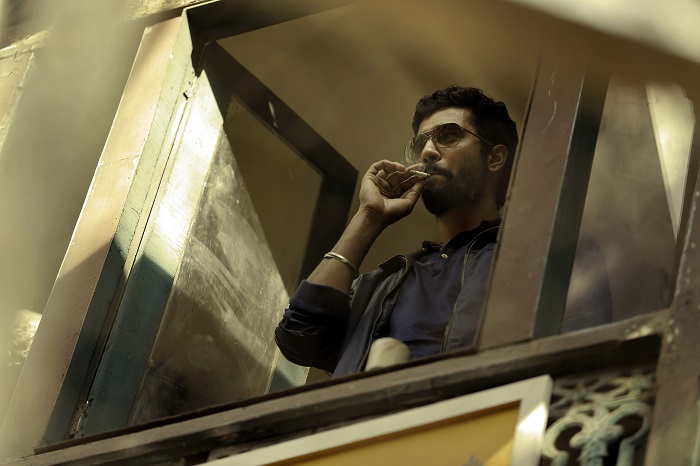
PSYCHO RAMAN: $16.00 Psycho Raman reportedly started life as a biopic about Raman Raghav, an Indian serial killer from the 1960s. Unable to accumulate the budget for a period piece, director, Anurag Kashyap (Gangs Of Wasseypur), has instead crafted this modern day tale about Ramanna (Nawazuddin Siddiqui), a homeless drifter who shares most of the same qualities with the aforementioned Raman. Hot on his tail is Raghav (Vicky Kaushal), a violent and abusive cop who has previously let Ramanna slip through his fingers and, as such, takes out his frustration on his girlfriend, Simmy (Sobhita Dhulipala). Whilst Kashyap has stirred up a blistering looking film that grabs hold of you from its opening credits, an infusion of EDM and bright lights, and an overly fussy opening structure, unfortunately cloud the narrative. But though it falls, the film is soon back on its feet. That the names of our protagonist and antagonist combine to form the name Raman Raghav provides an example of the (lack of) subtlety that’s on offer. Kaushal’s turn as the cop with a dark agenda is, at times, turned up to 11 so quickly that the actor has nowhere else to go. Siddiqui’s performance as the wide eyed Ramanna, however, really makes you sit up and take notice. Clearly the hero in his own movie, Ramanna stalks the slums and streets looking for easy victims. Perhaps the most excruciating is a visit to his nervous sister, who Ramanna used to abuse when they were younger. Like a tiger trapped in the living room, Siddiqui commands your attention, never making it obvious when he is going to bare his teeth. Seeing as both men are fundamentally two sides of the same coin, it’s a shame that Siddiqui doesn’t have more to bounce off. John Noonan
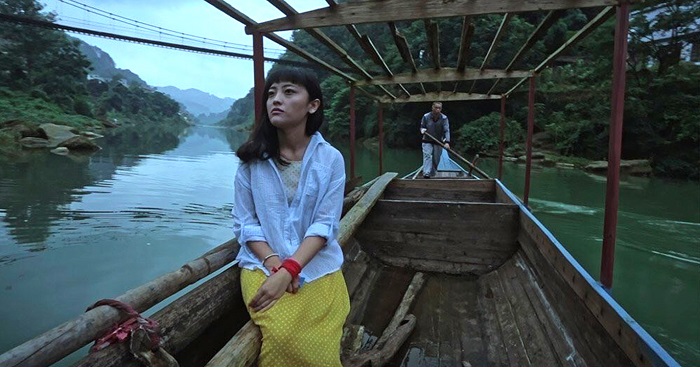
KAILI BLUES: $8.00 Kaili Blues is a lot more interesting in theory, and by repute, than in reality. For starters, writer-director, Gan Bi, is an established poet, who has only now turned his hand to filmmaking. Then there is the much-vaunted single take, which lasts forty minutes, in the middle of the movie. And, most promising of all, there are the comparisons with the work of such surrealistic cinematic visionaries as Luis Bunuel, David Lynch, and Apichatpong Weerasethakul. The truth is that precisely nothing surreal or especially bizarre occurs onscreen here. It’s all rather mundane and, while some of the characters think or talk oddly, their occasional superstitious ramblings about mysterious wild men covered in hair and drawing clocks on trains are merely silly and irrelevant rather than interesting. The plot is murky, and so – alas – is most of the cinematography. Kaili Blues is set in a city – Kaili being its name – in south-east China, and the story revolves around supposedly benign doctor, Yongzhong Chen (Chen Shen), who looks after his young nephew, Weiwei (Feiyang Luo), because Weiwei’s (again supposedly) negligent and amoral father, “Crazy Face” (Lixun Xie), fails to do so. This is all really just the premise for a seemingly interminable road trip – involving various modes of transport – through nearby mountains and impoverished villages. When someone boils a kettle, we witness the whole event, and if a train passes a platform, we watch every single carriage go by. Worse still, there are long tracking shots of a motorbike ride, some from the point of view of the rider, so that all we see is the road ahead. A bit of serious editing might have been in order. Here’s hoping that Gan Bi’s poetic sensibility transfers more successfully from page to screen in future. Mark Demetrius
The Bacchus Lady, Psycho Raman, and Kaili Blues are all playing at The Brisbane Asia Pacific Film Festival. For all session, ticketing, and venue information, head to the official website.
