



by Gill Pringle in LA
“What was in my mind was to try and write a movie a bit like Gladiator, because I loved Ridley’s movie – but my version of that kind of genre,” says Greengrass.
“I wanted to do a film about English history, about an English rebellion, really. And I was thinking about a few ideas, Peasants’ Revolt being the main one, and then when the pandemic hit, and we all got locked down, on the second day I thought, okay, I’m gonna be here for a while, I’m just gonna write this,” recalls the filmmaker who consulted with historian Dan Jones, author of one of the defining books about the Peasants’ Revolt, Summer of Blood.
“I’d done a fair amount of research and I’d read Dan’s book, but you have to put all that aside, really, and try and write a movie.
“And as I got into the world of 1381 and the oligarchs protecting their privileges and the corrupt court and the enraged people, the more it felt like not distant history, but our near tomorrow,” argues the Bourne series director whose other films include United 93, Green Zone and News of the World.
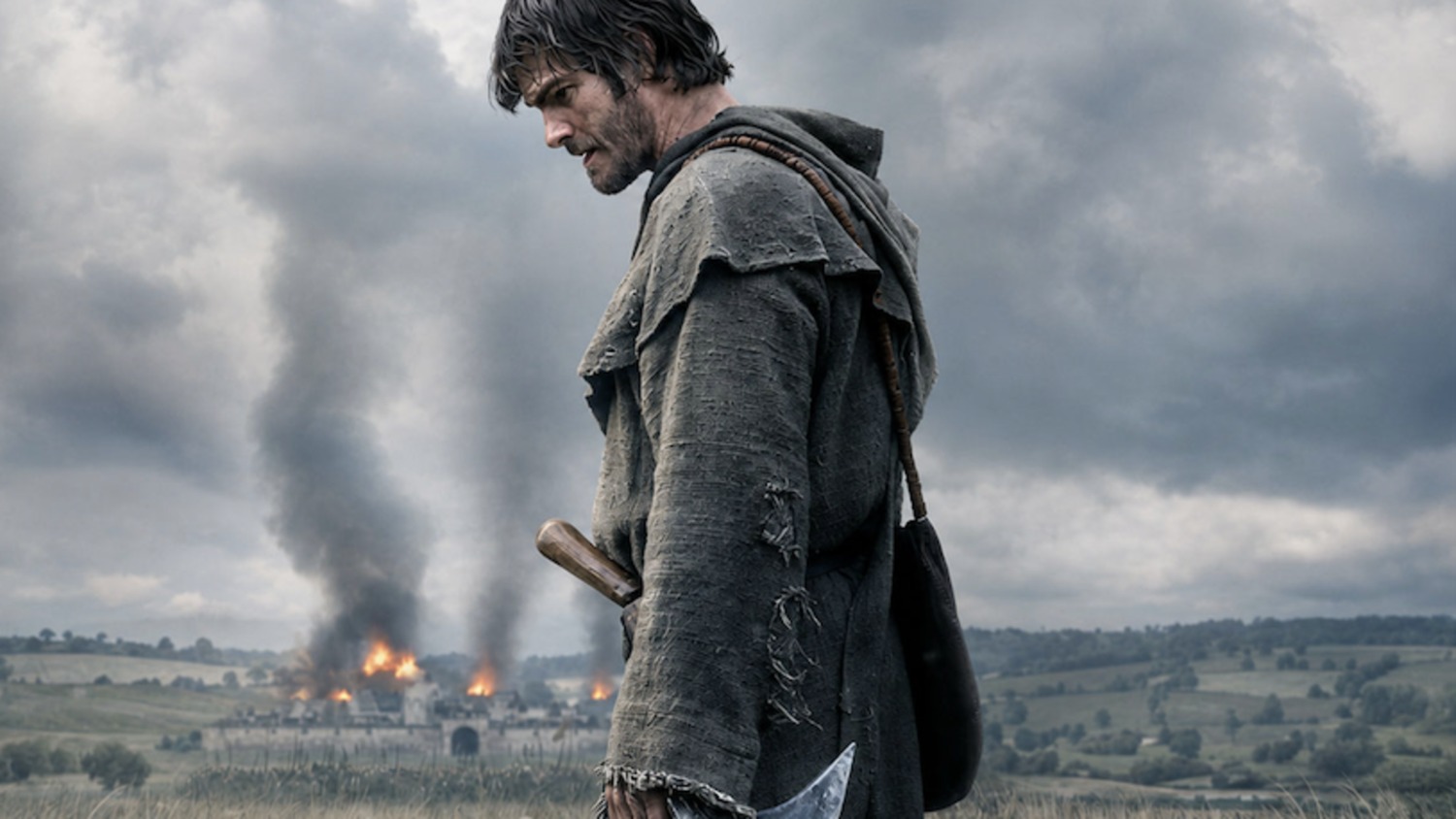
Set in plague-ravaged 14th-century England, The Uprising follows Andrew Garfield’s humble farmer, “Ploughman”, whose life is transformed by injustice and crushing taxes.
As anger spreads among ordinary people, Ploughman finds himself drawn into the Peasants’ Revolt of 1381, eventually becoming an unlikely leader of a ferocious rebellion against the tyranny of the young King Richard II, played by Woody Norman.
Set against the true events of the Uprising – that helped inspire the legend of Robin Hood – he forms a people’s army to face the young King’s might in a fight for justice.
Packed with gritty medieval action and political tension, the film is a deeply personal story about ordinary people fighting for freedom and dignity.
Set against a backdrop of The Plague which has swept across Europe – leaving half the population of England dead – grief, fear, and anger engulf those who survive.
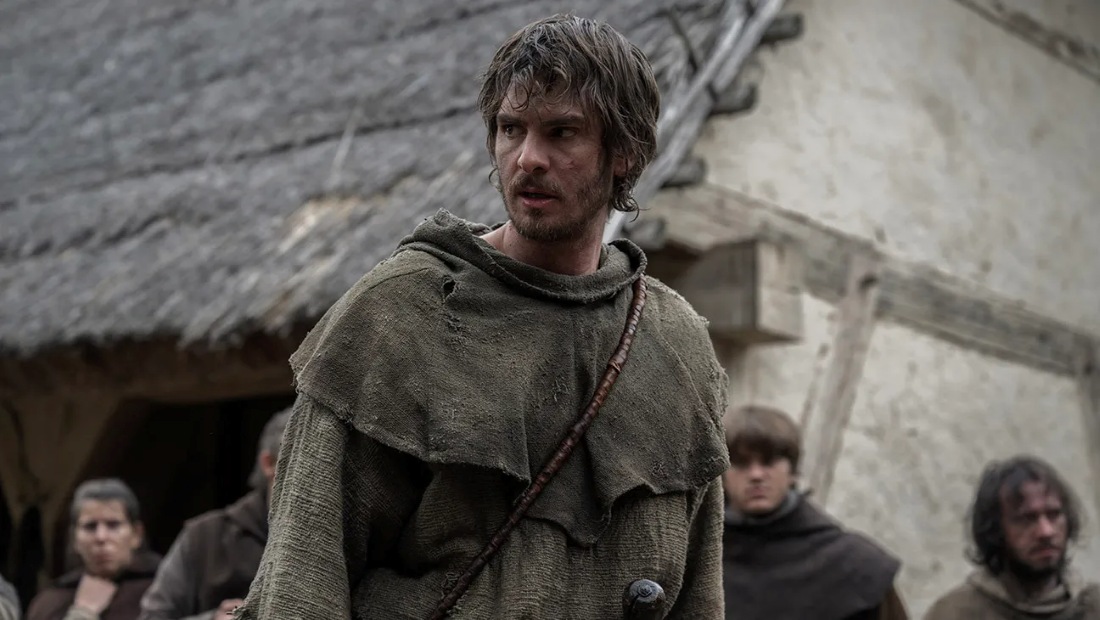
If the film is based on real events, then Garfield’s Ploughman is fictional. “I wanted to put at the centre of my story someone history never named at all: a simple farmer; a fictional character caught up in these tumultuous events who I could make stand for all the ordinary people who actually rose up, and paid the price for it,” explains Greengrass.
Garfield leapt at the chance of embodying this unlikely hero. “It’s a beautiful character that Paul wrote that I had the honour of trying to inhabit,” says the actor.
“And I say that because it feels like where we meet him at the beginning of our story, that there’s hardly any of him left. It’s like he has this little thin crust of identity that he is kind of clinging to tooth and nail. And through the process of the journey he goes on, that final little bit of crust gets fully cracked. And it’s like he’s more spirit than body,” says the Amazing Spider-Man, Hacksaw Ridge and After The Hunt star.
“And when I read the script, it felt . . . I don’t know, I think, as actors and filmmakers right now, and as Paul said about the current cultural climate we’re in, it’s very, very hard to feel like you can speak directly to the moment because things are changing so constantly and we don’t know what the truth is anymore. It’s hard to identify where the centre of the world is, because there is no centre,” he says.
“So, it’s very rare to read something where you go, ‘Oh, this feels like a cry of the soul for this very moment we’re in’. That’s what I felt when I read Paul’s script, and particularly the journey of the Ploughman.
“He’s this reluctant leader and a kind of natural leader because he has such little identity, that he can actually pay attention. He can hear. He has the humility to maybe hear the wind, to maybe hear the signs in the leaves of the trees, to feel who most needs a miracle, to really feel into other people’s pain and his own.
“He’s kind of in more pain than anything else. And there’s something beautifully transforming in accepting that pain and letting an old self die with that pain, so something new can emerge by the end of our story. It’s mysterious. It’s hard to talk about because it’s about what it is to fight for the dignity of one’s own soul,” he says.
Likewise, Thomasin McKenzie’s nun Alyce is an invented character.
“Alyce is representative of the women in the movement. Back in 1381, surprisingly, there were quite a few women who were known to be equally enraged and to be leading groups in this rebellion,” says the Jojo Rabbit, The Testament of Ann Lee and Last Night in Soho actress.
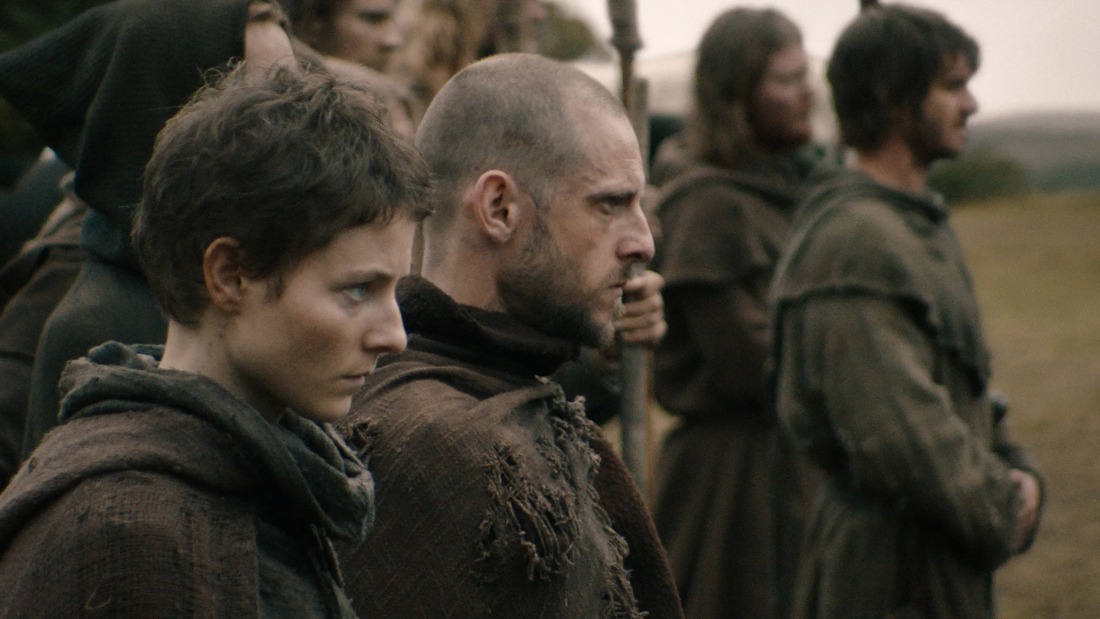
“I think we find out about Alyce’s history later in the film, at a really pivotal point, that she had been a part of the church and was taken advantage of and then cast away, completely betrayed by the people who were supposed to protect her and was betrayed by her family in a way,” she says.
“She wants to take action and fight for justice. At first glance, you don’t expect that she would hurt a fly. But then we see how much pain she’s carrying and how much she wants to let that pain out and inflict it on those who did her wrong.
“And so, her uprising is a result of that betrayal and just deep rage and brokenness. So, throughout the entire film, from the beginning until the end, she’s driven by a very strong force to seek revenge.
“But there’s a real connection between Ploughman and Alyce. They see each other and they both have suffered great grief and are processing that grief in different ways. So, I think her connection with Ploughman kind of softens Alyce and makes her realise the need for forgiveness and connection,” she adds.
Greengrass was clearly impressed by the New Zealand actress.
“She is a fantastic actor, very intense, very truthful. She had that ability to deliver the scene, and it made you weep – and everybody on the set, too. And she could give you five different versions, which is always the mark of a great actor,” he says.
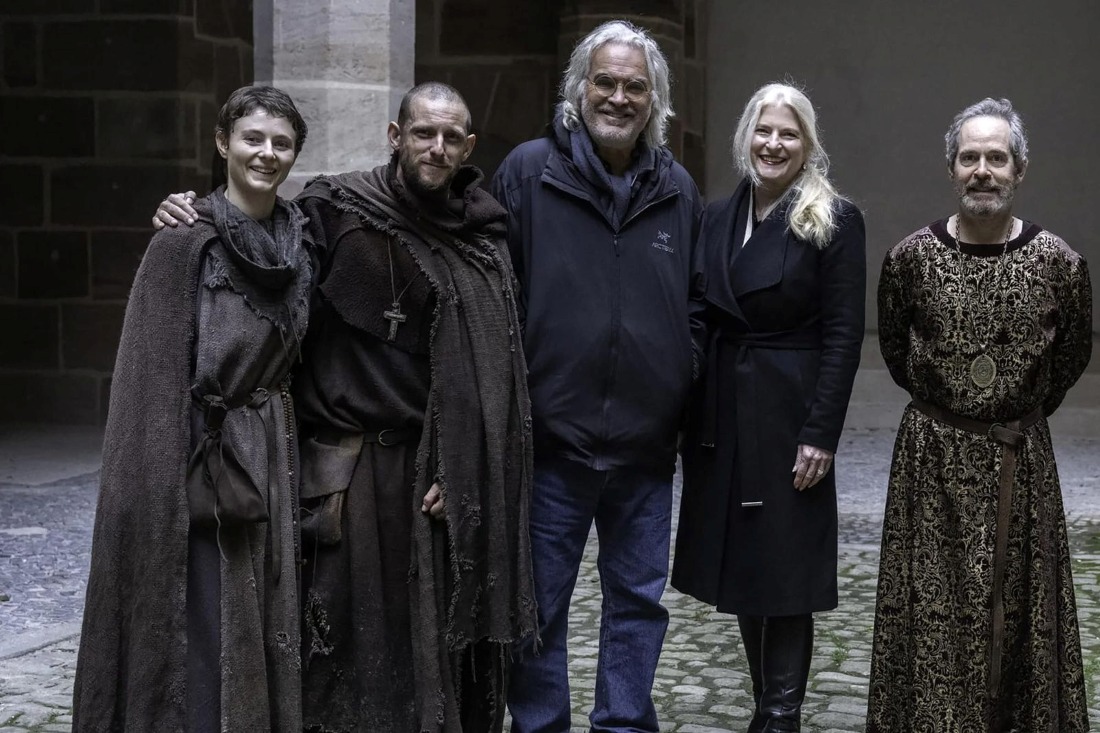
Other characters are based on historical figures, among them Treasurer Robert Hales, played by Tom Hollander; Archbishop Simon Sudbury, played by Stephen Dillane, and Mayor William Walworth, played by Jonny Lee Miller.
“Simon Sudbury was the actual Archbishop of Canterbury, and as God’s representative on Earth was also the de facto head of state during this period,” explains Dillane.
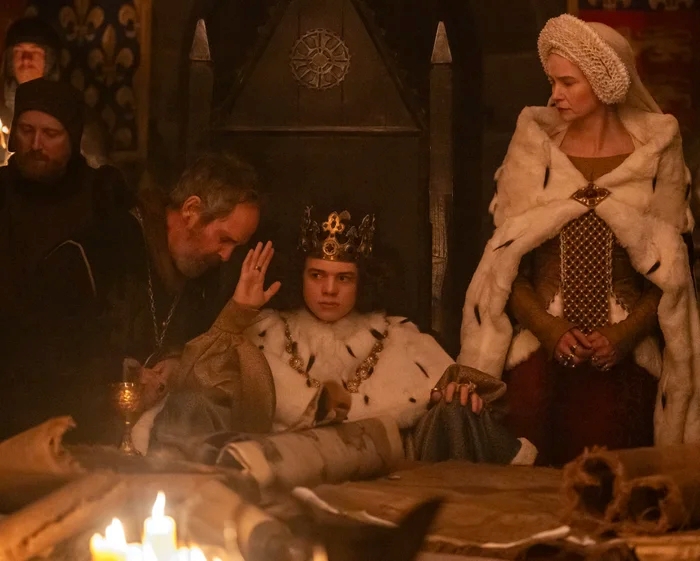 “Together with Treasurer Hales, it’s church and state, Sudbury and Hales being sort of twin heads of state, taking advantage of the power vacuum caused by the fact that King Richard II is just a 14-year-old boy,” he says.
Packed with stand-out performances, Katherine Waterston plays the boy king’s mother, The Countess, with Jamie Bell as John Ball and Cosmo Jarvis as Wat Tyler.
It’s apt that Greengrass began writing The Uprising during Covid lockdown. “Well, look, the Black Death was of an order well beyond COVID, although it looked for a while that COVID was gonna be similar,” says the filmmaker.
“But just over a million people, I think, lost their lives in the US. In Europe, The Plague took 50 percent of the population. But the result is the same. It’s just a deep, deep, deep dislocation. And what’s left when the first pangs of grief start to fade, is just a deep, growing rage. And I think that’s what we’re living through now in the US and UK and Europe and elsewhere.
“People come out of these experiences enraged at the unfairness of the world. And that’s really what this film’s tapping into. That said, it’s a movie. It’s gotta be entertaining and what I wanted to do was to make a big, grand spectacle movie about revolution,” he says.
And that is surely something the world needs right now.
The Uprising is screening at the British Film Festival. More information here.
