



by Gill Pringle
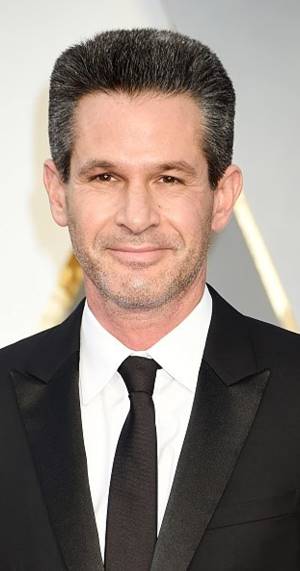
No stranger to large-scale sci-fi blockbusters, having co-produced The Martian, Deadpool and X-Men, Oscar-nominated and two-time nominated filmmaker Kinberg, 48, partnered with David Weil to create a sweeping ten-part sci-fi drama series for Apple TV+.
Spanning four continents, Invasion follows the terrifying moment of attack and the devastating aftermath of an alien invasion through the lives of five characters around the world, each struggling to survive while coming to grips with what has happened to their planet.
“It’s a drama at its heart, but it’s set against the backdrop of a massive alien invasion of Earth,” says Kinberg. “One story is a family. One story is a bunch of kids. One story is a woman who’s lost the love of her life. Another is a soldier who’s a long way from home. As all of these different emotional stories and situations are playing out, they are magnified by this traumatic global event.”
Populating his film with talented but largely-unknown actors, Kinberg couldn’t resist casting one of his favourite character actors, New Zealand’s Sam Neill in a lead role.
Best known for writing action films Mr & Mrs Smith and Sherlock Holmes, Kinberg opened up to us about his love of the alien genre:
 You describe H.G. Wells’ War of the Worlds, as your “North Star”. The novel was twice adapted for the big screen – in Byron Haskin’s 1953 film and then in Steven Spielberg’s 2005 movie starring Tom Cruise, although it is perhaps most renowned for the 1938 radio play written by Orson Welles, in which the narrator played the part of a news reporter witnessing an alien attack. The original title, “War of the Worlds” became public domain in 2016. Did you buy up the rights?
“No, it was purely inspiration and as I started imagining this show, it veered so wildly from War of the Worlds. Everything I work on has some “North Star”, usually it is another book or a movie or a story, sometimes it’s a personal North Star, but it just became the chromosome in the DNA of the show. But this show became so different in every way.”
Having produced The Martian and now you’re working on a reboot of Battlestar Galactica, where do you stand on the existence of alien life?
“I fully believe that there are aliens in our universe and we know there is alien life in the microbial sense, but I think, in terms of intelligent life, I can’t imagine that we are the only intelligent life in a massive universe, and I think we only know the edges of that universe and I think there are universes beyond the universe that we know about – and dimensions beyond the dimensions we know about. There’s so little we know about our natural world beyond earth that I can only imagine that there’s other life out there. It was only a few hundred years ago that Europeans believed the world was flat and we could fall off the edge of it and didn’t realise that there was a whole other population of people on the other side of that ocean. So, I think there’s something like that now and I don’t know how many years or generations we are away from discovering it or being discovered by it – but I 100% believe in alien life.”
Who has been your most fascinating resource during all your celluloid explorations into the universe?
“We’ve had so many different consultants, whether it was on The Martian or even the X-Men movies and probably the most consultants on this. I will say that NASA has been an amazing partner on so many different projects for me, on Invasion and The Martian specifically, and they’ve been really generous, including some information that they haven’t even made public because I think they want movies and television to represent reality more than just fantastical non-reality.”
By and large, you have populated Invasion with little known actors – other than Sam Neill who, of course, everyone knows from Jurassic Park and his huge body of work. What made you decide to cast Sam in this?
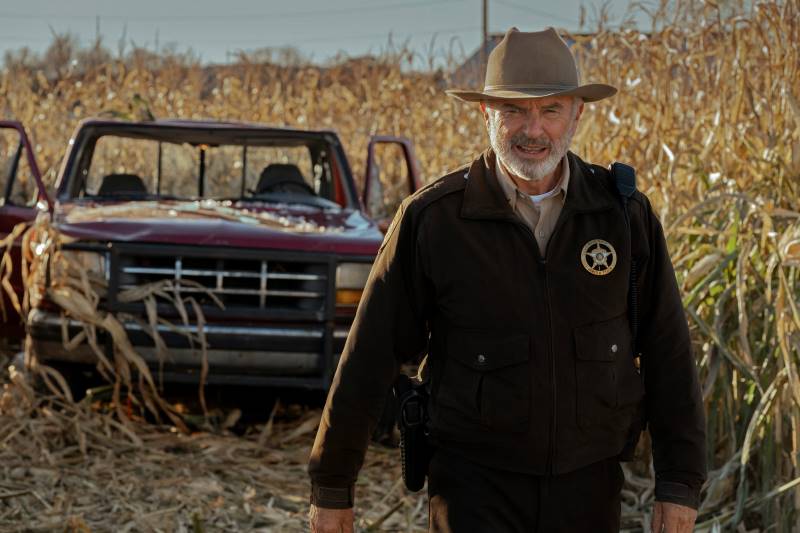
“All the other roles are with relatively new actors but it was important for the show to feel real to me and that was partly the reason for not casting big stars in the main roles. But, when it came to Sheriff Jim Bell Tyson, I wanted to cast that role a little bigger, perhaps for obvious reasons, yet I wanted it to be an actor who was also a character actor; a chameleon, someone who has done a lot of different types of work. Even with Jurassic Park, the thing that Sam is best known for – and I think the dinosaurs were the stars of Jurassic Park in many ways – and he’s able to bring a level of reality and nuance and texture to all of his characters in the way they all feel so distinct from one another. He’s an actor who’s interested in creating new characters and not just repeating himself. And so, for all of those reasons, when I looked at the list of potential actors that we had initially, like, if it was Clint Eastwood cast as the sheriff – you’d think of Clint as an entity separate from Sheriff Tyson – but what Sam brings is, yes, he’s a star and we all have a relationship to him, but his other characters aren’t cluttering your brain as you’re watching him inhabit this character fully.”
Invasion is very compelling in that it’s set in different countries where the actors are speaking their native tongue. But how did you arrive on the countries that are spotlighted in Invasion: Japan, Middle East, UK and two different US locations? Why not Australia?!
“I think that four or five storylines is about the maximum that an ensemble can handle before it becomes so horizontal that you can’t go deep and vertical into any one of those storylines or those characters. So, four or five storylines does limit the amount of locations and it means you’re going to skip a couple of continents that hopefully in a Season 2, we would be able to explore. We focused on those places not for any strategic reason other than – it’s hard to answer the question of where the characters come from when they’re original characters; they just come from your subconscious. It’s like they show up at your door in a way. So, these characters showed up as a small town sheriff in the American South, a Syrian-American family in Long Island, a bunch of kids from all kinds of different cultures in the UK, as a Japanese character and as an American soldier in the Middle East. It’s a lot of characters and a lot of continents, and we got to shoot in a lot of places, and I never imagined we’d actually have the opportunity to do that; I’ve never done that in any movie I’ve ever worked on before even on massive films. So, in the future, I think we could certainly get into other continents and Australia could well be one of them.”
Which was the most difficult character to cast?
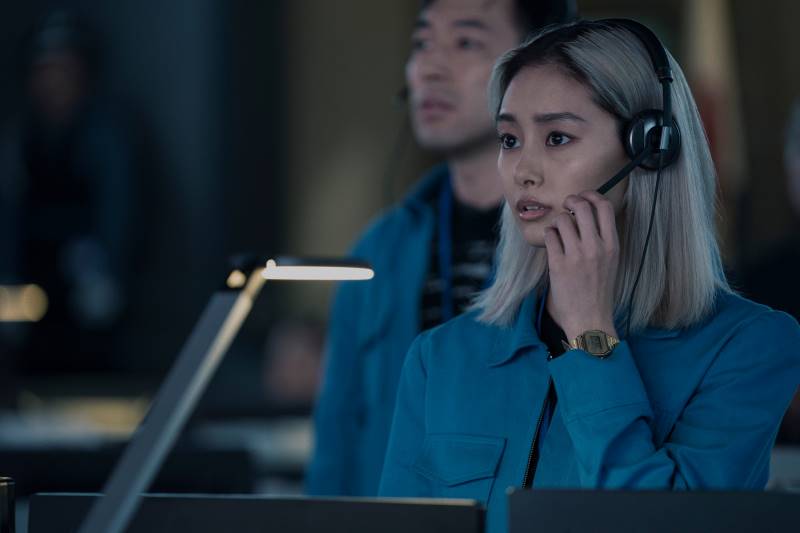
“Well, they were all difficult to cast because I was really hoping and looking for actors who could play a level of emotional reality and I also didn’t want stars, I wanted new fresh faces so there was a lot of work that goes into finding new fresh faces. It’s a lot harder than having a list of the 20 most famous people that you know. But I think the hardest character to cast was Mitsuki Yamato’s character, the Japanese technician because, 1. I wanted the character to be Japanese and speak fluent Japanese and, 2. I wanted her to have a really driven strength to her and a fragility and vulnerability that the character also has. Balancing those two things was very hard to find.”
Was it hard to cast the group of British kids who experience something akin to Lord of the Flies in the situation they find themselves in?
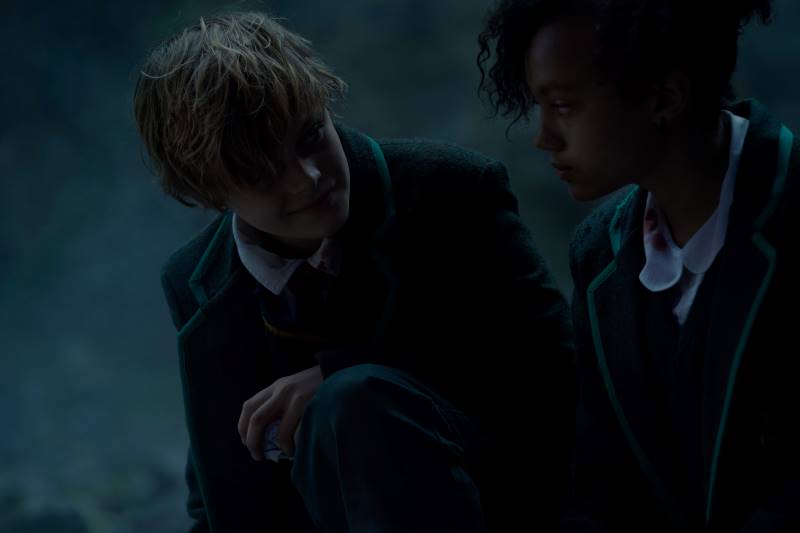
“Lord of the Flies is one of my favourite books and it’s something that I thought a lot about inside the kids’ story and, obviously, it doesn’t totally become that and they get out of their version of an island. But it was definitely hard to find those kids. Billy Barratt was an incredible find for Caspar and India Brown was a great find for Jamila which is a critical character, and Paddy Holland was a great find for Monty. When you’re casting kids, you’re really hoping for the best because one of the things that I find with child actors is a lot of them have been actors their whole lives and they can be too trained and rigid, and they don’t have the full life experience of grown-ups. So, they’re really relying on technique more than they are on pure instincts and we found these actors that are really instinctual, intuitive kids and really sunk into the characters. They actually were easy and really game for everything, and they were shooting outside of Manchester in the freezing cold in a rock quarry and the whole thing was an adventure for them.”
You’re a director as well as a writer and producer. What made you choose not to direct this?
“When it became time to shoot this, I was directing a movie called The 355 and I obviously couldn’t do both at the same time and I didn’t want the show to wait. Also, I really love working with directors and I thought this, as much as I had a really clear vision of what the show should feel like and look like, I was interested in somebody else’s perspective because this show is so much about different perspectives. I was excited about the opportunity to work with different directors who would bring their own vision to the show. And when I met with Jakob Verbruggen, who directed the first two and last two episodes of the season, he just had such a clear idea and he built on the ideas that I had. It wasn’t just him executing my ideas – it was really him building on those ideas and he has a beautiful touch visually and I think he did an extraordinary job; perhaps much better than the job I would have done because I’m a bit too close to the material.”
How did you create your alien? And what alien films have inspired you the most?
“There’s so many that I love. Ridley Scott’s Alien and James Cameron’s Aliens, but I would say the two that were the most influential specifically for this show was Close Encounters of the Third Kind, which is probably my favourite alien invasion movie, and Arrival which I liked a great deal too. The tone of those two were very character driven and intimate and real. That type of reality is compelling to me and felt very relevant to our show. But I like so many. District 9 is one of my favourite movies of the last 20 years but a very different tone than what we’re doing here. There’s been lots of great ones and what’s so cool about the genre is that they’re so diverse. District 9 is so different from Independence Day which is so different from Arrival and yet they’re all telling a similar story.”
The first three episodes of Invasion premiered on Friday, 22 October on Apple TV+, followed by new episodes every Friday.

