

by Julian Wood
People looking at Australian filmmaking from overseas might conclude that it is narrow, or that it chiefly deals with a small number of stock situations like suburban dramas or struggles in the outback.
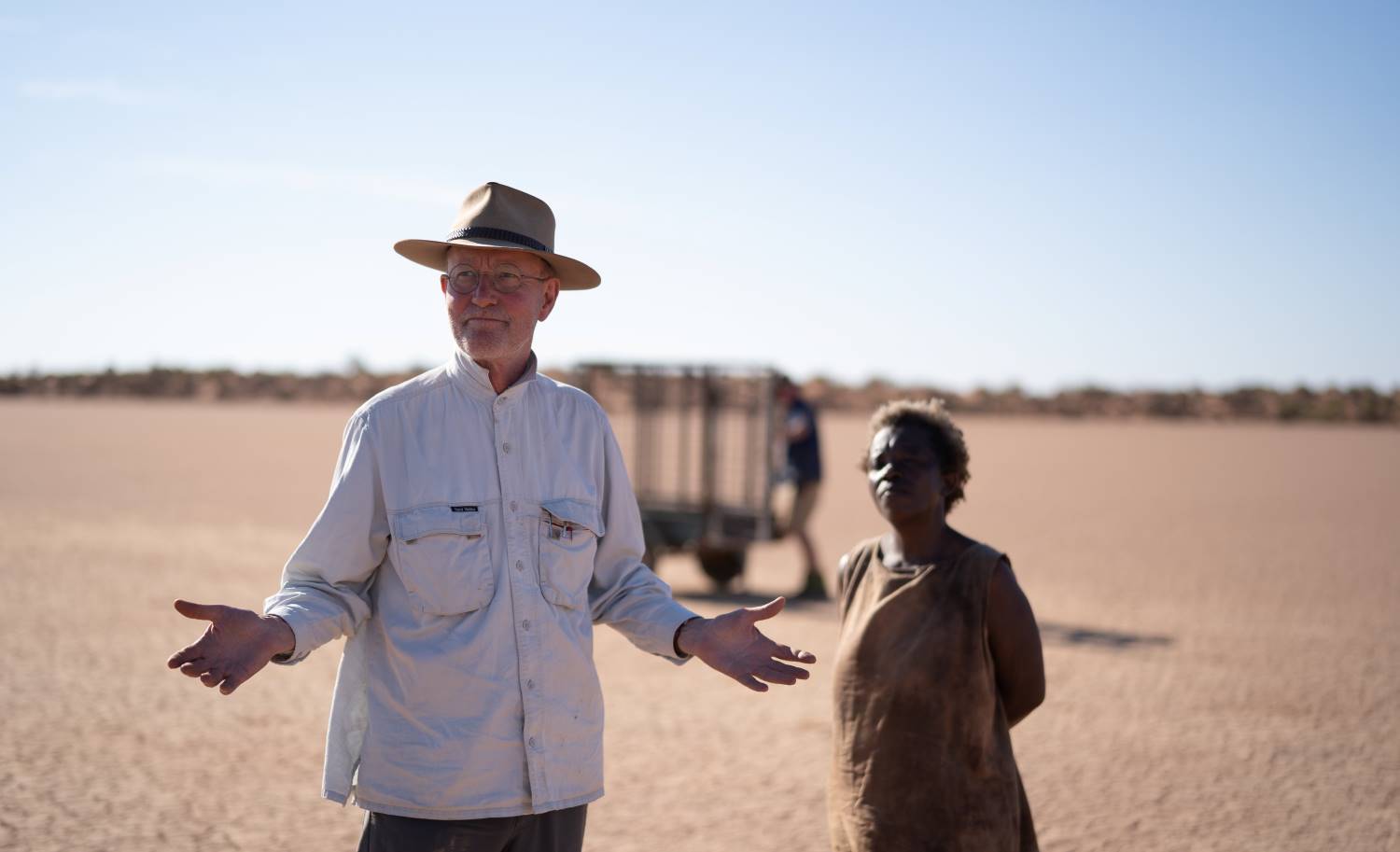
But Australian director Rolf de Heer is living proof that we can throw up all kind of filmmakers and all kinds of films. No one could accuse de Heer (Bad Boy Bubby, Alexandra’s Project, The Tracker, Ten Canoes, Charlie’s Country) of simply ploughing the same field. His films are both wild and wildly different. His latest is no exception. The Survival of Kindness defies description, but it is guaranteed to stimulate and divide audiences.
FilmInk spoke with de Heer, who turned out to be as fascinating as his films.
Tell us how you came to begin such a strange journey? What was the launching off point for you?
“The beginnings were inauspicious. I had a project that I had been working on for some years. I got the finance and then Covid scuppered that, and I was wondering what’s going to happen. Where is cinema going to go now? And I didn’t think that I would get to make that film in the way that I had originally thought. So, I needed to rewrite it.
“I thought I will make it in a different way and learn from that, and then perhaps apply it to another project. That was my starting point – to make a film in a different way and obviously it would have to be low budget. And I knew that I would have to make a film that could be ‘Covid nimble’, if we got locked down or had to move locations.
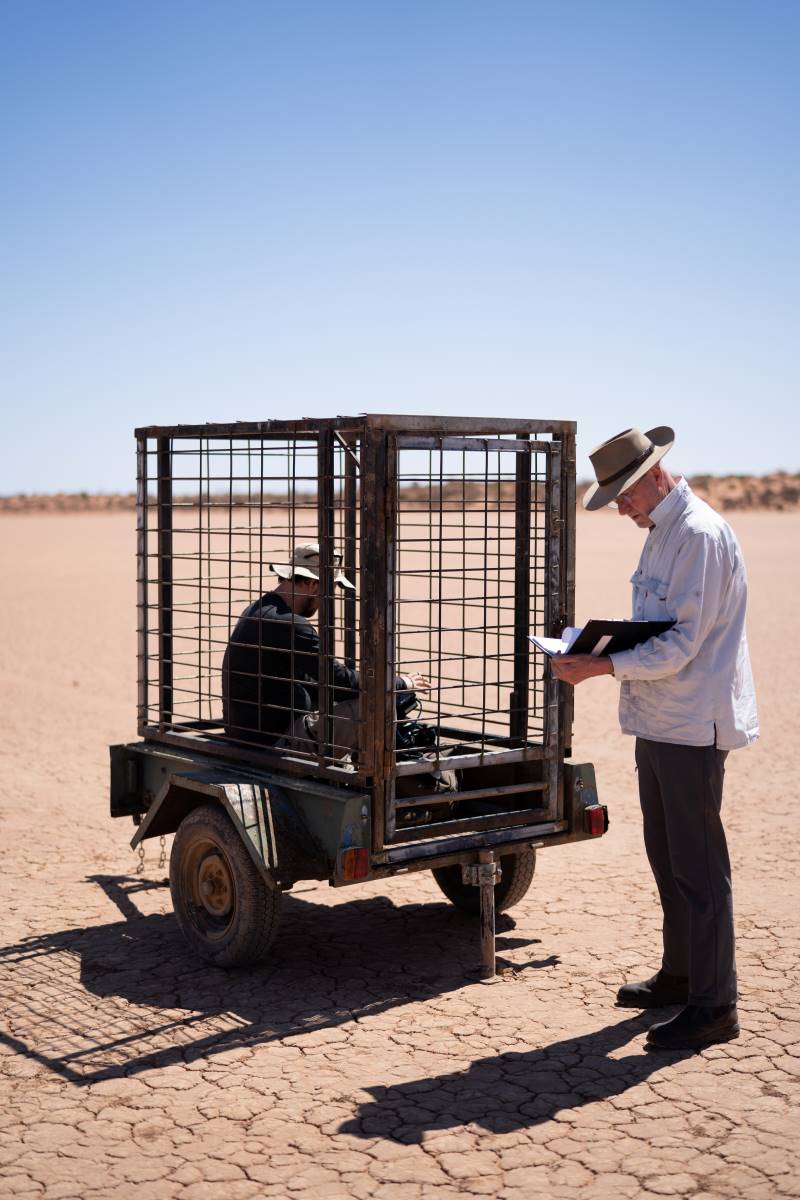
“I started to look for locations and see if they could inspire me. Living in Tasmania as I do, I started with Kunanyi/Mount Wellington. I would go there regularly, and I was getting to find some places that were really interesting. Then, one morning, an image came into my mind completely unasked for. It was an image of a black person in a cage on a trailer in the desert being left to die… I tried to ignore it, but the image persisted somehow. So, it became my starting point. Now I knew more about what the film had to be. I also realised that I might have to change locations, so I looked for ones in South Australia.”
That’s interesting, so does the protagonist have to be a woman?
“Actually, I wrote it initially for a particular man but then he couldn’t do it. Then I found someone who was really interesting and then I thought ‘why couldn’t it be a woman?’ And further, I thought, ‘why couldn’t it be this woman?’ And then it made sense that it was a woman. That time was the collision between Black Lives Matter and the pandemic. These were/are important items, vivid times. [De Heer describes some stories of what was happening to people under Covid.] These events seeped into where this film had to go.”
It sounds as if you are happy with happenstance, or at least that you don’t exactly over plan before embarking on your films.
“Yes, that’s true, but I have been privileged in my filmmaking. I have financed multiple projects without a finished script! If I have an idea and then I get the budget that I am after, then I can write the film. So, yes I do have that confidence. But with every script, I have the feeling, the belief that it is going to get made. There is too much hard work involved for that not to happen. But of course, not all of them do get made [laughs]. I have a dozen scripts that didn’t in fact get made.”
In this one, are you trying to realise a whole world, a dystopia?
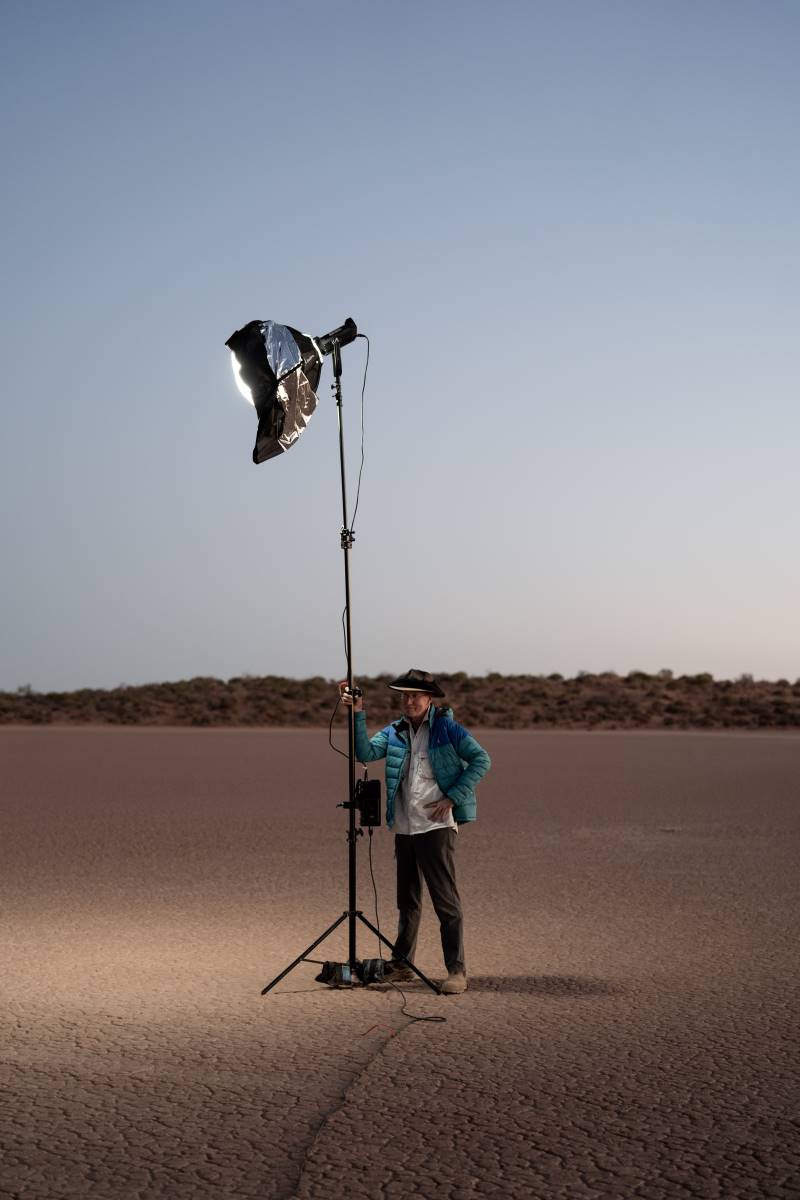
“It is all about how it evolves as an idea. With this film, I didn’t know which time to set it in, so I set it in ‘no time’ and then the idea of ‘no place’ followed. There are things in the film that could have taken place in lots of other times or places. Once I had let go of being place-specific, it was quite liberating.”
Do you want the audience to work with the symbolism and to construct meaning and narrative using that?
“Funnily enough, I don’t work with symbolism at all. People talk about those aspects in my films, and I can honestly say that I didn’t think of that consciously at all. But the symbols could be there. There could be things where I think later, ‘yes, that was part of something that was in my mind’. In this film, I know precisely what works for me. But I need to do it in a way that I can still be comfortable with the mysterious element that is there.
“Those things [themes/metaphors etc] are important perhaps to me when making it, but not important for an audience viewing it. You don’t need to know what was in my head. So, why not leave it a little open and see where it wants to go? I don’t write chronologically. I usually write in a completely nonlinear way. I write with cards on the wall and so on. Except strangely, in this one, I was more chronological, which is quite contradictory. Normally, I would need to have a knowledge of the ending but here, again, this was not the case. It’s that sort of ‘journey film’ where it can be like that. The only thing that really matters is, does it work? And if it doesn’t work, I toss it out and I don’t look back or ask why. I only ask, ‘do I like it or not?’ The feel of where it was going was a bit more open in my mind.”
Without giving spoilers, the film is sort of circular?
“Well maybe. It ends in the only place it could end. But you don’t need to know that, because you need to find your own film.”
So, you end up with a film that is deliberately under-explained and which could mean so many different things?
“It was a film where I could let go of pinning things down. I am always interested in how differently audiences see things. If you show a film and there are 200 people in the audience then there are, or could be, 200 different films. That aspect never ceases to amaze me.”
Well, it will be interesting to see what people make of it!
“I know already from enough interested people who have seen it that there are people who already hate it, but there are also people who love it; who are absolutely passionate about it.”
