



by Gill Pringle in LA
What would you sacrifice for perfection?
That’s the question posed by Ryan Murphy’s sleek, slightly sci-fi show, The Beauty. On first glance, it seems like a superficial show about gorgeous people set in glossy locations, with a cautionary message tucked somewhere underneath. But once you settle into the series, it becomes clear that this is a much darker, sharper story than the title suggests.
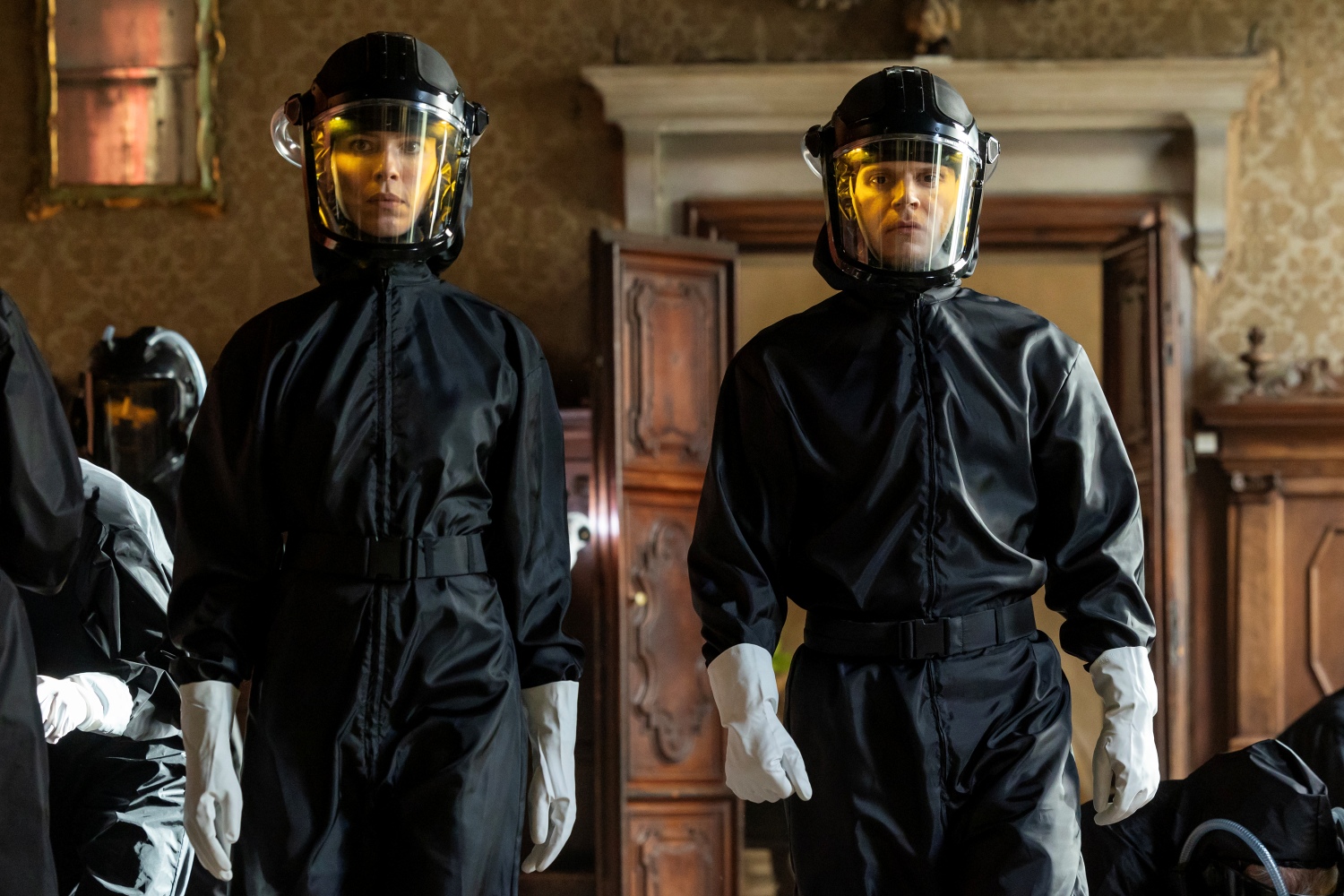
The narrative begins on the Paris catwalk where the world of high fashion turns black as international supermodels begin dying in gruesome and mysterious ways.
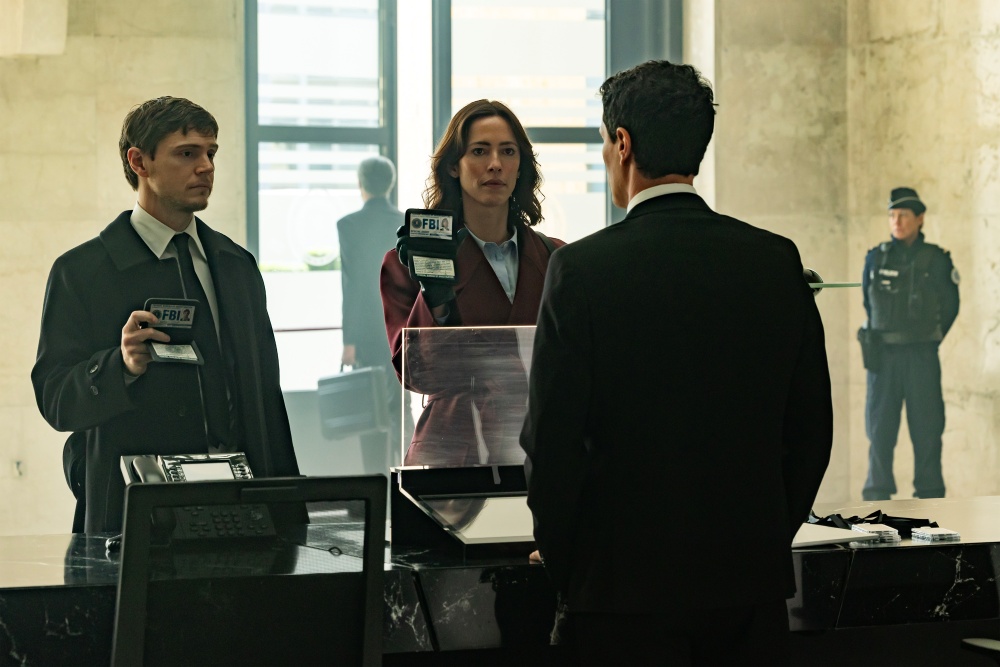
FBI Agents Cooper Madsen played by Evan Peters and Rebecca Hall’s Jordan Bennett are dispatched to Paris to uncover the truth. Delving deeper into the case, they discover how a sexually transmitted virus has been transforming ordinary people into visions of physical perfection, but with terrifying consequences.
In the era of Ozempic, botox, fillers and a myriad treatments and surgeries promising the fountain of youth, The Beauty offers a bleak, and sometimes hilarious, look at the lengths that people will go to seek perfection.
“Ryan Murphy has a nose for the zeitgeist and what is current and he makes it subversive and provocative and worth discussing,” says Rebecca Hall.
“I think that there’s a lot to be said about it, the sort of chase for perfection and what that means, and also the commodification of beauty. I think human beauty is a conceptually complicated thing. It’s not like nature. It’s not like looking at a sunrise or something that’s subjective. It’s subjective.
“So, the idea that you can pay for perfection, and therefore you’re handing over your idea of it to someone who is taking your money and might want more of it, is complicated. Like, what does that mean? How does it shift? What does it change? Because, frankly, I think keeping people in a place of inadequacy is more profitable,” she suggests.
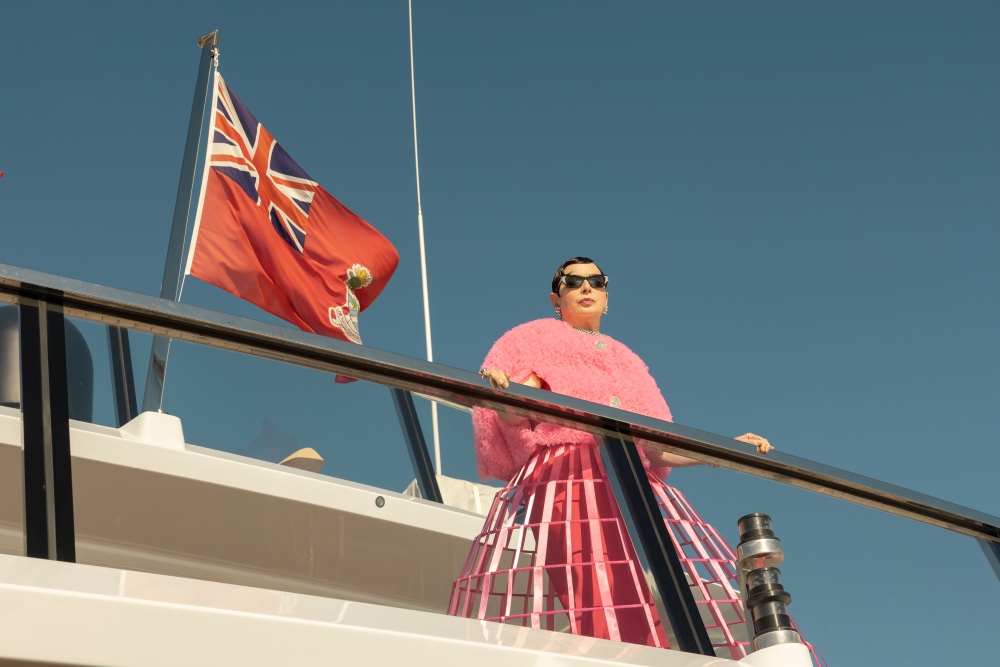
As our two FBI agents are left with more questions than answers, their path leads them directly into the crosshairs of Ashton Kutcher’s “The Corporation” – yes that’s his name – a shadowy tech billionaire who has secretly engineered a miracle drug dubbed “The Beauty,” which he uses liberally on himself. He will do anything to protect his trillion-dollar empire – including unleashing his lethal enforcer, Anthony Ramos’ “The Assassin” to do damage control.

“I think that we’re living in a world where GLP-1s are pervasive,” says Kutcher. “You know, the demand for Ozempic, and Wegovy and Mounjaro and all of these drugs, and some of them are for health complications – others are just for aesthetic outcome.
“And then we have this increasing demand for cosmetic surgery, including tourism for cosmetic surgery, and people augmenting themselves in order to achieve a look or a feel or a vibe that they think will give them some sort of advantage, or maybe it will just make them happy,” says Kutcher whose ex-wife Demi Moore received an Oscar nod last year for her role in The Substance, a movie with similar themes.
“And then you start to ask questions like: Is that so wrong? And then you add on top of it – gene editing, which is happening in the world today, which can make you healthier or if you have sickle cell anemia or some other genetic defect that you can solve,” he argues.
“You start to amalgamate all of that into one thing, and it’s a shot, and it’s called ‘The Beauty’. And the question is: What are you willing to sacrifice for that? And what risks are you willing to take?
“I think that’s incredibly poignant. Ryan always has his finger on the pulse of the decisions that we’re all making on a daily basis, like, what skin cream am I going to use? What kind of shampoo am I using? Like all of these things that are daily decisions, this show gets underneath and explores it and makes you ask those questions about yourself and about what your worldview is,” says the actor whose wife in The Beauty is played by Isabella Rossellini.
A glossy thriller series, we follow the two agents – whose partnership comes with benefits – as they race across Paris, Venice, Rome and New York to stop a threat that could alter the future of humanity.
The central hook is brilliantly simple: in the world of The Beauty, physical attractiveness isn’t genetic or random. It’s something you can catch. Beauty is a sexually transmitted condition, and once you have it, you become physically flawless. No wrinkles, no blemishes, no asymmetry – just instant, head-turning perfection. Naturally, society doesn’t treat this as a problem at first. It treats it as a miracle.
What the show does well right away is explore how quickly “beauty” turns from gift to obsession. Entire industries rise and fall overnight. Social hierarchies are rewritten. People who were once invisible suddenly hold power, while those who don’t – or won’t – get “The Beauty” are left behind. The series is smart enough not to spell everything out; instead, it lets you watch the chaos unfold through characters who are trying, and often failing, to keep up.
And, if fashion and Hollywood, are professions that can rise or fall on physical perfection, it’s almost a meta experience when we talk to The Beauty cast.
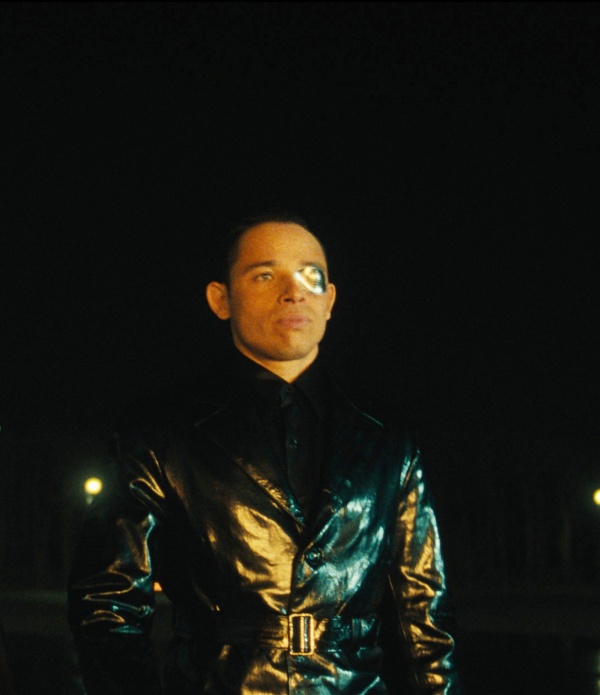 “I mean, just the other day, my stylist is like, ‘Hey, we have a photo shoot coming up. You should get a facial’. And apparently, I get to the facial, and he’s like, ‘Yeah, she flushed your face, right?’ And I’m thinking to myself: Was I looking puffy before, you know?” says Anthony Ramos.
“And then there are these things they have, like sculpting, and then they have shots where they can put collagen in your body. We now live in a world where there’s Botox and the tummy tuck, and now you got Ozempic.
“There’s so much available to us that can enhance our beauty or that we could take to essentially make us the person that we’d like to look like on the outside. I think that society kind of tells us what we should look like on the outside a lot of times.
“And I think that instinctually, we kind of put that pressure on ourselves, like, maybe I’m not skinny enough, or maybe my face isn’t trim enough, or, yeah, maybe I’m looking a little too puffy. Let me get this facial to flush my face, so on and so forth. It’s a part of our culture in a big way. And I think that this show talks about that on a deep level,” says Ramos.
Ultimately, The Beauty works because it understands that horror doesn’t always come from monsters. Sometimes, it comes from desire. The desire to be seen, to be wanted, to be flawless. By turning that desire into something contagious, the series holds up a distorted mirror to our world – inviting us to look a little closer at what we are chasing, and why.
The Beauty is streaming now on Disney+
