


by Dov Kornits
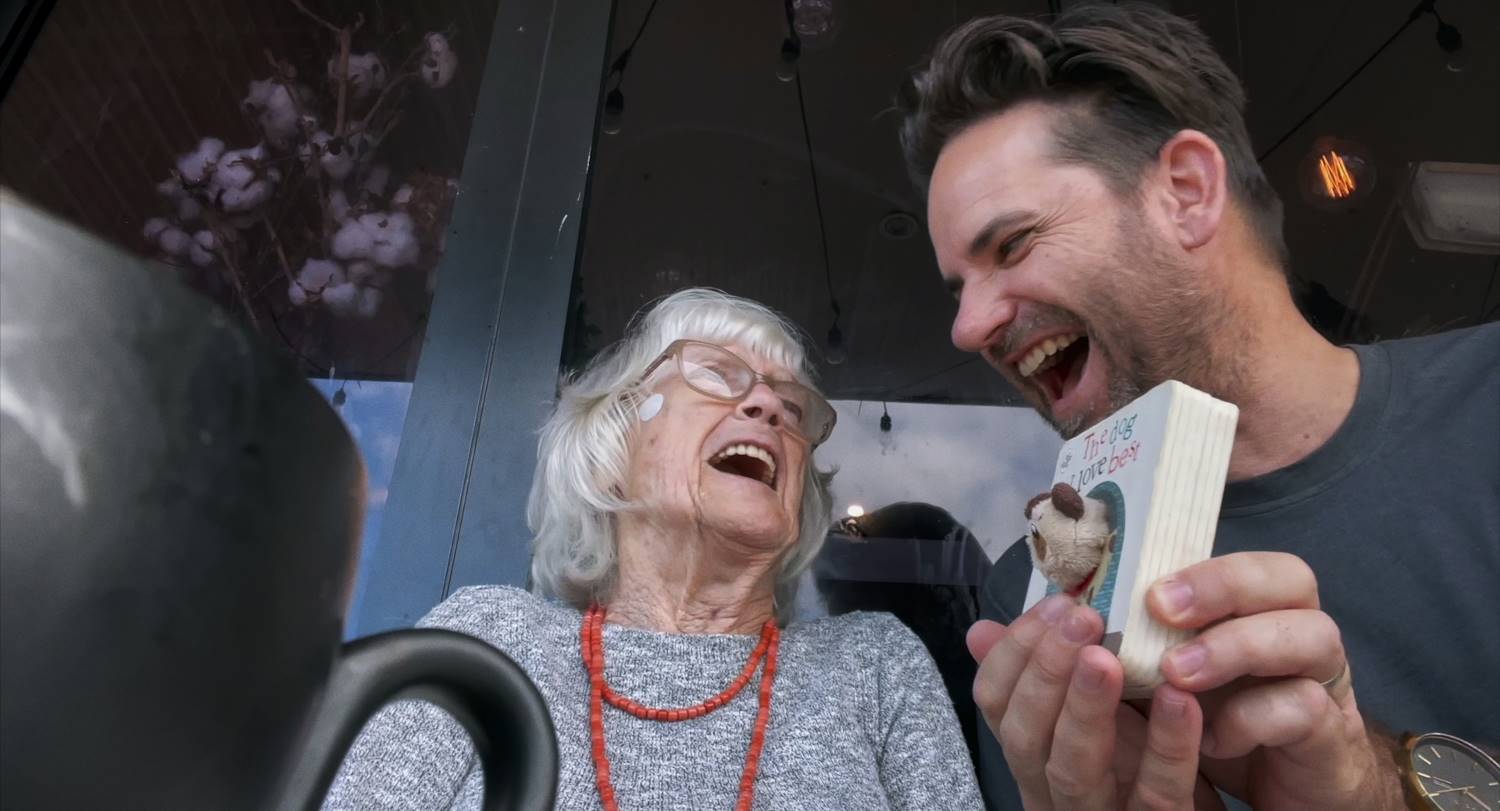
“The first video we shared on Facebook because we felt it was a moment of pure joy amidst a sea of pandemic drudgery,” says Australian filmmaker Jason van Genderen about the oft asked question of why post a video of his grandmother, who was living with his family at the time and in the midst of Alzheimer’s. “There wasn’t much joy on our small screens back in April 2020, and the experience we had with making the home supermarket at home for Oma was just too magical to not share. Mind you, we had no plans or idea of what that was to spark too… it was all completely serendipitous.”
The video went viral, reported on news channels around the world, and today we are speaking with Jason about his feature length documentary Everybody’s Oma, which follows his family’s journey of caring for their beloved matriarch.
A highly regarded commercials, branded content and shorts filmmaker, and ambassador for smartphone filmmaking, van Genderen recorded the entire journey, which had to be whittled down to feature length, but there were also other considerations, as he tells us.
“Our post production team really held our family’s safety and consent close to heart. Of the 300+ hours of footage our editor Gavin [Banks] sifted through, we always weighed each scene’s inclusion against three values. 1 – Was this scene made with love or something else? 2 – Did this scene help educate what living with dementia is like, and the roles of family as carers? And 3 – how would Oma respond to seeing the scene when she was fully cognitive? We absolutely had material that was either too raw or too graphic to show with those filters in mind. Once we illustrated a point, we moved onto the next part of the story. We only show one ambulance trip in the whole film, there were countless more but showing a multitude of those doesn’t advance the story. Once the audience clocks a conceptual part of the narrative, we move forward to the next. Gavin was also co-director on this, so if judgement calls needed to be made that felt too close to me – because I was in the scene – then we reverted to Gavin’s take on it. And Megan [van Genderen, Jason’s wife, producer and key character] ended up with final say over everything. As our kids’ mother, as co-carer of Oma, as a matriarchal eye – she deserved that autonomy to ensure the family’s story was created in a safe space.”
Does your family get annoyed with you for always shooting everything? Do you have strategies for the camera to be out of sight?
“Not so much annoyed but more like ‘Oh here goes Dad again filming everything!’ Our whole family ended up getting involved in capturing pieces of story, it became both a creative tool within lockdown as much as it was a cathartic way of video diarising thoughts, feelings, complexities. Megan picked up the camera almost as often as I did, so we had a unified approach to the value of that documentation. The camera usually remained out-of-sight because we would be carrying it and standing behind it, it’s a hyper-real first-person observational perspective. And we ensured we filmed the tough stuff, not just the lighter moments. It was important to show the breadth of the journey we were on so we could also validate the lives and journeys of families everywhere caring for someone. Anything less would have been a curated, sanitised portrait.”
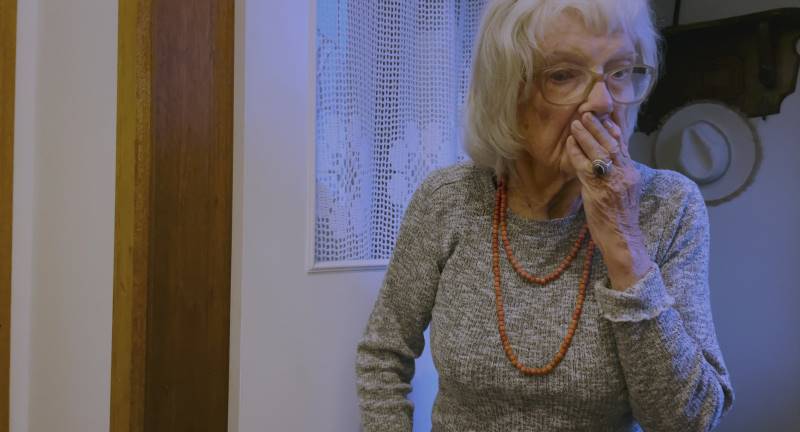
The film touches on the big contemporary issues of carers as well as Alzheimer’s. Which do you think you lean into more in the final film?
“Both. They go hand-in-glove. Alzheimer’s (and any form of dementia) takes a community of care. There’s 1.5M everyday Australians involved in the care of someone living with dementia, and more broadly than that, 2.64M Australians identifying as Carers of any kind. That’s by no means a minority representation. Yet trying to find real stories about carers and dementia that faces the big questions head-on are rare. More broadly, Everybody’s Oma is a story about our capacity to love deeper than we ever knew possible. I feel every family would take away something unique that mirrors their own lives in some way.”
How hurtful were some of the online comments that you were getting when you were in the thick of it caring for Oma?
“I haven’t met anyone who enjoyed being trolled online, so yeah, it’s painful. But it’s also a reality of sharing a story in a digitally connected audience like social. You’re not always in control of where people come across your content. If they find you when you’re having a low day, they’ll judge you by that. If they see you at your best, they’ll take that too. The lesson I learnt from this was to tell your story as completely as you can each time you show up on social media, you need to prime with situational context. Facebook is a membrane, a two way conversation… not a podium or a lectern.”
Online is a community, which you mention a number of times in the film, but is it really? When you’re in the thick of it, they’re not really there, are they? Can you comment?
“No, they absolutely are a community. They are there in the thick of it, but you tend to be more affected by the critical remarks than the complimentary ones. Our Oma’s Applesauce followers defended us passionately by responding to any trolling remarks, they had our backs. But a community – when it gets large – can become challenging to respond to. You feel an overwhelming responsibility to reply to people who take great time and thought to share their stories with you or offer ideas and support. When there’s 50 of those to write back to, that’s achievable. When it’s 5000, it’s impossible to maintain that personal contact. But we try our best and our community understand, they’ve been wonderful.”
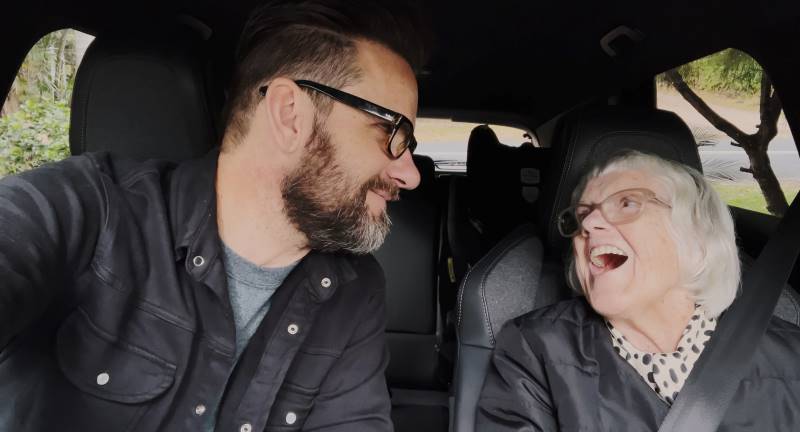
The film doesn’t really touch on the whole Covid craziness surrounded nursing homes. Are you able to discuss whether this impacted your family at all, and was there consideration given to including that in the film?
“I think the stresses surrounding aged care communities during Covid was something already well reported in mainstream news, and we didn’t feel that added to the family’s personal narrative with Oma. Yes, Oma unexpectedly endured 107 days of lockdown the day after we moved her into her care community, but the staff were also incredibly supportive and creative in how we managed window visits. We were even allowed to bring Oma’s cat (Hailey) in for weekly visits to Oma and the home ended up adopting her!”
You were an advocate for shooting on a mobile for many years. What are your thoughts on where things are at right now with the tech and use by filmmakers? Do you hope that Everybody’s Oma is a particularly progressive example for the filmmakers of tomorrow?
“I remain a passionate advocate for films to be captured on a wider range of tools. It’s not the camera that makes the film, we all know that. But what a camera (such as my iPhone) does enable is a unique access and infusion within an observational documentary like Everybody’s Oma. When the tool does that, it deserves a more serious consideration – because it’s an enabler of a style of story capture that’s not achievable with more conventional cinematography tools. That doesn’t mean I don’t love other cameras of course, but it means I’m absolutely open to what I call an ‘ambient’ storytelling capture that an iPhone empowers creatives with. It’s immersive, playful, fast and forward moving… who doesn’t like a camera that ticks all those boxes? I hope future documentary filmmakers see our film as an example of a new liberating production aesthetic. It’s created its own style, and perhaps what I call ‘ambient filmmaking’ may spark its own genre.”
Did you encounter any issues in the process due to shooting the film on a phone camera? And can you discuss the tech used?
“I’ve shot high-end commercials and content on smartphones using all the expected bells and whistles, we can accessorize with any number of high-end help to lift the audio, lensing, stability and lighting needed. However, shooting Everybody’s Oma was a little different to that, in fact a lot different. I didn’t even have time to use third-party recording apps (such as Filmic Pro) which give us very granular controls over the iPhone’s camera. When we were shooting this observational story, the sincerity in documenting meant we literally only had time to activate our iPhone’s native camera app and press record. Any longer than those spare seconds and the moment would have passed us by. That was the strength of the device… it was the only tool that allowed us that kind of immediacy and intimacy. We did encounter some technical challenges of course… the main one being how do we conform and transcode footage shot across a 10 year window of iPhone clips… from iPhone 5 to 13? We had varying resolutions, codecs, frame rates – but to be honest, I think our post-production team did a sterling job creating a wonderfully cohesive look across all those hours of vision. I know our editor Gavin Banks wished I shot more coverage for key moments – but again, when you are inside the journey of capturing your own daily joys and dramas, it was all about being present in the moment, the camera had to come second.”
What’s next?
“To be completely honest, I’m an open book right now. I feel the need to learn from this incredible experience of making the documentary and releasing it into the world. If it finds an appreciative audience, and if it can contribute to some meaningful change in the way we look after our elders – then there’s more stories we need to tell. If we think of our documentaries as long conversations that have the potential for reaching those most needing to be brought into the room, then that’s a wonderful thing.”
Everybody’s Oma is screening at CinefestOZ and in cinemas now
