



by Erin Free
US director Steve Balderson cannily crafts the zeroes and ones for his new sci-fi feature Brainstare, which was generated entirely by Artificial Intelligence…but with human hands and minds very much in control.
“Brainstare is not about AI,” says director Steve Balderson. “It’s about us: our obsessions, our compliance, our surrender. The machine doesn’t replace the human. It reveals the human.”
Artificial Intelligence, AI, is the new cultural frontier…a place of seemingly infinite possibility, but also one riven with controversy, fear, paranoia and uncertainty. Will it help humankind flourish, or overtake us? And what does it mean for the arts, and those who create it? Film director Steve Balderson made the bold call to meet these concerns head on with his new film Brainstare. A pioneering first, every image, every performance, and every frame of Brainstare was generated entirely by Artificial Intelligence, but the entire project was conceived, written, directed, and edited by humans.
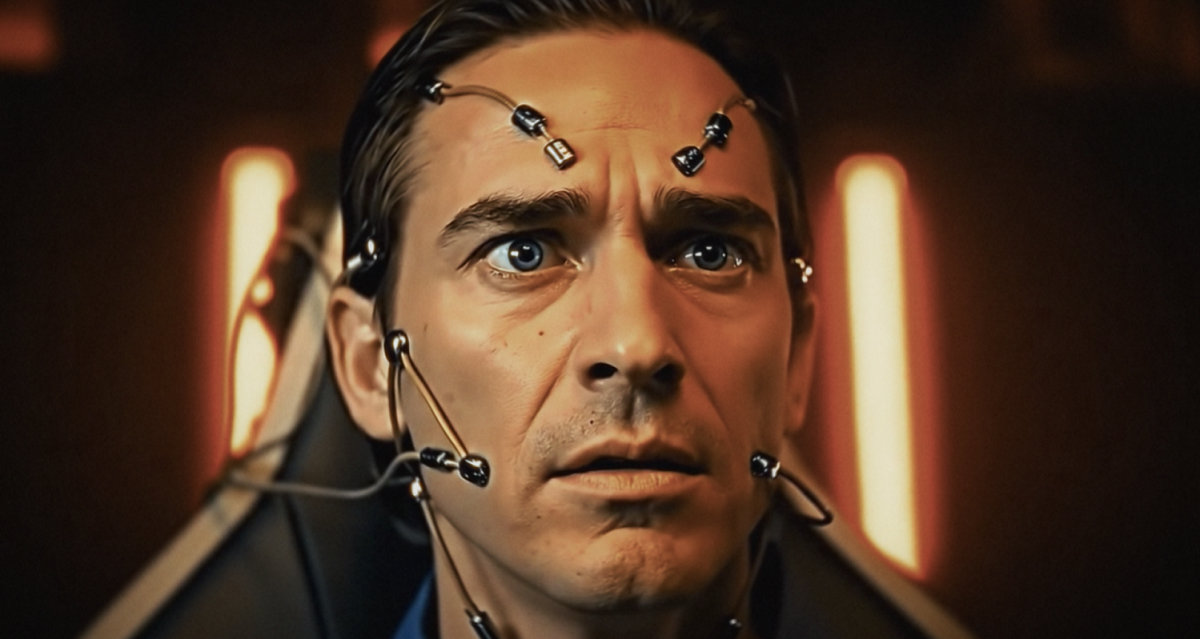
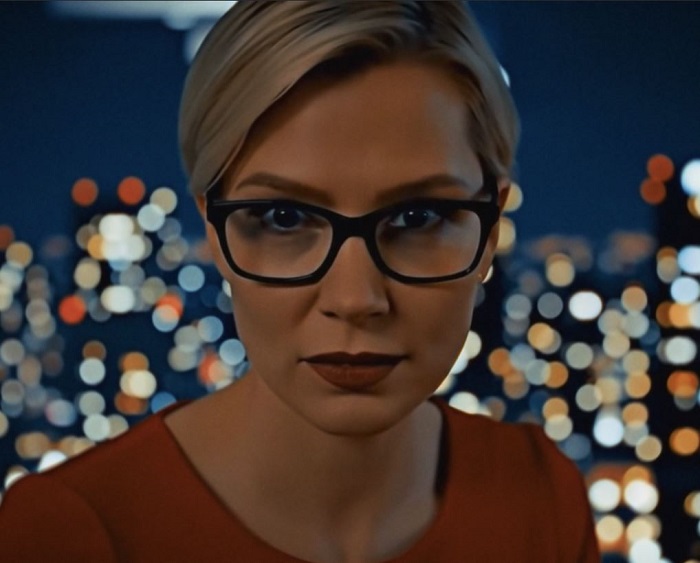
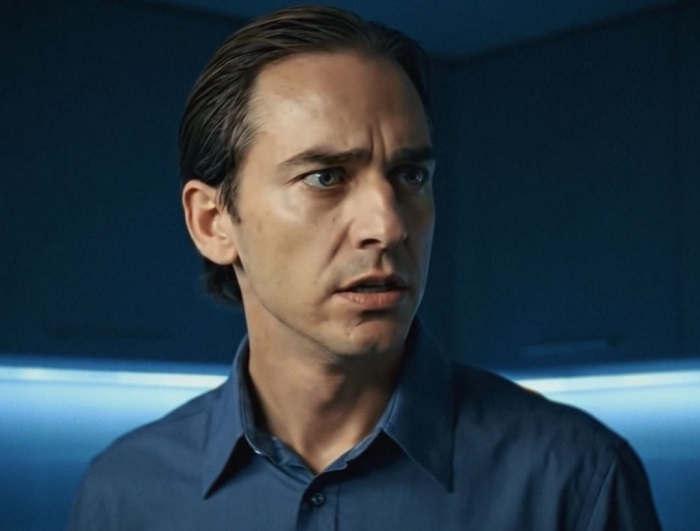
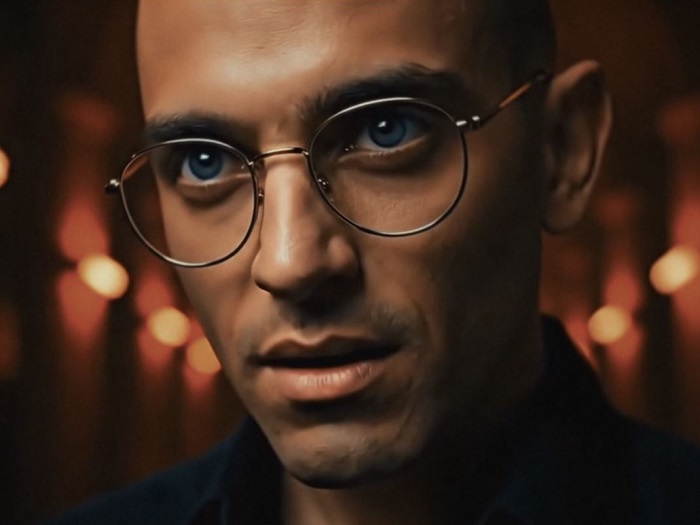
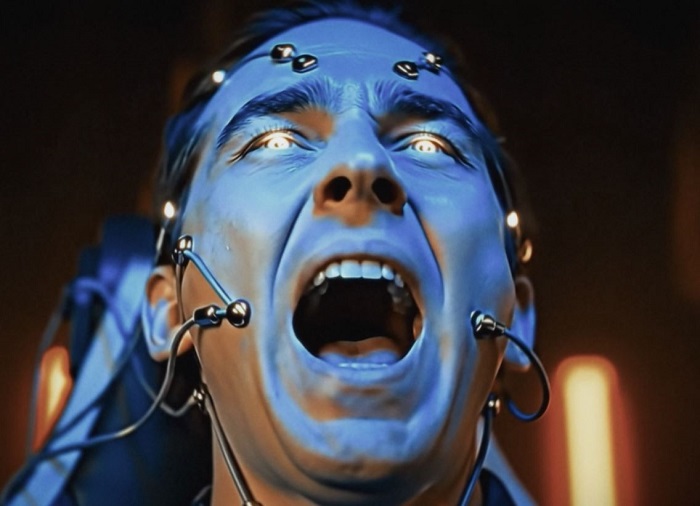
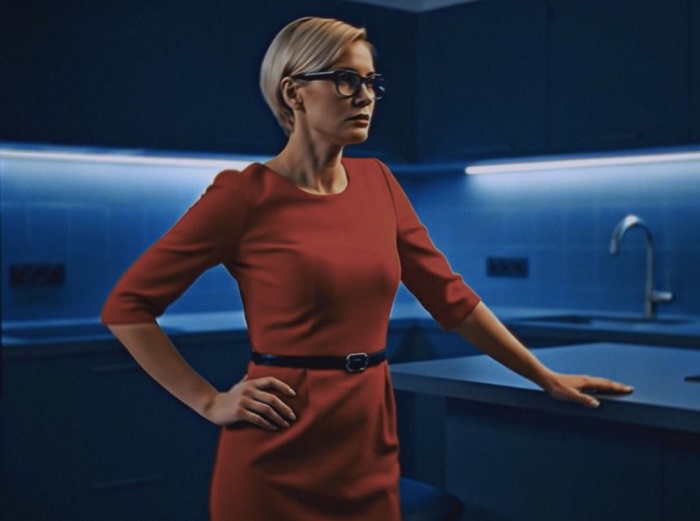
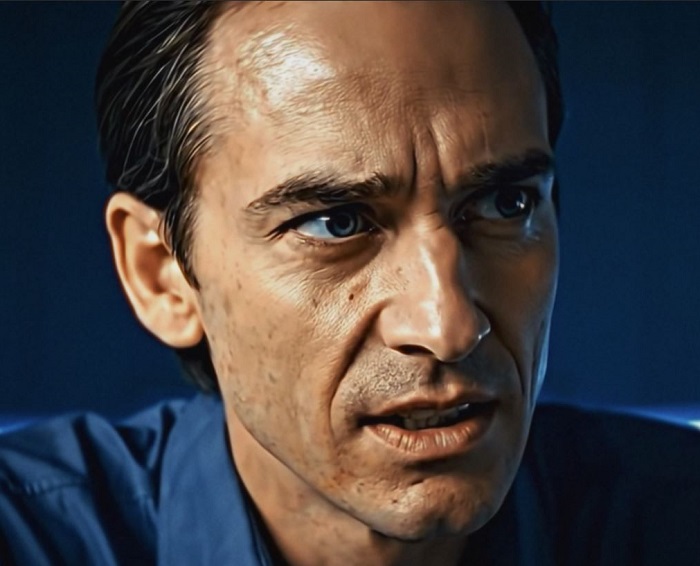
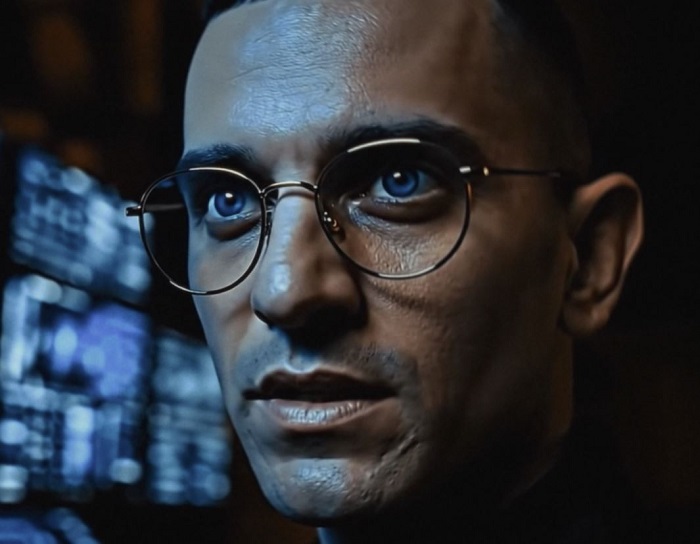
The veteran of a number of traditionally crafted independent features (2024’s Sex Love Venice, 2022’s Alchemy Of The Spirit, 2005’s Firecracker with Karen Black and Mike Patton, and many more), Kansas-born Steve Balderson teamed with screenwriter Joseph Suglia for the complex sci-fi thriller Brainstare. Set in a chilling corporate world where consciousness can be scanned and sold, Brainstare follows Anthony, an employee under evaluation for potential misconduct, and Sheba, the superior who interrogates him in increasingly dangerous mind games. Their escalating battle culminates in the activation of the Brainstare machine – a neuro-scanning device that pierces the human mind and exposes the hidden architecture of guilt, memory, and control.
In both form and content, this is a brave new world indeed…
What was your inspiration to create a feature using AI? Was this something that could only be done using AI? Or is AI just a tool?
“My inspiration came from pure curiosity – the urge to see whether a feature-length film could even be made this way. To me, filmmaking has never been about what tool you use. It’s about what you create. AI is a tool – a powerful, strange, exhilarating tool – but a tool nonetheless. It’s no different from choosing to shoot on a RED versus a Sony, or 35mm versus digital. Audiences never walk out of a cinema saying, ‘What brand of camera was that?’ They care about the emotional experience, not the machinery. What drew me to making a feature with AI was the opportunity to build a kind of cinema that simply wasn’t possible before – an ‘impossible film’, both visually and conceptually. Brainstare relies on a sense of heightened unreality; its imagery is part of its psychological architecture. In fact, I’m fairly certain this screenplay couldn’t have remained intact in a traditional production. Human actors and crew would have inevitably softened or literalised it. AI allowed the film to stay true to its own logic – and that’s the only reason the film exists at all.”
Your story is very much tied into technology/futurism etc…did you see that as a must in making a film in this way? A romantic comedy wouldn’t really work…
“Absolutely. The subject matter and the medium needed to speak to each other. Brainstare is a story about consciousness, surveillance, psychological distortion, and the fluidity of identity – all ideas that naturally intersect with the language and aesthetics of AI. I didn’t want to use AI as a gimmick or a surface gloss; I wanted the technology to deepen the meaning of the film rather than just decorate it. Could someone use AI to make a romantic comedy? Of course. And I probably will someday, but I’d reserve AI for stories that are either impossible to finance or impossible to execute on an indie level. A rom-com is something most filmmakers can realistically make without AI. But Brainstare is different – the technology isn’t an accessory. It’s woven into the DNA of the narrative. It’s in the imagery, the cadence, even the paranoia of the dialogue. The story and the toolset are inseparable.”
Like all films, this was a huge undertaking, but could you give us a basic sketch of how you created Brainstare utilising AI? What was the basic process?
“The process looked nothing like conventional filmmaking, yet it preserved all the core creative steps. Joseph Suglia wrote the original play and screenplay, which already had a very specific psychological rhythm. From there, I approached the project exactly as if I were prepping a live-action shoot: I spent months building storyboards, mapping blocking, designing lighting, choosing texture, and determining the pacing of each moment. Then I created a consistent visual library: ‘actors’, environments, symbolic imagery, and a whole set of aesthetic rules the film would follow. Instead of casting performers, I essentially designed them. Instead of scouting locations, I created them. Every element had to remain cohesive across hundreds of shots, which became its own kind of logistical challenge. Once all that groundwork was laid, I used AI models the way an animator or visual artist might: as a responsive tool that could interpret direction. Every shot was crafted through prompts that controlled performance, blocking, lensing, movement, and emotional tone. It was incredibly hands-on – more like sculpting than simply typing words into a machine.”
Did you find that you could achieve most of what you wanted to achieve using AI? Did you have to make compromises, as with all films?
“In many ways, I achieved more with AI than I could have with a traditional production. The limitations became part of the aesthetic. Strangely enough, this was the first time in my career where I could create something exactly as I envisioned it in my mind – without compromise, without negotiation, without the usual industrial interference. Whenever the AI model resisted something, I leaned into the resistance. It became a new form of directing. I had to learn how to communicate emotion and intention in entirely different ways. If I prompted an emotion like ‘anger’, the AI actor might return something unexpectedly adjacent or completely wrong. So I refined my language, adjusted, and redirected in the same way you do with human actors, except with one key difference. And here’s the truth actors don’t want to hear: AI actors don’t talk back. They don’t complain. They don’t show up late, rewrite your lines, or drag the film off-track because of ego. They just work. Endlessly. Precisely. Without chaos. For a director, that’s both liberating and a little terrifying…because once you’ve experienced that level of control, you realise how much of traditional filmmaking is spent managing everything except the film. One thing I’m especially proud of: every single word of Joseph’s screenplay is in the final film. Not one line was cut. Nothing ended up on the cutting-room floor. His writing has a very specific rhythm and density, and AI allowed me to preserve it intact; that’s nearly impossible when working with live actors, schedules, budgets, and all the variables of a physical production.”

Did you ever find the process frustrating, and if so, in what way?
“Absolutely. AI can be unpredictable. Sometimes it gives you exactly what you ask for; sometimes not. But the real frustration was the censorship. AI models are wrapped in so many ‘moral’ safety rails that they start to feel less like tools and more like the church. The list of ‘forbidden’ words is astonishing. Not just the obvious ones like cursing, sex or violence, but everyday, harmless human concepts: stripper, kiss, even certain adjectives that imply emotion or touch. It was mind-blowing. When your screenplay requires specificity – and Joseph Suglia’s writing absolutely does – those guardrails become suffocating. The AI tried to block everything: the genuinely R-rated moments and the perfectly innocent PG-13 ones. It kept insisting things were ‘against the rules and regulations’ even when the content was milder than network television. But I still got every single scene on screen, exactly as written. I just had to outmanoeuvre the system to do it. I had to rewrite prompts, disguise intentions, build elaborate detours around forbidden language. It forced me to become a different kind of director – part filmmaker, part hacker, part magician. And when I finally managed to trick the model into giving me the exact moment I needed, I screamed with joy and immediately backed it up in multiple places, just in case the AI decided to become morally offended again. The censorship was maddening…but beating it was exhilarating.”
The visuals look astounding…were you surprised by the polish you can achieve with AI?
“Thank you. I was genuinely surprised by how quickly the technology matured. When I first started experimenting, I assumed the final product would feel raw or glitchy — more like a test reel than a feature. Instead, the film developed its own visual grammar that felt deliberate: painterly, architectural, and eerily precise, almost like dream-logic rendered with mathematical clarity. I expected ‘experimental’. What I didn’t expect was ‘cinematic’. I also made a very deliberate choice to ensure that every element of the film was generated using AI – not just the visuals. The sound design, the music, the voices, all of it. It would have been easy to record my own voice or bring in VO actors and simply use AI as a layering tool, but that would have undermined the conceptual integrity of the project. For Brainstare, the experiment was the art. It’s written, directed, and edited by humans, but entirely realised by AI. And that purity of approach became part of the film’s identity.”
What are your plans with the release of the film? Has there been much push-back at this stage? Or interest?
“There has definitely been some push-back, and honestly, it feels very familiar. My first two features were shot on 35mm because HD didn’t exist yet. I lived through the moment when people said digital wasn’t ‘real cinema’, when streaming wasn’t taken seriously, when entire careers were built on insisting that if it wasn’t 35mm, it didn’t count. The same voices who rejected those shifts are now insisting that AI is illegitimate. History repeats itself. As for release plans, I’m using an aggregator to put the film on global streaming platforms. At the moment it’s available on Vimeo on Demand and the Relay app. Beyond that, I’m genuinely curious to see which platforms embrace it and which avoid it. I don’t yet know who in the industry is anti-AI and who is simply excited by innovation and evolution. My father told me, ‘Pioneers get arrows.’ And it’s true – every major shift in anything begins with resistance. But those arrows also mean you’re walking into territory no one else has mapped yet. That’s part of the thrill.”
Did the “human element” always remain at the centre of Brainstare? Did you have to push back against the AI? There are currently concerns about bias toward certain things etc…
“Yes and yes. The human element was the core of everything. Joseph’s writing is intensely human, and the emotional architecture of the film – the rhythm, the pacing, the symbolism – all came from our decisions. My role as the director didn’t disappear simply because the tool was new; if anything, it became more pronounced, because I had to shape and control the models with tremendous precision. AI has no intention, no authorship, no consciousness. When it produces something biased, bland, or off-target, that’s exactly where the human filmmaker steps in. I pushed back constantly, in the same way I’d redirect a performance from an actor or adjust a lighting setup that wasn’t working. The technology doesn’t know what the film is about. We do. The ‘soul’ of a film still originates from the humans making it.”
We’re sure you’ve seen Terminator and all of the other tech-dystopia films…do you have any fears about AI? Will it be the end of us all?
“I’m not afraid of AI in the apocalyptic sense. I’m far more concerned about how humans use power than whether a machine will suddenly develop it. Every technological leap in history has brought ethical challenges with it. But creativity isn’t threatened by new tools; creativity is threatened by fear, by gatekeeping, by a refusal to evolve. My experience making Brainstare reinforced something very clear: AI didn’t shut anything down for me. It opened things up. If anything, the process expanded what I could do as a filmmaker rather than limiting it. Now, for human actors – yes, some of them should worry. And I don’t mean the collaborative, grounded professionals. I mean the assholes. The chronically angry ones. The ones who are impossible to deal with, behave rudely, rewrite the script in their head, or sabotage a shooting day because their ego got bruised. The ones who walk onto a set and instantly turn it toxic. I’ve been lucky; most actors I’ve directed have been wonderful. But the ones who weren’t? Excruciating. When one human can cost you thousands of dollars and hours of work because they decided to be difficult, that’s not artistry…that’s bullshit. So if the choice is between a human jackass who derails the film, or an AI actor who doesn’t bitch, doesn’t demand special treatment, and doesn’t turn every note into a power struggle? Yeah, I’ll cast the AI every damn time.”
After this experience, would you make another feature in this manner?
“Absolutely, if the project calls for it. I’m genuinely excited to do it again. I’m also fascinated by how AI can fold into traditional live-action filmmaking, the same way CGI once did. AI is simply another palette. Another brush. Another way to break the rules. And here’s the part the industry doesn’t want to admit: independent filmmakers will benefit first. Studios are terrified of this freedom. They’re built on control – control of budgets, control of labour, control of who gets to make a movie and who doesn’t. AI blows a hole straight through that system. Suddenly the tools that used to require millions of dollars and hundreds of employees are in the hands of one filmmaker with vision and enough stubbornness to figure it out. That terrifies the old guard. For indies, it’s the opposite. It’s liberating. What once required studio-level resources can now be achieved for a fraction of the cost. It’s exactly like the shift from 35mm to HD. The people shouting the loudest about ‘purity’ were always the ones who could afford film. Everyone else just wanted a chance to make their movie. AI is the next leap – and it levels the playing field in a way we haven’t seen before. There are no limits now. The only question is how bold you’re willing to be.”
Brainstare has now launched worldwide on Vimeo On Demand and is also available globally via the Relay streaming app (through FilmHub).
