



By Samuel Gay
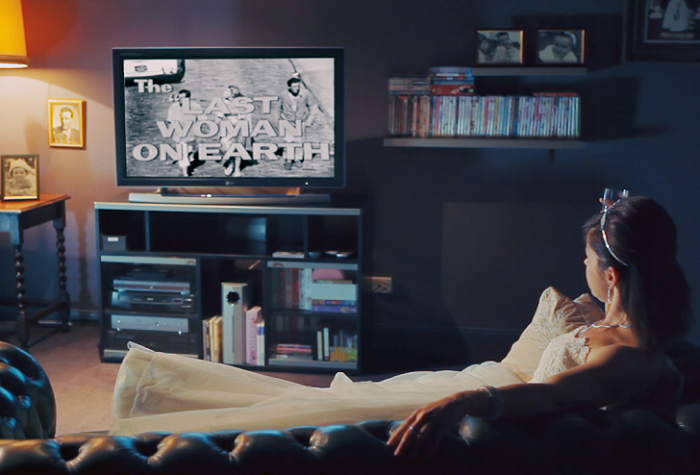
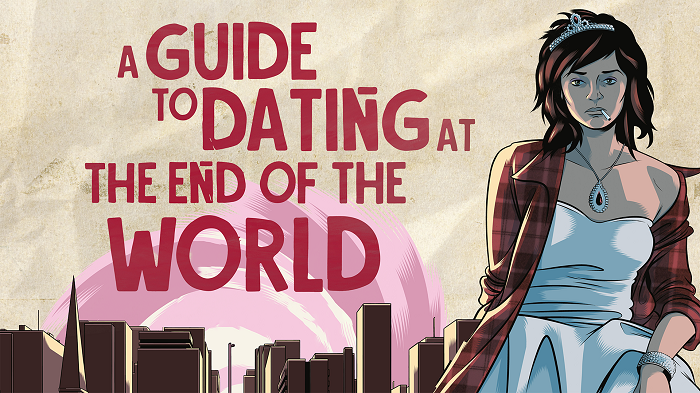
A Guide To Dating At The End Of The World is a low budget feature made in Brisbane over the last twelve years. Set in March 2010 (the relevance of the date becomes clear only later), it’s a rare Australian entry into the sci-fi genre which cheekily invokes classic rom-com tropes; and also, a rare Brisbane-made indie-feature!
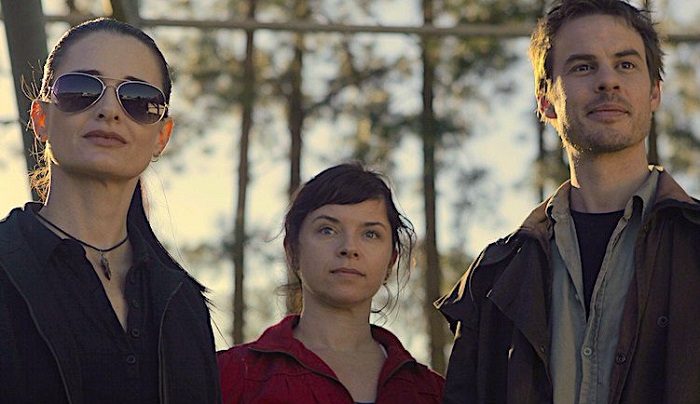
The film follows Alex (Kerith Atkinson) – not so endearingly described even by her friends as a “prickly pear” – who is decidedly single. When her pals try and set her up with John (Tony Brockman), things quickly go, well, pear shaped.
Alex isn’t interested in her friends’ cupid act, and the nervous John is trying way too hard, which leads Alex to loudly announce that she wouldn’t go out with him if he was the last man on earth.
The next morning, Alex awakes to find that everyone has vanished from her hometown of Brisbane… except, of course, for John. In the ultimate meet-cute, the totally isolated Alex then realises that she and John might have more in common than she initially thought.
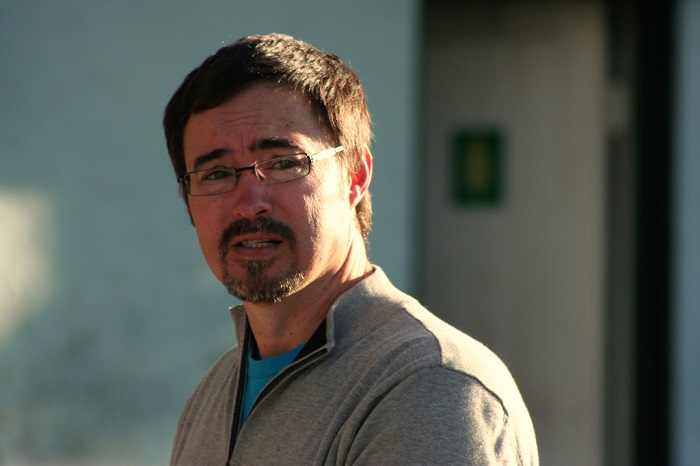
Director, co-writer and co-producer Samuel Gay takes us through the film’s marathon journey to its recent premiere.
THE VERY BEGINNING…
The film’s eventual co-writer Stewart Klein and I had been friends since the late ’90s when we were at The Queensland College of Art (QCA), now better known as Griffith Film School. He was a couple of years ahead of me and then went to AFTRS and did the postgraduate screenwriting course. We wrote and made little short films, but let’s just say they weren’t “festival friendly”.
I graduated from film school at the end of 1998. Most of my classmates went on to careers in the industry, as cinematographers, sound designers, sound recordists, producers and writers. Many applied directly to AFTRS – I applied for the directing course but didn’t really have enough of a portfolio to get in.
I stayed in Brisbane and we set up a film company, but this was still at the pre-digital time when making films, even short films, was expensive, and most of the time we would all sit around dreaming about it, saying, “If only we could get some film stock or something.” There was no way in hell we were gonna shoot on video back then!
A DETOUR…
Myself, Simon Smith and Simon Chapman (who would eventually shoot A Guide To Dating At The End Of The World) set up a little production company to make commercials, corporates and music clips, doing them on the smell of an oily rag. At first it looks easy and then you realise that it’s all extremely competitive. We were up against some talented people already established in Brisbane. In the early 2000s, we made a few short films. Brisbane had a fantastic short film festival which ran with The Brisbane International Film Festival called The Fast Film Festival, which was great. Like Tropfest, they gave you a word and an object that had to be in the film, and a very short timeframe to make and submit the film.
By then, I’d met my partner Susan, and when we decided to get married, my family wanted to know what I was going to do financially. I had this engineering degree from back before I went to film school! A friend of mine who worked at the council said they were looking for engineers, and I thought, “Okay, I’ll do this for a little while.” All of a sudden, it had been seven years! It literally felt like no time had passed at all.
THE LIGHTING OF THE FUSE…
Then around 2010, I was at a family get-together lamenting to Susan’s cousin David Cassidy, who was an accountant, about how I wanted to make a feature film, but I needed to find people with money. He was very encouraging and said that he certainly knew enough people that could help finance it.
Then not long after that, I was at Jason Hargreaves’ place – he’s another cinematographer friend – and he showed me this new digital SLR camera he had just bought (one of those new Canon 5Ds) and he said, “This thing is high def. They are amazing; you can put old lenses on it, and it’s already being used on features. And if you want to use it, I’m happy to help.” And help he did: Jason and Simon share the DOP credit on the film. I drove home thinking that suddenly it was actually possible.
A STORY PRESENTS ITSELF…
The story then came together very quickly. With Stewart, I started writing the idea that became this script. It was originally known as The Last Man On Earth until Fox went and made a TV series with that name. Our initial premise was “something’s happened, it’s been a catastrophe, and everyone but this one woman has disappeared.” We then developed the backstory where the lead role is a woman who is so sick of all her friends pressuring her about finding a man etc. We wrote it in 2010 and then by mid-2011 we were shooting it, but that was after a long, long time in “pre-pre” production, finding locations, and working out how to pull it off as cheaply as possible.
THE SHOOT…
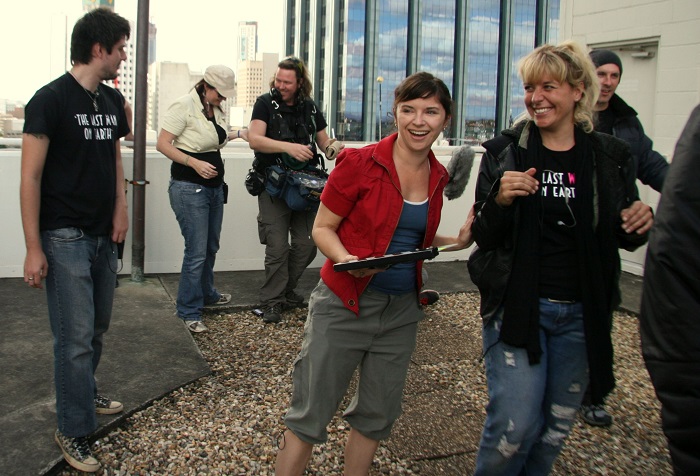
We financed the film by drawing down from the mortgage on our house, all the while fashioning the film to be something we could achieve on a low budget: limited cast numbers, small crew, limited locations etc, and just a two-week principal photography shoot.
It was always going to be a bit guerrilla style; wherever we went, we made sure to not draw attention to ourselves. But there were still locations we needed and paid for, like the mansion that Alex takes over when everyone disappears, and the Yatala Drive In, where she hangs out with John. But in other cases, we got inventive, and/or got lucky, with locations. We shot all the underground stuff at the Telstra museum, which was fantastic for the “secret American military base”, which is meant to be a hangover from WW2. We dressed a corner in the basement of the Telstra museum, which is literally just under this old Queenslander in the Brisbane suburb of Albion!
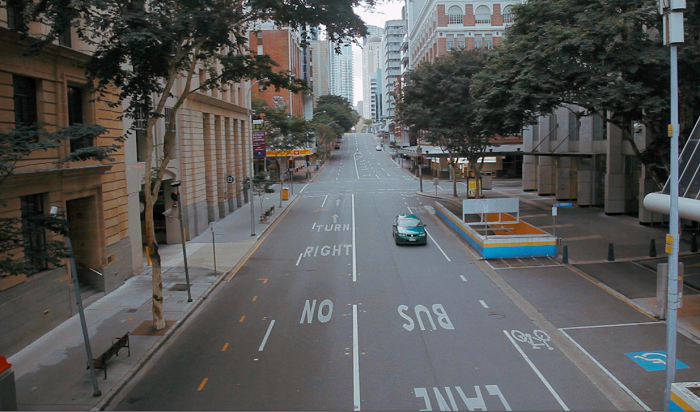
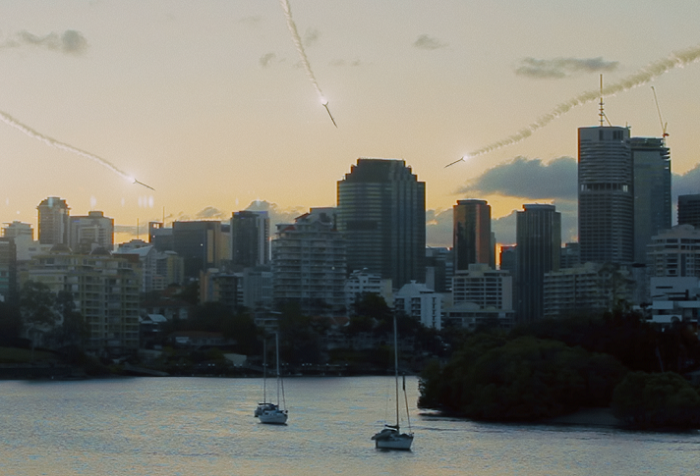
For the opening act, shooting what was meant to be a deserted city was actually pretty easy. Brisbane on a Sunday morning is very quiet! Unfortunately, there is no time when The Storey Bridge or The Inner City Bypass aren’t busy; we basically just removed the traffic and any background movement in these shots later in the VFX stage. Of course, we had no budget for completing the film initially, so that was all wishful thinking.
But we did pay all the cast and crew. We could only afford award rates, and we had a bare bones crew of about twenty. The shoot went really well. We made sure not to make too great a demand on people by doing ridiculously long days; and we made sure the catering was good. You’re always paying for other things as you go. For the pick-ups, we went out with just me, a DOP, and maybe one cast member. It was just the minimum required, and that’s strangely freeing.
THE POST PROCESS…
After the initial shoot, I converted all the raw footage to pro-res and synced up all of the audio so the film could be cut on Final Cut Pro 7. This was done by a good friend from college, Tamara Seeck, who was by now an editor living in Sydney. The plan was to get it to a rough cut, and that would help inform the pick-ups. Tammy cut it with lots of placeholders added in and then we started the pick-ups.
Another six months passed, and we had the pick-ups in and we had a very serviceable rough cut…. but the progress had started to slow down. Of course, we were all working on it around other jobs, including Tamara and I, and suddenly it became like a weekend project that was drawn out for months and months. I was sitting with it a lot myself as I had access to the whole edit project. I could mimic any edit Tamara was doing and then keep fiddling with it… and that’s something you shouldn’t really do! Tamara thought it best if she left me with the edit for a while. The options are endless, and in the end, I didn’t improve the cut. I was just picking at it and going around in circles, and so at the end of 2013, I just went back to Tamara and said, “Please look at it again! I’m sorry! I won’t touch it!” And this time, when she sent it back to me, I was stoked! It was all finally working!
COMPLETION?
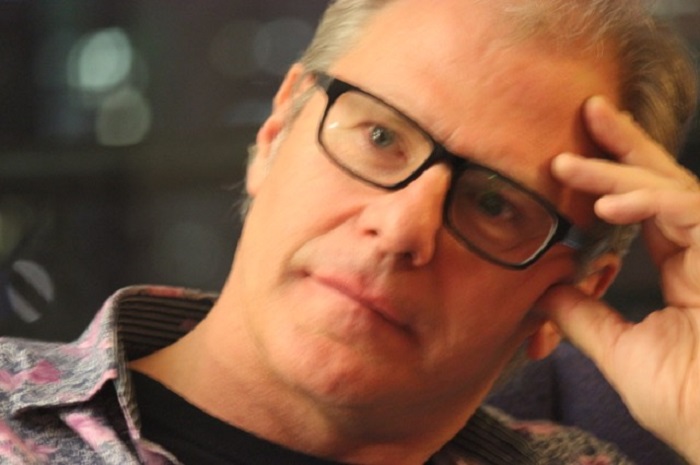
I was naively thinking that we’d just apply to Screen Australia and Screen Queensland for completion funds. And around this same time, I met producer/distributor Tait Brady. I went down to Sydney to do a two-day course that Tait was running on distribution/financing/ indie production etc at AFTRS. I then kept in touch with Tait and would email him with questions, but I hadn’t shown him the film yet.
At the same time, a good friend of mine said, “Look, you have this film, it’s good, but it still looks as rough as guts, and you can’t send it out to people in this shape.” By now, it’s 2014, and I thought, “Okay, I’ll spend some more money on it and let’s just get it as good as it can be at this stage.” I was very conscious of the fact that no-one who had helped make the film had seen anything yet, so I was keen to arrange a cast and crew screening. I brought in a grader and paid a few other people just to fix up the effects as much as possible, knowing that it still wasn’t distribution ready. We got the sound design done with Chris Gillette and Tfer Newsome. This was three years after we started shooting. We arranged a screening of this version for the cast, crew and some close friends. So, in a sense, the film is finished by then… but, of course, it wasn’t finished at all.
Just after that, a Sydney producer named Raquelle David put a posting on Facebook on one of those Aussie horror movie/sci-fi groups, looking for scripts. I immediately contacted her, with another script in mind that Stewart and I had been working on. But I also mentioned that we had just made a film that wasn’t quite finished. I gave her a video link to the film, and she contacted me straight away and asked what I was doing with it. She offered to come on board to help get post-production funding. And then she said that her mentor was Tait Brady!
Tait also responded to the fine cut version, especially its potential to be pushed further. It was by then early 2015 when we all got together, and Tait and Raquelle came on officially as producers, with the aim of finding completion funding from a combination of post-prod houses, state film agencies, Screen Australia and international sales agents. Tait was able to put up a small Distribution Guarantee (ie. $$) for Australian/NZ rights from his distribution company, Label.
FINAL TOUCHES…KINDA
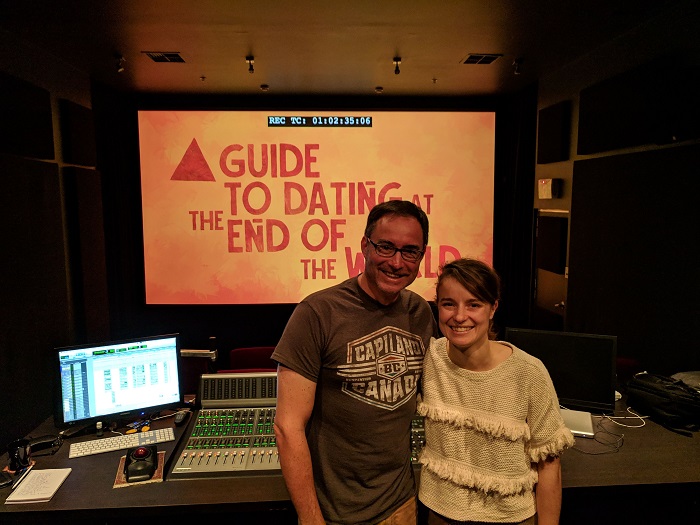
At this point, we’d all agreed that the film needed a composer to score it, and most importantly, more VFX work to “sell” the sci-fi aspects of the story and boost the on-screen production values. After this, it would all be remixed and re-graded. And this of course was going to cost a hell of a lot more than the original shooting budget.
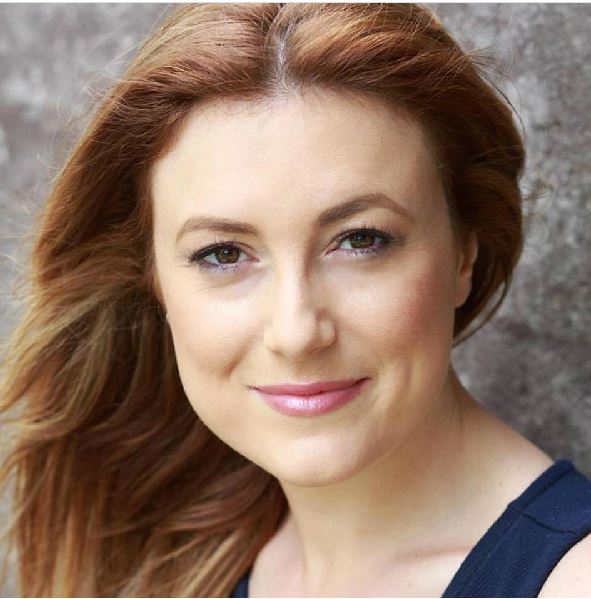
We’d storyboarded out all the tweaks we wanted to make, and started seeking out composers. It was Raquelle who first introduced us to the fabulous composer Helen Grimley in Sydney… but at this stage, we didn’t have a budget to pay her. Raquelle and Tait were going to sales agents overseas, at festivals and markets, but by this stage the sales biz was looking for bigger films “with cast” and little no-budget, no-name indies from Brisbane weren’t a big drawcard.
What also became clear later was that while the film sits in the genre space – because it’s not “hard” sci-fi but is essentially a comedy with a sci-fi backbone and romantic elements – it confused the international market because it didn’t just slot into a simply identifiable pigeonhole. The genre world was growing but preferred big, tough, hard-edged genre films, and not cute ones like ours!
AND MORE DETOURS…
In 2014, Susan and I also welcomed a beautiful baby girl into our lives, and suddenly 2015 became 2016 became 2017. Everyone, including myself, was starting to get exhausted by the project, and of course, we’d all moved on to other things. Tait was producing four films over this period, and Raquelle was soon to move to LA… and we started to run out of steam. Things had also shifted with the film agencies; in the last years of the FFC and the early years of Screen Australia, they had looked favourably on putting relatively small amounts of money into post-production of features to see them to completion, but that was no longer the case. Screen Queensland didn’t even allow you to apply for post-production funding at all! So, despite making a rare Brisbane indie feature, we weren’t even eligible for Queensland funds – that was a bit of a blow, especially as all we would have been looking for from them was, say, $50,000.
ENTER STEVE JAGGI…
Cut to 2018, and my friend Charlotte Cutting had come back to Australia to edit a film. She said, “This producer Steve Jaggi is really busy and getting things made, and he’s just moved to Brisbane.” Charlotte introduced me to Steve, and I sent him a link to the film as it was, just to show him something that I’d done. He immediately invited me in to discuss finishing it. Steve had investors and connections to a post-prod company; he already knew Tait and Raquelle, and we then worked it out very quickly as to how to get the film financed and completed.
Steve also agreed that it needed a lot of work in order to cut through in the marketplace and reach its creative potential, so we brought in an editor that Steve had worked with – the fabulous Adrian Power. Collectively, we worked out what additional pick-ups were needed and were achieveable. We looked at what we needed to help it all tie together better, including some great shots with a drone.
Then we started working out what VFX shots were needed. All of this took place again over a long period of course, and the bulk of the work on the edit was actually tightening the cut, not changing it in any major way. And we brought in Helen Grimley to score the film, while Tait sourced some affordable but suitable licensed tracks that gave a couple of scenes real energy. As it happened, they both ended up being from a Sydney all-girl band called Racket, which really suited the film, and gave the scenes a female voice too.
THE FINISH LINE…
With the VFX shots done, it was the final grade that really made a difference. The film looks sharper and richer now than it ever had, and the sound design and score just gelled it all together. All this post was done thanks to the kindness of strangers. Trackdown in Sydney did us a great deal; Serve Chilled in Brisbane really went over and beyond with their work on all the picture-post and VFX; the band licensed the songs for a really low fee; and Raquelle and Tait worked on the film for years for no fees until the very end.
Eventually, we completed the film… after lots of tweaks to the grade and problems with the DCP emanating from the original files shot on a 5d in 2011! We even screened at The Vision Splendid Film Festival in Winton with the first test DCP, and then went back and fine-tuned the picture. By then it was 2021, and Covid was here, closing down cinemas and festivals. Label didn’t want to release the film when cinemas were closed in some states and the exhibition climate was so poor.
Cinemas were backlogged with releases; we had a few festivals accepted and then cancelled… we eventually screened at a few here and overseas, and now finally we just had a cinema release here in Brisbane in late August. That closed the circle for me and the cast – it was as if it wasn’t real until it was actually released into the world – and the local audience response was just incredible.
A Guide To Dating At The End Of The World is now releasing nationally on a string of digital platforms, and it just came out in the UK on SKY… eleven years since we started shooting. Luckily, nothing in the film has dated… it’s set in March 2010 after all!
A Guide To Dating At The End Of The World is out very soon on iTunes/Apple TV, GooglePlay, YouTube Movies, VimeoOnDemand and LabelDIRECT TVOD platforms, in Australia and NZ. For all information, head to the official website.
