


by Cain Noble-Davies
Worth: $17.00
FilmInk rates movies out of $20 — the score indicates the amount we believe a ticket to the movie to be worth
Cast:
Mitch Eliot, Luke Condie, Keenan Walker, Matej Kohu, Anja Kastowsky, Bronte Simpson, Amy Victoria Brooks, Matt Wilson, Tatjana Marjanovic, Tom Absalom, Emily Teede
Intro:
… a fascinating cinematic experiment as much about the flexibility of spoken language as it is about the nuances of film language.
“Words have no meaning without context.”
These words open Three Chapters, the latest film by Aussie filmmaker James Demitri (The Winner Takes All). The film itself is actually three short films (Kink, The Visitor and The End), all of which are compelling yarns that show off the treasures of small-means, independent filmmaking. But when taken together, they say more than the words they share.
And indeed, every word of the dialogue is the same between all three instalments, in the same order, but spoken in entirely separate contexts.
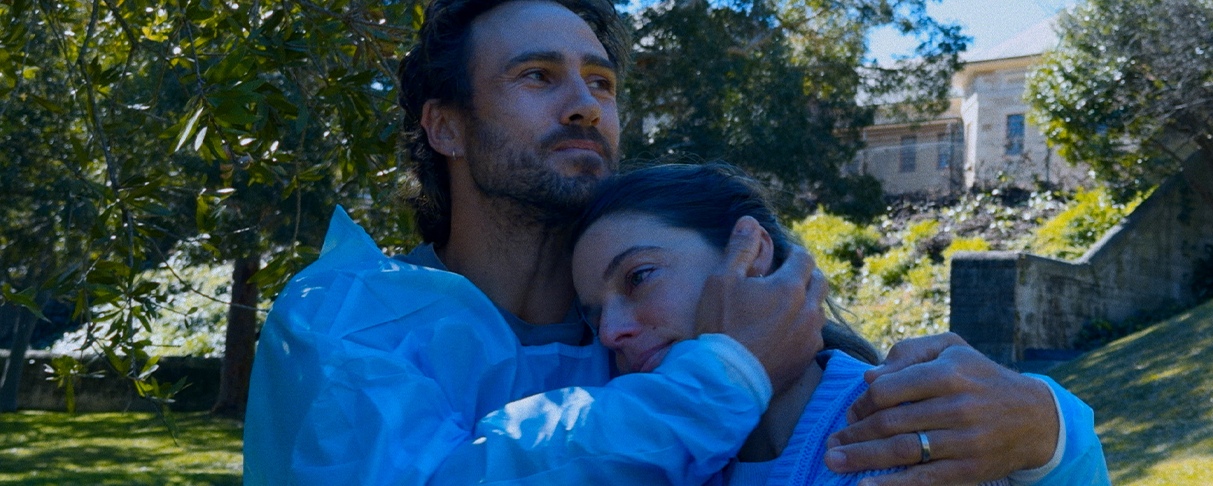
In Kink, the thumping house soundtrack, stuttering strobe edits, and saturated colour washes backdrop those words against a Gay dance club, tinged with a high sexual charge. In The Visitor, the more naturalistic lighting and stark, creaking sound design set up a much colder atmosphere, like the characters and the reality around them barely holding it together. And in The End, icy blues, sweeping and delicate orchestration, and the most emphatically Aussie backdrops of the three (from Weet-Bix in the kitchen to the patterns on bus seats, even the brickwork) envelop the frame in a mood that is as recognisable as it is heartbreaking.
Even through the shifting moods – from erotica to blood splatter to comfort – they all share a similarly tense experience when viewing. The emphasis on context, connected by a repeated string of words, creates a hyperawareness of the way that context shifts, both between the shorts and within each individual piece. It taps into an almost Theatre-Of-The-Absurd framework of deconstructing spoken language, and in the process, draws attention to how much goes into creating a film that isn’t written down; physical movements, where the camera is pointed and from what angle, and how delivery can change a blunted aside into a desperate plea. If you’ve ever wondered how a script can go from a Black List favourite to a box office bomb, watching this can help illuminate some of the reasons why.
There’s also an invigoratingly mercurial approach to how each short is paced, with the repeated verbiage making things far less predictable than it would seem at first glance. The context within each part is just as amorphous as it is between the three of them, shifting from places of familiarity to wholly different territory and back again, which keeps you on your toes throughout.
With Kink, it extrapolates the anxiety of the club scene, where fun and risk share the same dancefloor. With The Visitor, it examines how grief and loss can suddenly descend on a person’s life. And with The End, it takes the familiarity and potential predictability of a story and reveals how knowing what is coming doesn’t deaden the impact when it arrives. It’s with that last addition that the entire film coalesces into a cohesive work, bolstering its opening thesis by showing how words are dependent on context… but that the context itself is always changing. Our lives, our connections, our desires, are never stagnant, even when it feels like we’re just repeating ourselves.
Three Chapters is a fascinating cinematic experiment as much about the flexibility of spoken language as it is about the nuances of film language. From thrills to chills to tear duct spills, it handles every genre and tone it attempts with remarkable efficacy, and that it manages to accomplish so much within its humble means continues to mark James Demitri as an indie darling in the making. It’s also interesting to read all this as a deconstruction of the notion of remaking film, akin to Gus Van Sant’s trollish remake of Psycho in its understanding of the impossibility of perfectly recapturing the spark of another work, no matter how to-the-letter it tries to be. Change is inevitable, but that needn’t be a bad thing.
