



Worth: $17.00
FilmInk rates movies out of $20 — the score indicates the amount we believe a ticket to the movie to be worth
Cast:
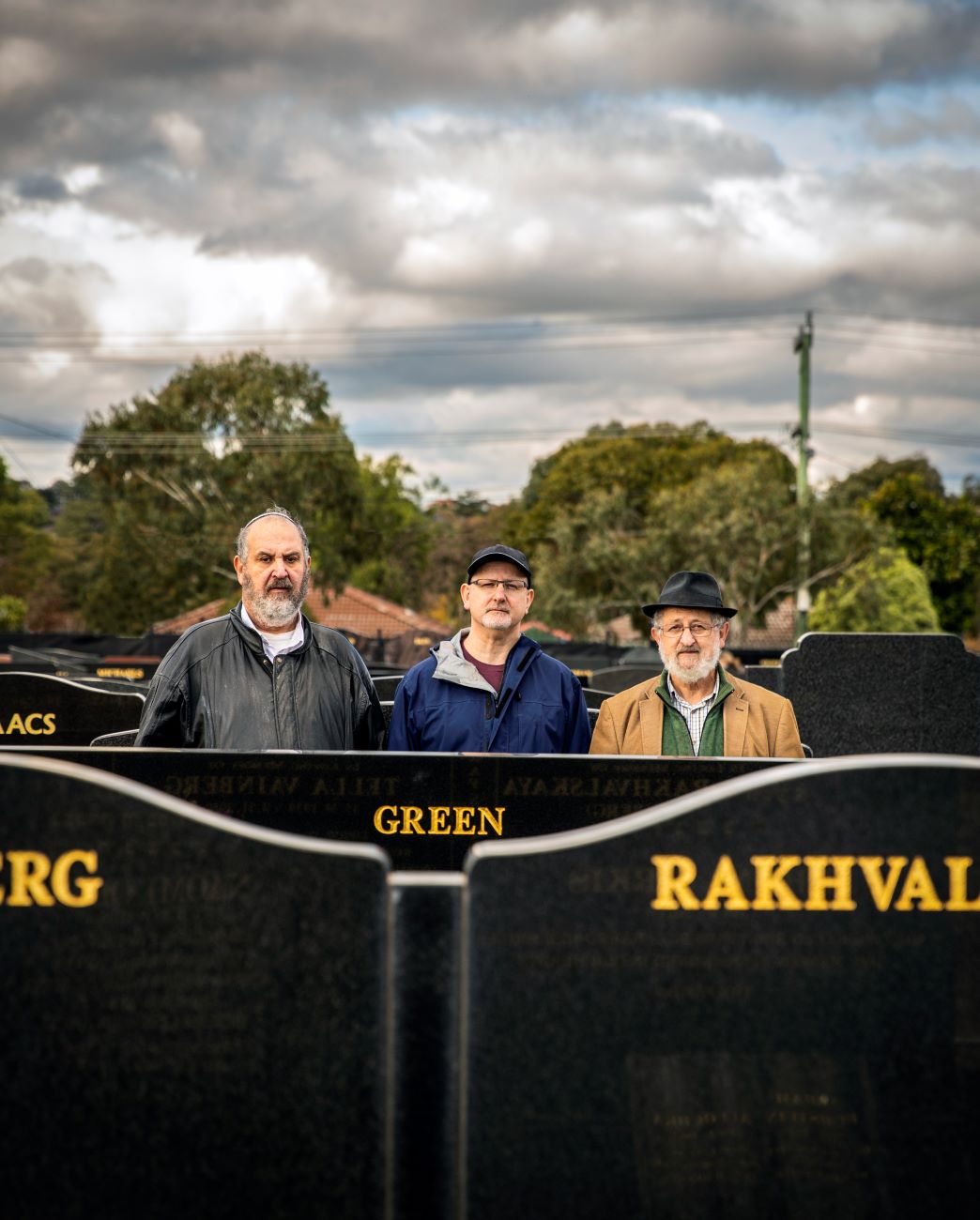
Boris, Fima, Jack, Jon and Sam Green and John Garvey
Intro:
Elegiac and undeniably moving, Revenge is sure to linger phantom-like in the minds of its audience.
Danny Ben-Moshe’s film, Revenge: Our Dad The Nazi Killer, is permeated by ghosts. The documentary follows three brothers, Jack, Jon and Sam, who suspect their late father, Boris Green, was involved in the revenge killing of a Nazi in 1950s Sydney. As the film explains, Boris was an Eastern European World War II partisan fighter who survived the Holocaust and then emigrated to Melbourne to begin a new life. However, once in Australia, Boris found himself living amongst fugitive Nazis who had similarly fled to the Southern Hemisphere post war; spectres of a terrible past he could not forget. Suspicious of their father’s mysterious trips to Sydney during their childhood, the Green brothers enlist the help of a private investigator, John Garvey, and together the group gradually uncovers Boris’ eerie, by turns violent past. Powered by the thrust of the murder mystery at its core, the documentary interlaces lost relatives, family secrets and suspect suicides.
The film’s present-day interviews are certainly compelling, punctuated by intimate, informal conversations that successfully foster an easy familiarity with the Green clan. However, its most touching scenes are those that depict the unearthing of historical documents. As Garvey digs for evidence in libraries and archives, the frame brims with torn legal reports, handwritten letters, grainy VHS footage and home videos, all through which the dead seem to linger and lurk.
Just as Boris was haunted by ghosts, he too transforms into a spectre, conjured from dusty photographs and hazily immortalised on the cinematic screen. Early in the documentary, a black and white photograph of Boris and his brother Fima appears in closeup, their hard, monochrome expressions latent with an ethereal emptiness. Overlaying the picture is Jon’s voice describing how Jews who survived the Holocaust became the “living dead,” having been emotionally eviscerated by the horrors of the war. Here, beautifully pairing image and narration, Ben-Moshe establishes Boris as a similarly enigmatic, undead figure. Throughout the documentary, the sons constantly attempt to grasp hold of Boris, Jon describing the act of painting as “a way of trying to understand” his father through his “face.”
Garvey is an adept guide through the story’s shadowy corridors, his journey ultimately bringing him to the “vexed” question (as Jon puts it) at the film’s centre: is it morally justifiable to kill those who have killed? The documentary deliberately leaves this question (largely) unanswered, raising the problem in several scenes and then languishing in silence, as if leaving room for the viewer’s response. In this way, Ben-Moshe elegantly matches the film’s form to its subject matter as the documentary, like Boris, becomes pervaded by spectral absences.
While Revenge examines the Greens’ rather specific family history, it also explores universal aspects of the parent-child relationship. Ben-Moshe skilfully elucidates the sense of mysteriousness all parents inevitably possess in their children’s eyes, and poignantly evokes the complex mixture of compassion and confusion one is likely to experience when reaching into their parents’ past. Elegiac and undeniably moving, Revenge is sure to linger phantom-like in the minds of its audience.
