


by Harry Varvaressos
Worth: $8.00
FilmInk rates movies out of $20 — the score indicates the amount we believe a ticket to the movie to be worth
Cast:
Will Hutchins, Nikita Chronis, Gideon Aroni, Paul Moder, Jess Zuker, Morgan Godfrey
Intro:
… things go from raw and nasty to just plain silly – not to mention alienatingly unpleasant.
In 2019’s Uncut Gems, Adam Sandler delivers a striking line. With garish veneers barely concealing his crocodilian smile, he boasts: “This is how I win.”
In the first feature from writer/director Gideon Aroni, you might well substitute this for “this is how I lose.”
Clearly indebted to the Safdie brothers’ brand of nocturnal mayhem and absurd levels of cortisol, Pure Scum is a frenzied descent into adolescent abjection, which lives up to its title, for better or worse.
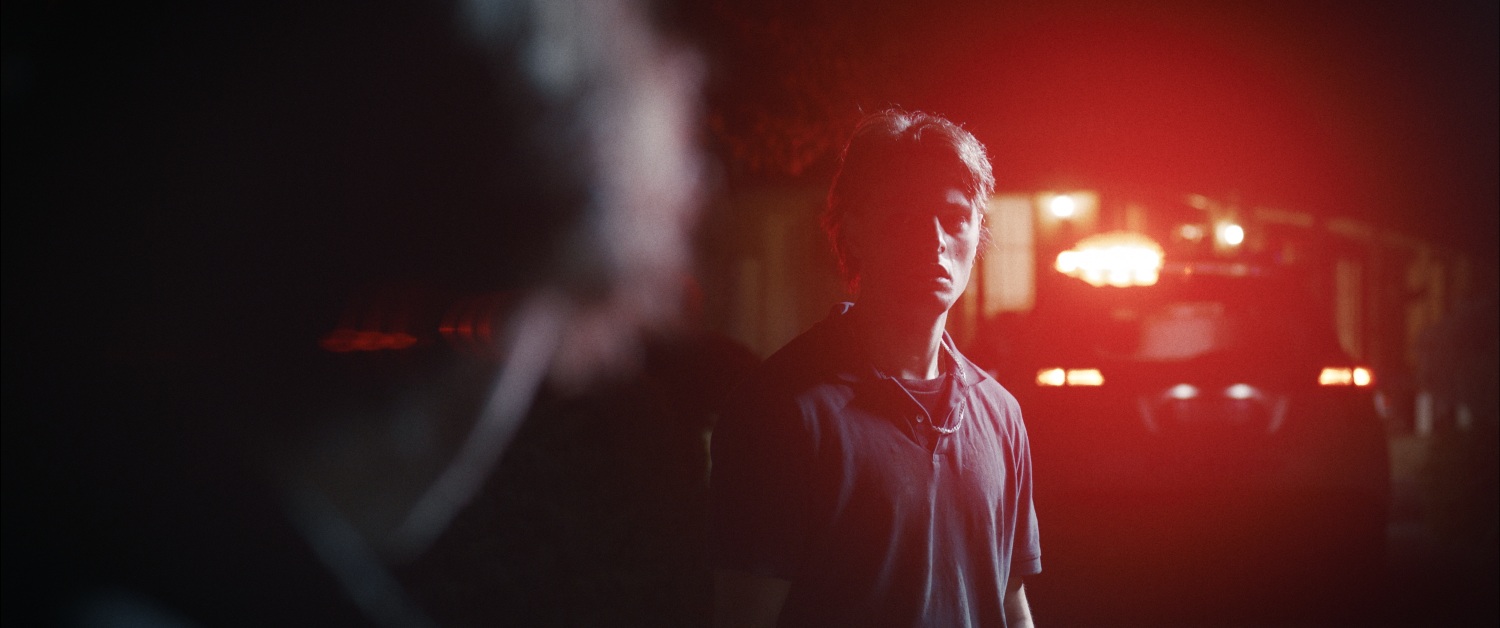
Ayden and Jesse, played by fresh faces Will Hutchins and Nikita Chronis, are best friends, though this designation is earned by frequency of contact rather than emotional support. They are peddling drugs in their late teens, fresh out of private school with no long term plan in sight. After a drug-fuelled hit and run leaves a mother and daughter gravely injured, they self-medicate their shock and nose-dive into Melbourne’s inner city nightlife – with increasingly horrific results.
At its core, Aroni’s film is (or should be) a character study: the sensitive and guileless femboy led astray by the controlling, sleek sociopath is a kind of WASP zoomer iteration of Leopold and Loeb – though, like Hitchcock’s Rope rather than Tom Kalin’s Swoon, the homoeroticism remains buried beneath performative stoicism. Chronis, who has appeared on Neighbours and Apple TV’s Time Bandits, impresses most. His detached charisma and dead-eyed stare fit snugly into the role of an amoral youth who draws insecure rich kids into his reverent orbit. With the much showier – and perhaps more difficult – part, Hutchins is less consistent; his various gasps, wails and anguished expletives often register as histrionic rather than visceral.
Nonetheless, especially in the film’s early stages, their toxic bromance authentically engages with the liminal space between adolescence and adulthood: of having outgrown such friendships of proximity but still lacking the self-knowledge and wherewithal to even realise, let alone fly the coop.
The real scum of their relationship is dried under fingernails beneath fresh stains of blood and vomit. Neither boy could care less for the other’s wellbeing, and each shamelessly exploits the other for narcissistic ends; Jesse depends upon Ayden’s fawning obedience to reassure him that he’s just as cool and charismatic as he ever was, and Ayden requires Jesse’s dominating callousness to retain the absolving self-image of a promising youth corrupted by a bad seed. It’s a mutually assured aversion to change, to accountability, to the dimness of their prospects and the necessity to confront them – and fertile psychological ground for a low-budget character piece.
Unfortunately, as the night wears on, Aroni’s script falls victim to the same self-destructive callowness as his protagonists. His tone is grave and humourless (despite the title’s promise of sleazy exploitation), so when bodies start stacking up, things go from raw and nasty to just plain silly – not to mention alienatingly unpleasant. Aroni understands the preposterous thrill of escalating chaos, but fails to capture any of the Safdies’ wit or sense for deranged fun. He wants to sternly moralise to us about private school privilege and toxic masculinity, and yet gleefully embraces the very nastiness that he seeks to critique. No one wants to be lectured by an edgelord, any more than have their trashy fun polluted by sanctimony or psychoanalytic posturing. By the third act, which serves up bogan-gangster goulash topped with melodramatic cheese, audiences will find themselves prematurely calling for the check.
