


by Flynn Shan Benson
Worth: $18.00
FilmInk rates movies out of $20 — the score indicates the amount we believe a ticket to the movie to be worth
Cast:
Oliver Reed, Vanessa Redgrave, Michael Gothard
Intro:
The sets, designed by Derek Jarman, are both majestic and camp, the actors perform their roles with passionate commitment — Redgrave is especially haunting — while Russell is somehow able to martial all this cruelty and pornography and history into a singular vision of horror.
‘Hell will have no surprises,’ one character portentously declares late in Ken Russell’s 1971 film The Devils, and after everything that the audience has seen, they can believe him: this story of mass possession in the a 17th-century French city has already shown magnificently-staged scenes of violence and debauchery, of corpses left to rot and churches used for orgies, of scripture used for vile ends and humanity debased — so what is there left for eternal damnation?
Russell’s film begins with a plague outbreak: victims’ bodies are strewn around the town to be collected, while charlatans sell snake oil to gullible sufferers. The old governor of the city is now dead, leaving Father Grandiet (Oliver Reed, hirsute and charismatic) to replace him. The nuns of the cloister desperately pile up at the window to get a glimpse of the reverend father, envisioning him as both spiritual saviour and erotic fantasy — though the severe Sister Jeanne (Vanessa Redgrave, eerily crooked to one side with a hunchback) takes hypocritical joy in reprimanding them. The audience’s introduction to Father Grandiet, however, is in the arms of a teenage pupil who he has groomed, made pregnant, and now spurns. That he is the hero of this film, as much as there is one, tells you much about the immoral glee that Ken Russell indulges in throughout The Devils.
In the background to this, an effete French king lives in decadence while the leaders of the Catholic church wheedle and connive to achieve greater influence.
After Grandiet falls for a young woman who professes her love to him, he decides to perform a clandestine marriage for the two of them. When word of this spreads, the nuns perform their own farcical, pornographic re-enactment, prompting the jealous Sister Jeanne to rave to her father confessor and twist her masturbatory fantasies into the idea that Father Grandiet — in league with Satan himself — possessed her.
The confessor and his allies see this as an opportunity to remove the father and consolidate their centralised power, leading them to bring in an exorcist (Michael Gothard, looking more like John Lennon than a man of the cloth) and conduct an investigation into this possession. They ultimately compel Sister Jeanne to indict Father Grandiet; when the other nuns try to stop him, they are threatened with execution — unless they are also possessed, in which case they would be exorcised and spared. The sisters, already frustrated and close to madness, leap at this cue to abandon their sanity, their inhibitions, and their clothes.
Where this leads is not belief in the devil but in man’s inhumanity to man: Grandiet is denounced and tortured, while all holiness is defiled.
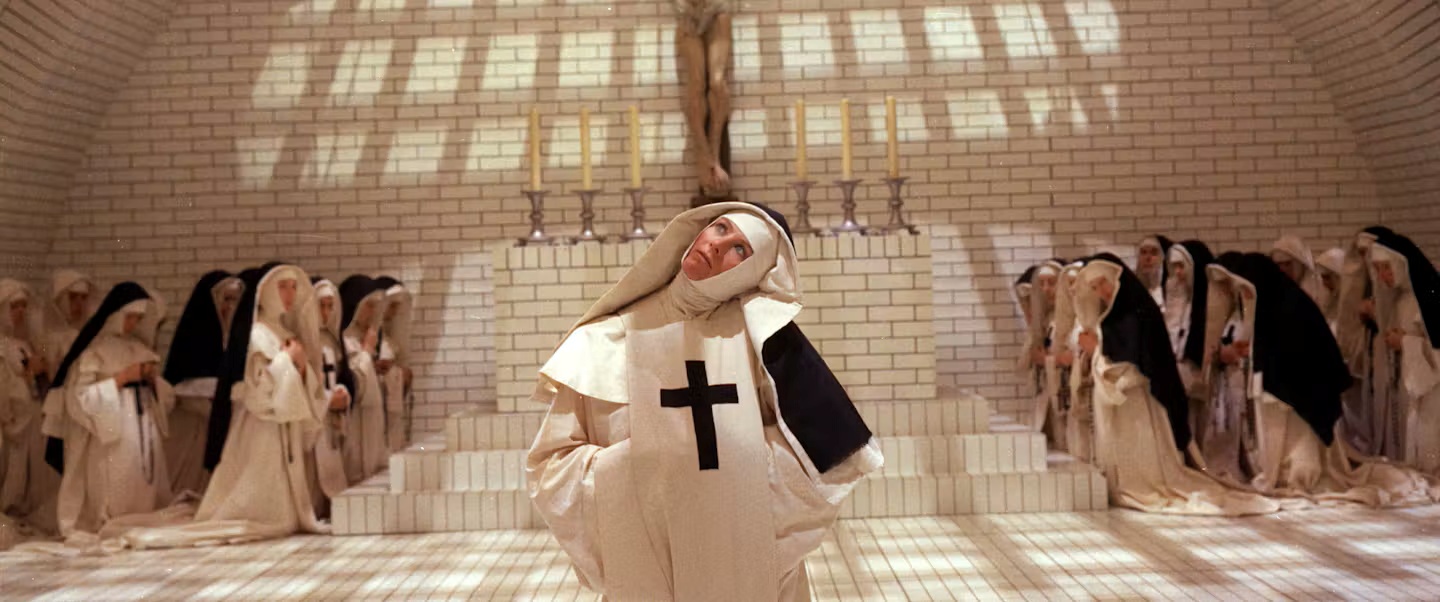
Watching this film more than fifty years after it was made, what stands out is not only the boldness of the subject but the scale of production: this is a big-budget, passionately crafted period piece akin to Fellin’’s Satyricon and Brass’s Caligula. The sets, designed by Derek Jarman, are both majestic and camp, the actors perform their roles with passionate commitment — Redgrave is especially haunting — while Russell is somehow able to martial all this cruelty and pornography and history into a singular vision of horror.
Moreover, this cut represents decades of effort on the part of filmmakers and critics and advocates of Ken Russell to restore footage that the studio refused to release, scenes that mix holy symbols and pornographic acts in ways that even a non-believer will find stirring thoughts of sacrilege. But these scenes also shock because, like Robert Egger’s The Witch or Darren Arronofsky’s mother!, they are not simply provocative but genuinely religious as any bible adaptation, even as they give new meaning to the word becoming flesh.
So, the horror that stays with the viewer at the desolate ending of The Devils is not that God is dead or religion is all lies, but the possibility that there is something divine in the human, but only in the form of two bodies becoming one — everything else, especially the Church, can only be perverse.
